Rice Flour
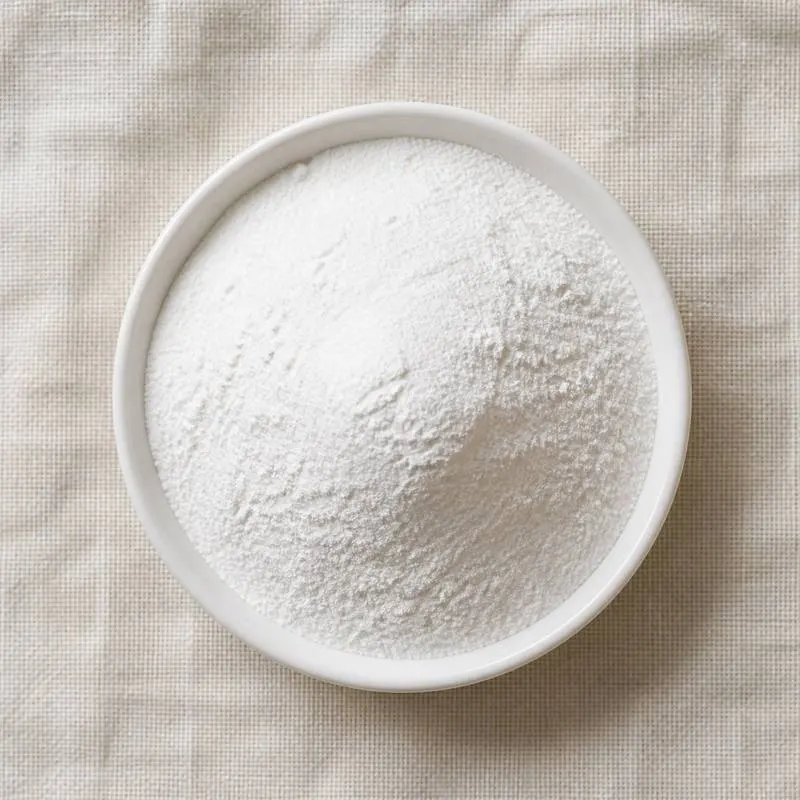
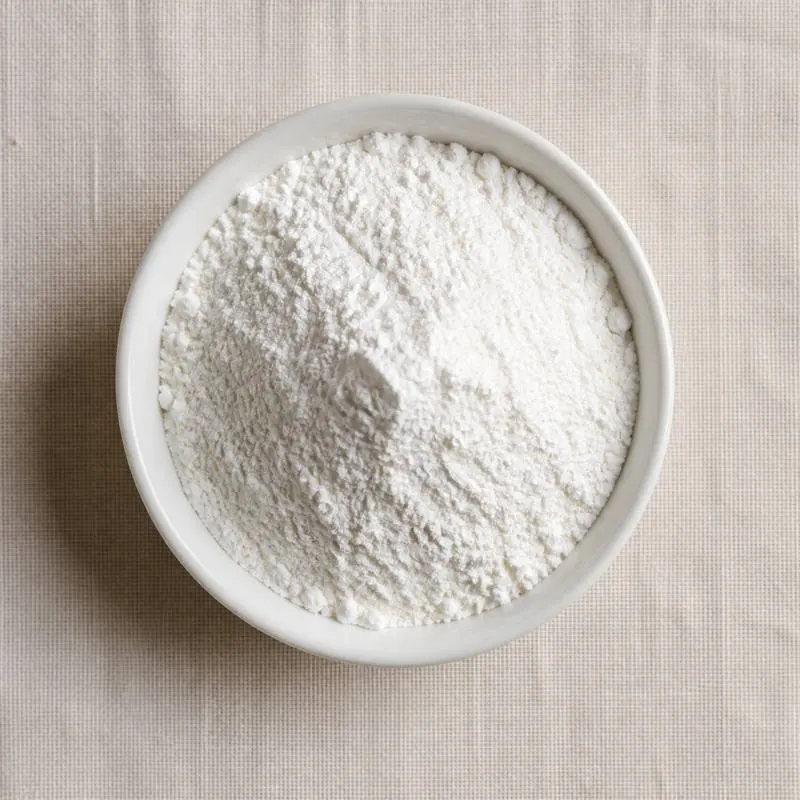
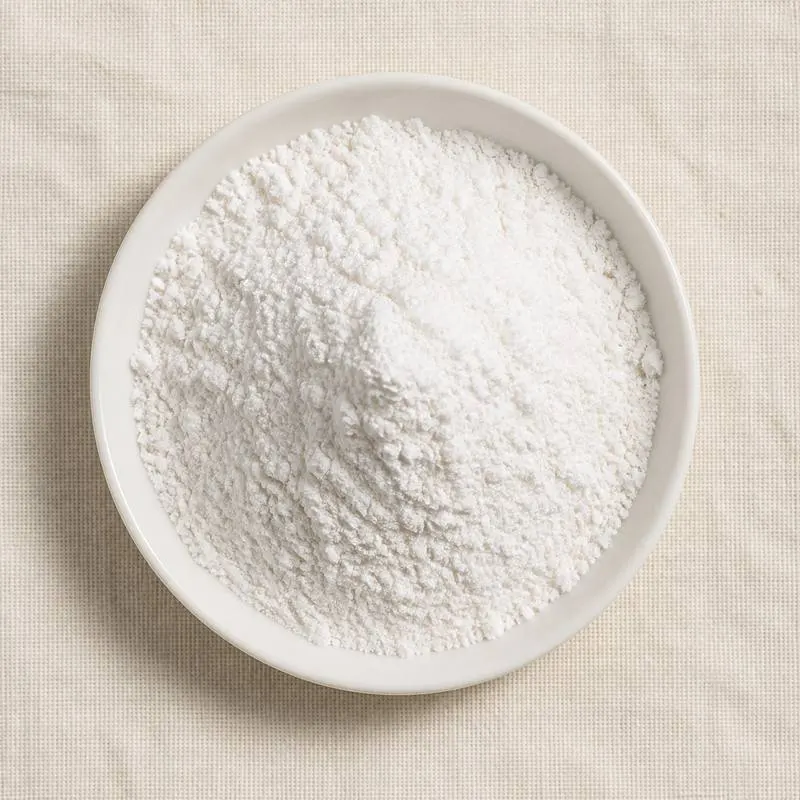
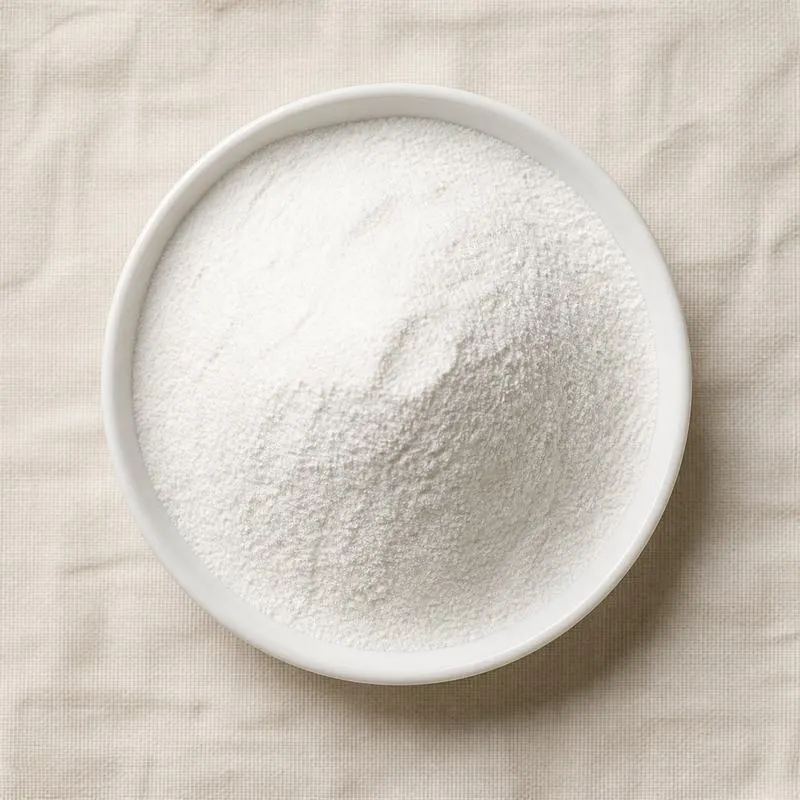
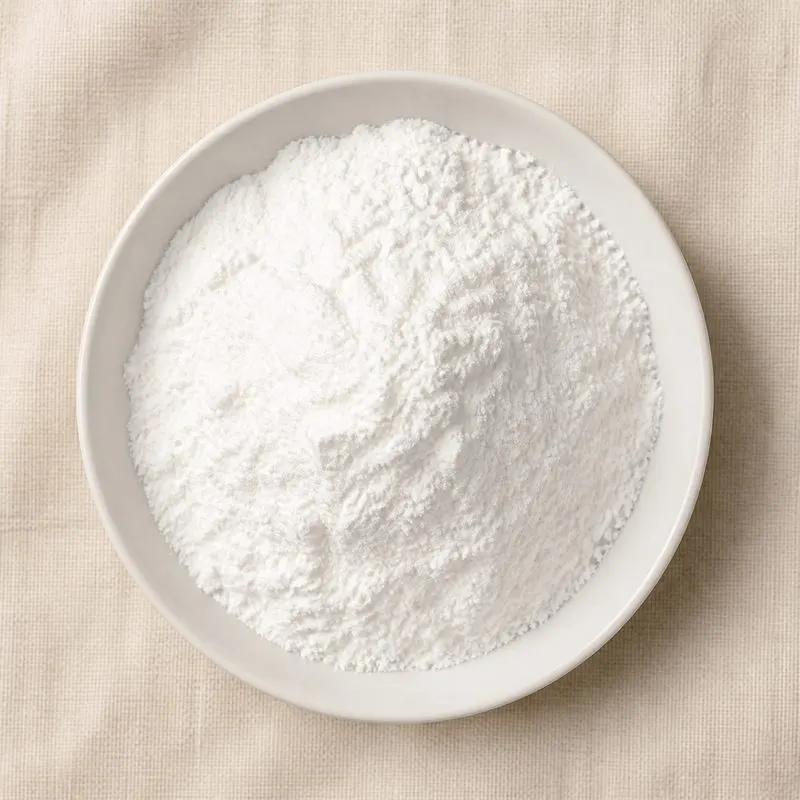
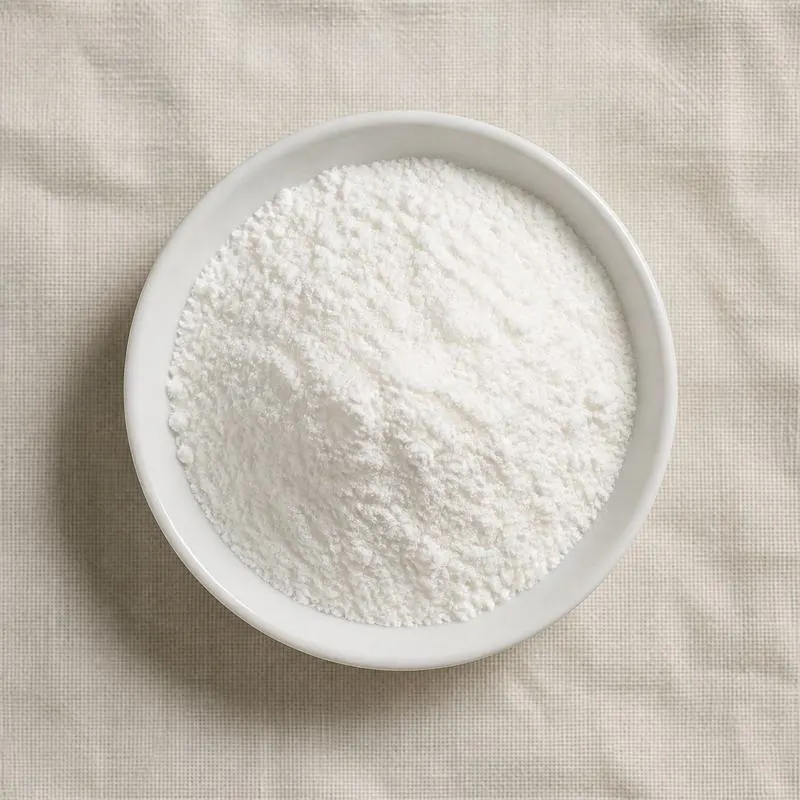
Rice flour is milled white or brown rice ground to a fine powder, composed of intact and fractured starch granules together with the grain's native protein, and containing no gluten-forming proteins of any kind.
Functionally it behaves as a starch carrier with a small protein contribution. The starch granules are the smallest of the cereal starches at 3 to 8 micrometres, polygonal and tightly packed, which gives rice flour a characteristically smooth, slightly chalky mouthfeel and a high water absorption once cooked. Amylose content, inherited from the parent variety, controls the outcome: regular rice flour at 20 to 30 percent amylose sets to a firm gel and retrogrades, giving the bite of extruded rice noodles, while glutinous rice flour at under 2 percent amylose gives a sticky, elastic, non-setting paste used for mochi and glutinous dumplings.
The flour is a white free-flowing powder, usually at 80 to 120 mesh, insoluble in cold water and requiring heat above roughly 65 to 80 degrees Celsius to hydrate and thicken. Pregelatinised versions, cooked and dried before grinding, disperse and thicken in cold water. Rice flour is low in fat when made from well-milled rice, which gives it good oxidative stability in storage.
We source bulk Rice Flour from top China manufacturers for our partners. The manufacturer is in Jiangsu. A smaller requirement can ship in a combined container with other ingredients.
Please send the grade you need, the volume and your destination port, and we will come back with a solution and a price.
or call +86-21-6858 0751
- Function
- Texturisers
Specifications
| Item | Specification |
|---|---|
| Appearance | White free-flowing powder, free of foreign matter |
| Odour and Taste | Neutral, characteristic of rice |
| Moisture | Not more than 13.0% |
| Protein, dry basis | 5.0% to 8.0% |
| Fat | Not more than 1.0% |
| Ash | Not more than 0.8% |
| Crude Fibre | Not more than 0.5% |
| Particle Size | Not less than 98% through 100 mesh |
| Whiteness | Not less than 88 |
| Gluten | Less than 20 mg/kg |
| Inorganic Arsenic | Not more than 0.2 mg/kg |
| Lead | Not more than 0.2 mg/kg |
| Aflatoxin B1 | Not more than 2 microgram/kg |
| Total Plate Count | Not more than 10,000 CFU/g |
| Yeast and Mould | Not more than 100 CFU/g |
| E. coli | Absent in 1 g |
| Salmonella | Absent in 25 g |
Common Markets Grades
The primary split is between regular rice flour and glutinous or waxy rice flour, which are not interchangeable and are ordered by name rather than by specification alone. Within each, dry milled and wet milled grades are traded. Dry milling on hammer or pin mills is cheaper but generates heat and a high proportion of damaged starch, which raises water absorption and gives a grainier product. Wet milling, in which soaked rice is ground as a slurry and then dried, gives finer particles, minimal starch damage and the smooth texture required for rice noodles, rice paper and confectionery.
Grades are further specified by mesh, commonly 80, 100 and 120 mesh with superfine 200 mesh available, and by whiteness. Brown rice flour retaining the bran is a separate grade with higher fat and a shorter shelf life. Pregelatinised and heat-treated flours are offered for cold prepared and clean-label thickening. Organic certified material is available, and buyers formulating for infant products specify tighter inorganic arsenic limits.
Applications
- Extruded and sheeted rice noodles and rice vermicelli, where amylose retrogradation supplies the firm bite that would otherwise come from gluten
- Rice paper and fresh rice sheet products, using wet milled flour for a smooth translucent film
- Gluten-free bakery, as the structural bulk of bread, cake and biscuit formulations alongside starches and hydrocolloids
- Mochi, glutinous dumplings and Asian confectionery, using waxy rice flour for a sticky elastic paste
- Batter and breading systems for fried products, giving a crisp coating that absorbs less oil than wheat batter
- Infant cereals and weaning foods, valued for digestibility and a bland flavour
- Snack extrusion and puffed products, where the small granules expand into a fine uniform cell structure
- Soups, sauces and instant mixes as a thickening and body-building base
- Dusting and anti-caking on dough surfaces and confectionery moulds
- Meat and seafood products, binding water and improving slice cohesion
Brands Using Rice Flour
Widely-distributed consumer products that list Rice Flour on the ingredient label.
- Bob's Red MillWhite Rice Flour ↗Bag of stone ground white rice flour with white rice as the only ingredient.Label verified 2026-08-31
- Double Wood SupplementsN-Acetyl Cysteine (NAC) Capsules ↗Capsule that lists rice flour among its other ingredients alongside hypromellose and microcrystalline cellulose.Label verified 2026-08-31
Brand names, product names and logos are the property of their owners. They appear here as published evidence that the ingredient is used, taken from the brand's own label or website. Their appearance is not an endorsement, and it does not mean the brand buys from us or from any manufacturer listed on this site.
China Manufacturers of Rice Flour
Top Rice Flour manufacturers in China.

Company names and logos are the property of the manufacturers themselves. They are listed here because our own directory records them as producing this ingredient. A listing is not an endorsement by them, and we do not represent them or speak on their behalf.
Regulatory Status
Rice flour is a cereal food ingredient, not a food additive. It has no E number, needs no additive authorisation and is declared on labels as rice flour.
In the United States it is subject to the FDA food safety framework and to the agency's action level for inorganic arsenic where it is used in infant rice cereal. In the European Union it falls under the general food law regulation, with maximum levels for inorganic arsenic, cadmium and aflatoxins in rice and rice-derived products set by the contaminants regulation, and pesticide residues governed by the maximum residue level framework. Rice flour is widely used in products carrying a gluten-free claim, which in both the EU and the United States requires the finished food to test below 20 mg/kg gluten, so mills supplying that market operate segregated lines and certify each lot. Codex provides commodity standards for rice and a standard for foods for special dietary use covering gluten-free claims. Rice is not itself a declarable allergen.
Manufacturing Process
Broken rice or milled whole grain is cleaned over screens, destoners and magnets. In the wet milling route the rice is steeped in water for several hours to soften the kernel, then ground with the steep water on a stone mill, colloid mill or pin mill to produce a slurry of fine particles. The slurry is dewatered on a centrifuge or filter press and the cake is dried in a flash or belt dryer at a temperature low enough to leave the starch ungelatinised, then broken up, pin milled and sifted to the target mesh.
In the dry milling route the cleaned rice is tempered to a controlled moisture and ground directly on a hammer or roller mill followed by a pin mill, with air classification used to separate the fine fraction and return oversize to the grinder. Dry milled flour is sifted, cooled and packed without a drying step. Heat-treated and pregelatinised grades take an additional pass, either dry heating in a fluid bed to modify pasting behaviour or cooking the slurry on a drum dryer or in an extruder before grinding. Finished flour passes over sifters, magnets and metal detectors before packing.