Saute Red Onion Oil
Saute red onion oil is a flavoured edible oil made by frying sliced red shallots or red onions in vegetable oil until they brown, then separating the oil from the solids. It is a flavouring preparation rather than a cooking oil, sold for the aroma the frying transfers into the fat phase, and it is a staple of Fujianese, Taiwanese and Southeast Asian cooking where it is added to noodles, rice and sauces at the end of preparation.
The aroma comes from two different chemistries running at once. Cutting the bulb activates alliinase, which converts the S-alk(en)yl cysteine sulphoxides into thiosulphinates and then into the propyl and propenyl di- and trisulphides that give raw allium its pungency. Frying then drives Maillard reaction between the bulb sugars and its amino acids, producing pyrazines, furans and thiophenes, and the browned, sweet, nutty character that separates fried onion oil from raw onion. The sulphur compounds and the Maillard products are both lipophilic, so the oil carries the full profile while the spent solids retain little of it.
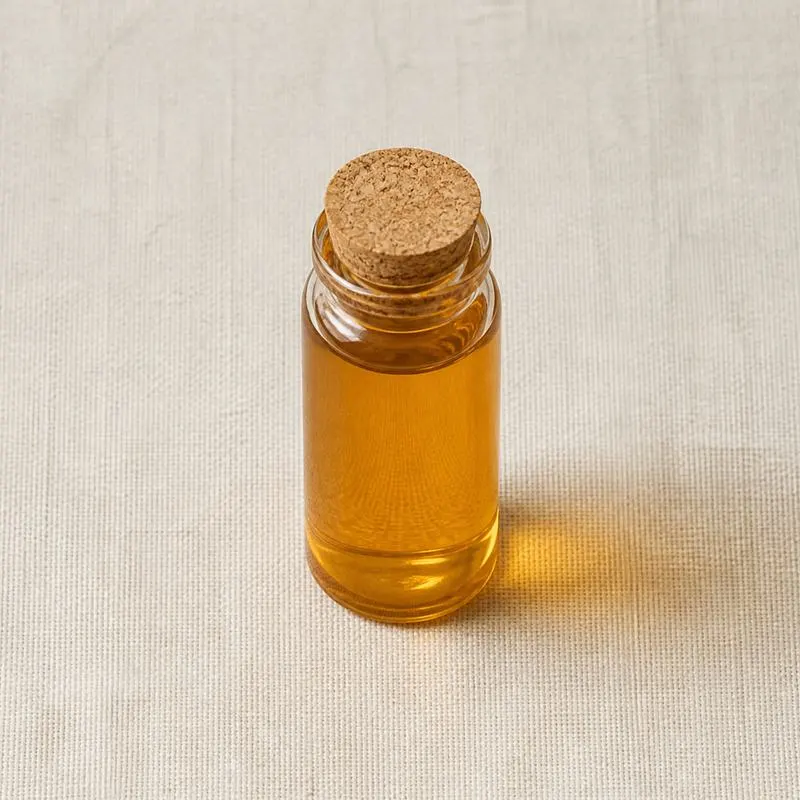
It is a clear golden to amber oil, sometimes with a fine sediment or with fried shallot pieces deliberately left in suspension. It is miscible with fats and oils and immiscible with water, so aqueous applications need an emulsifier. Being an unsaturated oil holding reactive sulphur compounds, it oxidises readily and is packed full and blanketed.
We source bulk Saute Red Onion Oil from top China manufacturers for our partners. The manufacturer is in Henan. A smaller requirement can ship in a combined container with other ingredients.
Please send the grade you need, the volume and your destination port, and we will come back with a solution and a price.
or call +86-21-6858 0751

- Function
- Flavours and Aromas
Specifications
| Item | Specification |
|---|---|
| Appearance | Clear golden to amber oil, fried shallot particles present in unclarified grades |
| Odour and Taste | Characteristic fried shallot, sweet and browned, no scorched or rancid note |
| Identification | Gas chromatography profile conforms to retained reference |
| Acid Value | Not more than 1.0 mg KOH per g |
| Peroxide Value | Not more than 5.0 meq per kg |
| Moisture and Volatile Matter | Not more than 0.20% |
| Insoluble Impurities | Not more than 0.10% in clarified grades |
| Relative Density at 20 C | 0.910 to 0.925 |
| Refractive Index at 40 C | 1.4650 to 1.4700 |
| Benzo[a]pyrene | Not more than 2.0 ug/kg |
| Lead | Not more than 0.1 mg/kg |
| Arsenic | Not more than 0.1 mg/kg |
| Total Plate Count | Not more than 1000 cfu/g |
| Salmonella | Absent in 25 g |
Common Markets Grades
Grades are described by carrier oil and by botanical source. Soybean, rapeseed, sunflower, palm olein and rice bran oils are all used, and the choice sets both the oxidative stability and the neutrality of the background; palm olein grades are the most stable and semi solid in cool conditions, while sunflower and rapeseed grades stay clear and pourable. Red shallot gives a sweeter, more concentrated aroma than red onion, and the two are quoted separately.
Beyond that, the trade distinguishes clarified oil, filtered bright and free of particles, from unclarified oil in which fried shallot fragments remain visible and settle. Strength is expressed as the ratio of fresh bulb to oil used in frying, and as a recommended dosage rate, since no single marker compound defines the product. Grades differ further in whether an antioxidant has been added to protect the oil phase, whether a reaction flavour or an allium oleoresin has been blended in to lift a weak batch onto profile, and whether the product is standardised as a pure fried oil or as a compound seasoning oil that also carries spices.
Applications
- Noodle seasoning oil sachets, dosed as the finishing aroma in instant and chilled noodle packs
- Dressed cold dishes and cold noodle sauces, where the oil carries flavour without cooking
- Fried rice and rice dish production in central kitchens
- Compound sauces and dipping sauces built on a fat carrier
- Braised and stewed meat and offal, added late so the fried note is not cooked out
- Savoury bakery, pastry and steamed bun fillings needing an allium base
- Snack seasonings, after the oil is spray dried onto a starch or maltodextrin carrier
- Soup bases and hot pot bases as an aroma top layer
- Frozen and chilled ready meals, restoring the fried character lost in reheating
- Foodservice finishing oils sold to restaurant chains for a consistent profile
China Manufacturers of Saute Red Onion Oil
Top Saute Red Onion Oil manufacturers in China.

Company names and logos are the property of the manufacturers themselves. They are listed here because our own directory records them as producing this ingredient. A listing is not an endorsement by them, and we do not represent them or speak on their behalf.
Regulatory Status
The product is a flavouring preparation obtained from a food by a physical process, which in the European Union places it inside the flavourings framework without an individual authorisation and without an E number. Any flavouring substance blended in afterwards must appear on the Union list of authorised flavouring substances, and any antioxidant used in the oil phase is a regulated food additive with its own conditions of use and must be declared. The carrier oil must meet the requirements for edible fats and oils, including the contaminant limits that apply to refined vegetable oils.
In the United States onion and shallot fall within the spices and other natural seasonings and flavourings recognised as generally recognised as safe under 21 CFR 182.10, with their essential oils and natural extractives covered by the parallel listing at 21 CFR 182.20, and a fried oil infusion is treated as a natural flavouring on that basis. Manufacture is subject to preventive controls for human food. Because the process is a high temperature frying operation on a plant material, buyers commonly ask for polycyclic aromatic hydrocarbon and acrylamide data even where no specific limit applies to the product category. Codex covers the material under its general provisions for flavourings and its standard for named vegetable oils in respect of the carrier.
Manufacturing Process
Red shallots or red onions are peeled, washed and sliced to a uniform thickness, since uneven slices brown at different rates and a scorched fraction ruins the batch. The slices are sometimes surface dried to reduce the water load. Oil is heated in a jacketed fryer to a moderate temperature and the sliced bulb is added in a controlled ratio, then fried against a temperature curve: water is driven off first, the sulphur chemistry develops through the middle of the cycle, and browning is allowed to proceed only to a set colour before the heat is cut.
The fried mass is drained and the solids separated on a screen, then the oil is clarified by settling, filtration or centrifugation depending on whether a bright or a particle bearing product is wanted. The clarified oil is cooled quickly to stop further reaction, standardised for strength against a retained sensory reference, and blended where necessary with allium oleoresin or a reaction flavour to bring a variable agricultural raw material onto profile. An antioxidant is added where the grade permits, and the oil is filled warm into lined drums or pails under nitrogen and stored cool and dark. The fried solids are a saleable by-product, dried and sold as fried shallot flakes.