Star Anise Powder
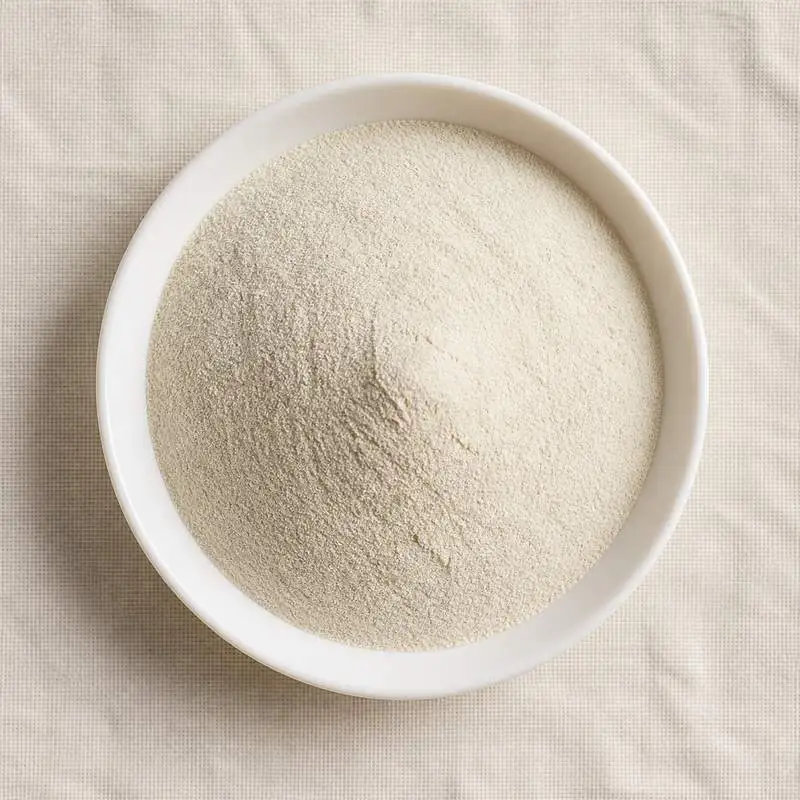
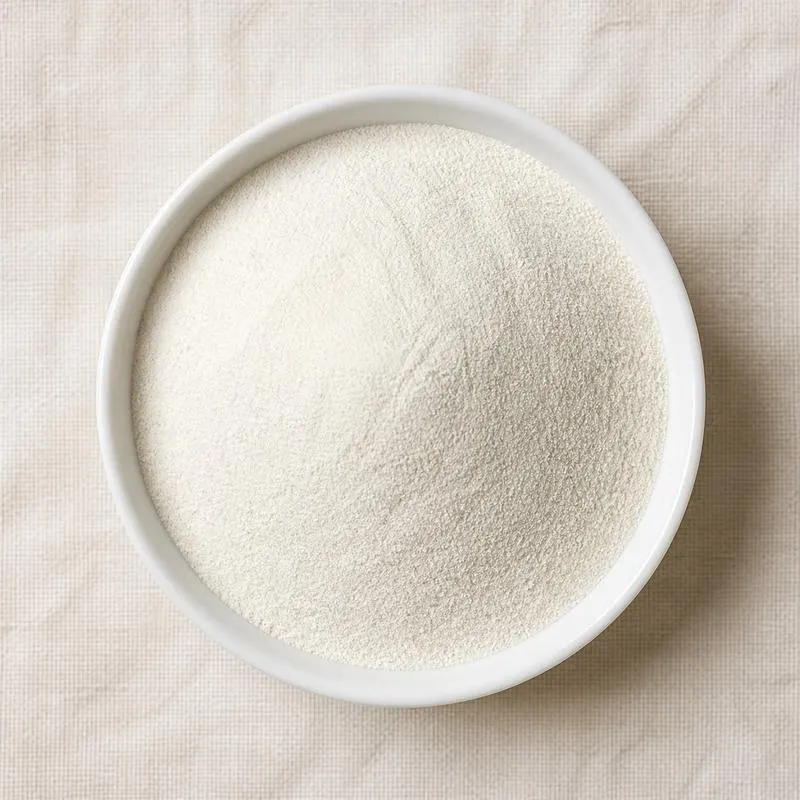
Star anise powder is the milled form of the dried fruit of Illicium verum, a free flowing reddish brown to pale brown powder for direct dosing into seasoning blends, meat products and cooked dishes. It contains both the pericarp and the seed of the star, ground together, and is the form in which the spice enters most industrial recipes because it disperses without the extraction time that whole fruit requires.
The aroma is carried by the volatile oil of the fruit, which is dominated by trans anethole with foeniculin, limonene, linalool, methyl chavicol and anisaldehyde making up the balance. Grinding is the point at which most of that oil is put at risk. Breaking the oil cells exposes the volatile fraction to air and to the heat generated in the mill, so a ground spice loses strength far faster than the whole fruit does, and the aroma of a powder is a direct function of how it was milled and how it has been stored since.
The powder is oily rather than dusty because of the high oil content of the fruit, which makes it prone to caking and to blocking a sieve, and its colour darkens over time as the oil oxidises. It is packed in a foil or metallised laminate under nitrogen where a long shelf life is required, and specified with a volatile oil figure that is checked on receipt rather than assumed from the whole spice it was made from.
We source bulk Star Anise Powder from top China manufacturers for our partners. The manufacturer is in Henan. A smaller requirement can ship in a combined container with other ingredients.
Please send the grade you need, the volume and your destination port, and we will come back with a solution and a price.
or call +86-21-6858 0751
- Function
- Flavours and Aromas
Specifications
| Item | Specification |
|---|---|
| Appearance | Free flowing reddish brown powder, free from foreign matter |
| Odour and Taste | Characteristic sweet liquorice anise, no musty, mouldy or rancid note |
| Identification | Chromatographic profile confirms Illicium verum, Illicium anisatum absent |
| Volatile Oil | Not less than 3.5 ml/100 g |
| Moisture | Not more than 10.0% |
| Total Ash | Not more than 5.0% |
| Acid Insoluble Ash | Not more than 1.0% |
| Lead | Not more than 3.0 mg/kg |
| Arsenic | Not more than 1.0 mg/kg |
| Total Aflatoxins | Not more than 10 microgram/kg |
| Total Plate Count | Not more than 100,000 cfu/g, 10,000 cfu/g for treated grades |
| Yeast and Mould | Not more than 1,000 cfu/g |
| Escherichia coli | Absent in 1 g |
| Salmonella | Absent in 25 g |
Common Markets Grades
Grades are set by particle size, by volatile oil content and by microbial treatment. Mesh specifications run from a coarse cracked grind used where visible spice particles are wanted, through a sixty mesh general purpose powder, to an eighty or hundred mesh fine powder for emulsified meat products and instant seasoning where any visible speck would count as a defect. A finer grind gives faster flavour release and better dispersion but has a shorter aroma shelf life because of the greater surface area exposed to air.
Volatile oil content is the analytical grade marker and is quoted in millilitres per hundred grams, with a higher figure indicating both better raw material and gentler milling. Cryogenically milled grades are priced above standard milled material for the aroma they retain. Microbial treatment separates untreated powder, which carries the high plate count normal for a field dried spice, from saturated steam treated grades used for products that receive no further heat step. Standardised grades in which star anise oleoresin has been added back onto the powder are offered where a fixed strength matters more than a wholly unmodified product.
Applications
- Chinese five spice powder, in which it is the dominant component by aroma
- Braised and red cooked meat production, dosed directly rather than infused as whole fruit
- Cured and dried sausage and preserved meats
- Marinades, rubs and tumbling systems for roast and barbecue meats
- Instant noodle and soup seasoning sachets in Chinese braised directions
- Snack seasonings on crisps, extruded snacks and coated nuts
- Hotpot and dry pot seasoning blends, where a powder disperses faster than whole spice
- Bakery and confectionery in anise and liquorice directions
- Curry and masala blends, contributing a sweet aromatic layer
- Pickles, sauces and condiment manufacture where a smooth product is required
China Manufacturers of Star Anise Powder
Top Star Anise Powder manufacturers in China.
Company names and logos are the property of the manufacturers themselves. They are listed here because our own directory records them as producing this ingredient. A listing is not an endorsement by them, and we do not represent them or speak on their behalf.
Regulatory Status
Star anise powder is a spice and a food rather than a food additive and carries no E number. In the United States it is generally recognised as safe under 21 CFR 182.10, and in the European Union it is a food and a source of natural flavourings under general food law and the flavourings framework. Where the powder is standardised by adding oleoresin, the added extract is a flavouring preparation under the same framework.
Authenticity is the dominant control for this product specifically. Japanese star anise, Illicium anisatum, resembles the culinary species and contains the neurotoxic lactones anisatin and neoanisatin, and because ground material cannot be identified by its appearance the verification has to be done on the whole fruit before milling or by chromatographic testing afterwards. Both major markets have warned against the use of star anise infusions for infants for this reason. Aflatoxin and ochratoxin A limits apply to the dried spice, alongside pesticide residue limits, lead and cadmium limits, the European prohibition on ethylene oxide treatment, and the declaration required where irradiation has been used, which is permitted for dried aromatic herbs and spices in both markets under the applicable rules. Codex covers the material through its standards and code of hygienic practice for spices and dried aromatic herbs.
Manufacturing Process
Dried whole star anise is received and authenticated as Illicium verum, since the toxic Japanese star anise is a recognised adulterant and the shape of the fruit becomes impossible to judge once it is ground. The material is cleaned through sieves, air classifiers, destoners, magnets and optical sorters that remove stalk, leaf, stone, metal and mouldy or discoloured fruit, and moisture is checked and reduced by gentle drying where necessary, because damp fruit smears in the mill rather than fracturing.
Milling is carried out in a hammer, pin or impact mill fitted with a classifying screen, and is normally run under chilled or cryogenic conditions with liquid nitrogen. Cooling serves two purposes with this spice: it makes the oily fruit brittle so that it fractures cleanly instead of forming a paste, and it holds the temperature down so that the anethole is not driven off. The ground material is sieved to the target mesh with oversize returned to the mill, then passed through saturated steam sterilisation where the grade requires it and dried and cooled quickly so that the moisture picked up during treatment is removed. The powder is passed over a magnet and through a metal detector, checked for volatile oil, particle size, moisture and microbiology against a retained reference, and packed in a moisture and oxygen barrier under nitrogen.