Star Anise Oleoresin
Star anise oleoresin is the concentrated extract obtained by treating the dried fruit of Illicium verum with a food grade solvent or with supercritical carbon dioxide and removing the solvent under vacuum. Unlike the steam distilled essential oil, which carries only the volatile fraction, the oleoresin retains the non volatile resinous and fixed oil material as well, so it presents a rounder and more complete impression of the whole spice.
Its aroma is dominated by trans anethole, which typically makes up the great majority of the volatile fraction, supported by foeniculin, limonene, linalool, methyl chavicol and anisaldehyde. The non volatile portion contributes body and a degree of fixation, holding the volatile fraction back so that the aroma releases more slowly than it would from a distilled oil. Anethole is intensely sweet and liquorice like and is isomerised slowly by acid and light from its potent trans form to the much weaker cis form, which is the main reason for cold, dark, nitrogen protected storage.
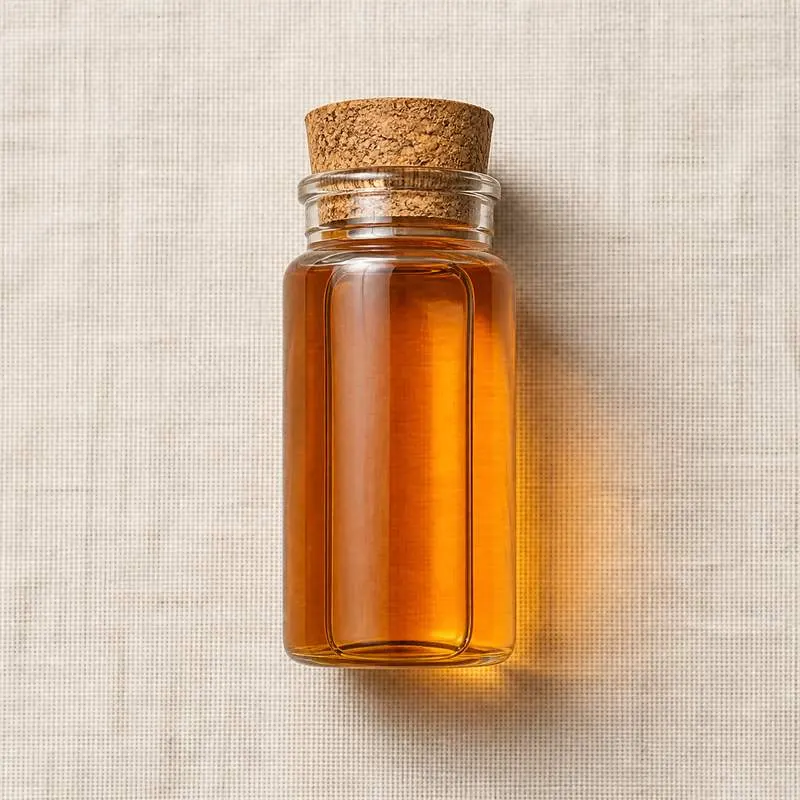
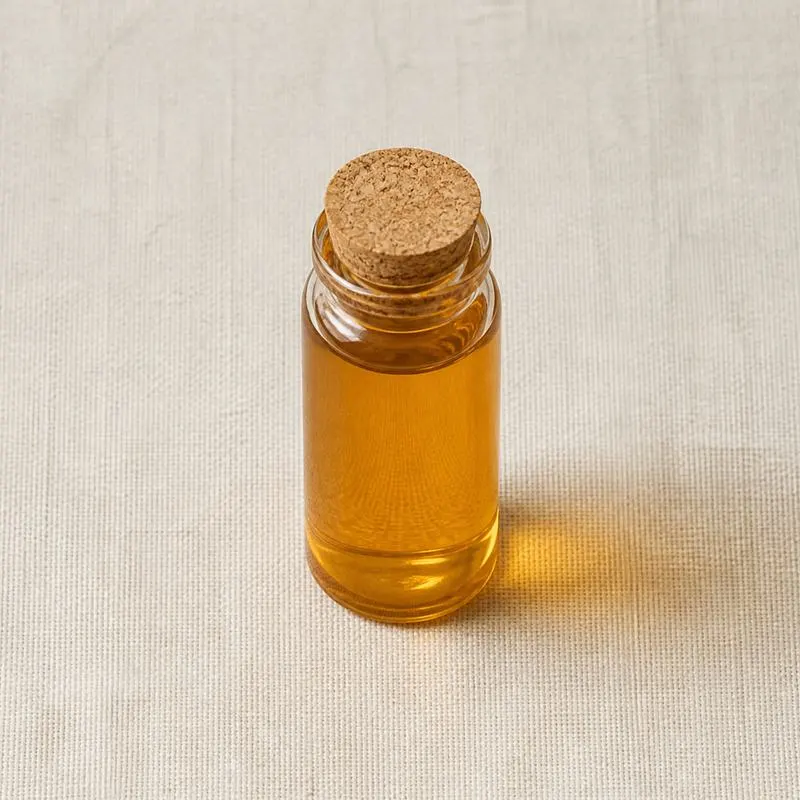
The material is a viscous dark amber to brown liquid or semi solid that separates and partially crystallises on cooling, since anethole congeals below about twenty degrees Celsius, so it is warmed and homogenised before dosing. It is oil soluble and essentially insoluble in water, and is used either neat or diluted in vegetable oil, propylene glycol or an emulsifier system, and as a plated or spray dried powder for dry blending.
We source bulk Star Anise Oleoresin from top China manufacturers for our partners. The manufacturer is in Shaanxi. A smaller requirement can ship in a combined container with other ingredients.
Please send the grade you need, the volume and your destination port, and we will come back with a solution and a price.
or call +86-21-6858 0751
- Function
- Flavours and Aromas
Specifications
| Item | Specification |
|---|---|
| Appearance | Viscous dark amber to brown liquid, crystallisation below 20 C normal |
| Odour and Taste | Characteristic sweet liquorice anise, no burnt, musty or solvent note |
| Identification | Gas chromatography profile conforms to reference standard |
| Volatile Oil | Not less than 40 ml/100 g as declared per grade |
| Trans Anethole | Not less than 30% as declared per grade |
| Moisture | Not more than 1.0% |
| Acid Value | Not more than 5.0 mg KOH/g |
| Residual Solvent | Not more than 25 mg/kg for hexane extracted grades |
| Solubility | Clear solution in vegetable oil and ethanol at stated dilution |
| Heavy Metals | Not more than 10 mg/kg |
| Lead | Not more than 2.0 mg/kg |
| Arsenic | Not more than 1.0 mg/kg |
| Total Plate Count | Not more than 1,000 cfu/g |
| Salmonella | Absent in 25 g |
Common Markets Grades
The principal analytical grade markers are volatile oil content in millilitres per hundred grams and trans anethole content by gas chromatography, and grades are traded at defined levels of each so that a formulator can dose against a fixed target. Extraction method is a separate grade distinction, since a carbon dioxide extract carries no solvent residue and a fresher top note, while a hydrocarbon or ethanol extract is cheaper and gives a heavier, more resinous profile.
Preparation grades follow the target system. Neat oleoresin ships in lined drums for industrial dosing. Oil soluble dilutions in refined vegetable oil are made for fat phases and seasoning oils. Water dispersible grades are emulsified with polysorbate or a gum so that they distribute in brines, sauces and beverages rather than separating as a floating film. Dry soluble grades are plated onto salt, dextrose or silicon dioxide, or emulsified into a carrier slurry and spray dried, for dry seasoning blends. Decolourised grades are offered where the dark colour of the oleoresin would be visible in a pale product.
Applications
- Five spice seasoning blends, replacing ground star anise where a standardised strength is needed
- Meat processing, in brines, marinades and sausage batters that cannot tolerate particulate
- Retorted and canned meats and soups, where ground spice aroma does not survive sterilisation
- Braised meat and master stock production in central kitchens
- Snack seasonings, plated onto a carrier for even distribution at low dosage
- Confectionery and bakery in liquorice and anise directions
- Soft drinks and root beer style beverages, using a water dispersible grade
- Liqueurs and anise flavoured spirits, as an alternative to the distilled oil
- Instant noodle sachets and seasoning oils in Chinese braised flavour directions
- Oral care and pharmaceutical flavouring, where a rounded anise character is wanted
China Manufacturers of Star Anise Oleoresin
Top Star Anise Oleoresin manufacturers in China.
Company names and logos are the property of the manufacturers themselves. They are listed here because our own directory records them as producing this ingredient. A listing is not an endorsement by them, and we do not represent them or speak on their behalf.
Regulatory Status
Star anise oleoresin is a flavouring preparation rather than a food additive and carries no E number. In the United States 21 CFR 182.20 lists spice oleoresins and natural extractives as generally recognised as safe, and the FEMA GRAS programme further supports flavouring use. In the European Union it is a flavouring preparation under the flavourings framework, which governs its use and the conditions under which it may be declared natural.
The main constraint in the European market is the presence of naturally occurring estragole, also called methyl chavicol, and methyleugenol in the extract, both of which are subject to maximum levels in flavourings and in specified foods under that framework, and which in practice cap the dosage of any star anise derived material. Authenticity is the other central control, since Japanese star anise, Illicium anisatum, contains the neurotoxic lactones anisatin and neoanisatin and has caused poisoning where it has been substituted for the culinary species, so species verification of the incoming fruit is a standard release requirement. Extraction solvent residues are separately regulated in both markets, in the European Union under the extraction solvents directive. Aflatoxin and ochratoxin A limits and pesticide residue limits apply to the raw fruit, and Codex covers it through its standards and code of hygienic practice for spices and dried aromatic herbs.
Manufacturing Process
Dried star anise fruit is cleaned through sieves, air classifiers, destoners, magnets and optical sorters to remove stalk, leaf, stone and mouldy material, and is authenticated as Illicium verum before processing, since the toxic Japanese star anise is a recognised adulterant. The cleaned fruit is milled to an extraction grind coarse enough that the packed bed does not blind under solvent flow, a balance that matters more with star anise than with most spices because the high oil content makes the milled material sticky.
The milled spice is charged into a percolation battery and extracted with ethanol, acetone or hexane in counter current fashion, or is loaded into a pressure vessel and extracted with supercritical carbon dioxide, which is then depressurised to drop the extract out and recompressed for reuse. The solvent miscella is filtered and taken to a falling film or wiped film evaporator where the solvent is removed under vacuum at the lowest workable temperature, since anethole is both volatile and heat sensitive, and the recovered solvent is condensed and returned to the process. The residual solvent in the oleoresin is stripped to within the permitted limit. The crude oleoresin is analysed for volatile oil and anethole content, standardised by blending batches or by adding back distilled oil, homogenised, filtered and filled warm under nitrogen into lined containers.