Linalool
Linalool is 3,7-dimethyl-1,6-octadien-3-ol, an acyclic monoterpene tertiary alcohol of formula C10H18O and CAS number 78-70-6. It is one of the most widely distributed aroma compounds in nature, occurring in coriander seed, rosewood, lavender, sweet basil, bergamot and Sichuan and rattan pepper, and it is among the highest volume aroma chemicals produced anywhere. It exists as two enantiomers with distinct odours: the R form, licareol, is woody and lavender like, while the S form, coriandrol, is sweeter and more citrus floral. Commercial synthetic material is racemic.
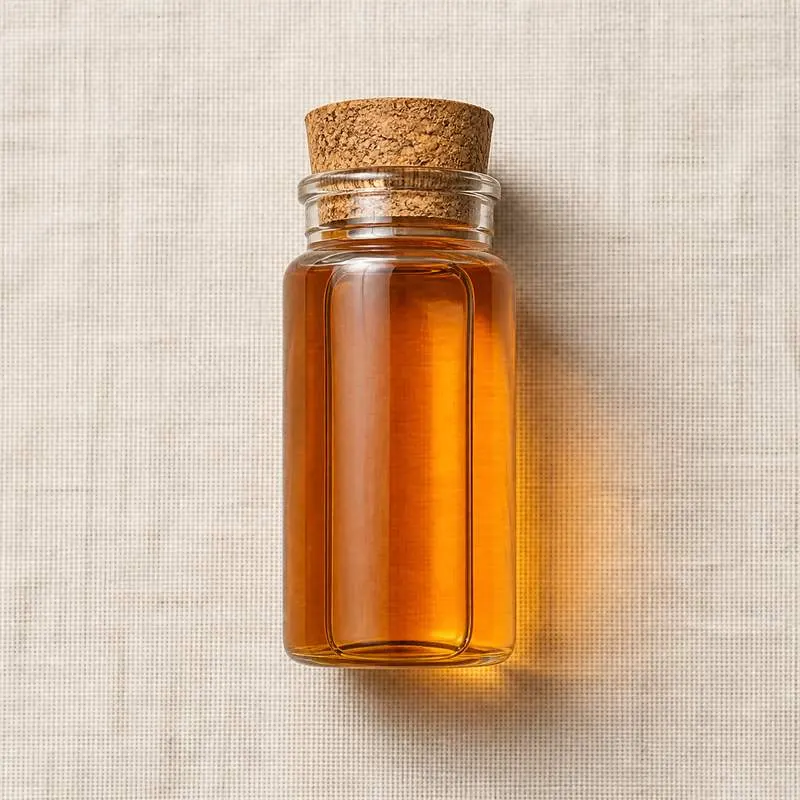
It is a colourless to pale yellow mobile liquid boiling near 198 degrees Celsius, practically insoluble in water and freely soluble in ethanol, propylene glycol and edible oils. The tertiary alcohol group and the two double bonds control its behaviour in formulation: it dehydrates and rearranges under acidic conditions, giving terpineol and other cyclic products that shift the odour, and it oxidises on exposure to air to hydroperoxides that are the recognised skin sensitisers of the material. Antioxidant addition and nitrogen packing under light shielded conditions are therefore standard.
We source bulk Linalool from top China manufacturers for our partners. The manufacturer is in Zhejiang. A smaller requirement can ship in a combined container with other ingredients.
Please send the grade you need, the volume and your destination port, and we will come back with a solution and a price.
or call +86-21-6858 0751
- Function
- Flavours and Aromas
Specifications
| Item | Specification |
|---|---|
| Appearance | Colourless to pale yellow clear mobile liquid |
| Odour | Characteristic floral, woody and citrus |
| Assay by Gas Chromatography | Not less than 97.0 percent |
| Identification | Infrared spectrum conforms to reference |
| Dihydrolinalool | Not more than 1.5 percent |
| Relative Density at 25 degrees Celsius | 0.858 to 0.868 |
| Refractive Index at 20 degrees Celsius | 1.461 to 1.466 |
| Solubility | Soluble in ethanol and edible oils, practically insoluble in water |
| Acid Value | Not more than 1.0 mg KOH per gram |
| Water Content | Not more than 0.2 percent |
| Peroxide Value | Not more than 10.0 meq per kg |
| Residue on Ignition | Not more than 0.05 percent |
| Lead | Not more than 1.0 mg per kg |
| Arsenic | Not more than 1.0 mg per kg |
Common Markets Grades
The main split is between synthetic and natural grades. Synthetic linalool at 96 to 99 percent assay is racemic and accounts for the great majority of supply. Natural grades are either fractionated from an essential oil, most often ho wood or coriander seed oil, or produced by fermentation, and are enantiomerically enriched as well as considerably more expensive; they are bought where a natural flavour declaration or a specific enantiomeric profile is required.
Beyond origin, the practical grade axes are assay and the level of the principal congeners, dihydrolinalool, geraniol, nerol and the terpineols, since these shift the odour and are the usual points of dispute on a certificate of analysis. Food grade material conforms to a Food Chemicals Codex monograph and carries the FEMA GRAS listing; perfumery and technical grades of comparable assay are documented differently and are not interchangeable. Dilutions in propylene glycol or triacetin are stocked for flavour compounding, and stabilised grades containing a permitted antioxidant are offered where long storage is expected.
Applications
- Citrus flavours, where it supplies the floral lift behind the terpene top
- Peach, blueberry and tropical fruit flavours, contributing a soft floral facet
- Herb and spice flavours including coriander, basil and Sichuan pepper reconstitutions
- Tea flavours, both black and green, where linalool is a genuine constituent of the leaf
- Beverages generally, dosed through an emulsion or solvent system
- Confectionery and chewing gum in fruit and floral profiles
- Bakery, where it survives the oven better than the lighter esters
- Fine fragrance, where it is a standard floral material in lavender, muguet and citrus accords
- Functional perfumery for soap, detergent and personal care
- As a chemical intermediate in the synthesis of vitamin E, linalyl acetate, geraniol and citral
Brands Using Linalool
Widely-distributed consumer products that list Linalool on the ingredient label.
- Dr. Bronner'sLavender Pure-Castile Liquid Soap ↗The ingredient list for this lavender scented castile soap declares linalool among the naturally occurring fragrance components, next to limonene and linalyl acetate.Label verified 2026-08-31
- Kiss My FaceGoat Milk Bar Soap, Rose + Magnolia ↗A goat milk bar soap whose ingredient list names linalool along with geraniol, limonene, citronellol and eugenol.Label verified 2026-08-31
- Kiss My FaceDe-Stress Bar Soap, Orange & Grapefruit ↗A scented bar soap that lists linalool with limonene, geraniol and citral at the end of its ingredient statement.Label verified 2026-08-31
- Aromatics InternationalThyme ct Linalool Essential Oil ↗A thyme essential oil sold by its linalool chemotype, named on the label for the linalool that dominates its composition rather than thymol.Label verified 2026-08-31
Brand names, product names and logos are the property of their owners. They appear here as published evidence that the ingredient is used, taken from the brand's own label or website. Their appearance is not an endorsement, and it does not mean the brand buys from us or from any manufacturer listed on this site.
China Manufacturers of Linalool
Top Linalool manufacturers in China.

Company names and logos are the property of the manufacturers themselves. They are listed here because our own directory records them as producing this ingredient. A listing is not an endorsement by them, and we do not represent them or speak on their behalf.
Regulatory Status
In the United States linalool carries FEMA GRAS number 2635 and is recognised as a synthetic flavouring substance permitted for use in food under 21 CFR 172.515. Food grade material conforms to the Food Chemicals Codex monograph. It also occurs naturally in the many essential oils that are themselves generally recognised as safe under 21 CFR 182.20.
In the European Union linalool appears in the Union list of authorised flavouring substances maintained under Regulation (EC) No 1334/2008, which permits it for general flavouring use subject to good manufacturing practice. Separately, linalool is one of the fragrance allergens that must be declared on the ingredient list of cosmetic products under the cosmetic products regulation when present above the specified thresholds, a requirement driven by the sensitising potential of its oxidation products rather than of the fresh material. JECFA has evaluated it within the group of aliphatic acyclic and alicyclic terpenoid tertiary alcohols and published a specification. Codex has adopted general guidelines for the use of flavourings.
Manufacturing Process
The dominant industrial route builds the carbon skeleton from acetone and acetylene. Acetone is ethynylated with acetylene under base catalysis to give methylbutynol, which is partially hydrogenated to methylbutenol; that alcohol undergoes a Saucy Marbet or comparable rearrangement with an enol ether to extend the chain to 6-methyl-5-hepten-2-one, known as methylheptenone. Methylheptenone is then ethynylated a second time with acetylene to give dehydrolinalool, and selective partial hydrogenation of the triple bond over a lead poisoned palladium catalyst delivers linalool while leaving the two double bonds intact. Selectivity at that final hydrogenation is the critical process control, since over hydrogenation gives dihydrolinalool, the principal congener.
An alternative route starts from alpha pinene recovered from turpentine, hydrogenating it to pinane, oxidising that to the hydroperoxide, reducing to pinanol and pyrolysing the pinanol to linalool. Whichever route is used, the crude product is neutralised, washed and purified by fractional distillation under vacuum in a packed column, since the boiling points of linalool and its congeners are close. Natural material is instead obtained by fractional distillation of ho wood or coriander oil, or by fermentation using an engineered yeast on a sugar substrate followed by extraction and distillation. Finished material is polish filtered, dosed with antioxidant where specified, and filled under nitrogen.