Acetylated Distarch Adipate
Acetylated distarch adipate is a dual modified food starch in which the granule has been both cross linked with adipic acid and esterified with acetic acid. The cross linking reaction forms adipate diester bridges between hydroxyl groups on neighbouring starch chains, tying the granule together; the acetylation reaction caps a small proportion of the remaining hydroxyl groups with acetyl groups, holding the chains apart.
The two modifications answer opposite problems and are used together for that reason. Cross linking reinforces the granule so that it resists rupture under heat, shear and acid, which is what native starch fails at in a retort or a high shear pump. Acetylation lowers the gelatinisation temperature and, more importantly, obstructs the re association of starch chains on cooling, which is what causes a native starch paste to cloud, weep and turn short in the refrigerator. The combined product therefore survives severe processing and then stays smooth, clear and stable through chilled and frozen storage.
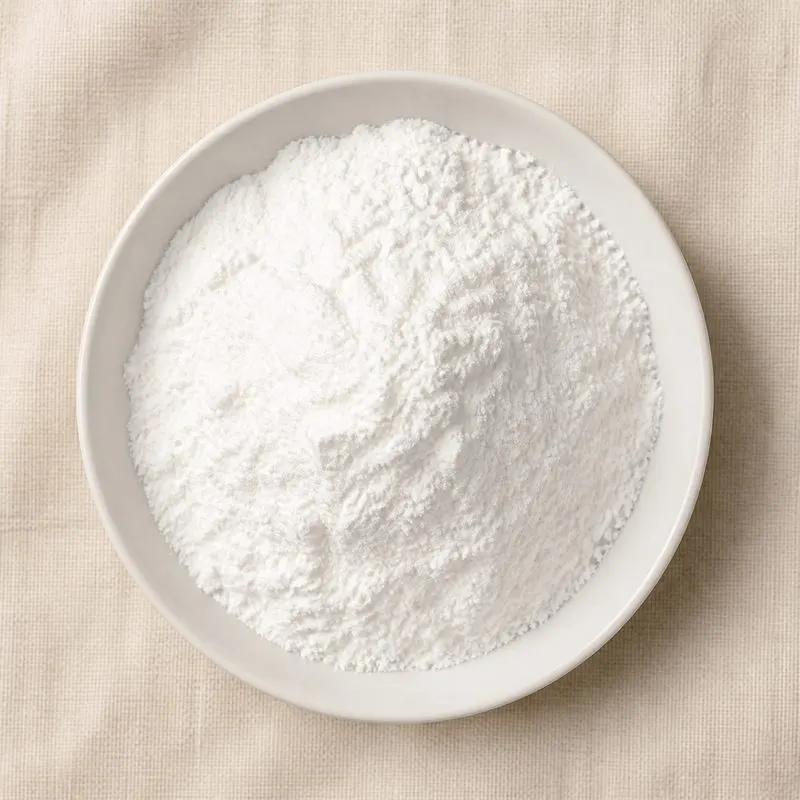
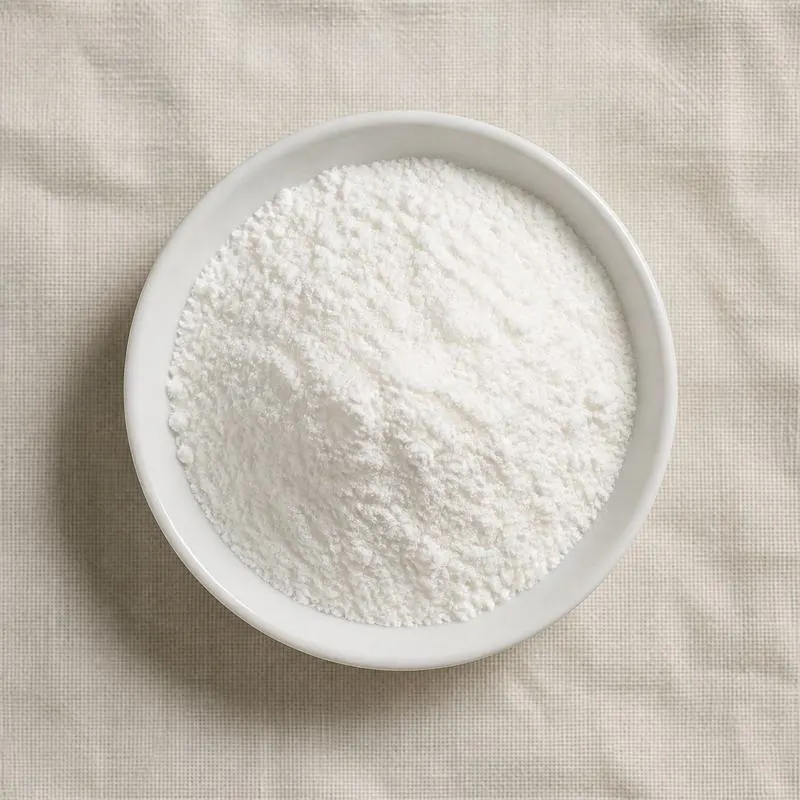
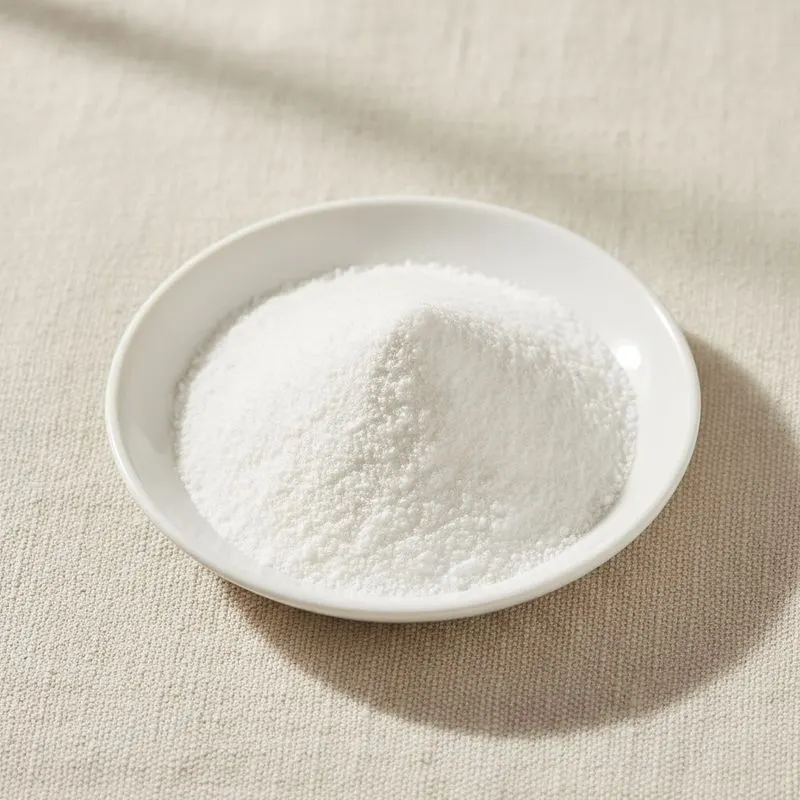
It is a white to off white free flowing powder, insoluble in cold water in the standard form and requiring heat to swell. A pregelatinised version, which swells in cold water, is made by drum drying the cooked paste. Degree of substitution is low in both reactions, so the material remains a starch in composition and is digested as one.
We source bulk Acetylated Distarch Adipate from top China manufacturers for our partners, working with several of them. The manufacturers are in Jiangsu. A smaller requirement can ship in a combined container with other ingredients.
Please send the grade you need, the volume and your destination port, and we will come back with a solution and a price.
or call +86-21-6858 0751
Specifications
| Item | Specification |
|---|---|
| Appearance | White to off white free flowing powder, free of foreign matter |
| Odour and taste | Bland, no off odour |
| Identification | Iodine stain and microscopy conform to starch reference |
| Total starch, dry basis | 97.0 percent minimum |
| Moisture | 14.0 percent maximum |
| Acetyl groups | 2.5 percent maximum |
| Adipate groups | 0.135 percent maximum |
| Residual acetic anhydride | Not detected |
| Ash, dry basis | 0.5 percent maximum |
| pH, 10 percent slurry | 4.5 to 7.0 |
| Sulphur dioxide | 50 mg/kg maximum |
| Lead | 0.5 mg/kg maximum |
| Arsenic | 0.5 mg/kg maximum |
| Total plate count | 10000 cfu/g maximum |
| Yeast and mould | 500 cfu/g maximum |
| E. coli | Absent in 1 g |
| Salmonella | Absent in 25 g |
Common Markets Grades
The main variables in trade are the base starch and the balance of the two modifications. Waxy maize based grades give the clearest, longest textured pastes and the best freeze thaw performance; tapioca based grades give a clean flavour and a smooth short texture favoured in dairy; potato based grades give the highest viscosity; regular maize based grades are the cheapest and give an opaque, firmer set. The cross linking level is set against the severity of the process the starch must survive, from a lightly cross linked grade for a simple pasteurised sauce to a heavily cross linked grade for a retorted, acidic, high shear product.
Physical forms are cook up granular starch, which requires a heat step, and pregelatinised or instant starch, which builds viscosity in cold water and is used in dry mixes and cold prepared products. Agglomerated and lecithinated instant grades are made to improve dispersion and avoid lumping. Grades are specified commercially by peak and final viscosity on a rapid visco analyser curve as much as by chemistry.
Applications
- Retorted soups, sauces and ready meals, where cross linking prevents the viscosity collapse that native starch suffers at sterilisation temperature
- Fruit pie fillings and bakery fillings, holding viscosity through acid, bake and long ambient storage
- Frozen ready meals and sauces, where acetylation prevents retrogradation and the syneresis that follows freeze thaw cycling
- Salad dressings, mayonnaise and acidic sauces, resisting acid hydrolysis at low pH
- Chilled dairy desserts, yoghurts and fromage frais, holding a smooth body over shelf life without weeping
- Canned and pouched pet food, surviving retort and giving gravy body
- Instant noodles and coated snacks, contributing texture and process tolerance
- Meat products and injection brines, binding water through cooking and chilled storage
- Infant food and puree, where a smooth stable body is required through retort and storage
Brands Using Acetylated Distarch Adipate
Widely-distributed consumer products that list Acetylated Distarch Adipate on the ingredient label.
- Four'N TwentyClassic Meat Pie ↗The pie filling ingredient list declares Thickeners (1412, 1422), 1422 being the INS number for acetylated distarch adipate.Label verified 2026-09-01
- Four'N TwentyAngus Beef Cheese and Bacon Pie ↗Acetylated distarch adipate is declared as Thickener (1422) in the beef filling of this pie.Label verified 2026-09-01
- Herbert AdamsWagyu Massaman Curry Pie ↗The curry filling lists Thickener (1422), the INS number for acetylated distarch adipate, alongside capsicum, green beans and onion.Label verified 2026-09-01
- Nanna'sSnack Apricot Pies 4pk ↗The apricot filling declares Thickeners (1422, 401), 1422 being acetylated distarch adipate.Label verified 2026-09-01
- PattiesBites by Patties Mac & Cheese Crumbed Bites ↗The cheese sauce component lists Modified Maize Starch (1422), the INS number for acetylated distarch adipate.Label verified 2026-09-01
Brand names, product names and logos are the property of their owners. They appear here as published evidence that the ingredient is used, taken from the brand's own label or website. Their appearance is not an endorsement, and it does not mean the brand buys from us or from any manufacturer listed on this site.
China Manufacturers of Acetylated Distarch Adipate
Top Acetylated Distarch Adipate manufacturers in China.
- Jiangsu Tianjiang Biotechnology Co., Ltd.6 ingredients in the directory
 NanTong GaoFeng Biotechnology Co., Ltd.10 ingredients in the directory
 Suzhou Gaofeng Biotechnology Co., Ltd.11 ingredients in the directory
Company names and logos are the property of the manufacturers themselves. They are listed here because our own directory records them as producing this ingredient. A listing is not an endorsement by them, and we do not represent them or speak on their behalf.
Regulatory Status
In the United States 21 CFR 172.892 permits acetylated distarch adipate as a food starch modified; the regulation lists the reagents and treatment limits allowed in the manufacture of modified food starch. That regulation caps adipic anhydride at a low level of the starch and limits the acetyl content of the finished starch, and requires that residual reagents be removed. The material is labelled as modified food starch or as food starch modified in the United States rather than by its chemical name.
In the European Union it is authorised as E 1422, acetylated distarch adipate, under the food additives framework, and may be used quantum satis in most food categories, with purity criteria including a limit on acetyl groups and on residual adipate set out in the specifications regulation. JECFA has evaluated the modified starches as a group and maintains a specification monograph for acetylated distarch adipate, and Codex lists it among the permitted additives in the General Standard for Food Additives. It is a chemically modified starch and so must be declared as a food additive in the European Union rather than simply as starch.
Manufacturing Process
Native starch, most often waxy maize, tapioca or potato, is slurried in water at about 35 to 40 percent solids and adjusted to alkaline pH with sodium hydroxide, since both reactions proceed on the alkoxide form of the starch hydroxyl. Sodium sulphate is added to suppress swelling and hold the granule intact through the reaction, which is carried out below the gelatinisation temperature so that the modification occurs in the granular state and the starch can be recovered by filtration afterwards.
The reagent is a mixed anhydride of adipic acid and acetic acid, prepared from adipic acid and acetic anhydride, which delivers both modifications in one addition: the adipic portion forms diester cross links between chains and the acetic portion forms acetyl monoesters. Reagent is metered in over a controlled period while pH is held by continuous caustic addition. When the reaction has run to the target degree of substitution, the slurry is neutralised with dilute hydrochloric or sulphuric acid, and the starch is washed on a countercurrent hydrocyclone or rotary vacuum filter train to strip salts, unreacted reagent and the acetic and adipic acid released on hydrolysis. The washed cake is dewatered and flash dried, then cooled, milled, sieved and packed. Where an instant grade is required, the washed slurry is cooked and dried on a heated drum and the film milled to powder.