Agar Polysaccharide
Agar polysaccharide is the purified galactan fraction isolated from agar, the cell wall extract of red seaweeds of the Gelidium and Gracilaria genera. The name is used in trade for material that has been refined beyond ordinary food grade agar to remove salts, protein, pigment and cell debris, leaving the polysaccharide itself.
Chemically it is a linear chain of alternating 1,3-linked beta-D-galactose and 1,4-linked 3,6-anhydro-alpha-L-galactose units. Two populations exist within it. Agarose is the neutral, regularly repeating fraction that carries almost no sulphate and is responsible for gelation, since its double helices aggregate on cooling into the junction zones that build the network. Agaropectin is the irregular fraction bearing sulphate half-esters, pyruvate ketals and methoxyl groups, which interrupts the helix and contributes viscosity rather than gel strength. The higher the agarose proportion and the lower the sulphate content, the firmer and clearer the gel and the higher the gelling temperature.
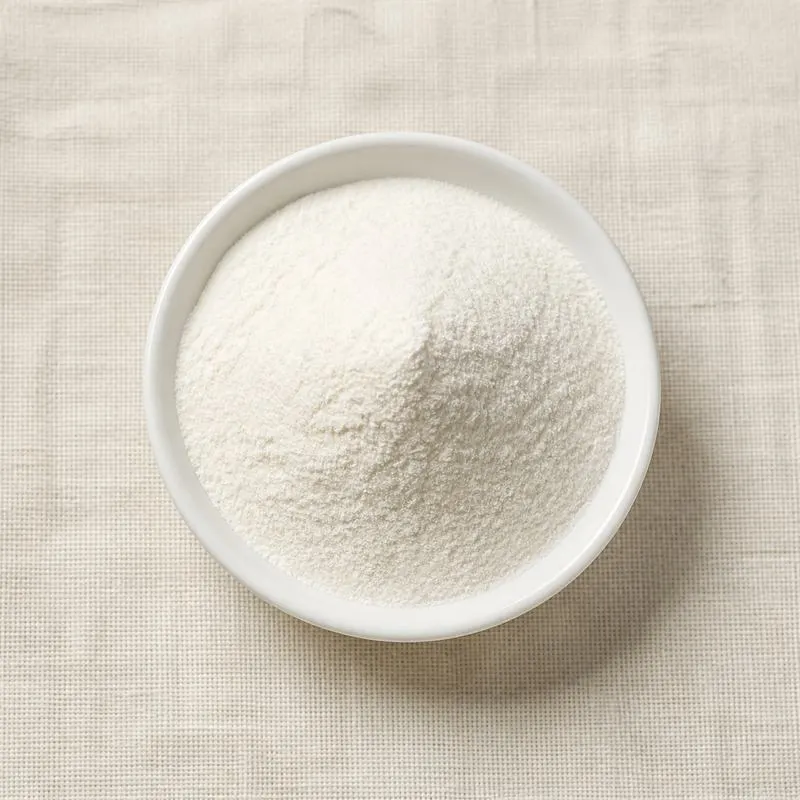
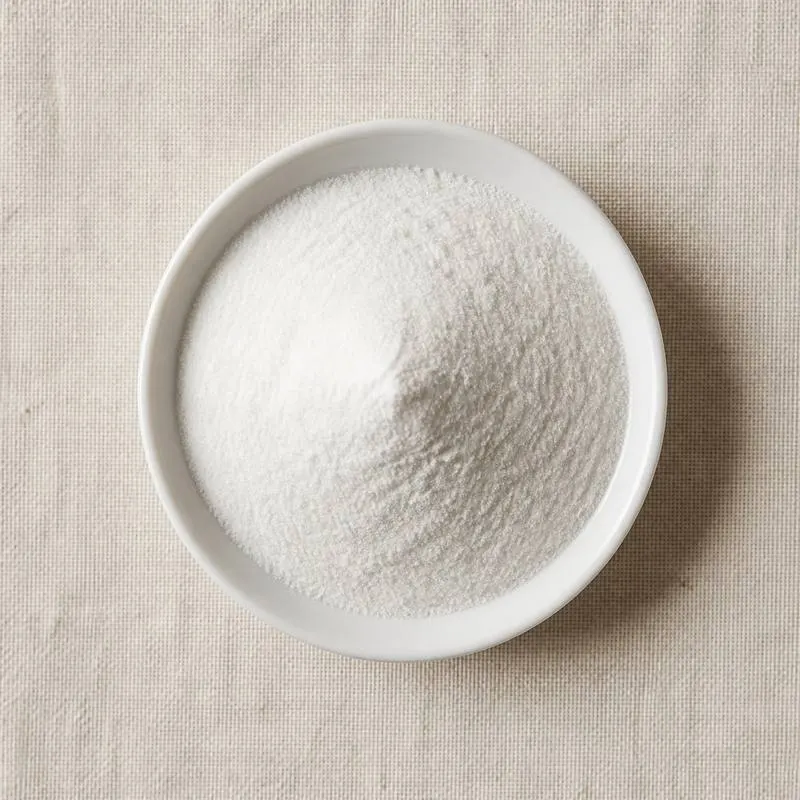
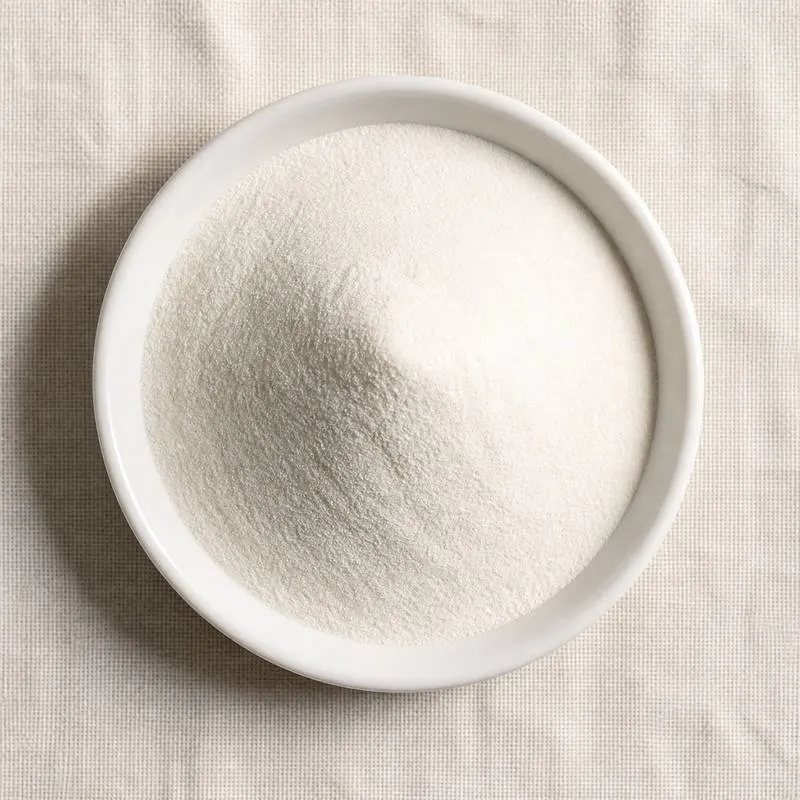
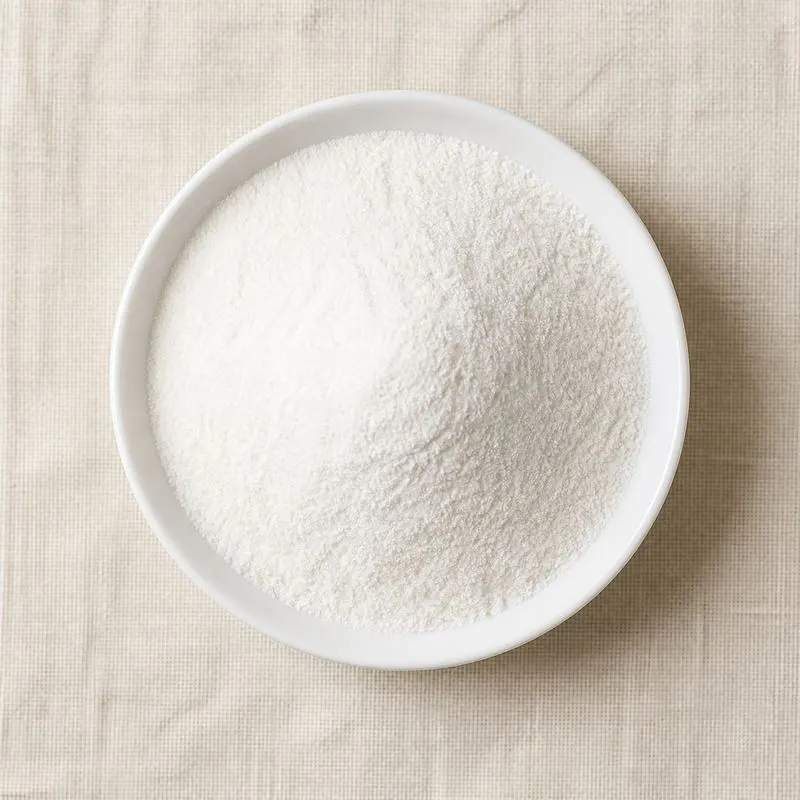
It is a white to off-white powder, insoluble in cold water and dissolving on heating, and it retains the large hysteresis characteristic of agar, setting on cooling well below the temperature at which the gel remelts. Purified fractions are also traded as agarose for laboratory use and as agaro-oligosaccharides for functional applications, and an enquiry should state which is required.
We source bulk Agar Polysaccharide from top China manufacturers for our partners. The manufacturer is in Hubei. A smaller requirement can ship in a combined container with other ingredients.
Please send the grade you need, the volume and your destination port, and we will come back with a solution and a price.
or call +86-21-6858 0751
- Function
- Thickener / Hydrocolloid
Specifications
| Item | Specification |
|---|---|
| Appearance | White to off-white powder, free of foreign matter |
| Odour and Taste | Almost odourless, bland |
| Identification | Positive gel formation, characteristic infrared spectrum |
| Total Polysaccharide, dry basis | Not less than 90.0% |
| Gel Strength, 1.5% gel at 20 degrees Celsius | Not less than 900 g per square centimetre |
| Sulphate, dry basis | Not more than 2.5% |
| Loss on Drying | Not more than 15.0% |
| Total Ash, dry basis | Not more than 5.0% |
| Acid Insoluble Ash | Not more than 0.5% |
| Transmittance, 1% hot solution at 600 nm | Not less than 90% |
| Particle Size | Not less than 95% through 80 mesh |
| Lead | Not more than 2 mg/kg |
| Arsenic | Not more than 3 mg/kg |
| Total Plate Count | Not more than 5,000 CFU/g |
| Yeast and Mould | Not more than 500 CFU/g |
| Salmonella | Absent in 25 g |
Common Markets Grades
Material is ordered by purity and by gel behaviour. Refined food grade agar polysaccharide is specified by gel strength, sulphate content, ash and clarity of the hot solution. Higher purity fractions, sold as agarose, are graded by electroendosmosis, gelling temperature and sulphate, since those control performance in electrophoresis and chromatography. They command prices far above the food grades. Low melting point agarose, produced by hydroxyethylation, is a distinct laboratory product.
At the other end, hydrolysed material sold as agar oligosaccharide or neoagaro-oligosaccharide is not a gelling agent at all but a soluble low molecular weight carbohydrate traded for its functional and cosmetic use, and it should not be confused with the gelling grades. Bacteriological grade sits between food and agarose grades and is specified for clarity, gel strength and microbiological limits appropriate to culture media. Buyers should state the intended use, because gel strength, sulphate limit and price differ by an order of magnitude across the family.
Applications
- Confectionery and dessert gels requiring a firm brittle set that holds shape at ambient temperature
- Bakery glazes and fillings that must survive baking without melting
- Dairy and plant based desserts as a vegetarian setting agent in place of gelatin
- Bacteriological culture media, forming a clear inert solid substrate for microbial growth
- Plant tissue culture media where clarity and low ionic content matter
- Gel electrophoresis and chromatography in the purified agarose form
- Encapsulation and immobilisation of cells and enzymes in a thermally set matrix
- Cosmetic gels and masks, providing structure and a cooling set without animal derived gelatin
- Pharmaceutical suspensions, vegetarian capsule shells and laxative preparations
- Functional food ingredients in the hydrolysed oligosaccharide form, used for their soluble carbohydrate properties
China Manufacturers of Agar Polysaccharide
Top Agar Polysaccharide manufacturers in China.
Company names and logos are the property of the manufacturers themselves. They are listed here because our own directory records them as producing this ingredient. A listing is not an endorsement by them, and we do not represent them or speak on their behalf.
Regulatory Status
For food use the material is regulated as agar. In the United States agar-agar is affirmed as generally recognised as safe under 21 CFR 184.1115, subject to the conditions of use stated there and to good manufacturing practice.
In the European Union it falls under E406 agar in the food additives regulation, and any material sold for food must meet the identity and purity criteria for E406, which cover loss on drying, ash, acid insoluble ash, water absorption, the absence of starch and gelatin, and heavy metals. It is generally permitted at quantum satis where agar is allowed and is declared as agar or E406 on the finished label. Codex and JECFA recognise agar as INS 406 with published specifications. Agarose and other laboratory grades are not food additives and are sold against laboratory reagent specifications instead. Hydrolysed agar oligosaccharides sold as functional ingredients do not sit under the E406 authorisation, and their regulatory status has to be established for the market of sale, which in the European Union may bring in the novel food regulation depending on the history of consumption.
Manufacturing Process
The route begins as for agar. Washed red seaweed is alkali treated in hot sodium hydroxide, which converts L-galactose 6-sulphate residues into 3,6-anhydrogalactose and raises the proportion of gelling structure in the extract. The weed is neutralised, washed, and extracted with hot water at atmospheric pressure or in a digester, and the extract is filtered hot with a filter aid to remove cell debris.
Purification is what separates this product from ordinary agar. The filtered extract is gelled and dewatered by freeze and thaw or by hydraulic pressing, and the liquor expelled carries salts, pigment and low molecular weight solubles away with it. The washed gel is then given additional treatment to lower sulphate and ash further, which may include repeated washing, ion exchange, bleaching with hydrogen peroxide or activated carbon treatment, and in high purity routes precipitation of the polysaccharide with a water miscible solvent such as ethanol or isopropanol. Where agarose is being separated, the neutral fraction is fractionated from the charged agaropectin, historically by precipitation with a quaternary ammonium salt or by chromatography. The purified material is washed free of solvent and salt, dried in hot air or by lyophilisation for the highest grades, milled and sieved. Oligosaccharide grades take a further enzymatic or acid hydrolysis step followed by desalting and drying.