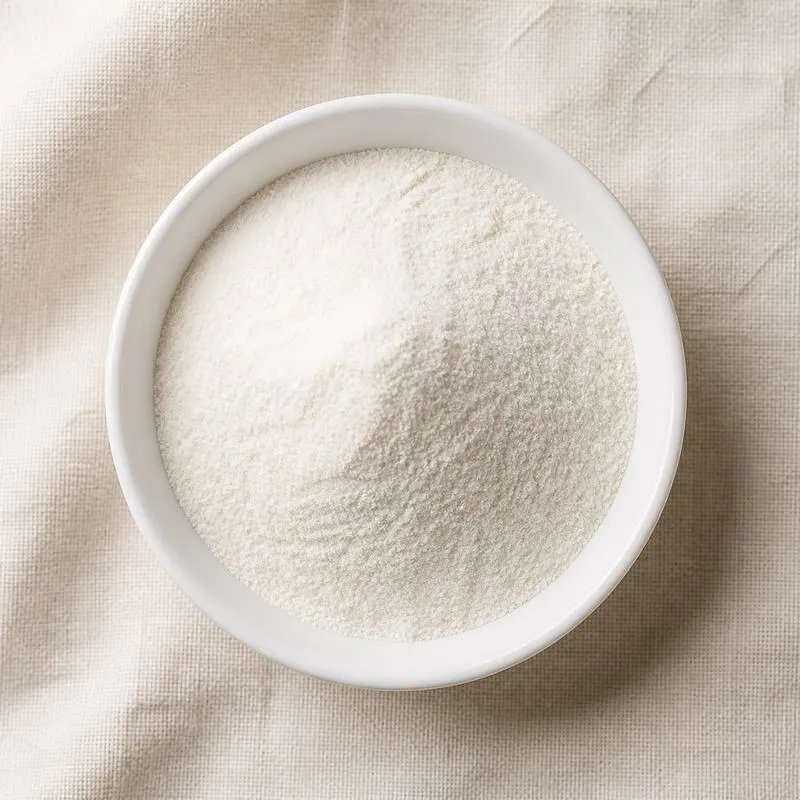
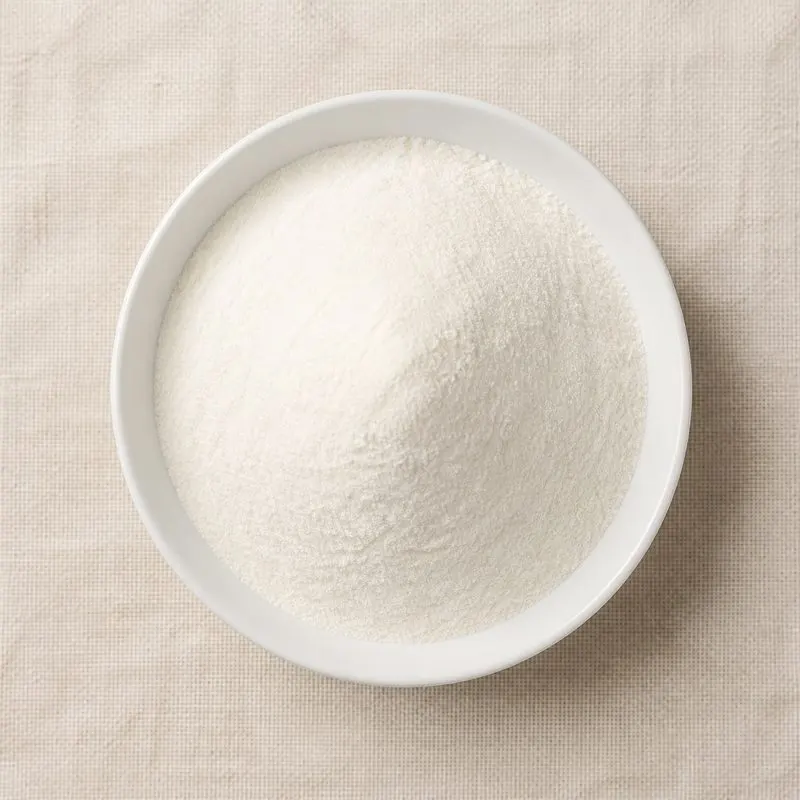
Xanthan Gum
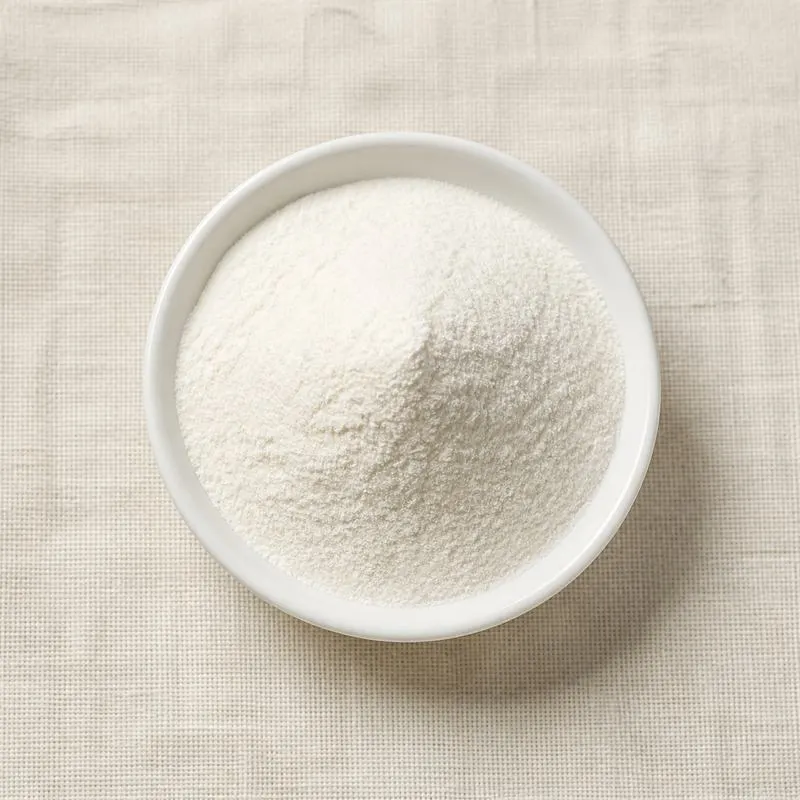
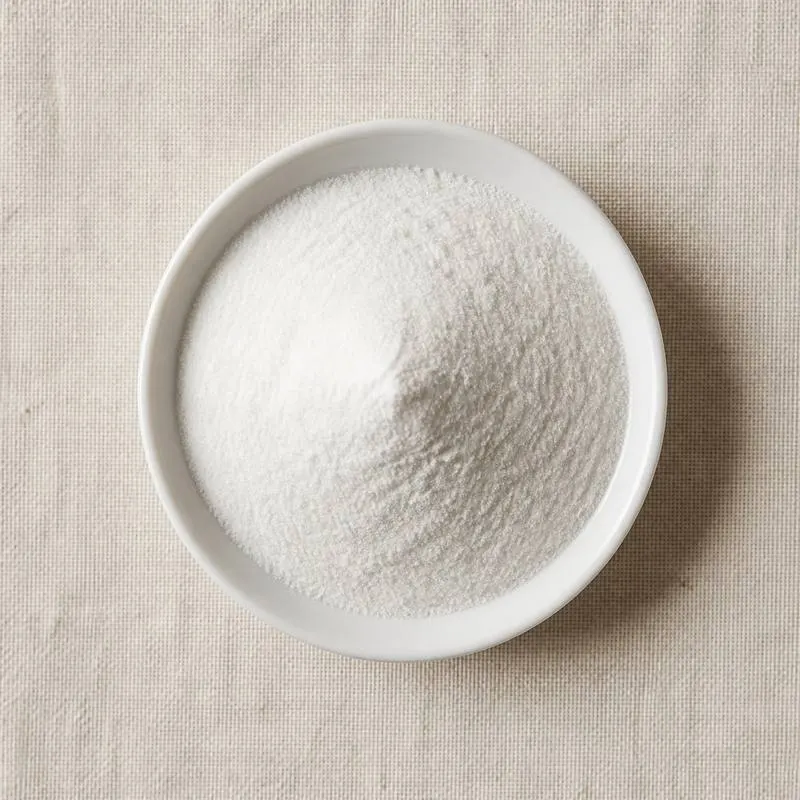
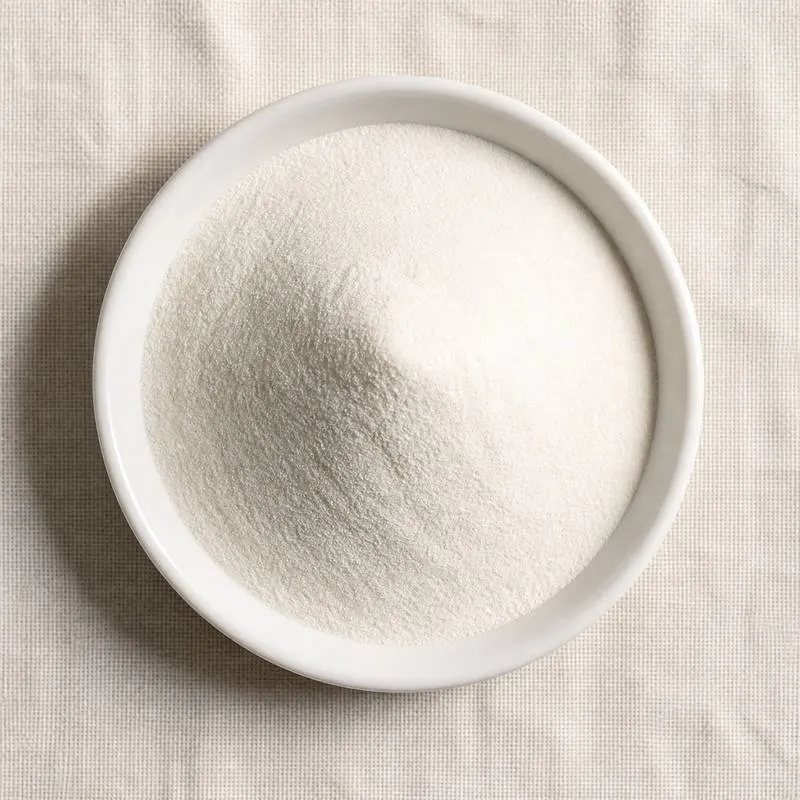
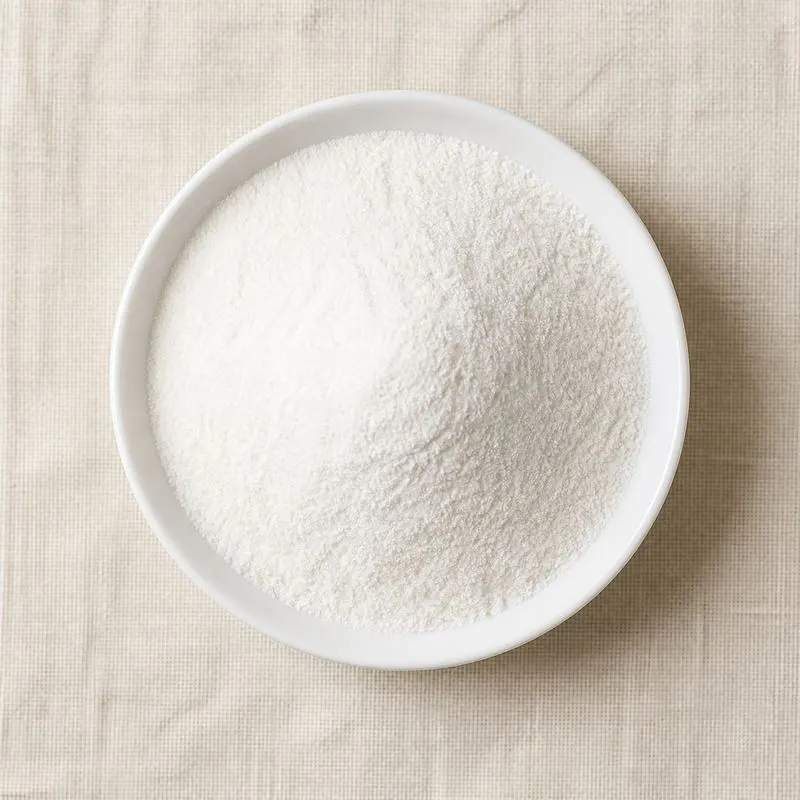
Xanthan Gum is a high-molecular-weight extracellular polysaccharide produced by aerobic fermentation of the bacterium Xanthomonas campestris. It hydrates rapidly in cold or hot water and gives suspensions an unusually strong shear-thinning behaviour.
The chain is a cellulose-like β-1,4-D-glucose backbone carrying trisaccharide side groups built from mannose and glucuronic acid, with pyruvate and acetate substitutions. This rigid double-helical structure is what gives the gum its low-shear viscosity and weak-gel mouthfeel.
We source bulk Xanthan Gum from top China manufacturers for our partners, working with several of them. The manufacturers are mostly in Inner Mongolia, Hebei and Shandong. For this ingredient the minimum order is 1,000 kg and a 20-foot container takes 18 MT, and a smaller requirement can ship in a combined container with other ingredients.
Please send the grade you need, the volume and your destination port, and we will come back with a solution and a price.
or call +86-21-6858 0751
- Minimum order
- 1,000 kg
- Qty in 20' FCL
- 18 MT
- Packaging
- 25 kg kraft paper bag with PE inner liner
- ISO 9001
- HACCP
- Halal
- Kosher
Specifications
| Item | Specification |
|---|---|
| Appearance | White to light yellow powder |
| Purity/Assay | ≥ 90% (Food Grade) |
| Viscosity | 1000-2000 mPa.s (1% solution) |
| Moisture/Loss on Drying | ≤ 15% (Food Grade) |
| pH | 6.0-8.0 (1% solution) |
| Particle Size/Mesh | ≥ 80 mesh |
| Ash | ≤ 5% (Food Grade) |
| Heavy Metals | ≤ 10 mg/kg (Food Grade) |
| Lead | ≤ 2 mg/kg (Food Grade) |
| Arsenic | ≤ 1 mg/kg (Food Grade) |
| Total Plate Count | ≤ 1000 cfu/g (Food Grade) |
| Yeast & Mold | ≤ 100 cfu/g (Food Grade) |
Common Markets Grades
Xanthan Gum is graded primarily by mesh size, pyruvate content, and end-use compliance.
80-mesh material is the standard grade for sauces, dressings, and bakery dough conditioning, where slower hydration is acceptable. 200-mesh and 200-mesh-fine grades are used in dry beverage mixes, instant soups, and gluten-free baking premixes that need rapid dispersion.
Transparent (clarified) grades are produced for clear beverages, ready-to-drink teas, and personal-care gels. Higher-pyruvate grades give stronger synergy with locust bean gum and are produced for elastic dessert gels.
Oilfield-grade xanthan is produced separately for drilling muds and enhanced oil recovery, with looser microbial and clarity specifications.
Applications
- Salad dressings, vinaigrettes, and barbecue sauces for emulsion stability and cling
- Gluten-free bread, cake, and pastry mixes as a structural binder replacing wheat gluten
- Dairy beverages, plant milks, and protein drinks to suspend cocoa, calcium, and pulp particles
- Instant soups, gravies, and dry sauce sachets for cold or hot reconstitution
- Ice cream, sorbet, and frozen-dessert mixes for ice-crystal control and creamier texture
- Toothpaste, mouthwash, and oral-care gels for binding and shear-thinning flow
- Shampoos, body washes, and conditioner systems as a viscosifier and pearliser carrier
- Pharmaceutical suspensions and pediatric syrups for active-ingredient suspension
- Oil and gas drilling fluids for cuttings transport and filtration control
- Pet food gravies and wet-pet-food coatings for cling and visual gloss
Brands Using Xanthan Gum
Widely-distributed consumer products that list Xanthan Gum on the ingredient label.
- Bob's Red MillXanthan Gum ↗Listed: 'Xanthan Gum.' (single-ingredient product)Label verified 2026-05-24
- Bob's Red MillGluten Free 1-to-1 Baking Flour ↗Listed: 'Sweet White Rice Flour, Whole Grain Brown Rice Flour, Potato Starch, Whole Grain Sorghum Flour, Tapioca Flour, Xanthan Gum.'Label verified 2026-05-24
- Premier ProteinVanilla Milkshake Protein Powder ↗Listed: 'WHEY PROTEIN ISOLATE, WHEY PROTEIN CONCENTRATE, CONTAINS 2% OR LESS OF SOLUBLE CORN FIBER, SUNFLOWER LECITHIN, NATURAL AND ARTIFICIAL FLAVORS, ACESULFAME POTASSIUM, SUCRALOSE, XANTHAN GUM, SALT.'Label verified 2026-05-24
- CeraVeHydrating Hyaluronic Acid Serum ↗Listed: '...PHENOXYETHANOL, DISODIUM EDTA, ISOPROPYL MYRISTATE, CAPRYLYL GLYCOL, CITRIC ACID, XANTHAN GUM, PHYTOSPHINGOSINE, ETHYLHEXYLGLYCERIN'Label verified 2026-05-24
- ColgateTotal Gum Protect Toothpaste ↗Listed: '...Sodium Methyl Cocoyl Taurate, Flavor, Tetrasodium Pyrophosphate, Cellulose Gum, Potassium Nitrate, Sodium Saccharin, Xanthan Gum, Cocamidopropyl Betaine, Titanium Dioxide.'Label verified 2026-05-24
- Field RoastClassic Pizzeria Pepperoni ↗Listed: '...LOCUST BEAN GUM, XANTHAN GUM, PAPRIKA (COLOR)...'Label verified 2026-05-24
Brand names, product names and logos are the property of their owners. They appear here as published evidence that the ingredient is used, taken from the brand's own label or website. Their appearance is not an endorsement, and it does not mean the brand buys from us or from any manufacturer listed on this site.
China Manufacturers of Xanthan Gum
Top Xanthan Gum manufacturers in China.
 Deosen Biochemical (Ordos) Co., Ltd.7 ingredients in the directory
 Fufeng Marketing Co., Ltd.4 ingredients in the directory
- GBH Bioscience (Yunnan) Co., Ltd.2 ingredients in the directory
- Hebei Fengchuan Biotechnology Co., Ltd.4 ingredients in the directory
- Hebei Xinhe Biochemical Co., Ltd.6 ingredients in the directory
 Jianlong Biotechnology Co., Ltd.2 ingredients in the directory
 Kevin Food Co., Ltd.7 ingredients in the directory
- Northwest Biological (Ningxia) Technology Co., Ltd.4 ingredients in the directory
 Zhejiang Top Hydrocolloids Co., Ltd.10 ingredients in the directory
Company names and logos are the property of the manufacturers themselves. They are listed here because our own directory records them as producing this ingredient. A listing is not an endorsement by them, and we do not represent them or speak on their behalf.
How We Help Source Xanthan Gum
Direct Factory Sourcing
We run the whole process: selecting the manufacturer from the top Chinese food ingredient producers, negotiating the price, verifying quality, and coordinating the logistics. You deal with us instead of with several factories at once.
Original Packaging and Documents from the Manufacturer
The manufacturer sends your Xanthan Gum out of its own factory in the original packing, through to your destination port. The COA, COO, MSDS, TDS and any certifications reach you from the manufacturer as well.
Free Samples and Lead Time
We send 100 to 500 g free for your own laboratory to test and you cover only the courier, usually within 2 to 3 working days. ETD is usually within 7 to 15 days once the order is confirmed, and we check that date against the factory's own manufacturing schedule before we give it to you.
Combined Shipment
We can load Xanthan Gum together with other ingredients such as Carrageenan, Sodium Carboxymethyl Cellulose and Agar Agar into one 20' FCL. If your quantity is small, we can also ship LCL.
Regulatory Status
Xanthan Gum is approved as a food additive in all major markets and is one of the most widely cleared hydrocolloids in modern food law.
In the European Union Regulation (EC) No 1333/2008 lists it as E415, a permitted thickener and stabiliser. The U.S. Food and Drug Administration affirms it as GRAS under 21 CFR 172.695 for general food use.
JECFA has reviewed xanthan multiple times and considers the daily intake not to be of toxicological concern at typical use levels. The Joint FAO/WHO specification covers identity, purity, and residual isopropanol limits.
Halal and Kosher certificates are routinely available, and most major suppliers offer non-GMO and organic-compliant grades.
Manufacturing Process
Xanthan gum is made by submerged aerobic fermentation. A glucose- or sucrose-rich medium is inoculated with a selected strain of Xanthomonas campestris and held at around 28 to 32 °C with vigorous stirring and aeration for two to four days.
As biomass grows, the cells secrete xanthan into the broth. Viscosity climbs steadily and limits oxygen transfer, which is why fermenter geometry and impeller design are central to yield.
The broth is pasteurised to kill the producing organism, then the gum is precipitated by adding 2-3 volumes of isopropyl alcohol or ethanol. The fibrous precipitate is pressed, milled, dried, and screened to the target mesh.
Recovery solvent is distilled and recycled. Clarified grades involve an additional filtration of the heated broth before precipitation to remove cell debris.