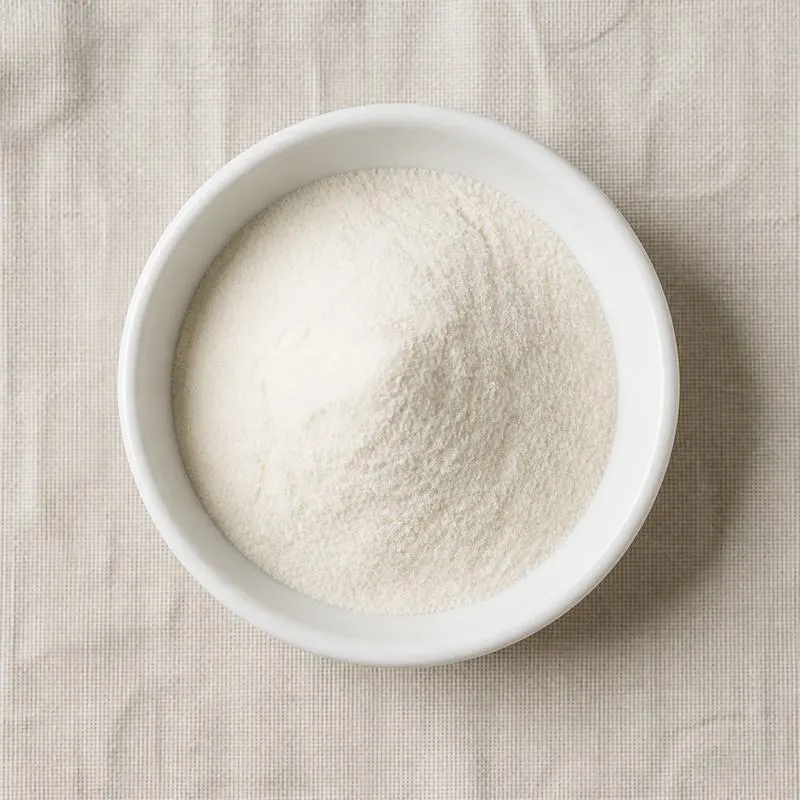
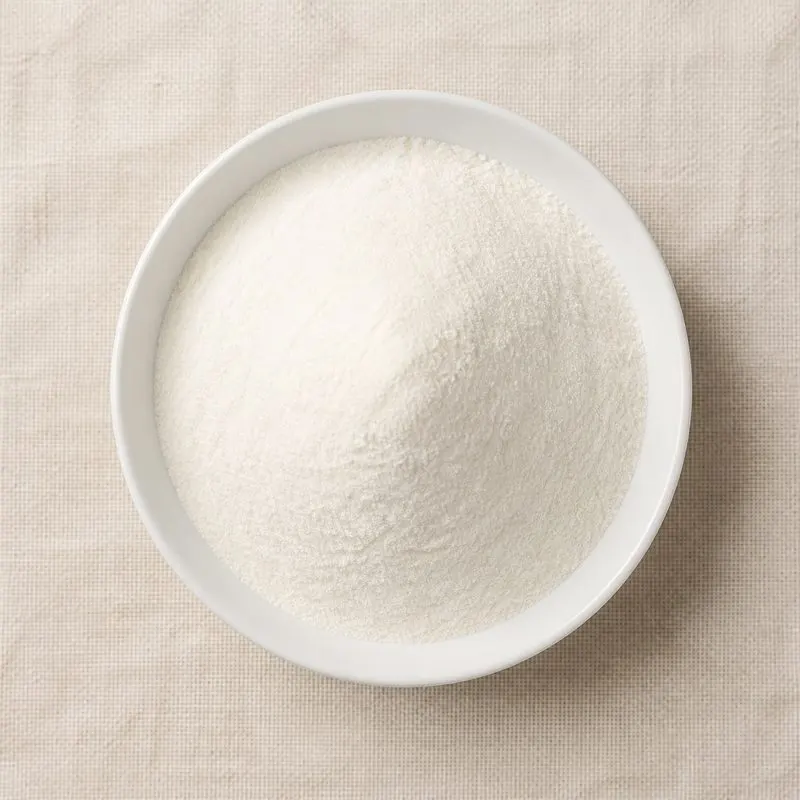
Gellan Gum
Gellan Gum is a linear anionic polysaccharide secreted by the bacterium Sphingomonas elodea during aerobic fermentation. It forms thermoreversible gels at concentrations as low as 0.05 percent, which makes it the most cost-efficient gelling agent on the hydrocolloid shelf.
The repeating tetrasaccharide unit is glucose, glucuronic acid, glucose, rhamnose. The native form carries L-glyceryl and acetyl groups; commercial low-acyl gellan has these stripped to produce firm, brittle gels.
We source bulk Gellan Gum from top China manufacturers for our partners, working with several of them. The manufacturers are mostly in Hebei, Henan and Zhejiang. For this ingredient the minimum order is 500 kg and a 20-foot container takes 10 MT, and a smaller requirement can ship in a combined container with other ingredients.
Please send the grade you need, the volume and your destination port, and we will come back with a solution and a price.
or call +86-21-6858 0751
- Minimum order
- 500 kg
- Qty in 20' FCL
- 10 MT
- Packaging
- 25 kg kraft paper bag with PE inner liner
- ISO 9001
- HACCP
- Halal
- Kosher
Specifications
| Item | Specification |
|---|---|
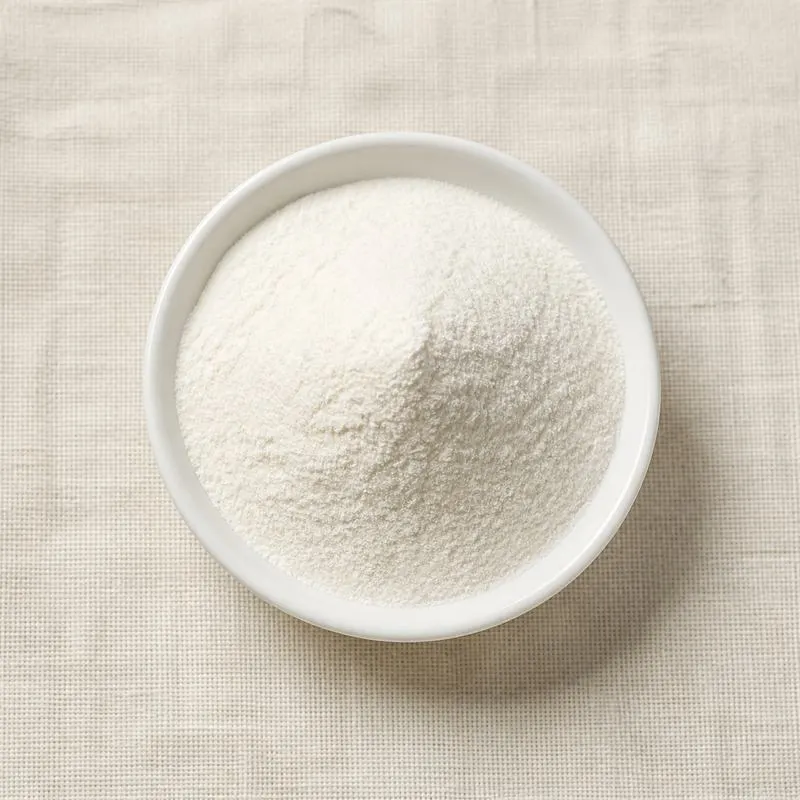
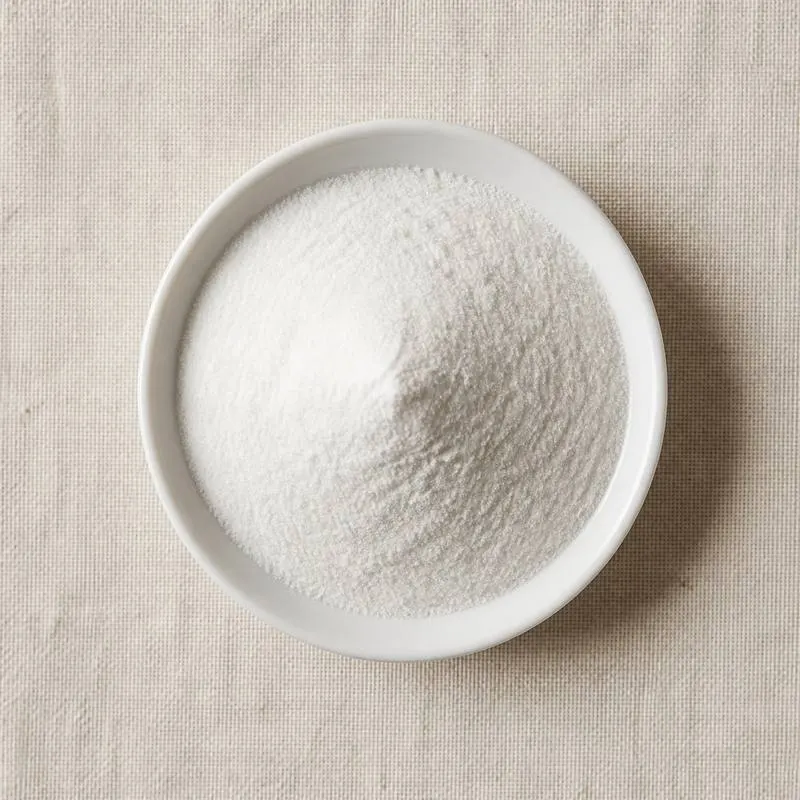
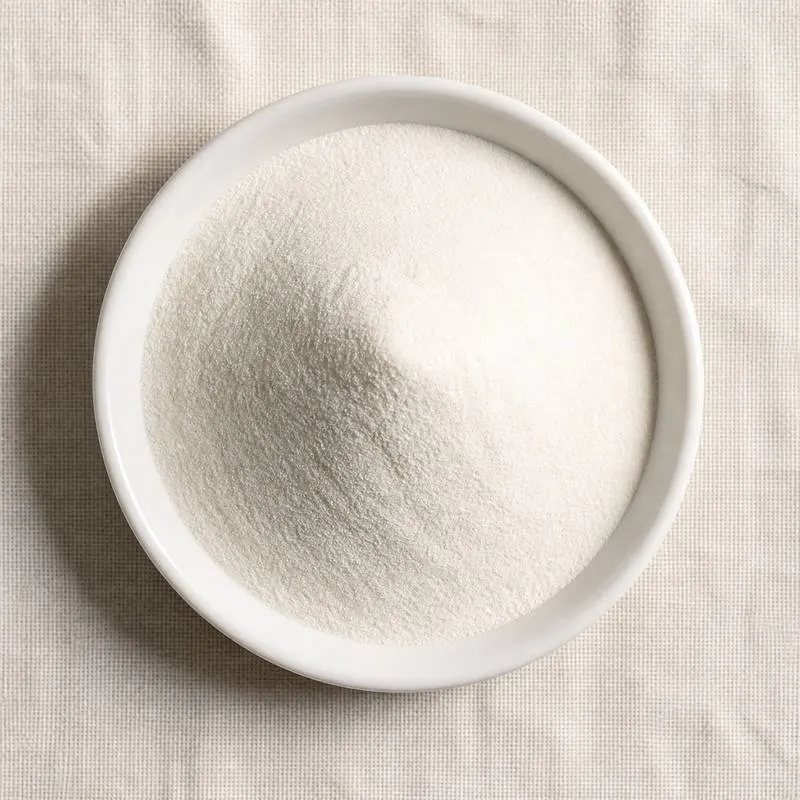
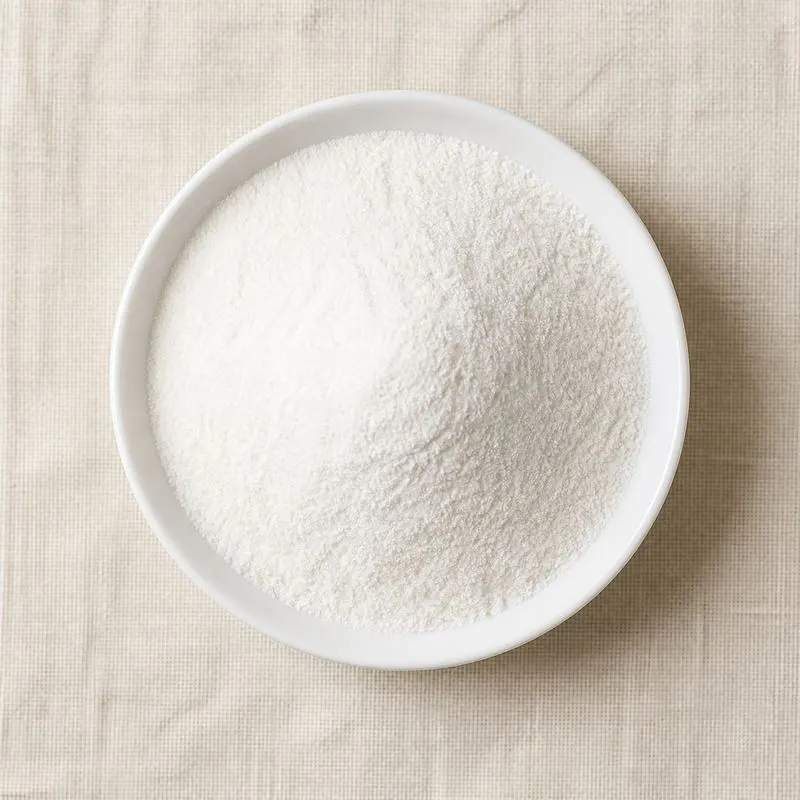
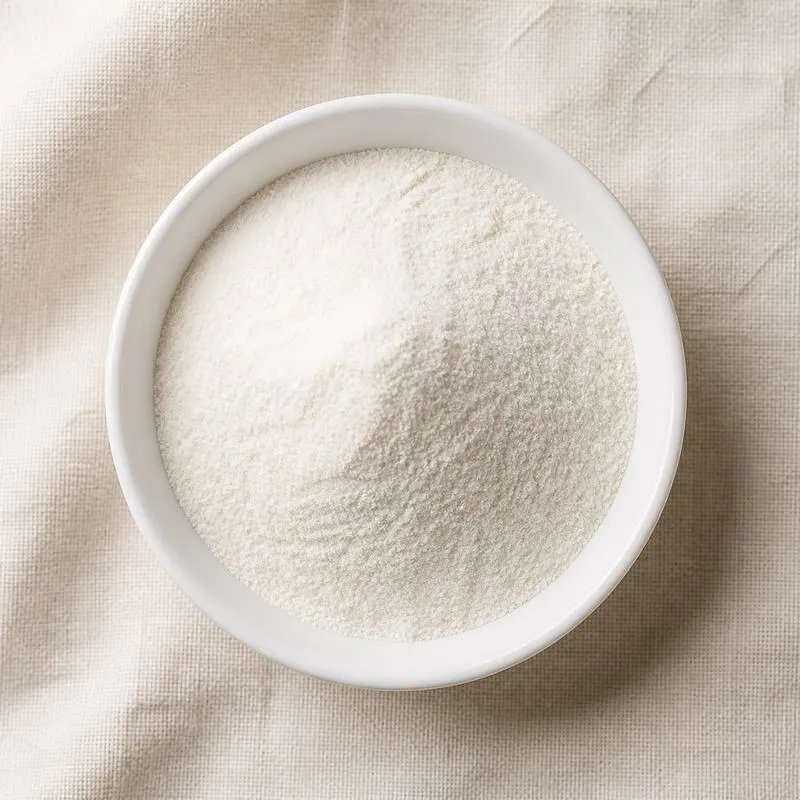
| Appearance | Off-white to slightly yellow free-flowing powder |
| Gel strength (0.5% with calcium) | 500 to 1100 g/cm² (low-acyl) |
| Loss on drying | ≤ 15.0% |
| Ash | ≤ 15.0% |
| Nitrogen content | ≤ 3.0% |
| Heavy metals (as Pb) | ≤ 5 mg/kg |
| Arsenic | ≤ 3 mg/kg |
| Particle size | ≥ 95% through 60 mesh |
| Total plate count | ≤ 5000 cfu/g |
Common Markets Grades
Gellan Gum has two principal chemical forms.
Low-acyl gellan (LA) gives hard, transparent, brittle gels and is used in suspension beverages, dessert jellies, and pet-food jellies. It is the volume leader.
High-acyl gellan (HA) gives soft, elastic, opaque gels reminiscent of agar. It is used in plant-milk stabilisation, fruit fillings, and confectionery centres where a more cohesive texture is required.
Mixed-acyl blends of the two forms give intermediate textures and are commonly used in ready-to-eat desserts. Clarified grades are produced for clear sports drinks and protein waters.
Applications
- Plant milks and dairy alternatives for calcium and protein suspension
- Sports drinks and protein waters needing a clean fluid gel
- Ready-to-eat dessert cups: panna cotta, jellies, and flans
- Confectionery centres, soft jellies, and gummy hybrids
- Bakery glazes and fruit fillings with bake-stable texture
- Pet-food gravies and chunked formats for jelly set
- Pharmaceutical sustained-release matrices and ophthalmic gels
- Microbiological agar replacement in plant tissue culture media
- Air-freshener gels and other industrial gelled formats
- Cosmetic gels and serums with a non-tacky skin feel
Brands Using Gellan Gum
Widely-distributed consumer products that list Gellan Gum on the ingredient label.
- SilkOriginal Almondmilk ↗Listed: 'Almondmilk (Water, Almonds), Cane Sugar, Contains 2% or Less of: Vitamin and Mineral Blend, Sea Salt, Gellan Gum, Ascorbic Acid, Natural Flavor.'Label verified 2026-05-24
- Califia FarmsUnsweetened Almondmilk ↗Listed: 'Almondmilk (Water, Almonds), Calcium Carbonate, Sunflower Lecithin, Sea Salt, Natural Flavor, Guar Gum, Gellan Gum, Vitamin A Palmitate, Vitamin D2, Potassium Citrate.'Label verified 2026-05-24
- Premier ProteinVanilla Almondmilk Non-Dairy Protein Shake ↗Listed: contains guar gum and gellan gum among soy protein isolate, sugar, sunflower lecithin and stabilizers.Label verified 2026-05-24
- Ripple FoodsOriginal Plant-Based Milk ↗Listed: contains gellan gum alongside gum arabic and guar gum in the stabilizer system.Label verified 2026-05-24
Brand names, product names and logos are the property of their owners. They appear here as published evidence that the ingredient is used, taken from the brand's own label or website. Their appearance is not an endorsement, and it does not mean the brand buys from us or from any manufacturer listed on this site.
China Manufacturers of Gellan Gum
Top Gellan Gum manufacturers in China.
 Deosen Biochemical (Ordos) Co., Ltd.7 ingredients in the directory
- GBH Bioscience (Yunnan) Co., Ltd.2 ingredients in the directory
- Hebei Fengchuan Biotechnology Co., Ltd.4 ingredients in the directory
- Hebei Xinhe Biochemical Co., Ltd.6 ingredients in the directory
 Henan Tianmimi Sugar Industry Co., Ltd.1 ingredient in the directory
- Northwest Biological (Ningxia) Technology Co., Ltd.4 ingredients in the directory
 Zhejiang Tech-Way Biotechnology Co., Ltd.1 ingredient in the directory
 Zhejiang Top Hydrocolloids Co., Ltd.10 ingredients in the directory
 Zhengzhou Opal Biotech.limited.2 ingredients in the directory
Company names and logos are the property of the manufacturers themselves. They are listed here because our own directory records them as producing this ingredient. A listing is not an endorsement by them, and we do not represent them or speak on their behalf.
How We Help Source Gellan Gum
Direct Factory Sourcing
We run the whole process: selecting the manufacturer from the top Chinese food ingredient producers, negotiating the price, verifying quality, and coordinating the logistics. You deal with us instead of with several factories at once.
Original Packaging and Documents from the Manufacturer
The manufacturer sends your Gellan Gum out of its own factory in the original packing, through to your destination port. The COA, COO, MSDS, TDS and any certifications reach you from the manufacturer as well.
Free Samples and Lead Time
We send 100 to 500 g free for your own laboratory to test and you cover only the courier, usually within 2 to 3 working days. ETD is usually within 7 to 15 days once the order is confirmed, and we check that date against the factory's own manufacturing schedule before we give it to you.
Combined Shipment
We can load Gellan Gum together with other ingredients such as Carrageenan, Sodium Carboxymethyl Cellulose and Agar Agar into one 20' FCL. If your quantity is small, we can also ship LCL.
Regulatory Status
In the European Union Regulation (EC) No 1333/2008 approves Gellan Gum as a food additive under the number E418.
The U.S. FDA affirmed gellan as GRAS in 1992 for use as a stabiliser and thickener at 21 CFR 172.665. JECFA has cleared the additive within standard purity specifications covering residual solvent and protein.
The additive is also recognised in Japan, China, Australia, New Zealand, and most of South America. Halal, Kosher, and non-GMO declarations are routinely available.
Manufacturing Process
Gellan is produced by submerged aerobic fermentation of Sphingomonas elodea on a glucose-based medium with controlled nitrogen and phosphate.
After fermentation, the broth is pasteurised. For low-acyl gellan, hot alkali treatment removes the glyceryl and acetyl groups. The deacylated polymer is then recovered with alcohol precipitation, dewatered, dried, and milled.
For high-acyl gellan, the alkali deacylation step is skipped, preserving the native substituents. Both routes finish with milling to a target particle size and blending to a controlled viscosity grade.
Clarified grades involve an additional hot filtration step to remove cell debris before precipitation.