Breadcrumbs
Breadcrumbs are dried, milled bread used as a coating, binder and texturiser. Industrially they are made either from bread baked specifically for the purpose or from the trimmings and crusts of commercial baking, dried to a low moisture and ground to a defined particle size distribution.
Their function in a coated product is structural. The porous starch and gluten matrix absorbs batter and frying oil, sets into a rigid crust as the starch gelatinises and dehydrates, and gives the crisp shell and the audible bite that define a breaded product. In meatballs, patties and stuffings the same porosity absorbs moisture and fat released during cooking, binding the mass and reducing cook loss. Colour development in the fryer comes from Maillard browning of the residual sugars and protein, so the reducing sugar level of the crumb decides how quickly it colours.
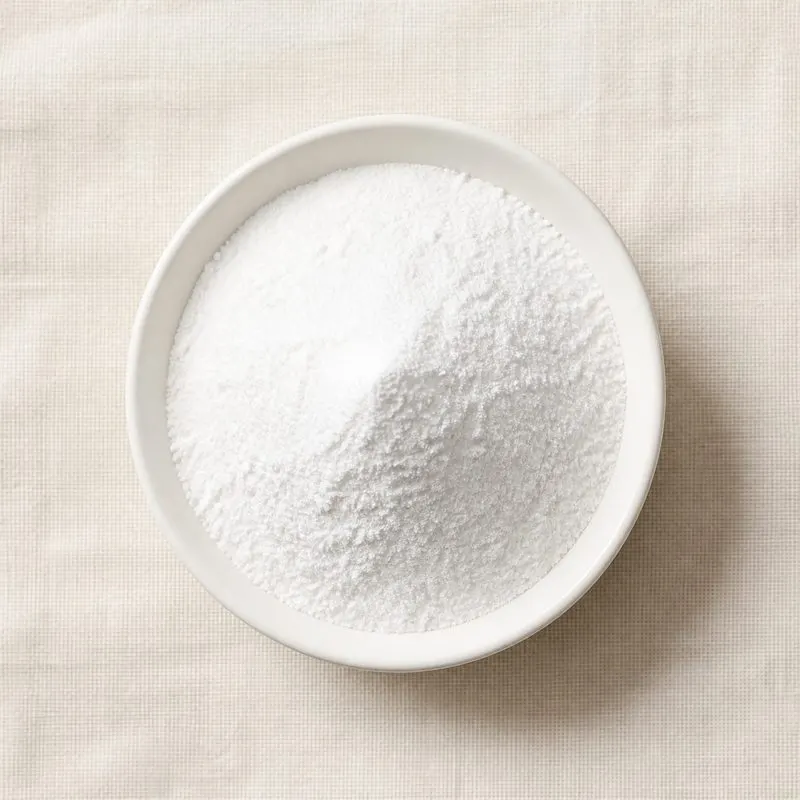
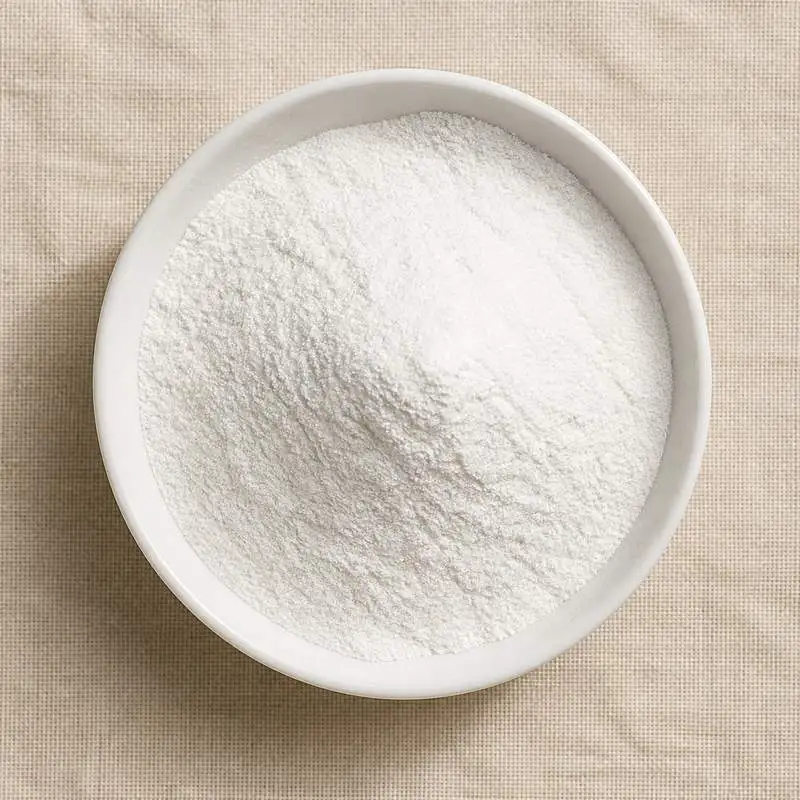
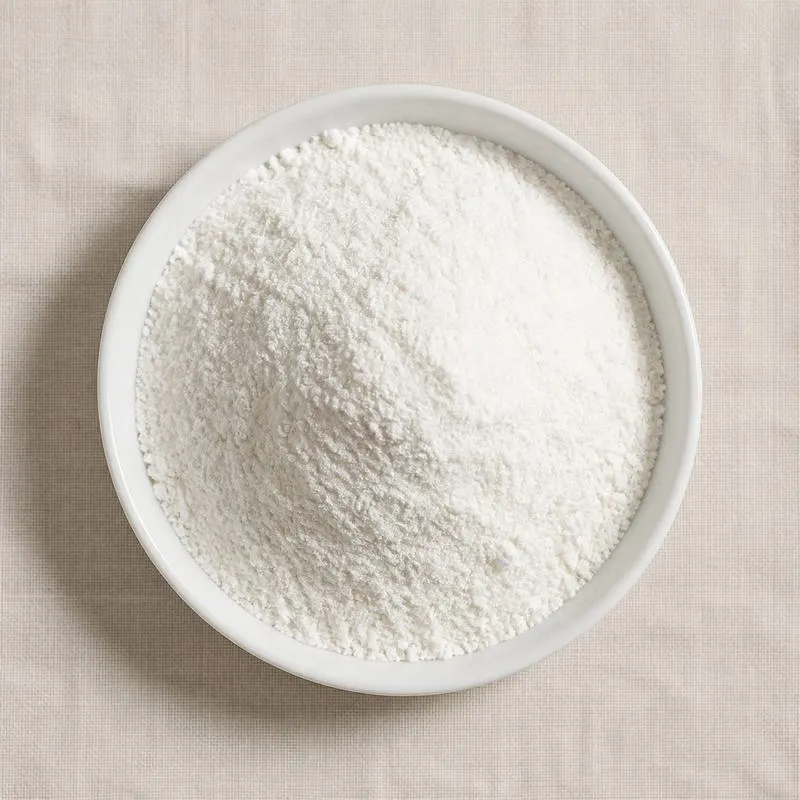
The material is free-flowing dry granules at around 6 to 10 percent moisture, ranging from fine, almost flour-like crumb to coarse flakes several millimetres across. Japanese style panko is the distinct subclass, made from crustless bread baked by electrical resistance and shredded rather than ground, giving elongated slivers that fry to a lighter, more open and less oil-absorbent crust. Being a low moisture product it is shelf stable but hygroscopic, and it goes soft and stale-smelling if it takes up water.
We source bulk Breadcrumbs from top China manufacturers for our partners, working with several of them. The manufacturers are in Shandong and Guangdong. A smaller requirement can ship in a combined container with other ingredients.
Please send the grade you need, the volume and your destination port, and we will come back with a solution and a price.
or call +86-21-6858 0751
- Function
- Bakery ingredient
Specifications
| Item | Specification |
|---|---|
| Appearance | Free-flowing dry crumb or flake, free from foreign matter |
| Colour | White, golden or toasted according to grade |
| Odour and taste | Clean baked cereal, free from stale or rancid notes |
| Moisture | 6.0% to 10.0% |
| Particle size | Sieve analysis conforms to the declared fine, medium or coarse profile |
| Bulk density | 200 to 400 g/L according to style |
| Protein | 9.0% to 13.0% |
| Fat | 2.0% max for plain grades |
| Ash | 2.5% max |
| Lead | 0.2 mg/kg max |
| Total plate count | 10000 cfu/g max |
| Yeast and mould | 500 cfu/g max |
| E. coli | Absent in 1 g |
| Salmonella | Absent in 25 g |
Common Markets Grades
Grades separate first on particle size, specified by sieve analysis and usually described as fine, medium and coarse, and second on style. Ground crumb is dense and gives a fine, even coating, panko style crumb is flaky and open and gives a lighter crust with lower oil pickup, and cracker meal is a harder, more brittle crumb from a leaner dough. Colour is the third variable, with white crumb made from crustless or low sugar bread, golden or yellow crumb coloured with paprika, turmeric or annatto, and toasted brown crumb for a darker finish without frying.
Compositional variants follow the diet requirements of the end product: wholemeal crumb, seasoned crumb carrying salt, herbs and spices, gluten free crumb made from rice or maize based bread, and vegan crumb made without dairy or egg. Free flow and bulk density are specified alongside particle size because they determine how evenly the crumb applies in a breading machine.
Applications
- Breaded coatings on chicken, fish, prawns and vegetable products, applied over a predust and batter
- Panko coatings on cutlets, tonkatsu and tempura style products, where the open flake gives lighter crust and lower oil uptake
- Meatballs, burgers and sausages, absorbing moisture and fat and binding the mince
- Meatloaf, stuffings and forcemeats, controlling texture and cook loss
- Gratin and crumb toppings on baked dishes, browning under heat without frying
- Croquettes and filled fried products, forming the outer shell
- Ready meals and frozen coated products, formulated to hold crispness after freezing and reheating
- Snack seasoning and coating blends, blended with flour and starch
- Pet food and treats as a carbohydrate binder
Brands Using Breadcrumbs
Widely-distributed consumer products that list Breadcrumbs on the ingredient label.
- Edward & SonsOrganic Panko Breadcrumbs ↗Japanese style panko breadcrumbs sold as a low sodium coating for tempura and breading.Label verified 2026-08-31
- Edward & SonsOrganic Italian Herb Breadcrumbs ↗Seasoned breadcrumbs with Mediterranean herbs, sold for coating proteins and vegetables.Label verified 2026-08-31
Brand names, product names and logos are the property of their owners. They appear here as published evidence that the ingredient is used, taken from the brand's own label or website. Their appearance is not an endorsement, and it does not mean the brand buys from us or from any manufacturer listed on this site.
China Manufacturers of Breadcrumbs
Top Breadcrumbs manufacturers in China.
 Guangzhou Thai Delicious Food Co., Ltd.1 ingredient in the directory
 Jinan Agir-Best Food Co., Ltd.1 ingredient in the directory
- Shandong Baiwei Haoyuan Food Technology Co., Ltd.1 ingredient in the directory
Company names and logos are the property of the manufacturers themselves. They are listed here because our own directory records them as producing this ingredient. A listing is not an endorsement by them, and we do not represent them or speak on their behalf.
Regulatory Status
Breadcrumbs are a composite food rather than an additive, so they carry no E number and no additive approval of their own. In the United States they are produced under the general food safety requirements for a food manufacturing facility, with preventive controls and allergen management under the food safety modernisation rules, and are labelled with a full ingredient statement. Wheat is a major allergen and must be declared, as must milk, egg, soya or sesame where the bread formulation contains them.
In the European Union the same applies under general food law and the food information regulation, with cereals containing gluten emphasised in the ingredient list. Any colour, preservative or antioxidant carried in the crumb must itself be an authorised additive under Regulation (EC) No 1333/2008 and be declared. A gluten free claim requires the product to meet the threshold set in the gluten free labelling rules and to be produced under segregation and testing controls. Acrylamide, which forms during baking and frying of cereal products, is subject to mitigation and benchmark requirements in the EU that apply to the finished coated food.
Manufacturing Process
The bread is made first. Dedicated crumb bread uses a lean, low sugar formulation of flour, water, yeast and salt, mixed, proved and baked, often in a continuous plant. Panko style crumb is baked in a different way, by passing current through the dough so that it cooks from within and forms no crust, which is what allows the shredded flake shape. Reclaim crumb instead uses trimmings, crusts and rejected loaves from a bakery line, which must be sorted and screened for foreign material before they enter the process.
Baked bread is cooled and aged so the crumb firms, then reduced. Ground crumb is broken and passed through roller or hammer mills; panko is cut on a shredder that tears rather than crushes. The wet crumb is dried in a band or fluidised bed dryer to the target moisture, then classified through a sieve deck into the specified size fractions, with oversize returned to the mill and fines diverted to lower grades. Seasoning, colour and oil are applied in a coating drum where required, and the finished crumb is metal detected, sieved once more and packed in moisture barrier bags or bulk containers.