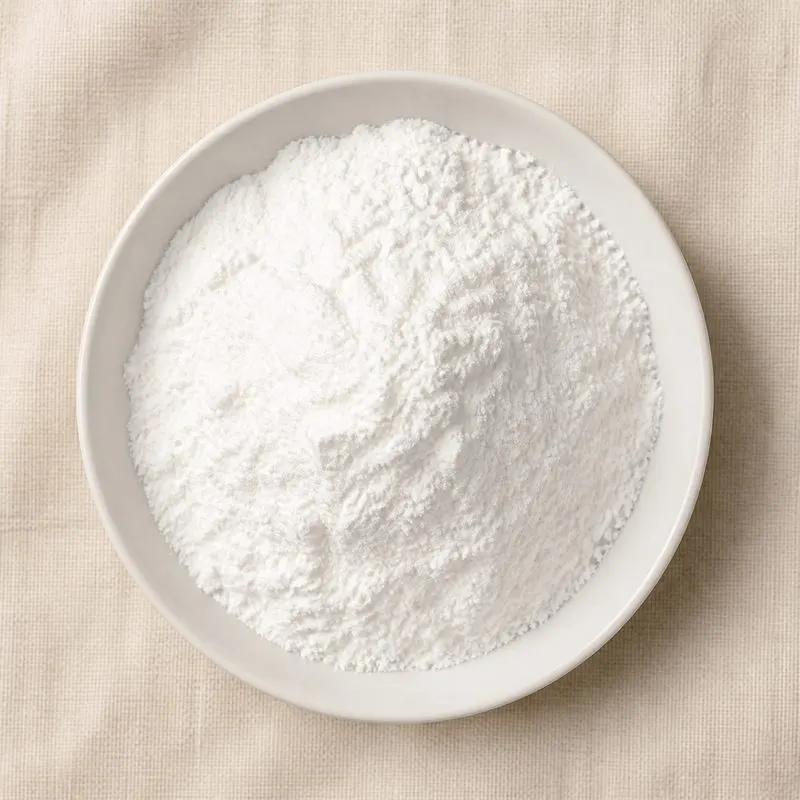
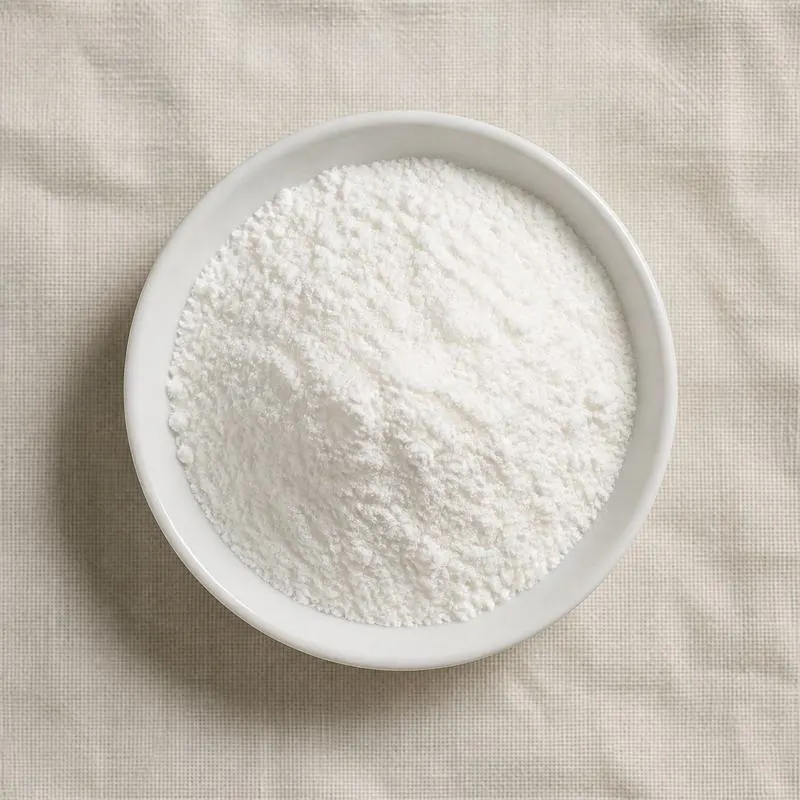
Cambodian Organic Tapioca Starch
Cambodian organic tapioca starch is native tapioca starch extracted from cassava roots, Manihot esculenta, grown in Cambodia to organic certification standards. The chemistry is that of any tapioca starch: a mixture of about 17 to 20 percent amylose and the balance amylopectin, with an unusually low content of protein, lipid and phosphate compared with cereal starches.
That compositional purity is what gives tapioca starch its characteristic behaviour. It gelatinises at a relatively low temperature, around 62 to 70 degrees Celsius, swells rapidly to a high peak viscosity, and gives a paste that is clear, cohesive, long and stringy in texture and almost completely neutral in flavour, since there is no cereal protein or lipid to carry an off note. On cooling it retrogrades more slowly than maize or wheat starch. Its weakness is granule fragility: peak viscosity falls away under continued heating, shear or acid, so native tapioca starch suits short, gentle processes and modified tapioca starches are used for retort and high shear systems.
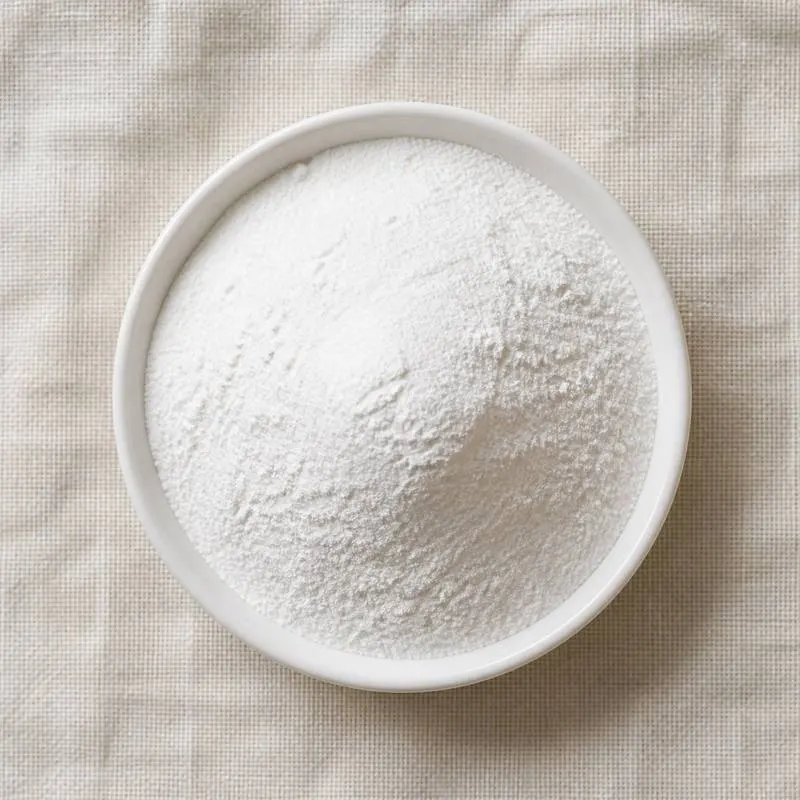
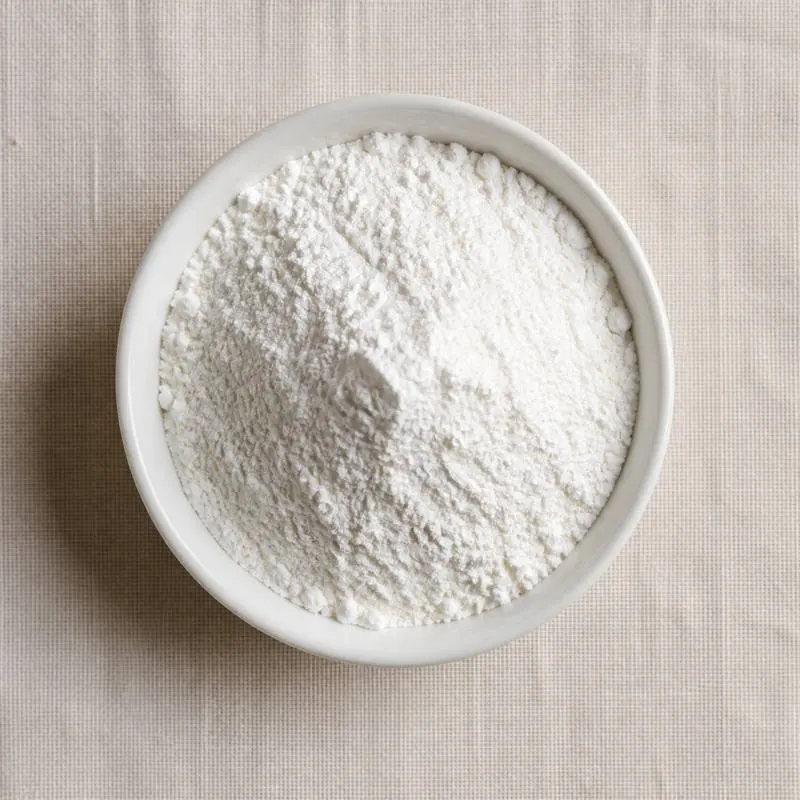
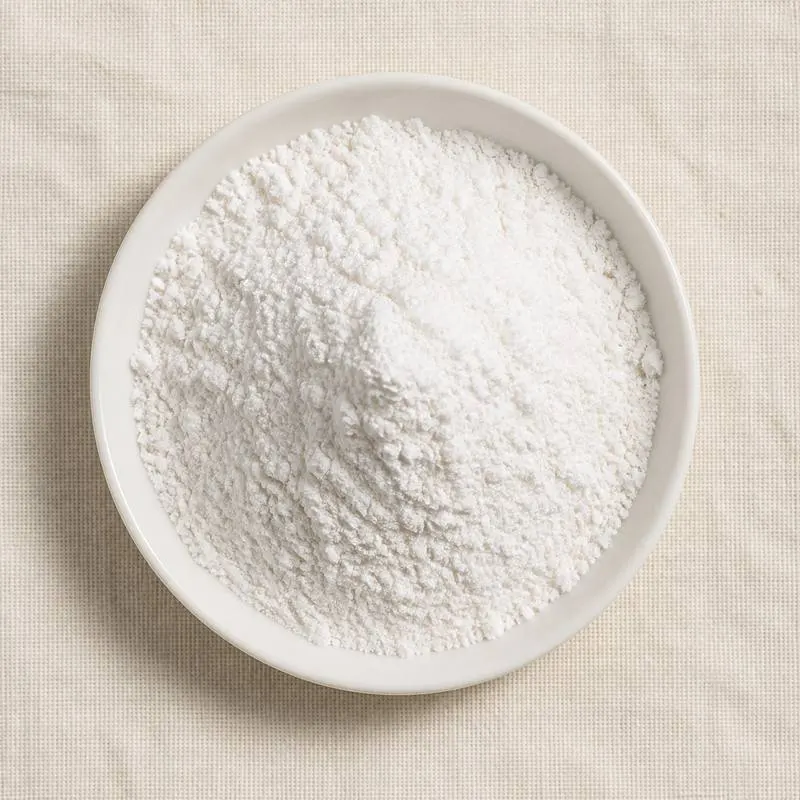
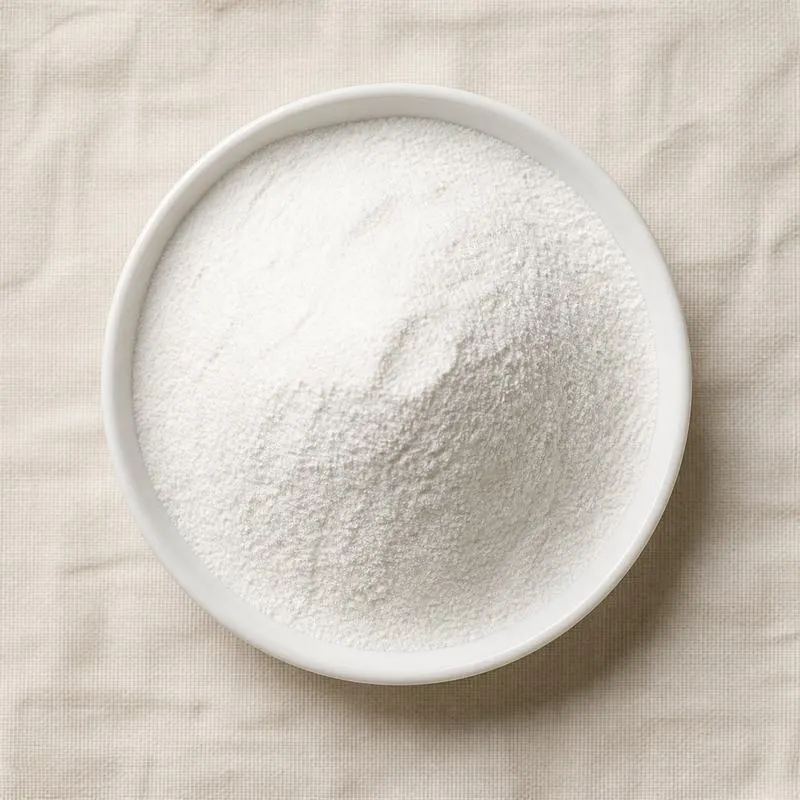
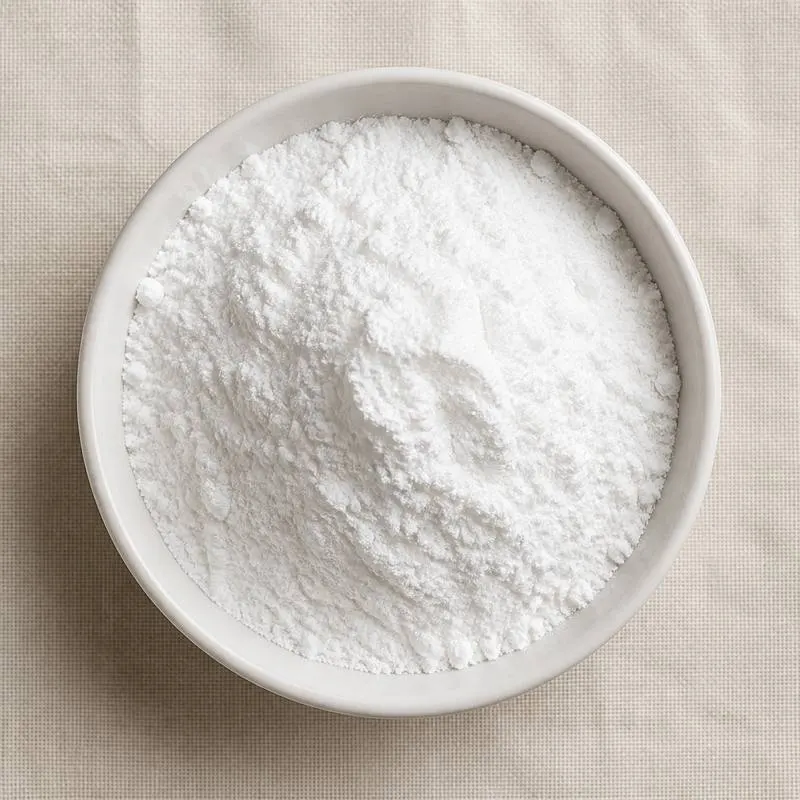
The Cambodian origin matters commercially rather than chemically. Cassava is a major upland crop there, much of it grown with low input practices that make organic conversion practical, and Cambodian organic certified starch has become a recognised trade origin for buyers who need an organic, non genetically modified, gluten free and allergen free starch. The material is a bright white free flowing powder, insoluble in cold water.
We source bulk Cambodian Organic Tapioca Starch from top China manufacturers for our partners. The manufacturer is in Hunan. A smaller requirement can ship in a combined container with other ingredients.
Please send the grade you need, the volume and your destination port, and we will come back with a solution and a price.
or call +86-21-6858 0751
- Function
- Texturisers
Specifications
| Item | Specification |
|---|---|
| Appearance | Bright white free flowing powder, free of foreign matter |
| Odour and taste | Neutral, no sour or musty note |
| Starch content, dry basis | 96.0 percent minimum |
| Moisture | 13.0 percent maximum |
| Protein, nitrogen times 6.25, dry basis | 0.1 percent maximum |
| Ash, dry basis | 0.2 percent maximum |
| Fat | 0.1 percent maximum |
| Whiteness | 93 minimum |
| pH, 10 percent slurry | 5.0 to 7.0 |
| Peak viscosity, 6 percent slurry | 700 Brabender units minimum |
| Specks per square decimetre | 3 maximum |
| Total hydrocyanic acid | 10 mg/kg maximum |
| Sulphur dioxide | 30 mg/kg maximum |
| Lead | 0.5 mg/kg maximum |
| Arsenic | 0.5 mg/kg maximum |
| Total plate count | 10000 cfu/g maximum |
| Yeast and mould | 500 cfu/g maximum |
| E. coli | Absent in 1 g |
| Salmonella | Absent in 25 g |
Common Markets Grades
The certified organic native starch is the primary article and is traded on whiteness, moisture, ash, pH and viscosity, with viscosity quoted as a Brabender or rapid visco analyser peak. Whiteness and specks per unit area are the practical quality differentiators between mills, since they reflect how quickly the root was processed after harvest and how thoroughly the fibre was removed.
Organic certification is itself part of the specification, and material is offered against the EU organic regulation, the United States National Organic Program and the Japanese Agricultural Standard, with the certifying body and certificate number forming part of the trade documentation. Non genetically modified, gluten free, kosher and halal statements normally accompany it. Physically the starch is offered as standard native powder and as organic pregelatinised drum dried powder for cold water use. Chemically modified tapioca starches cannot carry organic certification in most schemes, so the organic range is limited to native and physically modified grades.
Applications
- Bubble tea pearls and tapioca based confectionery, where the cohesive, chewy gel is the defining texture
- Gluten free bread, cake and batter systems, providing structure and a soft crumb without cereal flavour
- Clean label soups, sauces and gravies, giving a clear glossy body with no additive declaration
- Organic baby food and puree, where an unmodified, allergen free thickener is required
- Noodles and vermicelli, contributing elasticity and a smooth surface
- Confectionery gums and jellies, as the setting starch in gelatine free formulations
- Meat and seafood products, binding water and improving slice cohesion
- Coatings and batters for fried foods, where the low protein content gives a pale, crisp, non browning crust
- Organic dairy desserts and yoghurts, thickening without an additive label
- Paper and adhesive manufacture outside food, using the high viscosity and film strength
China Manufacturers of Cambodian Organic Tapioca Starch
Top Cambodian Organic Tapioca Starch manufacturers in China.
Company names and logos are the property of the manufacturers themselves. They are listed here because our own directory records them as producing this ingredient. A listing is not an endorsement by them, and we do not represent them or speak on their behalf.
Regulatory Status
Native tapioca starch is a food, not a food additive. In the United States it is a common food ingredient labelled as tapioca starch, with identity and purity criteria set by the Food Chemicals Codex starch monograph, and it carries no food additive citation. In the European Union native starches carry no E number and are regulated as foods; only chemically modified starches fall within the food additives framework. Codex maintains a general standard covering the composition and quality of edible starches, and a separate standard for edible cassava flour.
Two further frameworks apply to this article specifically. Organic status is governed by the importing market's organic legislation, the EU organic regulation or the United States National Organic Program, both of which require certification of the farm and of the processing site by an accredited body and an unbroken documented chain of custody. Separately, because cassava contains cyanogenic glycosides that release hydrogen cyanide, Codex sets a limit for total hydrocyanic acid in cassava products, and the wet extraction and washing train reduces residues in the starch to very low levels. Cassava is not a declarable allergen and the starch is naturally free of gluten.
Manufacturing Process
Cassava roots are harvested and delivered to the mill within a day or two, because the root deteriorates rapidly once lifted and both starch yield and whiteness fall quickly. The roots are washed and peeled in a rotating drum washer, then rasped to a fine pulp that ruptures the cell walls and liberates the starch granules. The pulp is diluted and passed over conical and centrifugal extractors, which separate the fibrous pulp residue from the starch milk, with the fibre stream washed countercurrently to recover entrained starch.
The crude starch milk is refined through a multistage hydrocyclone battery, each stage displacing more soluble protein, sugar and cyanogenic glycoside residue with fresh water, until protein and ash are brought to specification. Dewatering follows on a peeler centrifuge or rotary vacuum filter to a cake around 60 percent solids, and the cake is dried in a flash drier in a stream of hot air with a residence time short enough that no granule gelatinises. The dried starch is cooled, sieved, passed over a magnet and metal detector and packed. Under organic certification the whole train must be run without prohibited processing aids, and where a mill also handles conventional cassava, the organic run is segregated in time and the lines are cleaned and documented between runs so that the certified chain of custody is preserved.