Capsaicin Oleoresin
Capsaicin Oleoresin is a pungency-focused extract of hot chili pods that has been concentrated and standardised on Scoville Heat Units (SHU) rather than on colour.
It carries the capsaicinoid fraction (capsaicin, dihydrocapsaicin, and minor analogues) in an oil or solvent carrier. The carotenoid colour load is intentionally low so that heat can be dosed into a recipe without shifting its visible tone.
We source bulk Capsaicin Oleoresin from top China manufacturers for our partners. The manufacturer is in Hebei. A smaller requirement can ship in a combined container with other ingredients.
Please send the grade you need, the volume and your destination port, and we will come back with a solution and a price.
or call +86-21-6858 0751
- Packaging
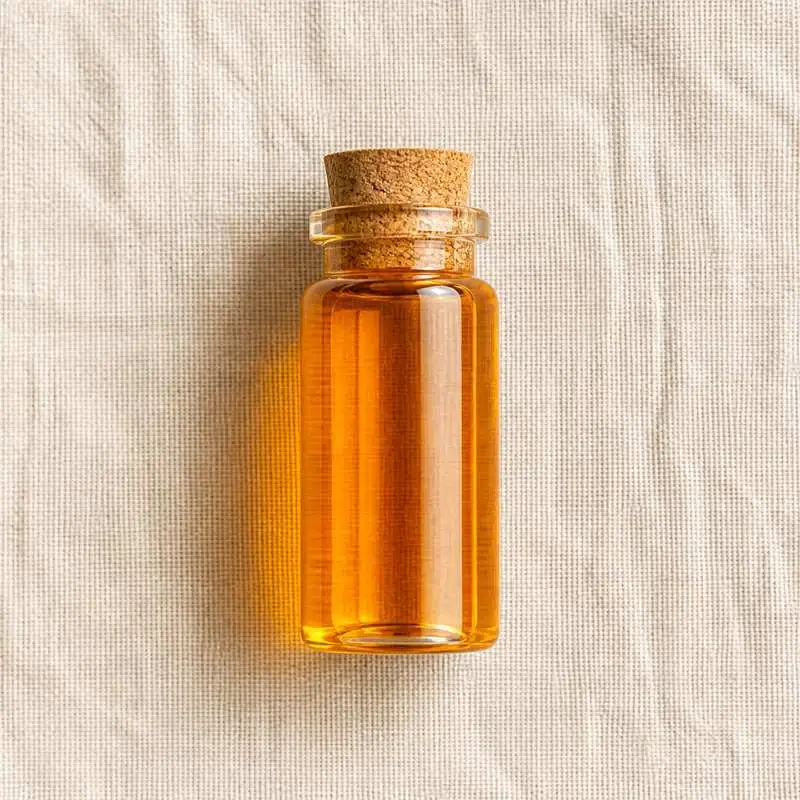
- 25 kg galvanised drum, nitrogen blanketed
- ISO 9001
- HACCP
- Halal
- Kosher
Specifications
| Item | Specification |
|---|---|
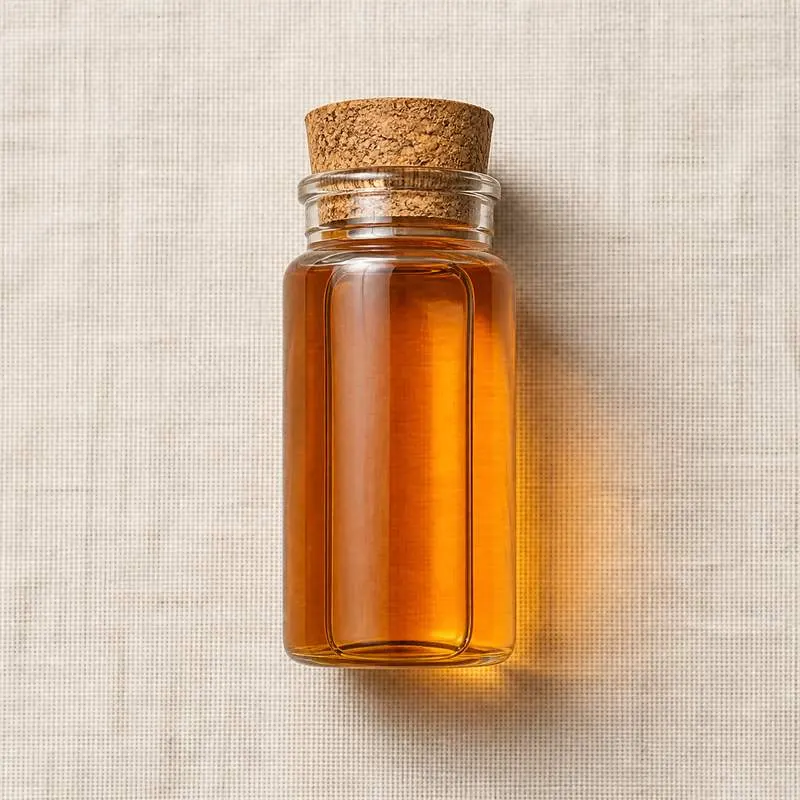
| Appearance | Dark red to reddish-brown viscous oily liquid |
| Odour | Characteristic pungent chilli odour |
| Total Capsaicinoids (by HPLC) | 0.6 - 38.0% (grade-dependent) |
| Pungency | 100,000 - 6,000,000 SHU (grade-dependent) |
| Capsaicin : Dihydrocapsaicin | approx. 60 : 40 |
| Specific Gravity (25 °C) | 0.930 - 1.000 |
| Refractive Index (20 °C) | 1.480 - 1.500 |
| Moisture | ≤ 2.0% |
| Acid Value | ≤ 20 mg KOH/g |
| Residual Solvent | ≤ 25 mg/kg |
| Heavy Metals (as Pb) | ≤ 10 mg/kg |
| Lead | ≤ 2 mg/kg |
| Arsenic | ≤ 1 mg/kg |
| Total Plate Count | ≤ 1,000 cfu/g |
| Salmonella | Negative/25g |
Common Markets Grades
Capsaicin Oleoresin is traded almost entirely on SHU. The strongest crude grade in routine commerce sits around 5,500,000 to 6,000,000 SHU, which corresponds to roughly 38 percent total capsaicinoids by HPLC.
Working dilutions in food and beverage are usually offered at 100,000 SHU, 500,000 SHU, 1,000,000 SHU, and 2,000,000 SHU in refined vegetable oil, propylene glycol, or polysorbate-based carriers.
Pharmacopoeial-grade capsaicin (USP and Ph. Eur.) at 95 percent or higher is a crystalline solid for topical analgesic monographs and reference standards.
Defense and self-defense grades, used in personal sprays, are standardised in major capsaicinoid (MC) content rather than SHU, with 1 percent to 10 percent MC being typical.
Applications
- Hot sauces and chili condiments where the heat needs to be tuned without darkening the colour
- Snack seasonings that already carry their own colour from paprika or annatto
- Beverage extensions: ginger shots, hot cocktails, and chili-spiked sodas using polysorbate grades
- Confectionery, including chili chocolate, hard candy, and chewing gum with a heat finish
- Topical analgesic creams, patches, and gels for muscle and joint pain (pharmacopoeial grade)
- Veterinary and agricultural deterrents against deer, rodents, and birds
- Personal-defense sprays and crowd-management aerosols
- Marine antifouling coatings using capsaicin as a non-metal active
- Spice rubs and dry seasonings where dust-free liquid dosing is preferred
- Functional supplements positioning on thermogenesis and metabolic support
Brands Using Capsaicin Oleoresin
Widely-distributed consumer products that list Capsaicin Oleoresin on the ingredient label.
Brand names, product names and logos are the property of their owners. They appear here as published evidence that the ingredient is used, taken from the brand's own label or website. Their appearance is not an endorsement, and it does not mean the brand buys from us or from any manufacturer listed on this site.
China Manufacturers of Capsaicin Oleoresin
Top Capsaicin Oleoresin manufacturers in China.

Company names and logos are the property of the manufacturers themselves. They are listed here because our own directory records them as producing this ingredient. A listing is not an endorsement by them, and we do not represent them or speak on their behalf.
How We Help Source Capsaicin Oleoresin
Direct Factory Sourcing
We run the whole process: selecting the manufacturer from the top Chinese food ingredient producers, negotiating the price, verifying quality, and coordinating the logistics. You deal with us instead of with several factories at once.
Original Packaging and Documents from the Manufacturer
The manufacturer sends your Capsaicin Oleoresin out of its own factory in the original packing, through to your destination port. The COA, COO, MSDS, TDS and any certifications reach you from the manufacturer as well.
Free Samples and Lead Time
We send 100 to 500 g free for your own laboratory to test and you cover only the courier, usually within 2 to 3 working days. ETD is usually within 7 to 15 days once the order is confirmed, and we check that date against the factory's own manufacturing schedule before we give it to you.
Combined Shipment
We can load Capsaicin Oleoresin together with other ingredients such as Capsicum Oleoresin, Ethyl Maltol and White Pepper into one 20' FCL. If your quantity is small, we can also ship LCL.
Regulatory Status
Capsaicin Oleoresin is accepted as a flavouring ingredient in food in most regulated markets when used at heat levels that match traditional culinary practice.
In the European Union, Regulation (EC) No 1334/2008 treats the capsaicinoid fraction as a natural flavouring preparation derived from Capsicum. Food business operators are expected to apply a self-imposed maximum based on consumer tolerability rather than a numerical limit.
The U.S. Food and Drug Administration lists capsicum and its oleoresins under 21 CFR 182.20 as generally recognized as safe (GRAS).
Pharmacopoeial capsaicin appears as a monograph in the United States Pharmacopeia (USP) and the European Pharmacopoeia (Ph. Eur.), where it is the labelled active in 0.025 percent and 0.075 percent topical analgesic products.
For non-food uses, defense-grade capsaicinoid sprays are controlled under national weapons or self-defense laws and vary widely between jurisdictions.
Manufacturing Process
Manufacture starts from very hot chili cultivars chosen for capsaicinoid yield rather than colour. Indian Reshampatti and Guntur Sannam, Chinese Hainan, and African bird's-eye are common feedstocks. Selected lots use ghost pepper (Capsicum chinense cv. Bhut Jolokia) for extra-high SHU starting material.
The dried pods are milled and extracted with ethanol, acetone, or hexane. The crude oleoresin is then enriched on the capsaicinoid fraction by selective re-extraction or by molecular distillation that drives off most of the carotenoid and triglyceride bulk.
For the highest grades, the concentrate is further purified by crystallisation or by preparative chromatography to a near-pure capsaicinoid mixture.
The finished concentrate is standardised to a target SHU by blending with refined vegetable oil, propylene glycol, or a polysorbate 80/ethanol carrier system, depending on the end-use matrix.