Caramel Syrup
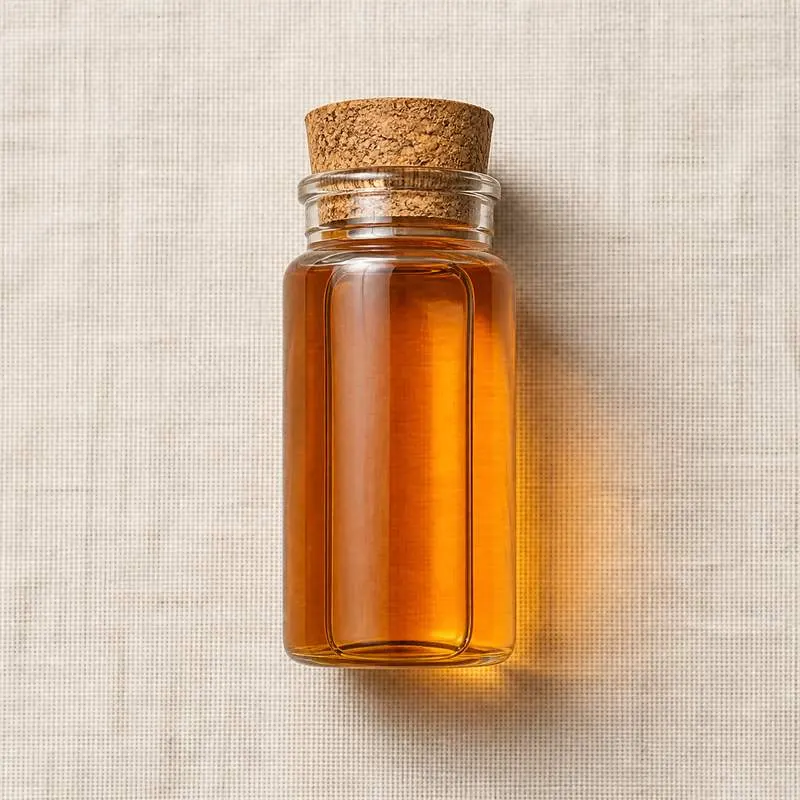
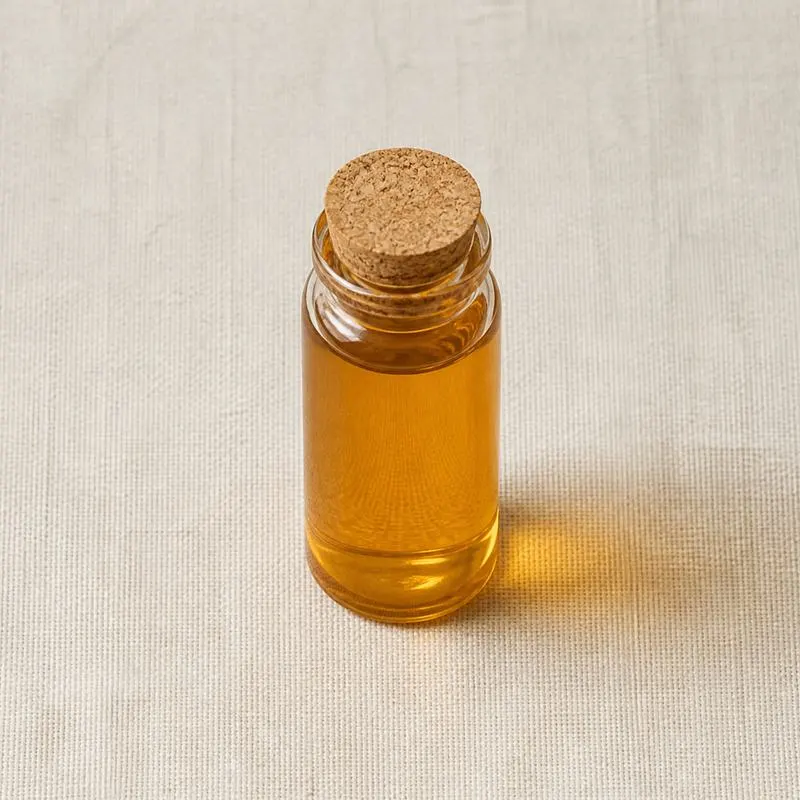
Caramel syrup is a concentrated liquid sweetener made by heating sugar until it caramelises and then dissolving the resulting mass in water, usually with additional sugar or glucose syrup to reach the working solids level. It is a food in its own right rather than an additive, and it delivers sweetness, brown colour and cooked sugar aroma in a single pumpable ingredient.
Its properties follow from the chemistry of caramelisation. Heating sucrose past its melting point drives dehydration and fragmentation reactions that generate the coloured polymeric caramelans and the volatile furanones, furfurals and diacetyl responsible for the aroma, while some sucrose inverts to glucose and fructose, which lowers the crystallisation risk and raises the hygroscopicity of the finished syrup. Bitterness rises with the degree of cook, and the balance between colour, aroma and bitterness is what defines a given syrup.
It runs at around sixty to seventy five degrees Brix, a clear to opaque brown viscous liquid, fully miscible with water, and stable at ambient temperature because its water activity is too low to support microbial growth. Viscosity falls sharply with temperature, so bulk material is warmed before pumping, and prolonged storage darkens it further as the reactions continue slowly at ambient conditions.
We source bulk Caramel Syrup from top China manufacturers for our partners. The manufacturer is in Sichuan. A smaller requirement can ship in a combined container with other ingredients.
Please send the grade you need, the volume and your destination port, and we will come back with a solution and a price.
or call +86-21-6858 0751
- Function
- Flavours and Aromas
Specifications
| Item | Specification |
|---|---|
| Appearance | Clear to opaque brown viscous syrup, free from crystals and foreign matter |
| Odour and taste | Characteristic cooked sugar, sweet with a mild bitter finish |
| Total soluble solids as Brix | To declared value, typically 60 to 75 degrees |
| Colour | Within agreed range against retained standard |
| pH | 3.5 to 5.5 |
| Viscosity at 25 degrees Celsius | Within agreed range for the grade |
| Reducing sugars | To declared value according to degree of inversion |
| Water activity | 0.85 maximum |
| Ash | 1.0 percent maximum |
| Lead | 0.5 mg per kg maximum |
| Arsenic | 0.5 mg per kg maximum |
| Total plate count | 500 cfu per gram maximum |
| Yeast and mould | 50 cfu per gram maximum |
| Salmonella | Absent in 25 grams |
Common Markets Grades
Grades are set by solids, by colour and by whether dairy or flavouring components are present. Plain caramel syrups made from sugar and water alone are the base material, sold on Brix and colour, while dairy caramel and butterscotch syrups carry milk solids, butter or fat and are cooked to a lighter colour with a fuller flavour. Sauce grades are thicker, higher in solids and often stabilised with hydrocolloids so that they hold a ribbon on a dessert, while beverage grades are thinner so they dose accurately through a pump.
Colour depth is graded from a pale golden syrup cooked lightly, through amber, to a dark bitter syrup taken close to the point of burning and used where colour matters more than sweetness. Preservative free grades depend on their own solids and pasteurisation, while extended shelf life grades may carry a permitted preservative. Sugar free versions are built on polyols or on a caramel flavoured sweetener system rather than on caramelised sucrose, and clean label, organic and kosher certified lines are produced where the sugar supply allows.
Applications
- Coffee shop and dispensed beverage syrups, pumped into hot and iced drinks
- Ice cream and frozen dessert ripples and toppings
- Dairy desserts, yoghurt and flavoured milk
- Bakery fillings, glazes and drizzles, where the syrup contributes gloss as well as flavour
- Confectionery manufacture, as a component of caramel and toffee centres
- Breakfast cereal and granola coating syrups
- Dessert sauces sold in retail bottles and foodservice pouches
- Alcoholic and ready to drink cocktail mixes
- Savoury sauces such as barbecue and braising sauces, where the cooked sugar note balances vinegar and salt
- Colour and flavour adjustment in bread and biscuit doughs, where a dark syrup deepens crust colour
Brands Using Caramel Syrup
Widely-distributed consumer products that list Caramel Syrup on the ingredient label.
- ToraniPuremade Caramel Syrup ↗Caramel flavouring syrup for coffee drinks, listed as pure cane sugar, water, natural flavours, caramel colour and citric acid.Label verified 2026-08-31
- ToraniClassic Caramel Syrup ↗Caramel syrup made from pure cane sugar, water, natural flavours, citric acid, potassium sorbate, sodium benzoate and caramel colour.Label verified 2026-08-31
- MoninCaramel Syrup ↗Caramel syrup sold for flavouring lattes, iced coffee and cocktails.Label verified 2026-08-31
- Hershey'sHershey's Caramel Syrup, 22 oz bottle ↗Pourable caramel syrup listing corn syrup, high fructose corn syrup, sweetened condensed skim milk, water, natural and artificial flavour and caramel colour.Label verified 2026-08-31
- Jordan's Skinny MixesSugar Free Caramel Syrup ↗Zero sugar caramel syrup sold for coffee and latte drinks.Label verified 2026-08-31
Brand names, product names and logos are the property of their owners. They appear here as published evidence that the ingredient is used, taken from the brand's own label or website. Their appearance is not an endorsement, and it does not mean the brand buys from us or from any manufacturer listed on this site.
China Manufacturers of Caramel Syrup
Top Caramel Syrup manufacturers in China.
Company names and logos are the property of the manufacturers themselves. They are listed here because our own directory records them as producing this ingredient. A listing is not an endorsement by them, and we do not represent them or speak on their behalf.
Regulatory Status
Caramel syrup made by cooking sugar is a food, not a food additive, so it has no E number and no additive listing. In the United States it is composed of generally recognised as safe ingredients, and any preservative, stabiliser or added flavouring must be permitted for the use and declared on the label. Milk is a major allergen and must be declared where dairy solids are present. Caramel colour is a different material, produced under different conditions for colouring purposes, and 21 CFR 73.85 regulates it separately as a colour additive; a caramel syrup may not be labelled or used as a substitute for it.
In the European Union caramel syrup is a composite food covered by general food law and labelling rules, with any additives present, such as preservatives or thickeners, restricted to those permitted for the food category and declared by function and E number. Milk must be emphasised as an allergen where present. Caramel colours are separately regulated as the additives E 150a to E 150d with their own specifications and purity criteria, including limits on process contaminants, which do not apply to a cooked sugar syrup sold as a food ingredient. Codex handles the product through its general standards on food additives, contaminants and labelling rather than a commodity standard.
Manufacturing Process
Refined sucrose, sometimes with glucose syrup, is charged with a small quantity of water to a jacketed cooker fitted with a scraped surface agitator, and heated under close temperature control. Water evaporates and the sugar melts, and beyond about one hundred and sixty degrees the caramelisation reactions begin, producing the colour bodies and the volatile aroma fraction. Cook temperature and residence time are the control variables, since a few degrees or a few minutes separate a light golden syrup from a bitter dark one, and the batch is monitored by colour measurement rather than by time alone.
The cook is arrested by adding hot water, which must be dosed carefully because the mass is well above the boiling point of water. The diluted caramel is then standardised to the target Brix, and any dairy solids, salt, flavouring, acid or stabiliser is dispersed in under agitation, with hydrocolloids hydrated separately before addition. The syrup is homogenised where a dairy phase is present, pasteurised in a plate or scraped surface heat exchanger, and filled hot into bottles, pouches, pails or drums before cooling. Lots are released against Brix, colour, viscosity, pH, sensory match and microbiological testing.