Chili Oleoresin
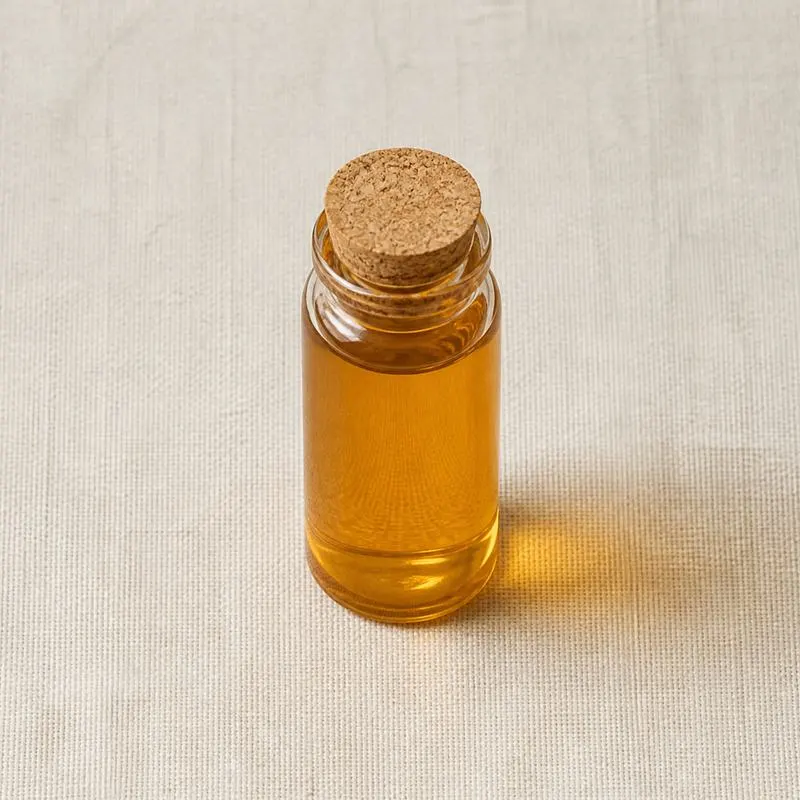
Chilli oleoresin is the concentrated extract obtained by solvent extraction of dried Capsicum fruit, containing the complete lipid soluble fraction of the pod in a form roughly ten to thirty times the strength of the ground spice. It is a dark red viscous liquid combining capsaicinoids, carotenoid pigments, volatile oil and the natural waxes and lipids of the fruit.
Its advantage over ground spice is analytical control. Pungency is measured as total capsaicinoid content by liquid chromatography and expressed in Scoville heat units, colour is measured as an ASTA value, and lots are blended to hit both figures, so a processor can dose to a defined heat and colour rather than compensating for a variable crop. The extract also carries none of the microbiological load, moisture or bulk of the pod, and no visible spice particles, which matters in clear or smooth products.
It is insoluble in water and soluble in oils, ethanol and propylene glycol, and it is sold either neat or standardised in a vegetable oil carrier so that it pumps and doses. Neat material is highly viscous and is warmed before handling. Capsaicinoids are potent irritants to skin, eyes and airways in concentrated form, so drums are opened under extraction and handled with protective equipment.
We source bulk Chili Oleoresin from top China manufacturers for our partners. The manufacturer is in Henan. A smaller requirement can ship in a combined container with other ingredients.
Please send the grade you need, the volume and your destination port, and we will come back with a solution and a price.
or call +86-21-6858 0751
- Function
- Flavours and Aromas
Specifications
| Item | Specification |
|---|---|
| Appearance | Dark red homogeneous viscous liquid, free from sediment when warmed |
| Odour and taste | Characteristic of dried capsicum, pungent according to grade |
| Total capsaicinoids | To declared value for the grade |
| Pungency | To declared Scoville heat units consistent with the capsaicinoid assay |
| Colour value | To declared ASTA units, below 500 in decolourised grades |
| Volatile oil | To declared value for the grade |
| Solubility | Soluble in vegetable oil and ethanol, insoluble in water |
| Specific gravity at 25 degrees Celsius | 0.90 to 1.05 according to grade |
| Refractive index at 20 degrees Celsius | Within agreed range for the grade |
| Residual hexane | 25 mg per kg maximum |
| Moisture | 1.0 percent maximum |
| Lead | 2 mg per kg maximum |
| Arsenic | 1 mg per kg maximum |
| Total plate count | 1000 cfu per gram maximum |
| Salmonella | Absent in 25 grams |
Common Markets Grades
The pungent grades are traded on capsaicinoid content, with commercial material commonly declared between one hundred thousand and one million Scoville heat units after standardisation, and the very high strength grades reserved for industrial dilution rather than direct use. Colour grades, extracted from sweet paprika type pods, are traded on ASTA colour value with negligible pungency, and the two are separate product lines because the pods grown for each purpose differ.
Decolourised oleoresin is a third family, produced by adsorbing out the carotenoids so that heat can be added without changing product colour, and it is the grade used in clear beverages, white sauces and pharmaceutical preparations. Within each family, material is offered neat, standardised in vegetable oil, as a water dispersible form emulsified with polysorbate, and as a spray dried or plated powder on a starch, salt or maltodextrin carrier for dry seasoning blends. Extraction route is a further distinction, with hexane, acetone and ethyl acetate extracted grades trading alongside supercritical carbon dioxide extracted material sold where a solvent free claim is required.
Applications
- Snack seasonings, where a powdered or plated form spreads heat evenly across a crisp surface
- Instant noodle sauce sachets and soup bases, dosed to a defined Scoville level
- Hot sauce manufacture, correcting the batch to a target heat that raw pods cannot hold
- Processed meat and sausage seasoning, adding pungency and colour without moisture or microbial load
- Retort and canned products, where capsaicinoids survive sterilisation unchanged
- Dressings and emulsified sauces, using the water dispersible form so heat does not concentrate in the fat phase
- Pickles and brined vegetables
- Cheese and dairy analogues, using decolourised grades where a red tint is unacceptable
- Pet food palatants and coatings
- Non food outlets in personal care, topical preparations and defensive sprays, which take the strongest grades
China Manufacturers of Chili Oleoresin
Top Chili Oleoresin manufacturers in China.
Company names and logos are the property of the manufacturers themselves. They are listed here because our own directory records them as producing this ingredient. A listing is not an endorsement by them, and we do not represent them or speak on their behalf.
Regulatory Status
In the United States capsicum oleoresin is a spice extractive that is generally recognised as safe for use as a flavouring and appears in the listing of essential oils, oleoresins and natural extractives at 21 CFR 182.20. Where the extract is used for colour, 21 CFR 73.345 lists paprika and paprika oleoresin as colour additives exempt from certification, and they must be declared accordingly. Residues of the extraction solvent are controlled under the requirements applying to solvent extracted food ingredients, and the solvents themselves must be permitted for that use.
In the European Union paprika extract, covering capsanthin and capsorubin, is the authorised food colour E 160c with permitted uses set by food category and with specifications covering solvent residues. Capsicum extract used for its flavour and pungency falls instead under the flavourings regulation as a flavouring preparation, which carries no E number. Extraction solvents are restricted to those listed in the solvents legislation, each with its own residue limit. Codex lists paprika oleoresin among the colours in the general standard for food additives, and the Joint Expert Committee on Food Additives has evaluated paprika extract, while the Codex guidelines for the use of flavourings cover capsicum used as a flavouring.
Manufacturing Process
Dried chilli pods are cleaned to remove stalks, stones, sand and metal, then flaked or coarsely milled so that the solvent can reach the placental tissue and pericarp without generating fine dust. The flaked material is charged to a battery of percolation extractors and washed in counter current flow with a food grade solvent, so that the freshest solvent meets the most nearly exhausted material and the concentration gradient is maintained across the battery. The loaded miscella is drawn off while the spent flakes are stripped of solvent with steam and sold as animal feed.
The miscella is concentrated by evaporation and then stripped of the last solvent in a falling film or thin film evaporator under high vacuum at a temperature low enough to protect the carotenoids, which degrade readily with heat. Winterisation follows, in which the crude oleoresin is chilled so that waxes crystallise and are filtered out, preventing later clouding. The filtered oleoresin is assayed for capsaicinoid content and colour value, and blended with vegetable oil or with a stronger lot until both figures meet the declared grade, since blending rather than extraction is what produces a saleable standardised product. Decolourised grades take an additional adsorption step. Finished material is filled under nitrogen into lined drums or pails, and powder grades are emulsified onto a carrier and spray dried or plated onto salt before packing.