Cis-3-hexenol
Cis-3-hexenol, systematically (Z)-hex-3-en-1-ol, is the six carbon unsaturated alcohol responsible for the smell of cut grass, and it is the single most used green note in flavour and fragrance work. It occurs naturally in the leaves of most green plants, where it is formed within seconds of tissue damage by enzymatic breakdown of linolenic acid, which is why the odour is associated with mowing and bruising rather than with the intact leaf.
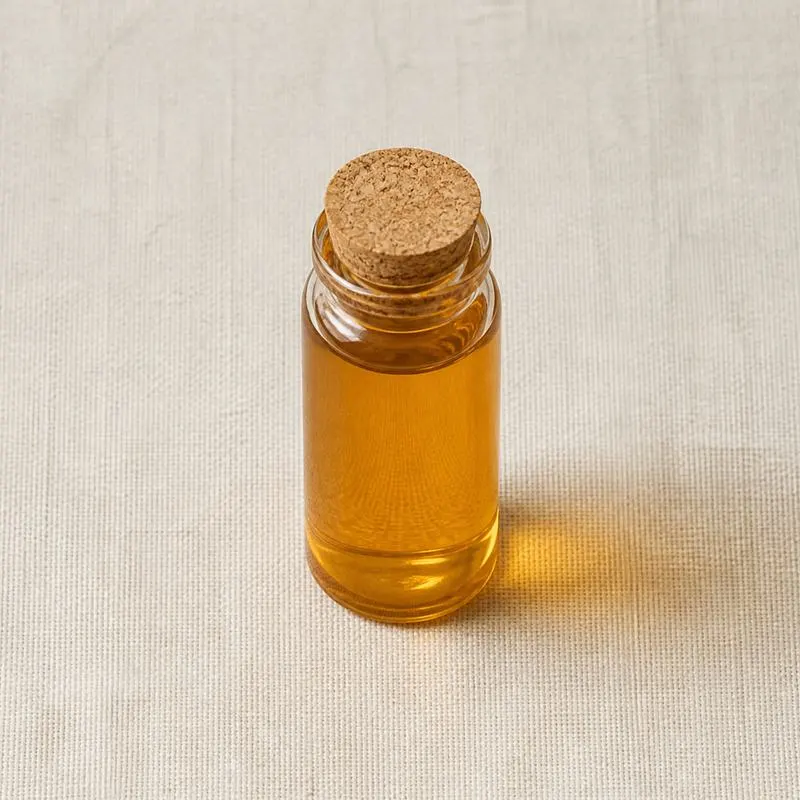
The commercial material is a colourless to pale yellow mobile liquid with a boiling point near one hundred and fifty six degrees Celsius. It is only slightly soluble in water but freely miscible with ethanol, propylene glycol and vegetable oils, so it is normally used as the neat liquid and dosed from a solution. The odour threshold is in the low parts per billion, so working dilutions of one percent or less are usual and overdosing produces a harsh, weedy, almost metallic effect.
The double bond is the point of instability. The cis configuration isomerises toward the trans isomer under acid conditions and at elevated temperature, and the alcohol oxidises slowly on air contact, so the material is stored cool, full and under nitrogen.
We source bulk Cis-3-hexenol from top China manufacturers for our partners. The manufacturers are in Beijing and Jiangxi. A smaller requirement can ship in a combined container with other ingredients.
Please send the grade you need, the volume and your destination port, and we will come back with a solution and a price.
or call +86-21-6858 0751
- Function
- Flavours and Aromas
Specifications
| Item | Specification |
|---|---|
| Appearance | Colourless to pale yellow clear mobile liquid |
| Odour | Intense fresh green, characteristic of cut grass |
| Assay by Gas Chromatography | Not less than 98.0% |
| Trans Isomer Content | Not more than 1.0% |
| Hexanol Content | Not more than 0.5% |
| Refractive Index at 20 C | 1.436 to 1.442 |
| Relative Density at 20 C | 0.845 to 0.852 |
| Acid Value | Not more than 1.0 mg KOH per g |
| Water Content | Not more than 0.3% |
| Solubility | Clear solution in one volume of 60% ethanol |
| Heavy Metals as Lead | Not more than 10 mg/kg |
| Lead | Not more than 1.0 mg/kg |
| Arsenic | Not more than 0.5 mg/kg |
Common Markets Grades
The dominant grade is synthetic material at ninety eight percent or better by gas chromatography, with the specification controlling the trans-2-hexenol and hexanol content because those impurities dull and coarsen the green note. Fragrance grade and flavour grade are separated on residual solvent and on catalyst residues rather than on assay, and a flavour grade will normally carry documentation of compliance with the flavouring substance listings.
Natural grade is a separate and considerably more expensive product, made by the enzymatic route from vegetable oil and traded with an isotope ratio certificate to document its natural origin. Both grades come as the neat liquid, and formulators buy dilutions at one or ten percent in ethanol, triacetin or propylene glycol where accuracy at small doses matters. There is no powdered or encapsulated form in general trade, although the alcohol is used inside spray dried flavour compounds.
Applications
- Fruit flavours for apple, pear, melon and kiwi, where a trace of leaf alcohol supplies the unripe green edge that makes the profile taste fresh
- Tomato and cucumber flavours, in which it is a genuine character compound rather than an accessory note
- Green tea and matcha flavours, providing the fresh leaf top note lost during processing and storage
- Berry flavours, especially strawberry and raspberry, where it lifts the jammy body of the lactone and furanone fraction
- Vegetable and culinary flavours for peas, beans and green herbs
- Beverage flavours in juices and flavoured waters, dosed at parts per billion in the finished drink
- Dairy and ice cream flavours built on fruit profiles, where the low water solubility requires it to be carried in the emulsion phase
- Fragrance compounds for detergents, personal care and fine perfumery, where the green top note is a staple
- Feedstock for cis-3-hexenyl esters, which are made by esterifying the alcohol with short chain acids
China Manufacturers of Cis-3-hexenol
Top Cis-3-hexenol manufacturers in China.
 Beijing Zoteq Co., Ltd.10 ingredients in the directory
 Jiangxi Shamhai Bio-technology Co., Ltd.5 ingredients in the directory
Company names and logos are the property of the manufacturers themselves. They are listed here because our own directory records them as producing this ingredient. A listing is not an endorsement by them, and we do not represent them or speak on their behalf.
Regulatory Status
Cis-3-hexenol is an established flavouring substance in the major markets. In the United States it holds FEMA GRAS status and appears among the synthetic flavouring substances and adjuvants permitted for food use by the Food and Drug Administration under its flavouring substance regulation. In the European Union it is entered on the Union list of authorised flavouring substances with its own FLAVIS number, which is the clearance that applies to its use in food, and no E number applies because flavourings sit outside the additive framework.
JECFA has evaluated the substance within its group assessment of aliphatic primary alcohols, aldehydes, acids and related esters and raised no safety concern at the levels at which it is used as a flavouring. Material sold for fragrance use is additionally covered by the industry self regulatory standards for cosmetic ingredients rather than by food law.
Manufacturing Process
The industrial synthetic route runs through acetylene chemistry. Acetylene is alkylated to 1-butyne, which is converted to its metal acetylide and reacted with ethylene oxide to give 3-hexyn-1-ol, extending the chain by two carbons and adding the alcohol group. The triple bond is then hydrogenated selectively over a lead poisoned palladium on calcium carbonate catalyst, the Lindlar system, which delivers hydrogen to one face of the alkyne and stops at the alkene, giving the cis double bond in high stereochemical purity. The crude alcohol is washed to remove catalyst residues and fractionated under vacuum, since atmospheric distillation promotes isomerisation.
The natural route reproduces the plant pathway in a reactor. A linolenic acid rich vegetable oil, usually from linseed or soya, is hydrolysed to free fatty acids and oxidised by a plant lipoxygenase to the 13-hydroperoxide, which a hydroperoxide lyase cleaves to cis-3-hexenal. Baker's yeast or an alcohol dehydrogenase then reduces the aldehyde to the alcohol, and the product is recovered by extraction or stripping and purified by fractional distillation.