Dsta Gum
DSTA gum is a high molecular weight microbial exopolysaccharide of the sphingan family, produced by aerobic fermentation with a Sphingomonas strain. It corresponds to the polysaccharide described in the literature as diutan gum, designated S-657, whose backbone is a tetrasaccharide repeat of glucose and rhamnose units carrying a two-sugar rhamnose side chain.
The sphingans are a family that also includes gellan and welan gum, and they differ from one another mainly in the side chain. Diutan carries the longest side branch and the highest molecular weight of the group, several million daltons, roughly triple that of welan gum, and this gives it a very steep shear thinning profile: extremely high viscosity at rest, which suspends solids indefinitely, and a sharp drop under shear, which lets the fluid be pumped. Viscosity recovers immediately once shear stops.
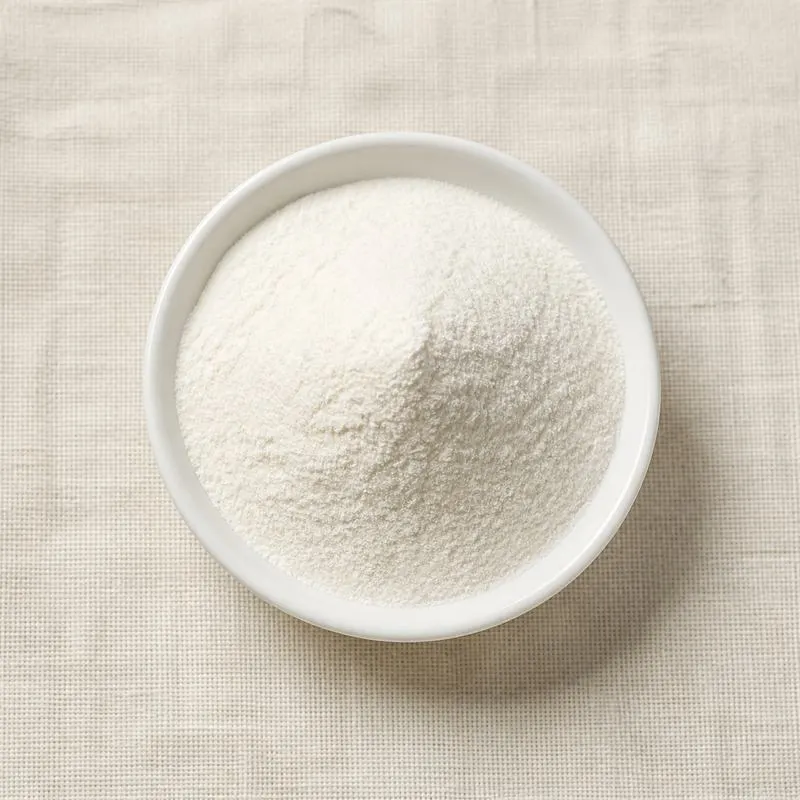
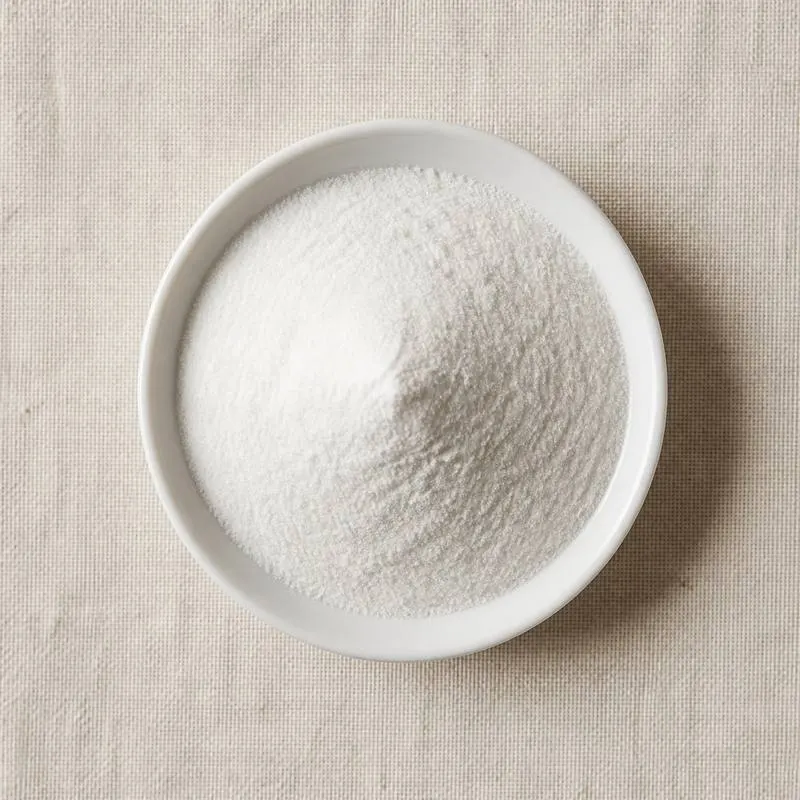
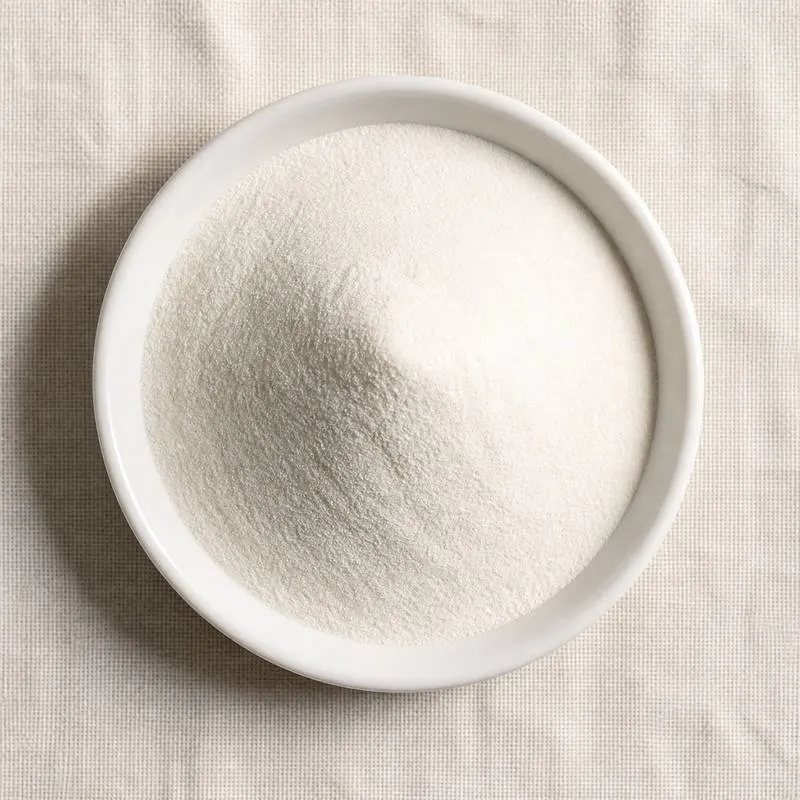
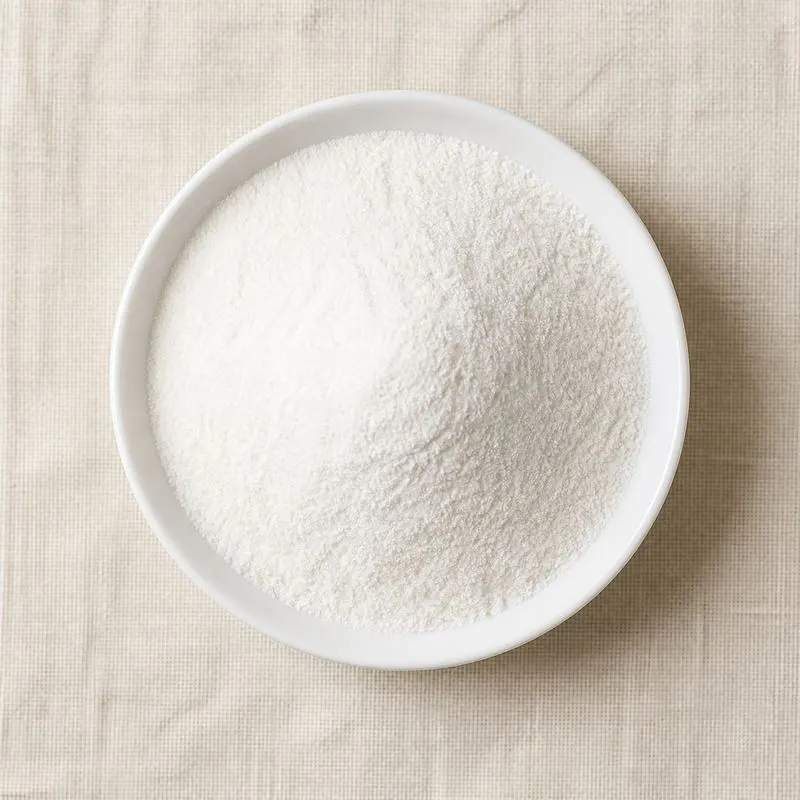
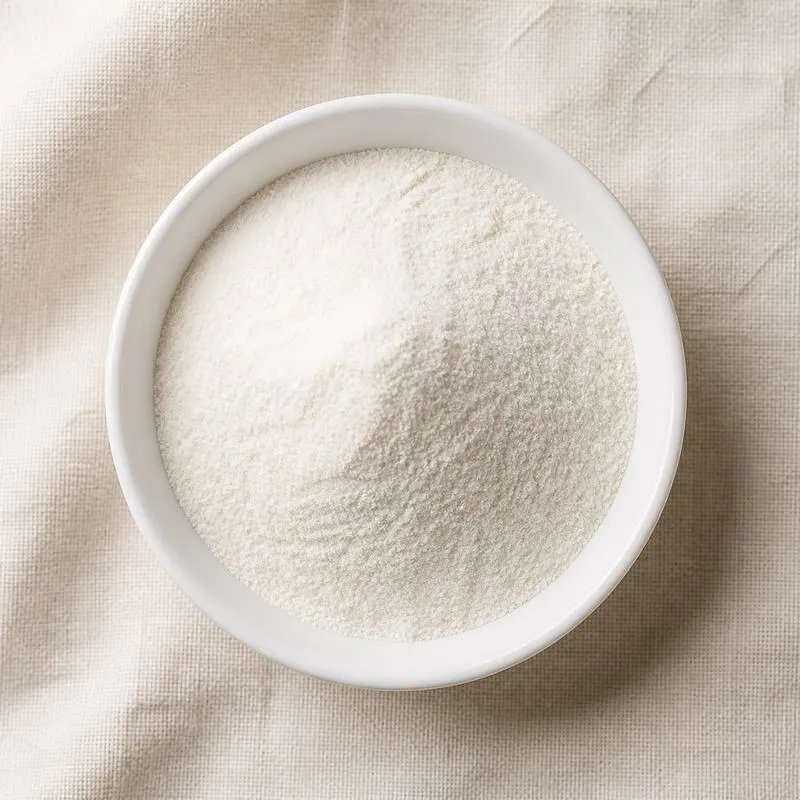
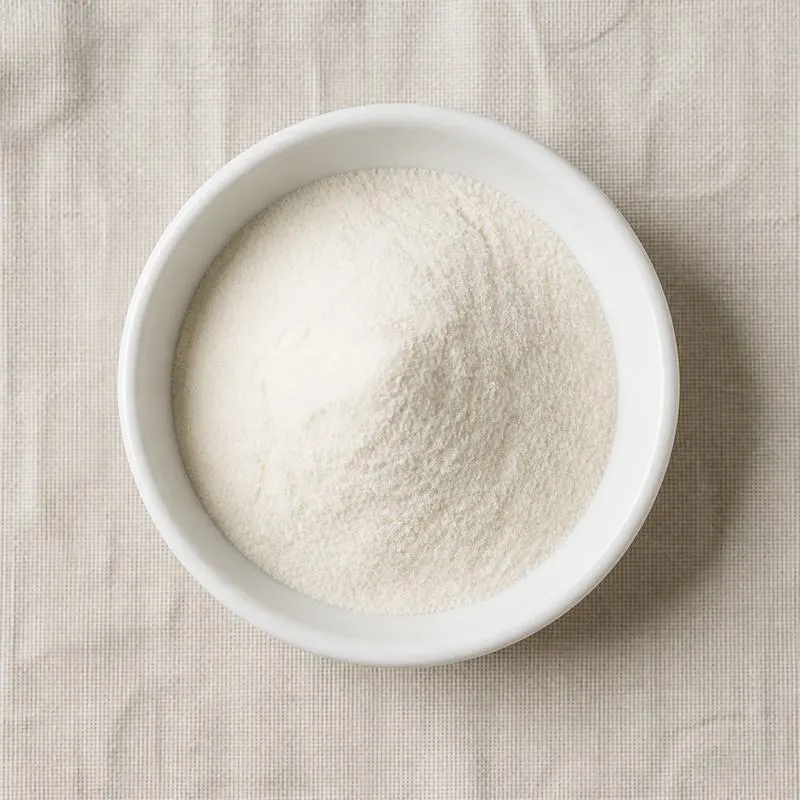
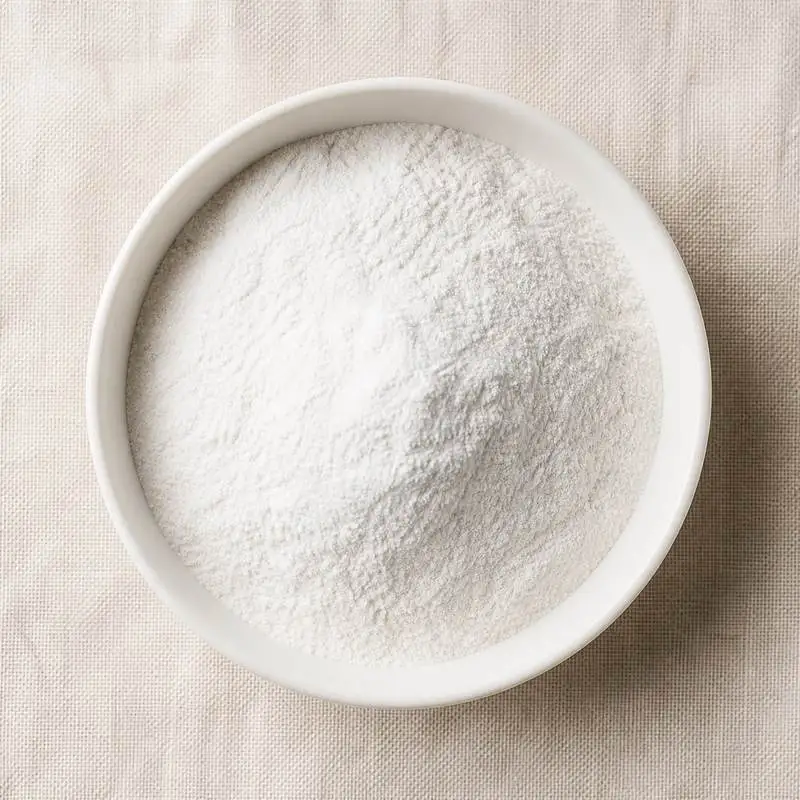
What distinguishes it from xanthan gum in practical use is tolerance. Solutions hold viscosity in high salinity brines, at elevated temperature and across a wide pH range, and they survive freeze and thaw cycling, conditions that degrade most other water soluble polymers. It is an off-white to cream free-flowing powder, soluble in cold and hot water, and is dosed at very low concentrations because of the viscosity it develops.
We source bulk Dsta Gum from top China manufacturers for our partners. The manufacturer is in Inner Mongolia. A smaller requirement can ship in a combined container with other ingredients.
Please send the grade you need, the volume and your destination port, and we will come back with a solution and a price.
or call +86-21-6858 0751
- Function
- Thickener / Hydrocolloid
Specifications
| Item | Specification |
|---|---|
| Appearance | Off-white to cream free-flowing powder |
| Odour | Slight characteristic fermentation odour |
| Identification | Positive for glucose and rhamnose on hydrolysis |
| Viscosity, 0.3% in deionised water at 3 rpm | Not less than 3,000 mPa s |
| Viscosity Retention in 10% sodium chloride | Not less than 90% |
| Shear Thinning Index | Not less than 5, ratio of low to high shear viscosity |
| Loss on Drying | Not more than 12.0% |
| Total Ash, dry basis | Not more than 15.0% |
| pH, 1% solution | 6.0 to 8.0 |
| Residual Isopropanol | Not more than 0.5% |
| Particle Size | Not less than 95% through 80 mesh |
| Lead | Not more than 5 mg/kg |
| Arsenic | Not more than 3 mg/kg |
| Total Plate Count | Not more than 10,000 CFU/g |
| Yeast and Mould | Not more than 500 CFU/g |
Common Markets Grades
DSTA gum is traded by viscosity, measured on a dilute solution at low shear rate, and by dispersibility, since a polymer of this molecular weight will lump badly if it is not either coarsely granulated or surface treated for dispersion. Standard powder and dispersible or agglomerated grades are the usual options, with fine mesh material used where fast hydration in a well agitated system is required.
Grades are further separated by intended sector. Construction grade is specified for its effect on mortar and concrete workability and is tested by slump retention and segregation resistance rather than by solution viscosity alone. Oilfield grade is specified by rheology in brine at temperature and by filtration behaviour. Personal care grade is specified for clarity, colour and microbiology. The polymer chemistry is the same across grades; the difference lies in purity, particle size and the standardising and testing regime, so the sector should be stated on enquiry.
Applications
- Self compacting and pumped concrete, where the polymer holds aggregate in suspension and prevents segregation and bleeding without stiffening the mix
- Cement grouts, mortars and tile adhesives, improving cohesion, workability and slump retention
- Oil well drilling fluids, suspending barite and carrying cuttings while remaining pumpable under shear
- Well cementing and completion fluids, holding solids in high salinity brine at downhole temperature
- Enhanced oil recovery, providing viscosity in reservoir brine where other polymers degrade
- Agricultural spray formulations, suspending wettable powders and reducing drift
- Household and industrial cleaners, suspending abrasive and insoluble particles in a pourable liquid
- Personal care emulsions and gels, giving suspension and a light non-tacky texture at low dose
- Ceramic and mineral processing slurries requiring stable suspension over long standing periods
China Manufacturers of Dsta Gum
Top Dsta Gum manufacturers in China.

Company names and logos are the property of the manufacturers themselves. They are listed here because our own directory records them as producing this ingredient. A listing is not an endorsement by them, and we do not represent them or speak on their behalf.
Regulatory Status
DSTA gum is an industrial polysaccharide rather than a food additive. It does not hold an E number, it is not listed among the authorised food additives in the European Union, and it is not the subject of a food additive regulation or a generally recognised as safe affirmation in the United States. It should not be used in food on the assumption that its relationship to gellan or welan gum gives it a food status; those are separately authorised substances and this one is not.
Its regulatory obligations are those of an industrial chemical. In the European Union that means registration and safety data sheet obligations under the chemicals regulation where volumes require it, and compliance with the classification and labelling rules. In the United States it falls under the chemical inventory and hazard communication framework. Construction use is governed by the concrete admixture standards applicable in the market, and oilfield use by the discharge and environmental classification schemes that apply offshore, including the harmonised offshore chemical notification arrangements in the North Sea. Where a producer offers a grade for personal care use, the relevant cosmetic ingredient rules and safety assessment apply.
Manufacturing Process
Production is a submerged aerobic fermentation. A Sphingomonas production strain is propagated through seed stages into a stirred tank fermenter charged with a sterilised medium of a carbohydrate source, usually glucose or a starch hydrolysate, together with a nitrogen source, phosphate and trace minerals. The fermentation runs for one to three days with vigorous aeration and agitation, with pH and temperature held to setpoints, and the broth becomes progressively more viscous as the polysaccharide accumulates outside the cells, which is itself the limiting factor because oxygen transfer falls as viscosity rises.
At the end of the run the broth is pasteurised to kill the organism, then diluted and treated to remove cell mass, typically by a combination of heating, enzyme treatment to lyse cell debris and filtration or centrifugation, since a polymer of this viscosity cannot simply be filtered clean. The clarified broth is then precipitated by mixing with isopropanol or ethanol, which throws the polysaccharide out as fibres. The precipitate is separated, pressed, washed with fresh alcohol to remove residual medium and salts, and desolventised. It is dried in a hot air or fluid bed dryer, milled to the specified mesh, sieved and blended across batches to a uniform viscosity. Alcohol is recovered by distillation and returned to the process.