Ethyl Flavoring Agent
Ethyl flavouring agent is the name under which ethyl maltol is sold in the Chinese catering and food ingredient trade, where it is treated as a general purpose aroma enhancer rather than as a flavour with a profile of its own. The substance is 2-ethyl-3-hydroxy-4H-pyran-4-one, registered under CAS number 4940-11-8 and carrying FEMA number 3487, and it is the ethyl homologue of maltol.
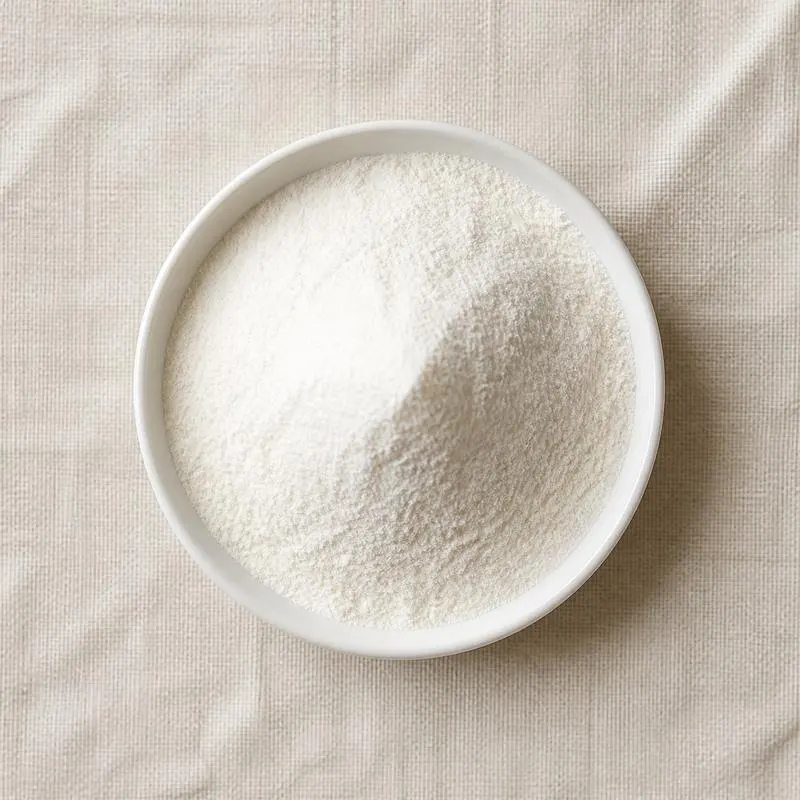
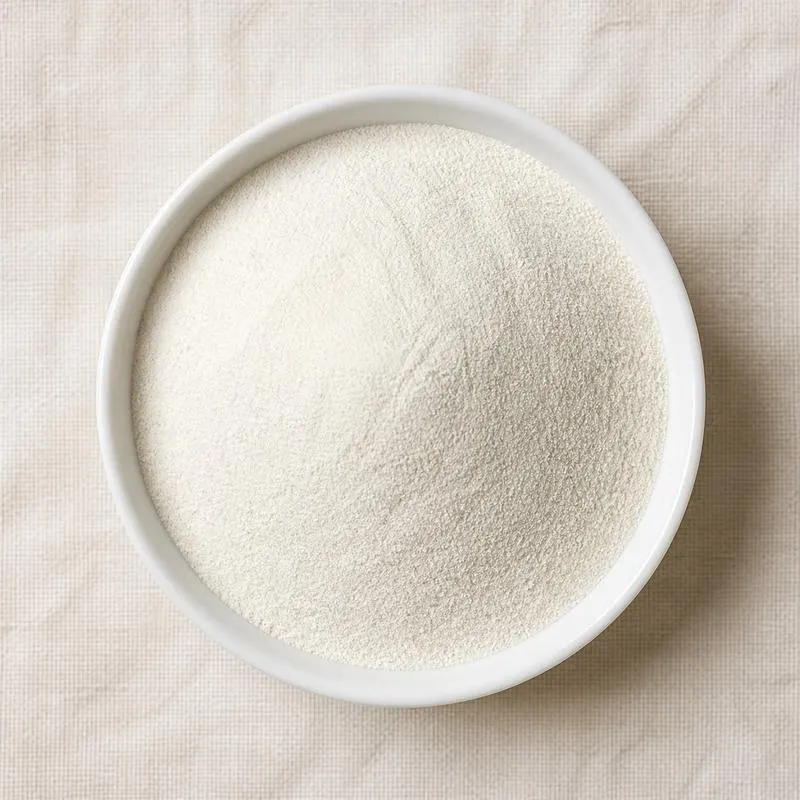
It is a white crystalline powder with a sweet, warm, caramellic and fruity odour usually described as candy floss or cooked sugar, and it is several times more powerful than maltol on a weight basis. Its commercial importance rests less on that aroma than on what it does to other tastes. At low dosage it increases the perceived sweetness of a system, which allows sugar or sweetener to be reduced, rounds off harsh or bitter edges, and gives a general impression of richness and body. It also masks the metallic and lingering notes of high intensity sweeteners and the cardboard notes of oxidised fat, which is why it appears in formulations that have nothing caramel about them.
The material melts a little under ninety degrees Celsius, is moderately soluble in water and freely soluble in ethanol and propylene glycol, and is stable to heat and to the pH range met in food. It chelates iron, and a solution in contact with iron will discolour, so stainless or lined equipment is used.
We source bulk Ethyl Flavoring Agent from top China manufacturers for our partners. The manufacturer is in Shandong. A smaller requirement can ship in a combined container with other ingredients.
Please send the grade you need, the volume and your destination port, and we will come back with a solution and a price.
or call +86-21-6858 0751
- Function
- Flavours and Aromas
Specifications
| Item | Specification |
|---|---|
| Appearance | White crystalline powder, free from discolouration |
| Odour | Sweet, caramellic and fruity, characteristic |
| Assay | Not less than 99.0 percent on the dried basis |
| Identification | Infrared spectrum and ferric chloride test conform |
| Melting Range | 89 to 93 °C |
| Loss on Drying | Not more than 0.5 percent |
| Residue on Ignition | Not more than 0.2 percent |
| Related Substances | Any single impurity not more than 0.5 percent |
| Solubility | Soluble in water at 20 °C, freely soluble in ethanol and propylene glycol |
| Solution Colour | Clear and near colourless at 1 percent in water |
| Iron | Not more than 10 mg/kg |
| Residual Solvent | Within the applicable limits for the solvents used |
| Lead | Not more than 2 mg/kg |
| Arsenic | Not more than 1 mg/kg |
Common Markets Grades
Ethyl maltol is a single defined substance, so grades differ in purity and physical form rather than in composition. Food grade material carries not less than ninety nine percent assay, with limits on melting range, loss on drying, residue on ignition and related substances. Pharmaceutical grades carry additional identification and impurity testing where the material is used in oral dosage forms, and tobacco grades are held to their own residual solvent limits.
Physical presentation is the practical distinction. Crystalline powder is the standard article, milled powder to a stated mesh is used for dry blending, and granulated grades are offered where free flow and dust control matter, since the fine powder is light and generates airborne dust during handling. Because the substance is potent and dosed at parts per million, ready made solutions in propylene glycol, ethanol or water at one to ten percent are widely traded so that a manufacturer can dose by volume. Maltol itself remains a separate article with a milder, more distinctly caramel character, and the two are not interchangeable at equal weight.
Applications
- Soft drinks and juice drinks, rounding the profile and increasing perceived sweetness
- Confectionery, in caramel, toffee, fruit and milk profiles
- Bakery and biscuit, adding a baked sugar impression
- Chocolate and compound coatings, where it deepens the cocoa impression
- Dairy drinks, ice cream and frozen dessert
- Reduced sugar and sweetener based products, masking the lingering finish of high intensity sweeteners
- Savoury seasoning and instant noodles, at low dosage to round harshness
- Tobacco and vapour products, as a sweetening and smoothing agent
- Fine fragrance and personal care, in gourmand and sweet accords
- Pharmaceutical syrups and chewable tablets, masking bitterness of actives
China Manufacturers of Ethyl Flavoring Agent
Top Ethyl Flavoring Agent manufacturers in China.

Company names and logos are the property of the manufacturers themselves. They are listed here because our own directory records them as producing this ingredient. A listing is not an endorsement by them, and we do not represent them or speak on their behalf.
Regulatory Status
In the United States ethyl maltol is used as a flavouring substance and holds FEMA GRAS status under FEMA number 3487, and it appears among the synthetic flavouring substances permitted for use in food. It is not a food additive requiring petition, and the declaration on a finished food follows 21 CFR 101.22 according to whether the flavour system is natural or artificial, with synthetic ethyl maltol supporting only an artificial declaration.
In the European Union maltol and ethyl maltol have historically carried the numbers E636 and E637 as flavour enhancers, and ethyl maltol is now handled as a flavouring substance on the Union list under Regulation (EC) No 1334/2008 rather than as an additive, so it may be used in accordance with that regulation and is declared as a flavouring. Purity requirements follow the specifications adopted for the substance. In cosmetic use Regulation (EC) No 1223/2009 applies with declaration under the INCI name, and fragrance use is additionally subject to the International Fragrance Association standards. Codex addresses flavourings through its general guidelines for their use, which rest on the JECFA evaluations, and maltol and its ethyl homologue have been evaluated within the furan derivative flavouring groups.
Manufacturing Process
Ethyl maltol is made by synthesis, and the industrial routes build the hydroxypyranone ring from furan derivatives obtained from agricultural pentosans. Furfural, produced by acid hydrolysis and dehydration of the hemicellulose in corn cobs, bagasse or rice hulls, is the usual point of departure. It is converted through hydrogenation and alkylation into an ethyl substituted furan intermediate, which is then oxidised and chlorinated to open and re-close the ring as a chlorinated pyranone. Alkaline hydrolysis of that intermediate installs the hydroxyl group and gives the finished pyranone skeleton.
The reaction mass is neutralised and the crude product recovered by extraction or by direct crystallisation. Purification is by recrystallisation from water or from an aqueous alcohol mixture, sometimes preceded by activated carbon treatment to remove colour bodies, since the finished article is required to be white and a faint pink or brown cast indicates residual iron complexes or oxidation products. Crystals are centrifuged, washed, dried under vacuum at a temperature well below the melting point, then milled or granulated to the ordered mesh and packed in lined fibre drums or bags. Release testing covers assay by liquid chromatography or titration, melting range, loss on drying, residue on ignition, related substances, iron, heavy metals and residual solvent, with an odour comparison against a retained reference.