Eu Matcha
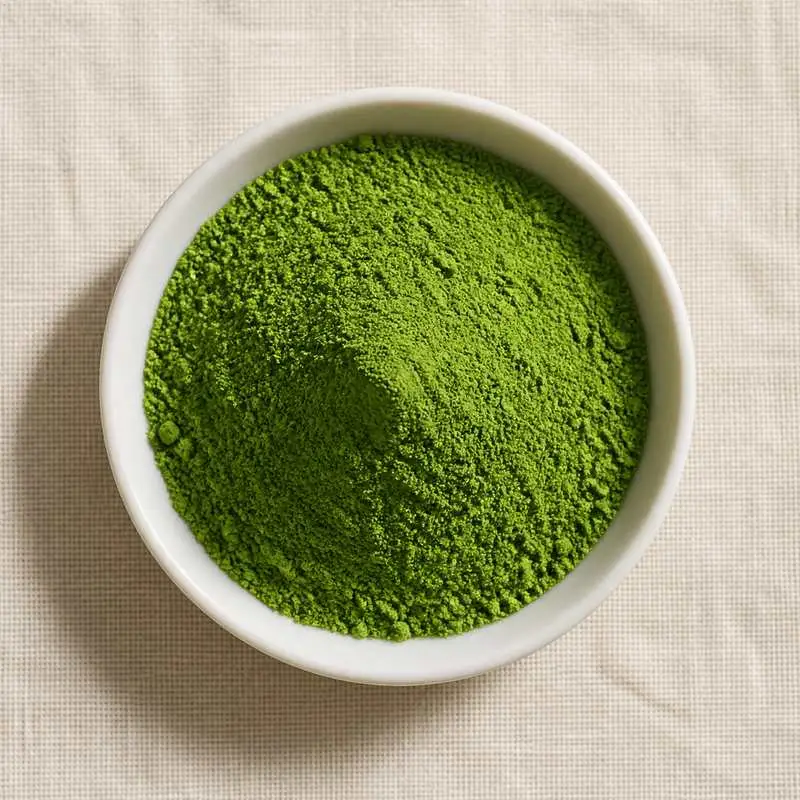
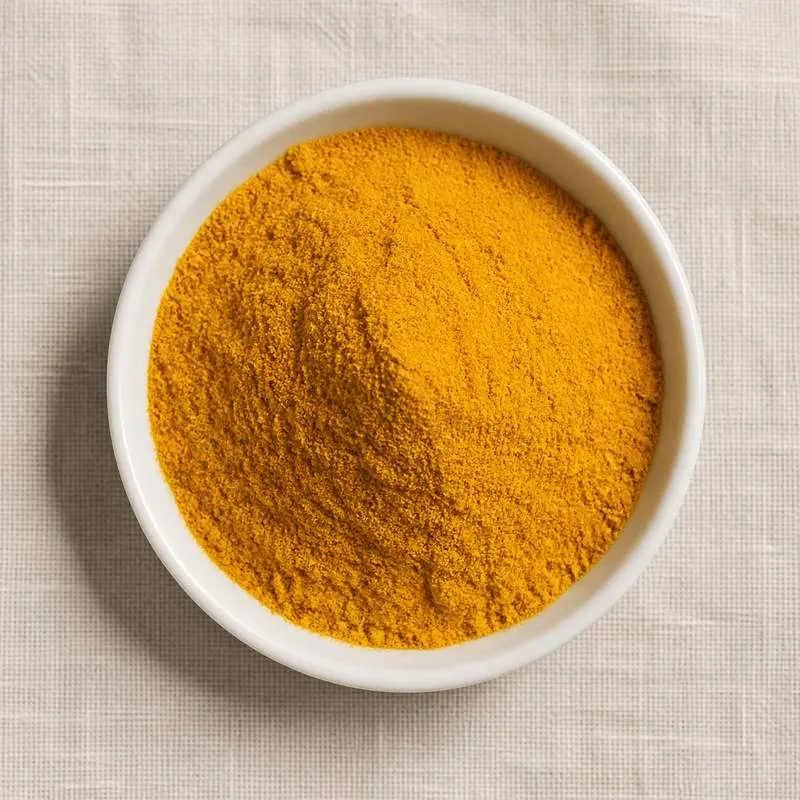
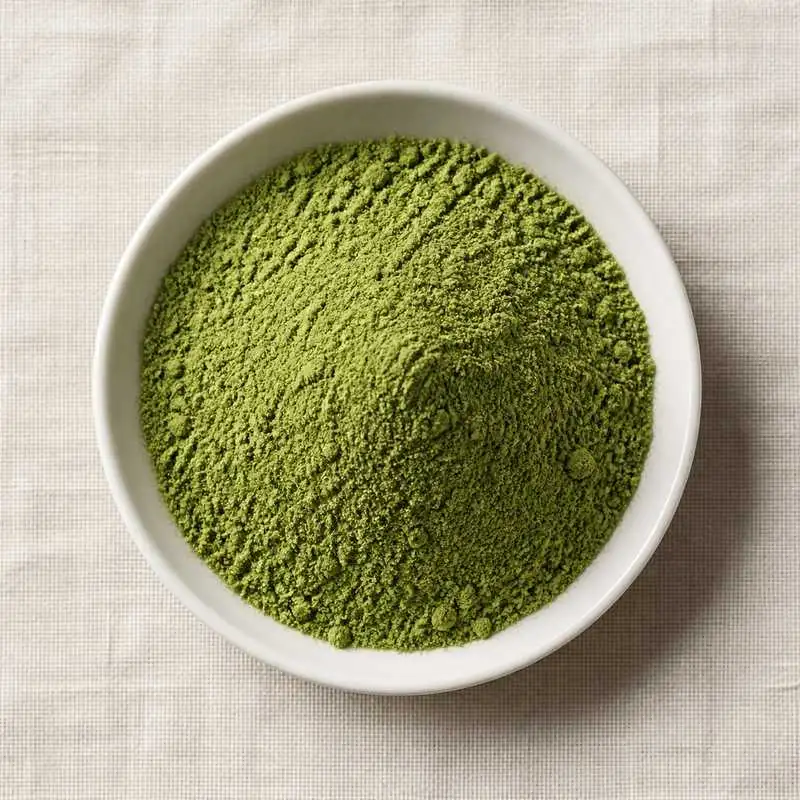
Eu Matcha is a stone-ground green tea powder produced from shade-grown leaves of Camellia sinensis, manufactured and tested to comply with European Union pesticide maximum residue limits (MRLs).
The product is not necessarily certified organic, but it is produced from gardens managed with EU-compliant pesticide programs and screened against the full EU multi-residue panel. The result is a cleaner-than-typical export-grade matcha at a lower price point than certified organic.
We source bulk Eu Matcha from top China manufacturers for our partners. The manufacturer is in Shanghai. A smaller requirement can ship in a combined container with other ingredients.
Please send the grade you need, the volume and your destination port, and we will come back with a solution and a price.
or call +86-21-6858 0751
- Packaging
- 25 kg kraft paper bag with PE inner liner
- ISO 9001
- HACCP
- Halal
- Kosher
Specifications
Grades / Types Available: Organic, Conventional
| Item | Specification |
|---|---|
| Appearance | Bright vivid green ultra-fine powder |
| Mesh Size | ≥ 1000 mesh (particle size ≤ 15 μm) |
| Moisture | ≤ 5.0% |
| Total Catechins | ≥ 10% |
| Ash | ≤ 7.0% |
| Pesticide Residues | Compliant with EU MRLs |
| Heavy Metals | ≤ EU limits |
| Total Plate Count | ≤ 10,000 cfu/g |
| Purity/Assay | ≥ 99% (Food Grade) |
| Moisture/Loss on Drying | < 5% (Food Grade) |
| pH | 6.5 - 7.5 (Food Grade) |
| Particle Size/Mesh | 100 mesh (Food Grade) |
| Lead | < 0.5 ppm (Food Grade) |
| Arsenic | < 0.1 ppm (Food Grade) |
| Yeast & Mold | < 100 cfu/g (Food Grade) |
Common Markets Grades
Eu Matcha is graded across ceremonial, premium, and culinary tiers.
The ceremonial tier is drawn from first-flush spring harvest leaves, with vivid green colour, fine particle size, and the lowest bitterness profile.
The premium tier balances colour and flavour for latte and dessert use at a working price point.
The culinary tier is built for bakery, ice cream, and confectionery applications where colour depth and cost matter more than nuance.
All tiers are tested against the EU MRL panel covering chlorpyrifos, paraquat, glyphosate, anthraquinone, and the broader residue list defined under Regulation (EC) 396/2005. Certificates of analysis include actual residue values rather than only pass/fail flags.
Particle size is held below 20 microns through laser-diffraction QC, and colour is reported as a/b values on every lot.
Applications
- Matcha lattes for European cafe chains
- Ready-to-drink bottled matcha beverages distributed in the EU and UK
- Ice cream and gelato in European retail
- Bakery and confectionery products for EU-market export
- Energy bars and breakfast cereals
- Yogurt and plant-based dairy alternatives
- Smoothies and protein shakes
- Chocolate, truffles, and confectionery centres
- Sauces and dressings in fusion cuisine
- Cosmetic and personal-care formulations
Brands Using Eu Matcha
Widely-distributed consumer products that list Eu Matcha on the ingredient label.
- Aiya EuropeAiya Organic Ceremonial Matcha (EU-certified) ↗Authentic Japanese ceremonial matcha imported into Europe by Aiya Europe GmbH (Hamburg/Vienna); certified to EU organic standards (also USDA-NOP and JAS). Aiya supplies approx. 90% of the European matcha market.Label verified 2026-05-24
- Aiya EuropeAiya Matcha Kotobuki (Ceremonial Organic) ↗Ceremonial-grade organic matcha distributed by Aiya Europe; meets EU organic MRL requirements, recommended for traditional Usucha preparation.Label verified 2026-05-24
- Ippodo TeaIppodo Ummon Matcha (40g) ↗Kyoto matcha sold through Ippodo's global storefront with EU distribution; ceremonial-grade matcha (Ummon) meeting Japanese export specs aligned with EU pesticide MRLs.Label verified 2026-05-24
- Mizuba Tea Co.Nagomi Ceremonial Organic Matcha ↗JAS-certified organic ceremonial matcha from Uji, Japan; grown solely with organic fertilizers and no agricultural chemicals, meeting EU organic-equivalent standards.Label verified 2026-05-24
Brand names, product names and logos are the property of their owners. They appear here as published evidence that the ingredient is used, taken from the brand's own label or website. Their appearance is not an endorsement, and it does not mean the brand buys from us or from any manufacturer listed on this site.
China Manufacturers of Eu Matcha
Top Eu Matcha manufacturers in China.

Company names and logos are the property of the manufacturers themselves. They are listed here because our own directory records them as producing this ingredient. A listing is not an endorsement by them, and we do not represent them or speak on their behalf.
How We Help Source Eu Matcha
Direct Factory Sourcing
We run the whole process: selecting the manufacturer from the top Chinese food ingredient producers, negotiating the price, verifying quality, and coordinating the logistics. You deal with us instead of with several factories at once.
Original Packaging and Documents from the Manufacturer
The manufacturer sends your Eu Matcha out of its own factory in the original packing, through to your destination port. The COA, COO, MSDS, TDS and any certifications reach you from the manufacturer as well.
Free Samples and Lead Time
We send 100 to 500 g free for your own laboratory to test and you cover only the courier, usually within 2 to 3 working days. ETD is usually within 7 to 15 days once the order is confirmed, and we check that date against the factory's own manufacturing schedule before we give it to you.
Combined Shipment
We can load Eu Matcha together with other ingredients such as Astaxanthin, Dehydrated Garlic and Lutein into one 20' FCL. If your quantity is small, we can also ship LCL.
Regulatory Status
Eu Matcha is positioned for EU and UK markets, where pesticide MRLs under Regulation (EC) 396/2005 are stricter than the residue limits applied in many non-EU jurisdictions.
The product itself is a conventional food and does not require any premarket authorisation. Standard food-labelling rules apply under Regulation (EU) 1169/2011.
Compliance is documented through certificates of analysis citing measured values for each pesticide on the EU panel, including chlorpyrifos (LOQ-level enforcement), anthraquinone (often the most challenging residue in tea), paraquat, and glyphosate.
The Japanese Agricultural Standard (JAS) for matcha is not a regulatory requirement for export but is often referenced for cultivation and processing definitions.
Halal, Kosher, and Non-GMO Project verifications exist on request. The product is suitable for EU food and beverage manufacturers needing residue assurance without paying the organic premium.
Manufacturing Process
Tea gardens follow shading protocols of three to four weeks before harvest, in line with traditional tencha production.
Pest and disease management is built around inputs cleared for use under EU MRL standards. Some prohibited or restricted compounds common in non-EU production (chlorpyrifos, paraquat, certain neonicotinoids) are excluded from the program at the field level.
Leaves are steamed within hours of harvest to halt enzymatic browning, dried without rolling, then destemmed and deveined to leave only the leaf flesh.
The cleaned tencha is stone-ground in granite mills to a particle size below 20 microns. The powder is packed under nitrogen in light-blocking pouches or cans.
Every lot is screened against the full EU multi-residue panel by an ISO 17025 accredited laboratory before release. Material that fails any individual MRL is downgraded out of the EU specification.