Ginger Oil
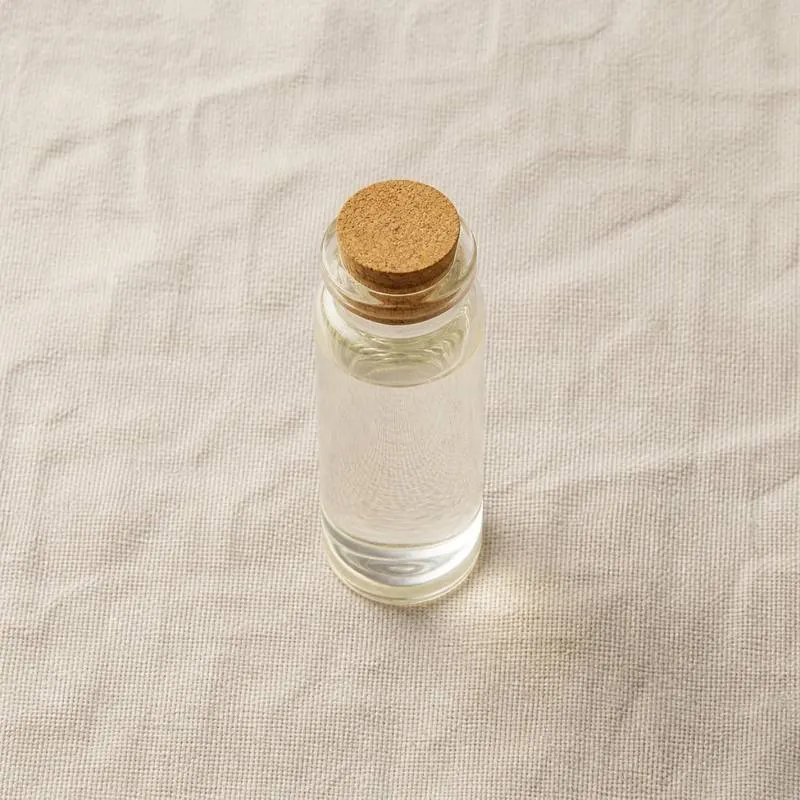
Ginger oil is the volatile oil obtained from the rhizome of Zingiber officinale, most often by steam distillation of dried and ground ginger. It is a pale yellow to amber free flowing liquid carrying the warm, woody, fresh-citrus top note of ginger, and it is used as a flavour and fragrance material rather than as a fixed oil.
Its composition is dominated by sesquiterpene hydrocarbons, with zingiberene usually the largest single component at roughly 20 to 35 percent, alongside beta-sesquiphellandrene, ar-curcumene, beta-bisabolene and the monoterpenes camphene, alpha-pinene and 1,8-cineole that supply the fresh lift. The pungency of ginger, by contrast, lies in the non-volatile gingerols and shogaols, which are not carried over in steam distillation, so distilled ginger oil is aromatic but not hot. Where pungency is wanted the trade uses ginger oleoresin, a solvent extract, or a blend of the two.
The oil is soluble in ethanol and in vegetable oils and effectively insoluble in water. Rich in terpene hydrocarbons, it oxidises and polymerises on exposure to air and light, so it is stored cold under nitrogen in filled containers.
We source bulk Ginger Oil from top China manufacturers for our partners, working with several of them. The manufacturers are mostly in Anhui, Henan and Shandong. A smaller requirement can ship in a combined container with other ingredients.
Please send the grade you need, the volume and your destination port, and we will come back with a solution and a price.
or call +86-21-6858 0751
- Function
- Plant extract
Specifications
| Item | Specification |
|---|---|
| Appearance | Clear pale yellow to amber mobile liquid |
| Odour | Warm, woody and fresh, characteristic of ginger |
| Zingiberene | 20.0 to 35.0 percent by GC |
| Total sesquiterpene hydrocarbons | 50.0 percent minimum by GC |
| Identification | GC profile conforms to ginger oil reference chromatogram |
| Relative density at 20 degrees C | 0.871 to 0.882 |
| Refractive index at 20 degrees C | 1.488 to 1.494 |
| Optical rotation at 20 degrees C | Minus 28 to minus 45 degrees |
| Solubility in 90 percent ethanol | Soluble in 5 volumes, clear solution |
| Acid value | 2.0 maximum |
| Flash point | 60 degrees C minimum |
| Heavy metals (as Pb) | 10 mg/kg maximum |
| Lead | 1.0 mg/kg maximum |
| Arsenic | 1.0 mg/kg maximum |
Common Markets Grades
The principal grades are steam distilled oil from dried rhizome, which is the standard article, and oil distilled from fresh rhizome, which is lighter and greener and is bought where a bright top note matters. Country of origin is quoted alongside the grade because profile varies, with Chinese, Indian, Nigerian and Indonesian oils each having a recognised character. Carbon dioxide extracted ginger is a separate product that carries both the volatiles and the pungent principles.
Refined and processed grades are also traded. Terpeneless and folded oils are produced by vacuum fractionation to concentrate the oxygenated fraction and improve solubility in aqueous flavour systems. Water-soluble forms come as emulsions or as spray-dried powders on a gum acacia or modified starch carrier. Ginger oleoresin is specified separately on its gingerol content and on volatile oil content. Organic certified lots are available in all the main forms.
Applications
- Carbonated soft drinks, particularly ginger ale and ginger beer, where the distilled oil supplies aroma and an emulsion or fold is used for dispersion
- Confectionery and bakery flavourings for ginger biscuits, cakes and hard candy
- Savoury seasoning blends and marinades, where it standardises the aroma that ground ginger delivers inconsistently
- Meat and poultry processing, contributing a warm spice note and masking off-odours
- Instant soups, sauces and noodle seasoning sachets, usually as a dry-carrier powder
- Alcoholic drinks including ginger liqueurs, spiced rums and botanical spirits
- Dairy and frozen dessert flavour bases where an oil-soluble spice note is needed
- Supplement softgels and digestive preparations, often blended with oleoresin for pungency
- Fragrance compounding in warm spicy and oriental accords
- Oral care and confectionery breath products for a warming note
Brands Using Ginger Oil
Widely-distributed consumer products that list Ginger Oil on the ingredient label.
- Aura CaciaGinger Essential Oil, 0.5 fl. oz. ↗Single-ingredient aromatherapy bottle listing Zingiber Officinale (Ginger) Oil, steam distilled from dried ground ginger rhizomes.Label verified 2026-08-31
- Edens GardenGinger Essential Oil ↗Undiluted ginger oil steam distilled from the root in Sri Lanka, with the botanical name Zingiber officinale given on the product page.Label verified 2026-08-31
- Rocky Mountain OilsGinger Root Essential Oil ↗Bottle whose ingredient line reads Ginger Root Oil, identified on the page as Zingiber officinale distilled from the root.Label verified 2026-08-31
Brand names, product names and logos are the property of their owners. They appear here as published evidence that the ingredient is used, taken from the brand's own label or website. Their appearance is not an endorsement, and it does not mean the brand buys from us or from any manufacturer listed on this site.
China Manufacturers of Ginger Oil
Top Ginger Oil manufacturers in China.
 Anhui Garlicare Bio-tech Co., Ltd.3 ingredients in the directory
- Henan Mingtian Food Co., Ltd.4 ingredients in the directory
- JiangXi HaiRui Natural Plant Co., Ltd.6 ingredients in the directory
 Jinan Aorun Technology Co., Ltd.9 ingredients in the directory
 Linquan Zerun Plant & Spice Co., Ltd.9 ingredients in the directory
- Synthite (Dezhou) Biotech Co., Ltd.4 ingredients in the directory
 Zhongjing Food Co., Ltd.4 ingredients in the directory
Company names and logos are the property of the manufacturers themselves. They are listed here because our own directory records them as producing this ingredient. A listing is not an endorsement by them, and we do not represent them or speak on their behalf.
Regulatory Status
Ginger and ginger-derived flavouring preparations have long-standing status in the United States. 21 CFR 182.20 lists ginger, its oil and its oleoresin among the essential oils, oleoresins and natural extractives that are generally recognised as safe for their intended use in food, and the oil carries a FEMA GRAS number as a flavouring substance. Its use is therefore as a flavouring at levels consistent with good manufacturing practice rather than under a food additive regulation with numerical limits.
In the European Union ginger oil is a flavouring preparation obtained from a food source and is handled under the flavourings regulation, which does not require individual authorisation for natural preparations of this type in the way it does for chemically defined substances. It has no E number, since it is a flavouring rather than an additive. The relevant Codex texts are the general provisions for flavourings and the standards covering spices and culinary herbs, which set out the identity and quality expectations for dried ginger as the raw material.
Manufacturing Process
Dried ginger rhizome is cleaned and coarsely ground, since particle size decides how readily the oil cells release their contents; grinding too fine causes matting in the still and grinding too coarse leaves oil behind. The charge is loaded into a stainless steel still and steam is passed through it, typically for six to twelve hours. The vapour of water and volatile oil is condensed, and the oil separates from the aqueous distillate in a Florentine flask by density difference, with the condensate water often recycled to recover dissolved oxygenated components.
The crude oil is dried over anhydrous sodium sulphate or by settling, filtered, and stored under nitrogen. Where a concentrated grade is required the oil goes to a vacuum fractionating column, in which the terpene hydrocarbons are taken overhead at low pressure and the oxygenated fraction is retained, giving a folded or terpeneless oil. Emulsified and powdered forms are prepared separately by homogenising the oil with a gum or modified starch solution and spray drying. Ginger oleoresin is made by a different process, by percolating ground rhizome with ethanol or acetone and stripping the solvent under vacuum.