Astaxanthin
Astaxanthin is a keto-carotenoid pigment with the molecular formula C₄₀H₅₂O₄, responsible for the pink to deep red colour of salmon flesh, shrimp shells, krill, lobster, and flamingo plumage. It is one of the most potent lipid-soluble antioxidants identified in nature.
Commercial astaxanthin is produced by microalgal cultivation (Haematococcus pluvialis), by yeast fermentation (Xanthophyllomyces dendrorhous, also known as Phaffia rhodozyma), and by chemical synthesis. The three sources differ in isomer profile and end-market positioning.
We source bulk Astaxanthin from top China manufacturers for our partners, working with several of them. The manufacturers are mostly in Beijing, Zhejiang and Hubei. For this ingredient the minimum order is 50 kg, and a smaller requirement can ship in a combined container with other ingredients.
Please send the grade you need, the volume and your destination port, and we will come back with a solution and a price.
or call +86-21-6858 0751
- Minimum order
- 50 kg
- Packaging
- 20 kg fibre drum, light-shielded
- ISO 9001
- HACCP
- Halal
- Kosher
Specifications
| Item | Specification |
|---|---|
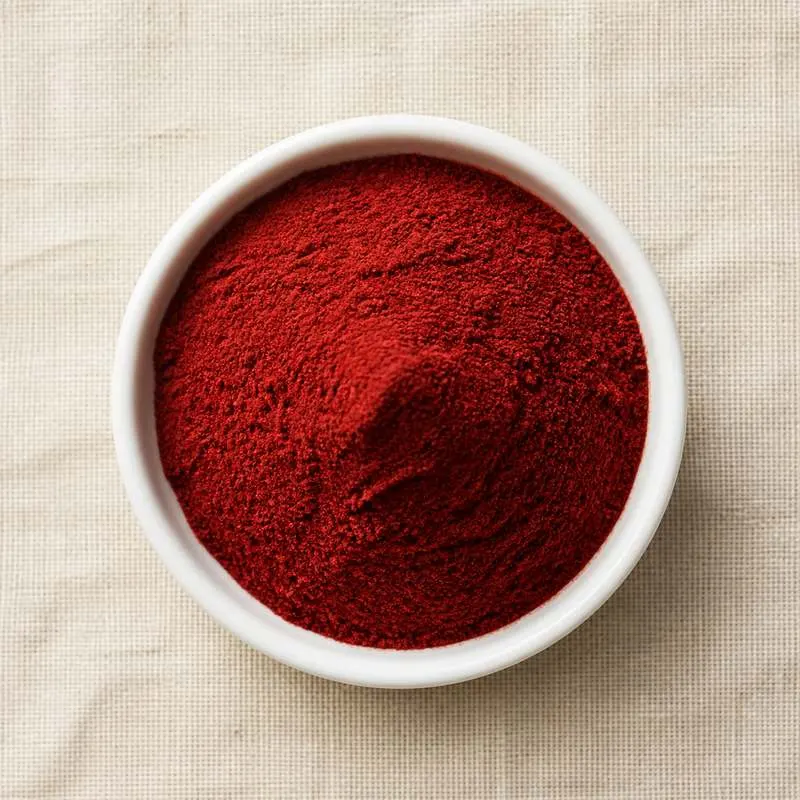
| Appearance | Dark red to brownish-red powder, oleoresin, or beadlet |
| Astaxanthin content (HPLC) | 2% / 2.5% / 5% / 10% (grade dependent) |
| Total carotenoids | typically 1.05 times astaxanthin content |
| Loss on drying | ≤ 8.0% |
| Heavy metals (as Pb) | ≤ 2 mg/kg |
| Residual solvents | Within ICH Q3C limits |
| Total plate count | ≤ 1000 cfu/g |
| Source | Haematococcus pluvialis microalgae |
Common Markets Grades
Astaxanthin comes in oleoresin, beadlet, and crystalline formats, with the source determining the dominant market.
Natural astaxanthin oleoresin from Haematococcus pluvialis carries 5 to 15 percent astaxanthin in a vegetable oil base, often supercritical-CO₂-extracted. It is the supplement industry's standard material for softgel filling.
Beadlets and cold-water-dispersible powders at 1 to 5 percent are produced for tablets, capsules, beverages, and food fortification, built on starch, gelatin, or pectin matrices.
Synthetic astaxanthin at 8 to 10 percent in a refined oil or as a stabilised beadlet is the dominant format for aquaculture feed, where the cost per gram is the deciding factor. The synthetic material is a racemic mixture of three optical isomers, while natural Haematococcus material is almost entirely the 3S,3'S isomer.
Yeast-fermented astaxanthin from Phaffia is a dried biomass typically standardised to 0.4 to 1 percent astaxanthin, used in salmonid feed where a yeast-cell carrier is acceptable.
Applications
- Dietary supplements positioned for antioxidant support, eye health, and skin protection
- Sports nutrition products targeting recovery, endurance, and oxidative stress markers
- Cosmetic anti-aging serums, eye creams, and after-sun lotions
- Functional beverages including wellness shots and beauty-from-within drinks
- Aquaculture feed for salmon, trout, and shrimp to deliver characteristic flesh and shell colour
- Poultry feed for egg yolk pigmentation in premium and free-range product lines
- Pet supplements for joint, eye, and skin support in dogs, cats, and horses
- Combination products with vitamin E, omega-3 fatty acids, or collagen peptides
- Topical formulations for blue-light protection and barrier support
- Liposomal and nano-emulsion delivery systems for premium nutraceutical lines
- Ornamental fish feed including koi, goldfish, and tropical aquarium species
- Reference material in carotenoid analytical chemistry
Brands Using Astaxanthin
Widely-distributed consumer products that list Astaxanthin on the ingredient label.
- Nutrex HawaiiBioAstin Hawaiian Astaxanthin 12mg softgels ↗Nutrex Hawaii BioAstin softgels use natural astaxanthin from Haematococcus pluvialis microalgae grown in ponds at Kona, Hawaii.Label verified 2026-05-24
- NOW FoodsAstaxanthin Extra Strength 10 mg Softgels (AstaReal) ↗NOW Foods' Astaxanthin 10 mg Extra Strength Softgels list natural AstaReal astaxanthin from Haematococcus pluvialis microalgae for antioxidant, eye and skin support.Label verified 2026-05-24
- Sports ResearchTriple Strength Astaxanthin 12 mg Softgels ↗Sports Research Triple Strength Astaxanthin is a 12 mg softgel combining Icelandic astaxanthin from Haematococcus pluvialis with cold-pressed organic virgin coconut oil.Label verified 2026-05-24
- SolgarAstaxanthin 10 mg Softgels ↗Solgar's Astaxanthin 10 mg Softgels deliver natural astaxanthin carotenoid from algae for antioxidant, skin and eye-health support.Label verified 2026-05-24
- Doctor's BestAstaxanthin with AstaReal 6 mg Veggie Softgels ↗Vegan softgels supplying 6 mg AstaReal astaxanthin extracted without solvents from Haematococcus pluvialis microalgae.Label verified 2026-05-24
- Pure EncapsulationsAstaxanthin 4 mg Softgel Capsules ↗Pure Encapsulations' Astaxanthin softgel supplies 4 mg astaxanthin per softgel sourced from Haematococcus pluvialis microalgae for antioxidant, skin, joint and cardiovascular support.Label verified 2026-05-24
Brand names, product names and logos are the property of their owners. They appear here as published evidence that the ingredient is used, taken from the brand's own label or website. Their appearance is not an endorsement, and it does not mean the brand buys from us or from any manufacturer listed on this site.
China Manufacturers of Astaxanthin
Top Astaxanthin manufacturers in China.
 Beijing Gingko Group Biotechnology Co., Ltd.12 ingredients in the directory
 Bgg World3 ingredients in the directory
 CABIO Biotech (Wuhan) Co., Ltd.9 ingredients in the directory
- Innobio Corporation Limited2 ingredients in the directory
- Kunming Biogenic Co., Ltd.3 ingredients in the directory
 Qingdao Borong Biotechnology Co., Ltd.10 ingredients in the directory
 Shanghai Natural Biotechnology Co., Ltd.9 ingredients in the directory
 VDK NaturaSyn Co., Ltd.5 ingredients in the directory
 Zhejiang Tianhecheng Bio-technology Shares Co., Ltd.17 ingredients in the directory
 Zhejiang Wedin Biological Technology Co., Ltd.18 ingredients in the directory
Company names and logos are the property of the manufacturers themselves. They are listed here because our own directory records them as producing this ingredient. A listing is not an endorsement by them, and we do not represent them or speak on their behalf.
How We Help Source Astaxanthin
Direct Factory Sourcing
We run the whole process: selecting the manufacturer from the top Chinese food ingredient producers, negotiating the price, verifying quality, and coordinating the logistics. You deal with us instead of with several factories at once.
Original Packaging and Documents from the Manufacturer
The manufacturer sends your Astaxanthin out of its own factory in the original packing, through to your destination port. The COA, COO, MSDS, TDS and any certifications reach you from the manufacturer as well.
Free Samples and Lead Time
We send 100 to 500 g free for your own laboratory to test and you cover only the courier, usually within 2 to 3 working days. ETD is usually within 7 to 15 days once the order is confirmed, and we check that date against the factory's own manufacturing schedule before we give it to you.
Combined Shipment
We can load Astaxanthin together with other ingredients such as Dehydrated Garlic, Lutein and Matcha into one 20' FCL. If your quantity is small, we can also ship LCL.
Regulatory Status
Astaxanthin is approved across food, supplement, and feed channels, with source-specific conditions.
In the European Union, astaxanthin from Haematococcus pluvialis is authorised as a Novel Food under Regulation (EU) 2017/2470, with defined maximum levels in food supplements for adults. EFSA has established an acceptable daily intake for astaxanthin.
The U.S. Food and Drug Administration has acknowledged multiple GRAS notifications for Haematococcus pluvialis-derived astaxanthin in defined food categories, and it is widely used as a dietary supplement under DSHEA. 21 CFR 73.35 approves synthetic astaxanthin for use in salmonid feed at specified inclusion rates.
Health Canada permits astaxanthin under its Natural Health Products framework. Japan recognises natural astaxanthin as a food ingredient and has an established Foods with Function Claims pathway for vision, skin, and recovery positioning.
Reference material exists in the United States Pharmacopeia. Kosher, Halal, vegan (for microalgal and synthetic material), and non-GMO certifications are widely available depending on the production route.
Manufacturing Process
The three commercial routes follow very different process flows.
The microalgal route uses Haematococcus pluvialis, a freshwater green alga cultivated in two stages. A vegetative green phase in closed photobioreactors builds biomass. The culture is then transferred to open or covered ponds and stressed with high light, nutrient depletion, or salt shock, which triggers cyst formation and massive accumulation of astaxanthin (up to 3 to 5 percent of dry weight). Cysts are harvested, cracked mechanically, and extracted with supercritical CO₂ to yield the natural oleoresin.
The yeast fermentation route grows Xanthophyllomyces dendrorhous in stirred-tank bioreactors on glucose, glycerol, or molasses. The harvested cells are mechanically disrupted, dried, and milled to a free-flowing powder that is typically used directly in animal feed.
The chemical synthesis route originated at Hoffmann-La Roche and is currently operated at scale by BASF and DSM-Firmenich. The synthesis builds the C40 carotenoid skeleton from C15 phosphonium salts via a double Wittig reaction, then introduces the 4,4'-diketo and 3,3'-dihydroxy groups by selective oxidation.
Across all routes, formulators stabilise astaxanthin with antioxidants such as tocopherols and pack the product under inert gas in opaque containers, since the molecule oxidises and isomerises readily.