Curcumin
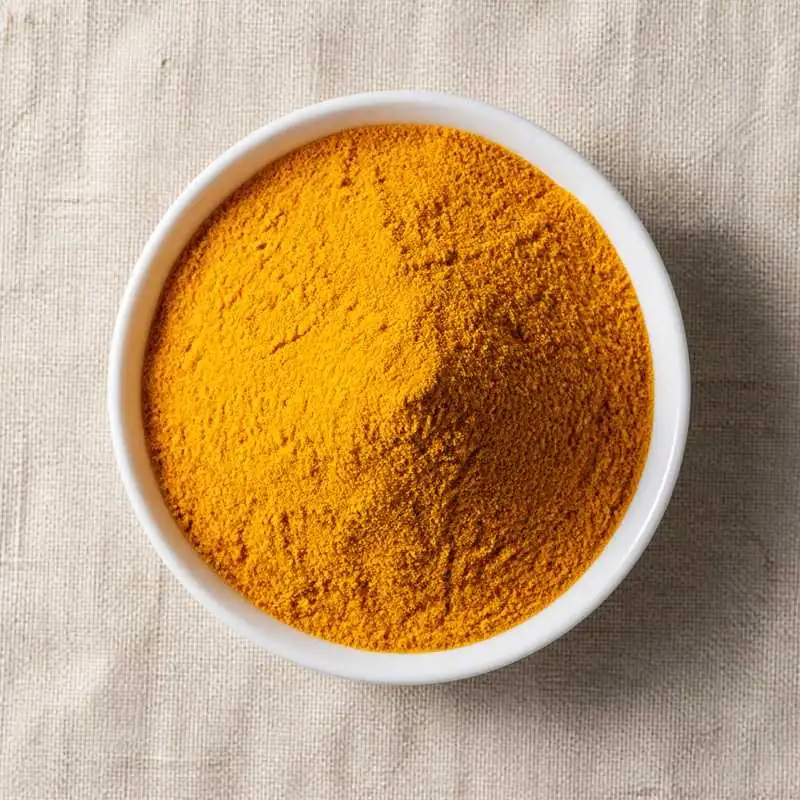
Curcumin is the principal yellow-orange polyphenol of turmeric and the molecule responsible for most of the spice's colour and bioactivity. It is a diarylheptanoid, also known as diferuloylmethane, with the formula C₂₁H₂₀O₆.
In commerce, curcumin most often refers to a purified extract assayed at 95 percent total curcuminoids, of which roughly 70 to 80 percent is curcumin itself, with demethoxycurcumin and bisdemethoxycurcumin making up the balance.
We source bulk Curcumin from top China manufacturers for our partners, working with several of them. The manufacturers are in Hebei, Zhejiang and Guangdong. For this ingredient the minimum order is 500 kg and a 20-foot container takes 10 MT, and a smaller requirement can ship in a combined container with other ingredients.
Please send the grade you need, the volume and your destination port, and we will come back with a solution and a price.
or call +86-21-6858 0751
- Minimum order
- 500 kg
- Qty in 20' FCL
- 10 MT
- Packaging
- 20 kg fibre drum, light-shielded
- ISO 9001
- HACCP
- Halal
- Kosher
Specifications
Grades / Types Available: Food Grade, Pharmaceutical Grade
| Item | Specification |
|---|---|
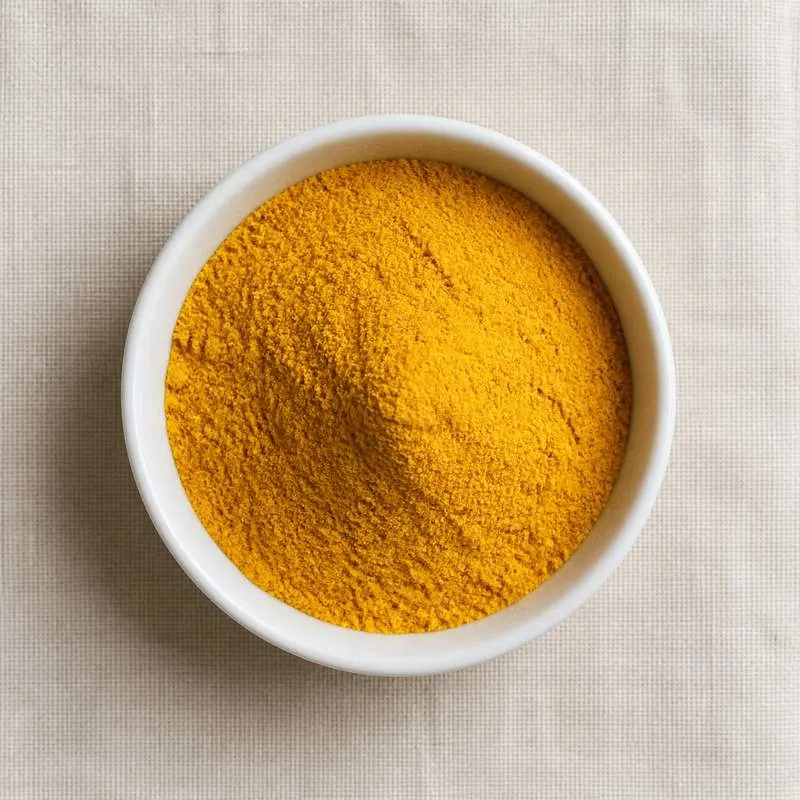
| Appearance | Yellow-orange powder |
| Curcumin Content | ≥ 95% (extract) / 2-5% (oleoresin) |
| Moisture | ≤ 5.0% |
| Solvent Residue | ≤ 50 mg/kg |
| Heavy Metals (as Pb) | ≤ 2 mg/kg |
| Arsenic | ≤ 3 mg/kg |
| Total Plate Count | ≤ 1,000 cfu/g |
| Purity/Assay (Food Grade) | ≥ 95% |
| Moisture/Loss on Drying | ≤ 5% |
| pH | 6.0 - 7.0 |
| Particle Size/Mesh | 100% pass through 80 mesh |
| Lead | ≤ 1 ppm |
| Yeast & Mold | ≤ 100 cfu/g |
Common Markets Grades
Curcumin is graded at several purity tiers depending on the end use.
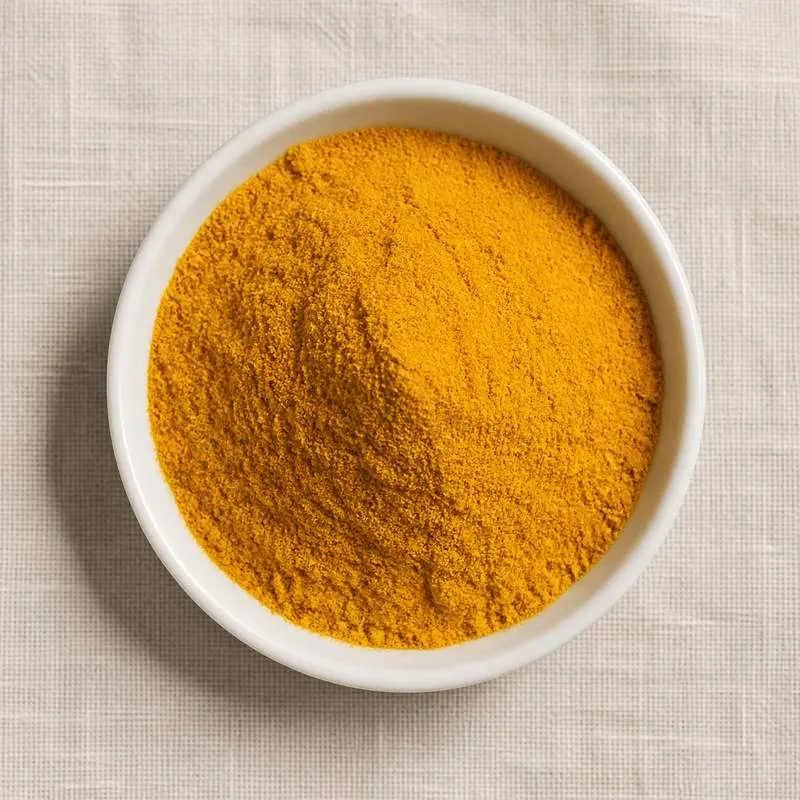
The 95 percent total curcuminoids grade is the standard for nutritional supplements, functional foods, and natural colour blends. It is typically a fine, intense orange-yellow powder, low in residual oleoresin volatiles.
Higher-purity grades at 98 to 99 percent curcumin (single isomer) are produced by recrystallisation for pharmaceutical research, reference standards, and clinical-trial material.
Food-colour grade curcumin powders and water-dispersible liquid formulations are sold under E100, often blended with carriers such as polysorbate 80, modified starch, or gum arabic to handle the molecule's poor water solubility.
Bioavailability-enhanced formats, including phytosome complexes with phosphatidylcholine, micellar dispersions, and gamma-cyclodextrin inclusion complexes, are positioned for the top end of the dietary supplement market.
Applications
- Dietary supplements positioned for joint comfort, antioxidant support, and inflammation balance
- Curry pastes, mustards, pickles, and savory sauces as a primary colour and flavour contributor
- Cheese, butter, and margarine where a deep golden tone is desired
- Bakery and confectionery for yellow shading in cakes, icings, and gummies
- Beverage mixes including golden milk, wellness shots, and instant tea blends
- Liquid and capsule formulations combined with piperine or lecithin for absorption enhancement
- Cosmetic and personal-care products including masks, brightening serums, and soap bars
- Pharmaceutical preparations as a colouring excipient in tablets and syrups
- Pet supplements targeting senior-dog joint and mobility support
- Natural textile and craft dyeing for cotton, silk, and wool
- Reference material in analytical chemistry and pharmacology research
- Functional snacks and protein bars where the flavour of turmeric itself is too earthy
Brands Using Curcumin
Widely-distributed consumer products that list Curcumin on the ingredient label.
- Doctor's BestCurcumin Phytosome with Meriva, 500 mg ↗A curcumin-phosphatidylcholine complex (Meriva) supplying 500 mg per capsule.Label verified 2026-05-24
- ThorneCurcumin Phytosome (formerly Meriva-SF), 1000 mg ↗A Meriva curcumin phytosome capsule delivering curcumin bound to phosphatidylcholine, sold earlier as Meriva-SF.Label verified 2026-05-24
- Jarrow FormulasCurcumin Phytosome 500 mg (Meriva) ↗Jarrow Formulas' Curcumin Phytosome product page delivers 500 mg of Meriva curcumin-phosphatidylcholine complex per capsule for antioxidant and joint support.Label verified 2026-05-24
- NOW FoodsCurcuFRESH Curcumin Veg Capsules ↗A curcumin supplement made from fresh turmeric rhizome, which retains curcumin in its native complexed form.Label verified 2026-05-24
- SolgarFull Spectrum Curcumin Licaps ↗A water-soluble curcumin micelle preparation in liquid-filled capsules.Label verified 2026-05-24
- Pure EncapsulationsCurcumin ↗A Curcuma longa extract capsule.Label verified 2026-05-24
Brand names, product names and logos are the property of their owners. They appear here as published evidence that the ingredient is used, taken from the brand's own label or website. Their appearance is not an endorsement, and it does not mean the brand buys from us or from any manufacturer listed on this site.
China Manufacturers of Curcumin
Top Curcumin manufacturers in China.
 Chenguang Biotech Group Co., Ltd.12 ingredients in the directory
 Hebei Dongzhixing Bio-tech Ltd.5 ingredients in the directory
- Hebei Hongri Natural Pigment Co., Ltd.4 ingredients in the directory
 Newtrend Group5 ingredients in the directory
 Ningbo Herb Pharma Corp.7 ingredients in the directory
- Tianxu Natural Pigment Co., Ltd.6 ingredients in the directory
 Zhejiang Wedin Biological Technology Co., Ltd.18 ingredients in the directory
Company names and logos are the property of the manufacturers themselves. They are listed here because our own directory records them as producing this ingredient. A listing is not an endorsement by them, and we do not represent them or speak on their behalf.
How We Help Source Curcumin
Direct Factory Sourcing
We run the whole process: selecting the manufacturer from the top Chinese food ingredient producers, negotiating the price, verifying quality, and coordinating the logistics. You deal with us instead of with several factories at once.
Original Packaging and Documents from the Manufacturer
The manufacturer sends your Curcumin out of its own factory in the original packing, through to your destination port. The COA, COO, MSDS, TDS and any certifications reach you from the manufacturer as well.
Free Samples and Lead Time
We send 100 to 500 g free for your own laboratory to test and you cover only the courier, usually within 2 to 3 working days. ETD is usually within 7 to 15 days once the order is confirmed, and we check that date against the factory's own manufacturing schedule before we give it to you.
Combined Shipment
We can load Curcumin together with other ingredients such as Astaxanthin, Dehydrated Garlic and Lutein into one 20' FCL. If your quantity is small, we can also ship LCL.
Regulatory Status
Curcumin is permitted as a food colour in essentially all major jurisdictions.
In the European Union, Regulation (EC) No 1333/2008 approves it under the food-additive number E100 for many food categories at quantum satis or specified maximum levels.
The U.S. Food and Drug Administration lists turmeric and turmeric oleoresin as colour additives exempt from certification under 21 CFR 73.600 and 73.615 for general food use. Curcumin itself is also recognised as GRAS for use as a colour and flavour.
JECFA has evaluated curcumin and assigned an acceptable daily intake for the purified material. Japan permits curcumin as an existing natural colour additive under the Food Sanitation Act.
Pharmacopoeial monographs for curcumin and turmeric appear in the United States Pharmacopeia, the European Pharmacopoeia, and the Ayurvedic Pharmacopoeia of India. Halal and Kosher certifications are commonly available.
Manufacturing Process
Curcumin manufacturing starts with dried Curcuma longa rhizomes grown principally in India, with smaller volumes from Indonesia, Vietnam, and Peru.
The rhizomes are washed, sliced, and solvent-extracted with ethanol, acetone, ethyl acetate, or hexane to yield turmeric oleoresin, a viscous dark mass containing 30 to 55 percent curcuminoids alongside essential oils and resins.
The oleoresin is then washed with isopropanol or hexane to strip non-pigment lipophilic material. The curcuminoid fraction is recrystallised one or more times from a polar solvent such as ethanol, producing the standardised 95 percent total curcuminoids powder.
For higher purity, the three curcuminoids are separated by silica-gel column chromatography or preparative HPLC, then individually recrystallised. The whole sequence is solvent-intensive, and residual-solvent specifications are a routine quality concern.