Fish Essence
Fish Essence is a savoury flavour concentrate that reproduces the aroma and taste of cooked fish, built from an enzymatic hydrolysate of fish protein that is then reacted with reducing sugars and amino acids under controlled heat. The hydrolysis step releases free amino acids and short peptides that carry the brothy taste, while the Maillard reaction generates the volatile pyrazines, thiazoles and sulphur compounds that give the cooked, roasted top note. Trimethylamine and related nitrogen bases are largely stripped, since the raw fishy character they contribute is unwanted in most finished products.
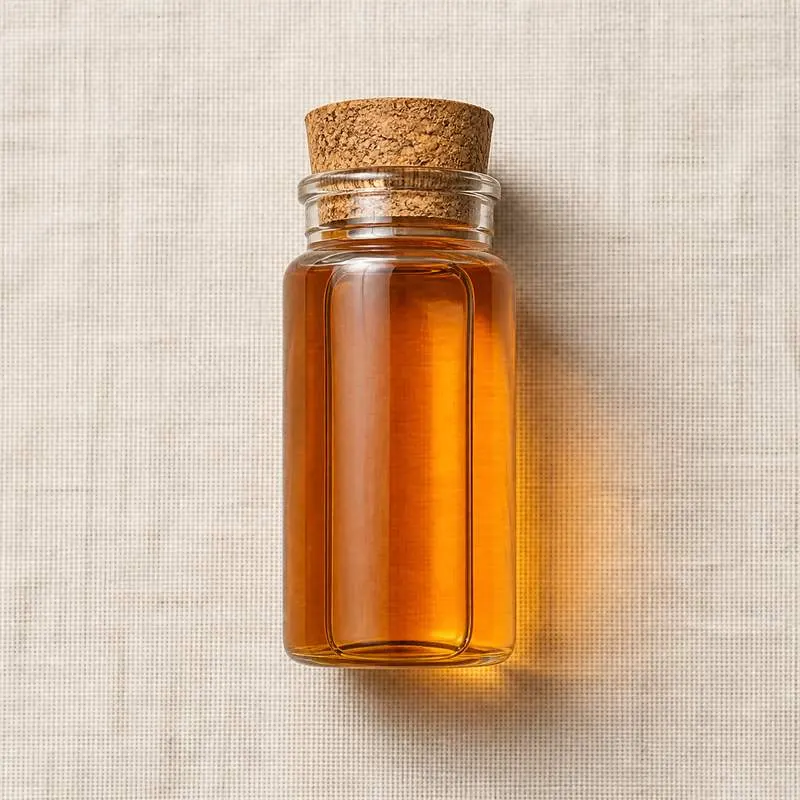
It is traded as a light to dark brown liquid, as a viscous paste, and as a spray dried powder on a maltodextrin or salt carrier. Liquid and paste grades are water dispersible and are used where the flavour is added to a wet system; powder grades are the standard for dry seasoning blends. The aroma fraction breaks down above roughly 120 degrees Celsius, so retort and extrusion applications generally use a reinforced grade or add the flavour after the thermal step.
We source bulk Fish Essence from top China manufacturers for our partners. The manufacturer is in Zhejiang. A smaller requirement can ship in a combined container with other ingredients.
Please send the grade you need, the volume and your destination port, and we will come back with a solution and a price.
or call +86-21-6858 0751
- Function
- Flavours and Aromas
Specifications
| Item | Specification |
|---|---|
| Appearance | Light to dark brown clear liquid, free of sediment |
| Odour and Taste | Characteristic cooked fish, savoury, no rancid note |
| Total Solids | Not less than 40.0 percent |
| Total Nitrogen | Not less than 3.0 percent |
| Amino Acid Nitrogen | Not less than 1.5 percent |
| Sodium Chloride | Not more than 15.0 percent |
| pH at 25 degrees Celsius | 5.0 to 6.5 |
| Histamine | Not more than 200 mg per kg |
| Lead | Not more than 1.0 mg per kg |
| Arsenic | Not more than 1.0 mg per kg |
| Mercury | Not more than 0.5 mg per kg |
| Total Plate Count | Not more than 5000 cfu per gram |
| Yeast and Mould | Not more than 50 cfu per gram |
| Salmonella | Absent in 25 g |
Common Markets Grades
Grades divide by physical form and by how much of the profile comes from the fish hydrolysate itself. Reaction flavour grades, in which the whole profile is generated from fish protein, are labelled natural in most markets and carry the fullest body. Compounded grades blend a smaller hydrolysate load with nature identical aroma chemicals to hit a defined species profile such as anchovy, cod, tuna or freshwater carp, and are cheaper per unit of flavour intensity.
Buyers also specify salt content, which ranges from under 5 percent in liquid concentrates to over 40 percent in powdered seasoning grades where salt acts as the carrier, along with total nitrogen, amino acid nitrogen and flavour strength expressed as a recommended dosage band. Both fish and, where a shellfish co extract is used, crustacean allergens must be declared.
Applications
- Instant noodle soup bases in seafood variants, supplying the fish broth character on reconstitution
- Surimi and fish ball products, restoring flavour lost during the washing and refining of the mince
- Fish sauce and seafood condiment production, standardising the aroma of naturally fermented liquor
- Retort seafood soups and chowders, where a reinforced grade compensates for sterilisation losses
- Snack seasoning dusts for prawn crackers and seaweed flavoured extruded snacks
- Frozen breaded fish coatings and batter mixes, reinforcing the fish note in low fish content products
- Aquaculture and pet food palatants, where the amino acid fraction drives feed intake
- Plant based seafood analogues, giving marine character to protein bases that have none
- Dumpling and spring roll fillings with seafood claims
- Ready to cook sauce sachets for steamed and braised fish dishes
China Manufacturers of Fish Essence
Top Fish Essence manufacturers in China.

Company names and logos are the property of the manufacturers themselves. They are listed here because our own directory records them as producing this ingredient. A listing is not an endorsement by them, and we do not represent them or speak on their behalf.
Regulatory Status
In the United States a preparation of this type is handled as a flavour under 21 CFR 101.22. Process flavours built from hydrolysed protein, sugars and amino acids are permitted where each starting material is itself an approved food ingredient, and the individual aroma substances used in compounded grades fall under the FEMA GRAS programme. Fish protein hydrolysate is an established food ingredient in US practice, and fish must be declared as a major allergen.
In the European Union, Regulation (EC) No 1334/2008 regulates thermal process flavourings and sets the permitted starting materials, the maximum reaction temperature and time, and limits on certain reaction by products. Material produced within those conditions from fish protein may be described as a natural flavouring. Codex has adopted general guidelines for flavourings, and JECFA has evaluated the principal Maillard derived flavouring groups, including the thiazoles and sulphur substituted furans, as flavouring agents. Fish is a declarable allergen in both jurisdictions.
Manufacturing Process
The feedstock is fresh or frozen whole fish, fish trimmings or by catch, most often from anchovy, sardine, tuna or freshwater species. Material is minced and cooked to denature the protein and inactivate the fish's own enzymes, and the oil fraction is separated by centrifugation because residual lipid oxidises to rancid off notes during storage. The deoiled protein slurry is adjusted to the pH and temperature optimum of a protease, typically a bacterial or fungal endopeptidase, and hydrolysed until the target degree of hydrolysis is reached.
Enzyme is inactivated by heating, and insolubles including bone are removed by decanter and filtration. The clarified hydrolysate is concentrated under vacuum, then dosed with reducing sugars, cysteine, thiamine and other precursors and held in a pressurised reactor at controlled temperature to develop the Maillard fraction. The reacted concentrate is standardised against a reference sample and either filled as liquid or paste, or emulsified with carrier and spray dried. Powder is sieved and packed with a desiccant liner.