Flaxseed Oil
Flaxseed oil is the oil pressed from the seed of Linum usitatissimum, sold for food and supplement use. Its defining feature is an alpha linolenic acid content of 50 to 60 percent of total fatty acids, the highest of any commonly traded edible oil, which makes it the principal plant source of the short chain omega-3 fatty acid.
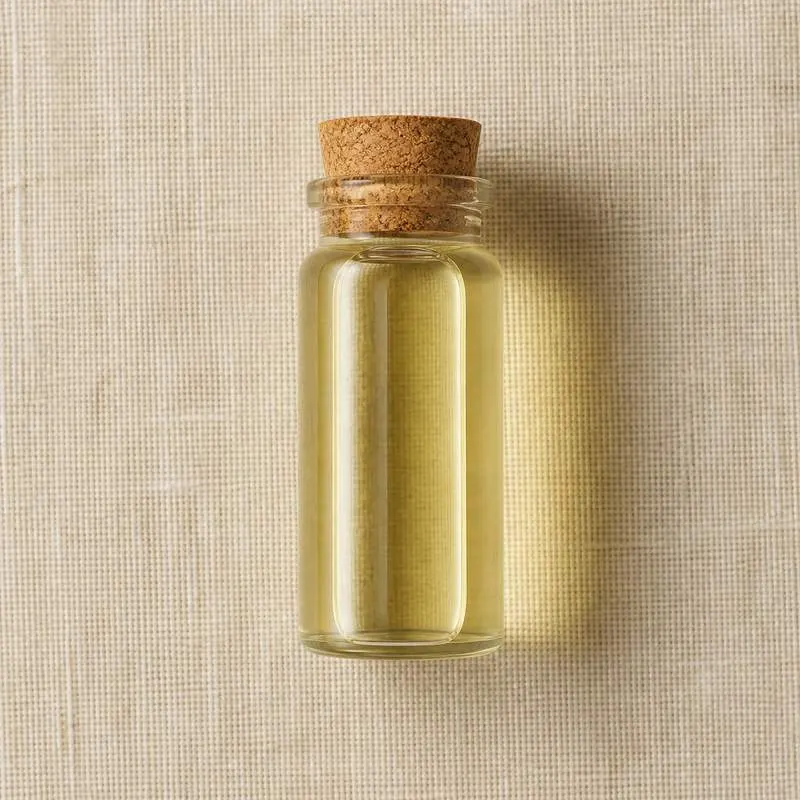
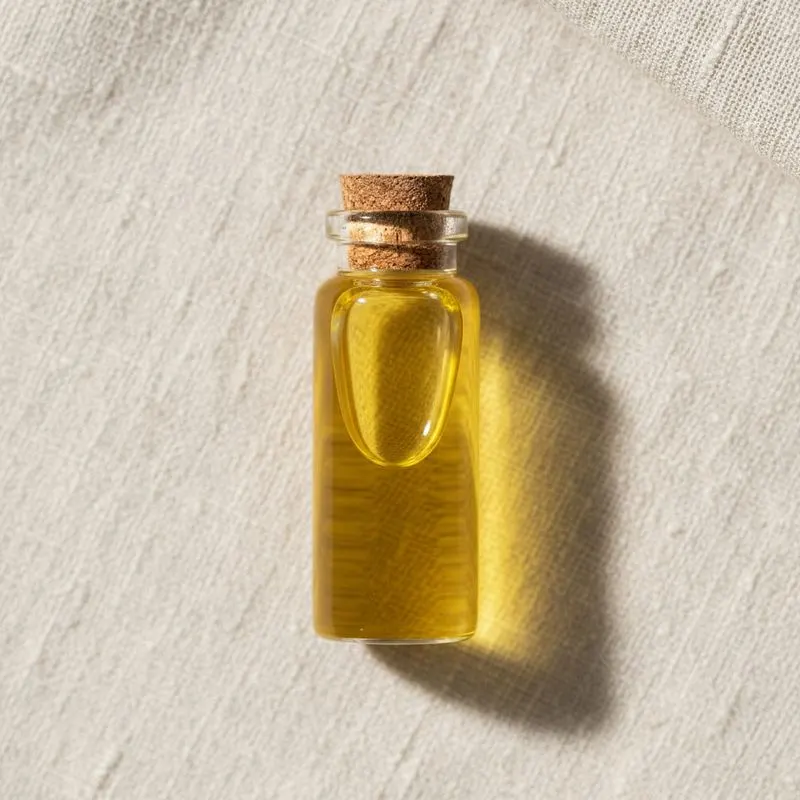
The remaining fatty acids are mainly oleic and linoleic acid with only around 9 percent saturates, giving an oil that is liquid and clear down to refrigeration temperature. Edible grades are golden yellow to pale amber, with cold pressed material retaining a mild nutty flavour and refined material being close to neutral. The oil also carries lignans, tocopherols and plastochromanol, which contribute some natural oxidative protection.
Three double bonds on the same chain make the oil oxidise extremely easily, far more so than sunflower or rapeseed oil, and this decides everything about how it is handled. It has no meaningful frying application, develops a paint-like off odour once oxidised, and is bottled in dark glass or under nitrogen, held refrigerated and given a short shelf life. It is insoluble in water and miscible with other oils, and it polymerises on prolonged exposure to air, which is the same property that underlies the technical use of the oil under its other name, linseed oil.
We source bulk Flaxseed Oil from top China manufacturers for our partners. The manufacturer is in Shandong. A smaller requirement can ship in a combined container with other ingredients.
Please send the grade you need, the volume and your destination port, and we will come back with a solution and a price.
or call +86-21-6858 0751
- Function
- Specialty oil
Specifications
| Item | Specification |
|---|---|
| Appearance | Clear golden yellow to pale amber oily liquid |
| Odour and Taste | Mild nutty for cold pressed, free from paint-like notes |
| Alpha Linolenic Acid | ≥ 55.0% |
| Linoleic Acid | 12.0 to 18.0% |
| Identification | Conforms by gas chromatography fatty acid profile |
| Free Fatty Acids (as oleic) | ≤ 1.0% cold pressed, ≤ 0.1% refined |
| Peroxide Value | ≤ 5.0 meq/kg |
| Anisidine Value | ≤ 10 |
| Moisture and Volatiles | ≤ 0.1% |
| Insoluble Impurities | ≤ 0.05% |
| Iodine Value | 170 to 203 |
| Saponification Value | 188 to 196 mg KOH/g |
| Unsaponifiable Matter | ≤ 1.5% |
| Trans Fatty Acids | ≤ 1.0% |
| Residual Hexane (refined) | ≤ 1.0 mg/kg |
| Lead | ≤ 0.1 mg/kg |
| Arsenic | ≤ 0.1 mg/kg |
Common Markets Grades
The main distinction is between cold pressed and refined. Cold pressed or virgin flaxseed oil is expelled at low temperature without solvent, filtered only, and retains flavour, colour and minor components; it is the grade sold for direct consumption and in capsules. Refined flaxseed oil has been degummed, neutralised, bleached and lightly deodorised, and is paler, blander and more consistent, used where the flavour of the virgin oil would intrude.
Beyond that, organic certified material is a significant separate line, and high lignan grades in which some of the seed mucilage and lignan fraction is retained or added back are traded at a premium. Alpha linolenic acid content is the assay that sets the value, quoted at 50, 55 or 58 percent minimum. Softgel fill grade is specified with tighter peroxide and anisidine limits than bulk culinary oil, and a microencapsulated powder made by spray drying an emulsion of the oil is a separate finished format. Technical linseed oil for coatings is not interchangeable with any of these.
Applications
- Omega-3 supplements in softgel and liquid form, as the plant based alternative to fish oil
- Salad dressings, dips and cold sauces, where the oil is used without heating
- Drizzling and finishing oils in food service, added after cooking
- Quark, cottage cheese and dairy preparations in central European tradition, blended cold
- Fortified beverages and smoothies, added as an emulsion or encapsulated powder
- Nutrition bars and baked goods, using the powder form to protect the oil through processing
- Vegan and vegetarian nutrition products carrying an omega-3 claim
- Pet food and pet supplements, for coat condition and as an omega-3 source
- Livestock and poultry feed, used to raise the alpha linolenic acid content of eggs and meat
- Cosmetic and personal care emulsions, as an emollient carrier oil
Brands Using Flaxseed Oil
Widely-distributed consumer products that list Flaxseed Oil on the ingredient label.
- Barlean'sOrganic Fresh Flax Oil ↗A cold pressed liquid flaxseed oil sold on its own, stated at 7,640 mg of ALA omega-3 per tablespoon.Label verified 2026-08-31
- Barlean'sTotal Liquid Omega 3-6-9 Lemonade Flavor ↗A liquid omega blend that combines cold pressed flaxseed oil with purified fish oil and borage oil.Label verified 2026-08-31
- Nature's WayOrganic Flax Oil ↗A bottled organic flax oil the brand states delivers 57 percent omega-3 and 15 percent omega-6 fatty acids.Label verified 2026-08-31
- Nature's WayFlax Oil Max Strength ↗A flax oil guaranteed by the brand to contain 52 percent ALA per serving.Label verified 2026-08-31
Brand names, product names and logos are the property of their owners. They appear here as published evidence that the ingredient is used, taken from the brand's own label or website. Their appearance is not an endorsement, and it does not mean the brand buys from us or from any manufacturer listed on this site.
China Manufacturers of Flaxseed Oil
Top Flaxseed Oil manufacturers in China.

Company names and logos are the property of the manufacturers themselves. They are listed here because our own directory records them as producing this ingredient. A listing is not an endorsement by them, and we do not represent them or speak on their behalf.
Regulatory Status
In the United States, flaxseed oil is used as a food on the basis of common use in food, and flaxseed and flaxseed oil are the subject of GRAS notifications to which the FDA responded without objection for defined food uses. It is also widely sold as a dietary ingredient under the dietary supplement framework. Claims about alpha linolenic acid must be substantiated, and the nutrient content claim rules set the conditions under which a food may be described as a source of omega-3.
In the European Union, flaxseed oil is a food rather than an additive and carries no E number. Alpha linolenic acid is the subject of an authorised health claim relating to the maintenance of normal blood cholesterol concentrations at a specified daily intake, and nutrition claims describing a food as a source of or high in omega-3 fatty acids are defined by reference to alpha linolenic acid content. The contaminants framework sets limits relevant to vegetable oils, including process contaminants formed during refining, and flaxseed itself carries cyanogenic glycosides, which are largely absent from the pressed oil but are managed in the meal. Codex has adopted a standard for named vegetable oils which covers flaxseed oil, setting its fatty acid composition ranges, quality criteria and permitted additives.
Manufacturing Process
Cleaned flaxseed is graded and destoned, then conditioned to a controlled moisture level. For the cold pressed grade the seed goes straight to a screw expeller running at low speed with a cooled barrel, so that the oil leaving the press stays below about 40 degrees Celsius; that temperature limit is what distinguishes the grade and is the reason yields are lower than in a hot pressed operation. The expelled oil is settled and then filtered, usually through a plate and frame or bag filter, and is bottled directly under nitrogen without further processing.
For the refined grade the seed is flaked and heated before pressing, and the press cake is solvent extracted with hexane to recover the residual oil. The combined crude oil is degummed with water or acid to remove phospholipids, neutralised with alkali to strip free fatty acids, bleached on activated earth to remove pigments and oxidation products, and deodorised by steam stripping under deep vacuum at the lowest workable temperature, since high deodorisation temperatures form trans isomers of alpha linolenic acid. Winterisation is generally unnecessary given the low saturate content. Finished oil is cooled, dosed with tocopherols or rosemary extract, and filled under nitrogen into light protected containers. The press cake left behind is sold as flaxseed meal.