Fresh Ginseng Adventitious Root
Fresh ginseng adventitious root is ginseng root biomass produced by plant tissue culture in bioreactors rather than grown in soil. An explant taken from the root of Panax ginseng C.A. Meyer is induced with auxin to form callus, from which adventitious roots, meaning roots arising from non-root tissue, are regenerated and then multiplied in liquid medium. The product sold is the harvested wet root mass, distinct from the dried and extracted forms of cultured ginseng.
Chemically the material carries the same dammarane triterpene saponins as field-grown root, the protopanaxadiol ginsenosides Rb1, Rb2, Rc and Rd and the protopanaxatriol ginsenosides Rg1 and Re, though the relative proportions differ from soil-grown root and the total saponin content of the cultured root is typically higher on a dry weight basis. Polysaccharides, polyacetylenes and phenolic acids are present as in the field crop.
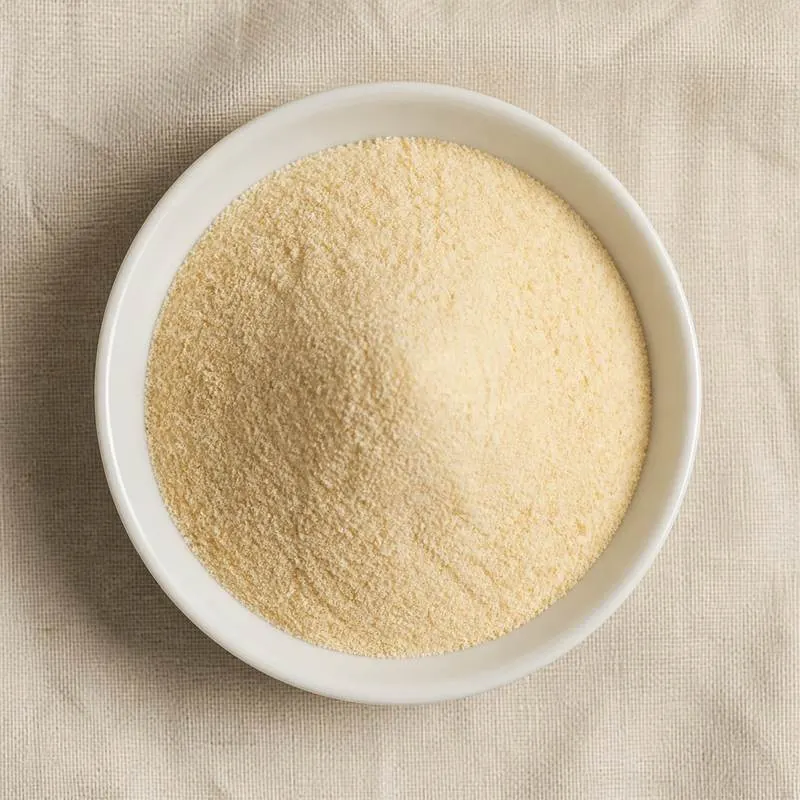
The fresh root is a pale cream to light yellow, fine, highly branched mass with a moisture content around 90 percent and a characteristic earthy ginseng odour. Because it is a wet biological material it is perishable, held chilled and processed within a short window, and it is normally either extracted immediately or dried or frozen at the production site. The main commercial argument for it is that a bioreactor cycle takes weeks rather than the four to six years of field cultivation, and the closed system avoids soil pesticide and heavy metal load.
We source bulk Fresh Ginseng Adventitious Root from top China manufacturers for our partners. The manufacturer is in Shanghai. A smaller requirement can ship in a combined container with other ingredients.
Please send the grade you need, the volume and your destination port, and we will come back with a solution and a price.
or call +86-21-6858 0751
- Function
- Plant extract
Specifications
| Item | Specification |
|---|---|
| Source | Panax ginseng adventitious root, bioreactor cultured |
| Appearance | Pale cream to light yellow branched fresh root mass |
| Moisture | 88 to 92% |
| Dry Matter | 8 to 12% |
| Total Ginsenosides on Dry Basis | ≥ 1.0% |
| Identification | Conforms by HPLC ginsenoside profile |
| Pesticide Residues | Not detected |
| Lead | ≤ 0.5 mg/kg on dry basis |
| Arsenic | ≤ 0.5 mg/kg on dry basis |
| Total Plate Count | ≤ 1,000 cfu/g |
| Yeast and Mould | ≤ 100 cfu/g |
| E. coli | Negative in 1 g |
| Salmonella | Negative in 25 g |
| Storage | Chilled at 0 to 4°C or frozen below -18°C |
Common Markets Grades
The material is specified on biomass and saponin figures rather than on a single assay. The variables buyers set are fresh weight and its corresponding dry matter percentage, total ginsenoside content on dry basis measured by HPLC, and the ginsenoside profile, since the ratio of Rb group to Rg group saponins differs by culture line and by elicitation regime. Cultures are often elicited with methyl jasmonate or a similar signalling compound in the final days of the run to raise saponin content, and whether elicitation has been used is a specification point.
Beyond the fresh biomass, the same production line supplies dried cultured root, milled cultured root powder and standardised extracts of cultured root, and these carry conventional extract specifications. Fresh root is traded chilled or frozen; frozen material is the practical export form because the fresh product has a shelf life measured in days. Organic and pesticide-free positioning is common for this product class, since the closed bioreactor uses no agrochemicals at all.
Applications
- Feedstock for cultured ginseng extract production, the largest use, with the fresh root taken straight to extraction
- Fresh ginseng health drinks and tonics produced close to the culture facility
- Cosmetic raw material, where the fresh root is homogenised or fermented for serums, essences and masks
- Functional foods and prepared dishes in the Korean and Chinese markets, used in place of fresh field ginseng
- Fermented ginseng preparations, where the fresh biomass is inoculated to convert ginsenosides to compound K and Rg3
- Ginseng vinegar, wine and fermented beverage production
- Animal and companion animal health products using the whole cultured biomass
- Research material for studying ginsenoside biosynthesis and elicitation
China Manufacturers of Fresh Ginseng Adventitious Root
Top Fresh Ginseng Adventitious Root manufacturers in China.
Company names and logos are the property of the manufacturers themselves. They are listed here because our own directory records them as producing this ingredient. A listing is not an endorsement by them, and we do not represent them or speak on their behalf.
Regulatory Status
In the United States Panax ginseng root has a long history of food use and cultured ginseng root is marketed as a dietary ingredient under the Dietary Supplement Health and Education Act, with manufacture under 21 CFR Part 111. Because tissue culture root is not identical in production history to field-grown root, suppliers introducing it may need to address new dietary ingredient notification, and the Food and Drug Administration has not issued a food additive regulation or a generally recognised as safe affirmation specific to cultured ginseng biomass.
In the European Union the position depends on whether the material counts as having a history of consumption. Field-grown ginseng root is an established food, but root produced from cell or tissue culture is explicitly within the categories the novel food Regulation covers, so cultured ginseng root and its extracts normally require novel food authorisation before being placed on the EU market. No ginseng health claim appears on the EU register of authorised claims. Neither Codex nor JECFA has published a specification for cultured ginseng root, so buyers rely on supplier monographs, on the European Pharmacopoeia ginseng methods for saponin analysis, and on documentation of the culture medium and any elicitor used.
Manufacturing Process
Production is a plant cell culture operation. A sterile explant is cut from a healthy ginseng root and placed on solid medium containing an auxin such as indole butyric acid, where it forms callus over several weeks. Adventitious roots are induced from the callus, and a vigorous root line is selected and maintained as the working stock. That stock is multiplied through shake flasks into progressively larger vessels.
Commercial growth takes place in balloon type airlift or bubble column bioreactors of several hundred to several thousand litres, filled with a Murashige and Skoog derived liquid medium carrying sucrose as the carbon source, mineral salts and the auxin. Air is sparged to supply oxygen and to keep the root mass suspended without the shear damage a mechanical impeller would cause. The culture runs sterile for roughly four to eight weeks under controlled temperature, pH and dissolved oxygen, with medium fed or exchanged during the run. Toward the end of the cycle an elicitor may be added to stimulate saponin accumulation. At harvest the root mass is separated from the spent medium by draining and screening, washed with purified water, dewatered on a centrifuge or press, then chilled, frozen or sent directly to extraction or drying.