Fruit Flavour
Fruit Flavour is the family of compounded flavourings that reproduce fruit character in food and drink, built from esters, aldehydes, alcohols, lactones and terpenes over a base of fruit juice concentrate, essential oil or extract. Esters such as ethyl butyrate, ethyl hexanoate and isoamyl acetate carry the fresh fruity top note; lactones such as gamma decalactone and gamma undecalactone give the creamy peach and coconut body; and green notes from cis 3 hexenol and hexanal supply the just picked impression that distinguishes a fresh fruit flavour from a cooked or jam one.
The class takes four forms. Water miscible liquids carry the aroma in propylene glycol, ethanol or triacetin for clear beverage use. Emulsions disperse an oil phase stabilised with gum acacia or modified starch and supply cloud as well as flavour, with a weighting agent added to stop the droplets rising and ringing the neck of a bottle. Oil soluble concentrates are used in fat continuous systems, and spray dried powders on maltodextrin or gum carriers are used in dry mixes.
The main technical constraint is volatility. The ester and aldehyde fraction that carries fresh fruit character is lost in any open cooking or extrusion step, so bakery and retort applications use reinforced or encapsulated constructions.
We source bulk Fruit Flavour from top China manufacturers for our partners. The manufacturer is in Guangdong. A smaller requirement can ship in a combined container with other ingredients.
Please send the grade you need, the volume and your destination port, and we will come back with a solution and a price.
or call +86-21-6858 0751
- Function
- Flavours and Aromas
Specifications
| Item | Specification |
|---|---|
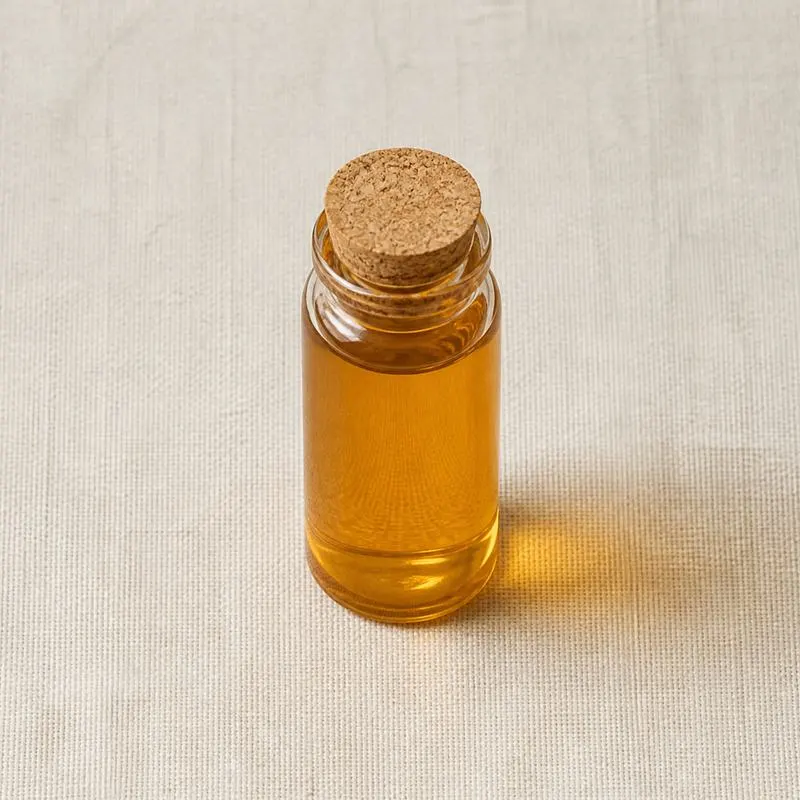
| Appearance | Clear to pale yellow mobile liquid, free of sediment |
| Odour and Taste | Characteristic of the declared fruit, true to reference sample |
| Solubility | Miscible with water at declared dosage, no separation |
| Relative Density at 25 degrees Celsius | 0.980 to 1.080 |
| Refractive Index at 20 degrees Celsius | 1.400 to 1.450 |
| Acid Value | Not more than 5.0 mg KOH per gram |
| Ethanol Content | As declared, plus or minus 2.0 percent |
| Gas Chromatography Profile | Conforms to reference chromatogram |
| Lead | Not more than 1.0 mg per kg |
| Arsenic | Not more than 1.0 mg per kg |
| Heavy Metals as Pb | Not more than 10 mg per kg |
| Total Plate Count | Not more than 1000 cfu per gram |
| Yeast and Mould | Not more than 50 cfu per gram |
| Salmonella | Absent in 25 g |
Common Markets Grades
The first split is labelling status. Natural fruit flavours draw their whole flavouring fraction from fruit or other food source by physical, enzymatic or fermentative processes, and within that group flavours described as coming from the named fruit must meet a higher threshold of that fruit as the source. Nature identical grades reproduce the same molecules by synthesis, and artificial grades include substances not found in the fruit. The three carry different declarations and different price levels.
The second is construction against application. Beverage grades are water miscible solutions or emulsions, graded on cloud stability and ring resistance. Bakery and confectionery grades are built on higher boiling components and are quoted on heat stability. Dairy grades are formulated to hold up against fat and protein binding, which suppresses part of the aroma. Buyers also specify whether the carrier is alcohol free or propylene glycol free, the flavour strength as a recommended dosage band, and organic, halal, kosher and non GMO certification.
Applications
- Carbonated soft drinks, where citrus and berry emulsions supply flavour and cloud together
- Still juice drinks and nectars, reinforcing a low juice content formulation
- Yoghurt and fermented dairy, where the flavour is dosed into the fruit preparation before filling
- Ice cream and frozen desserts, formulated to read at low temperature against high sugar and fat
- Boiled sweets and jellies, where heat stable constructions survive the cooking stage
- Chewing gum, where encapsulated grades extend the release over the chew
- Bakery fillings and fruit preparations, where a cooked profile is often preferred to a fresh one
- Powdered drink mixes and instant desserts, using spray dried grades for dry blending
- Alcoholic ready to drink products and flavoured beer, dosed cold after fermentation
- Oral care and pharmaceutical syrups, masking bitter actives with a fruit profile
China Manufacturers of Fruit Flavour
Top Fruit Flavour manufacturers in China.
Company names and logos are the property of the manufacturers themselves. They are listed here because our own directory records them as producing this ingredient. A listing is not an endorsement by them, and we do not represent them or speak on their behalf.
Regulatory Status
In the United States labelling of flavours as natural or artificial follows 21 CFR 101.22, which also sets the rules for characterising flavour claims where a fruit is named on the front of a pack. Clearance for the individual substances used comes from the FEMA GRAS programme, from 21 CFR 172.515 for synthetic flavouring substances, or from 21 CFR 182.20 for essential oils, oleoresins and natural extractives. Carriers such as propylene glycol and triacetin, and the gum acacia and modified starch used in emulsions, have their own clearances.
In the European Union the framework is Regulation (EC) No 1334/2008, which maintains the Union list of authorised flavouring substances with FL numbers, defines natural flavourings and flavouring preparations, and restricts when a flavour may be named after the fruit it evokes. That regulation also sets maximum levels for certain naturally occurring substances of concern in specified foods. Codex has adopted general guidelines for the use of flavourings, and JECFA has evaluated the esters, lactones and aliphatic aldehydes in structural groups and published specifications for many of them. Flavours built on nut, milk or celery derived components must declare those allergens in both jurisdictions.
Manufacturing Process
The natural components are prepared first. Fruit juice is concentrated under vacuum, and the aroma stripped off in that step is rectified and returned as a natural fruit distillate. Citrus oils are recovered by cold pressing the peel and are then folded by vacuum distillation to remove the terpene fraction, which oxidises to turpentine like off notes. Individual natural aroma chemicals are obtained by fermentation, as with gamma decalactone produced from castor oil derived ricinoleic acid by Yarrowia lipolytica, or by enzymatic conversion; the synthetic equivalents are made by esterification, oxidation or condensation and purified by fractional distillation.
Compounding follows a flavourist formula. Components are weighed on precision balances through a verified dispensary, with potent materials dosed as pre made dilutions, and dissolved into the specified solvent under agitation. The blend is mixed, held to mature and filtered. Emulsion grades then pass through a colloid mill and high pressure homogeniser after the gum phase is hydrated, with droplet size checked because it controls cloud stability. Powder grades are emulsified with carbohydrate carrier and spray dried at an outlet temperature low enough to retain the volatile fraction. Every lot is verified by gas chromatography against a reference sample and by sensory panel.