Hundred Flavours Essence
Hundred Flavours Essence is a Chinese market name for a general purpose savoury flavour concentrate, sold as a single seasoning intended to serve across many dishes rather than to reproduce one specific meat or vegetable. The construction is a compounded savoury flavour: a Maillard reaction base built from hydrolysed protein, reducing sugars and cysteine supplies the cooked meaty body, yeast extract and monosodium glutamate with the ribonucleotides supply umami intensity, and a milled spice or spice extract fraction, typically drawn from white pepper, star anise, cassia, fennel, ginger and garlic, supplies the aromatic layer.
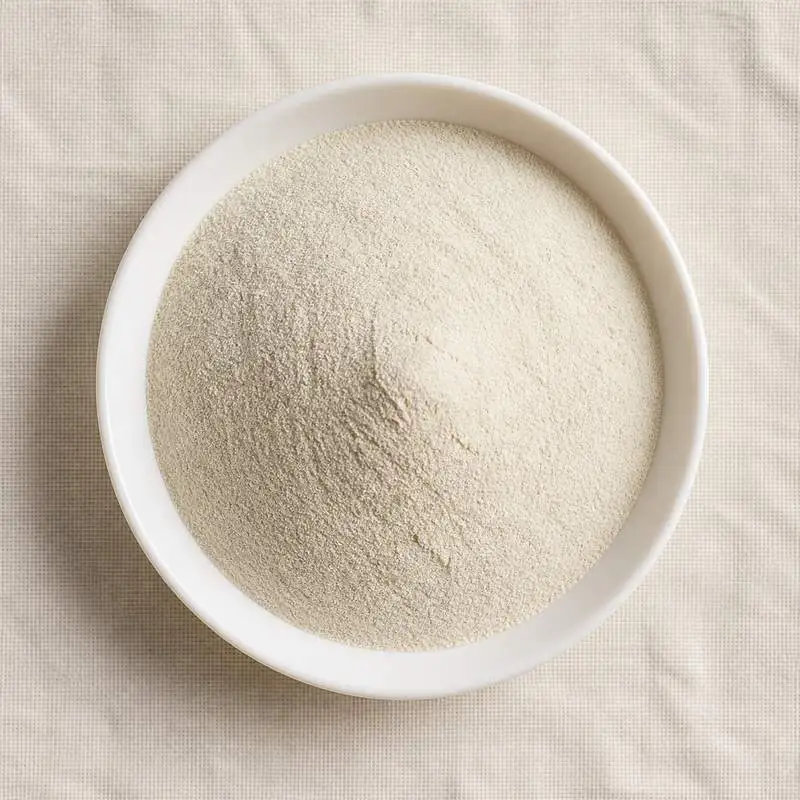
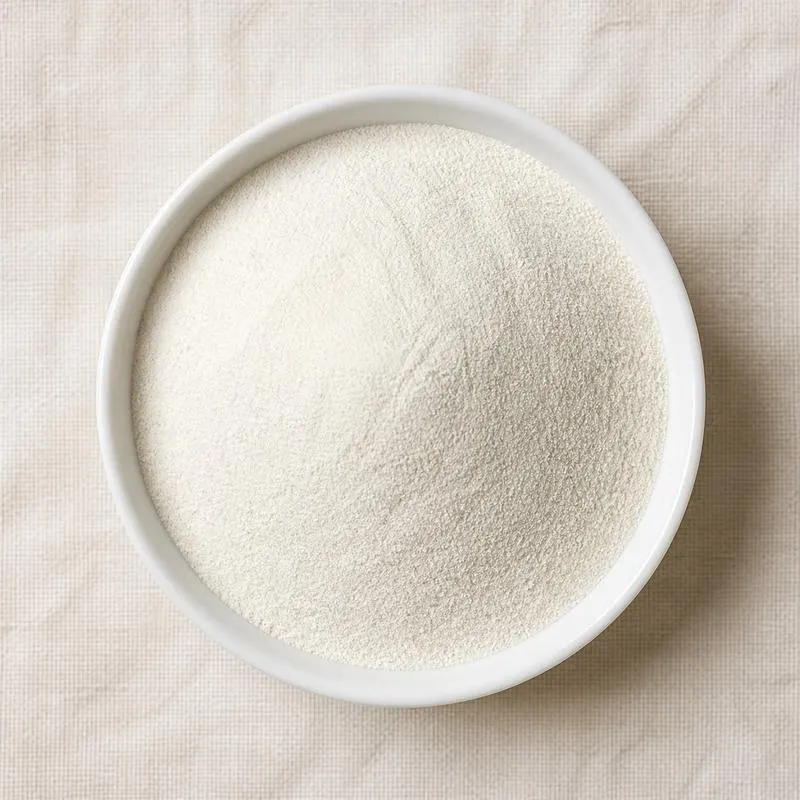
Most often it arrives as a free flowing light to dark brown powder on a salt or maltodextrin carrier, and less often as a paste. The powder disperses readily in hot liquid. Because the name describes a market position rather than a defined composition, the actual formula varies considerably between producers, and buyers work from a sample and a dosage recommendation rather than from a compositional standard.
We source bulk Hundred Flavours Essence from top China manufacturers for our partners. The manufacturer is in Guangdong. A smaller requirement can ship in a combined container with other ingredients.
Please send the grade you need, the volume and your destination port, and we will come back with a solution and a price.
or call +86-21-6858 0751
- Function
- Flavours and Aromas
Specifications
| Item | Specification |
|---|---|
| Appearance | Free-flowing light brown to dark brown powder |
| Odour and Taste | Characteristic savoury, meaty and spiced, free from off-notes |
| Solubility | Disperses completely in hot water, no visible residue |
| Loss on Drying | ≤ 5.0% |
| Sodium Chloride | 18.0 – 55.0%, to the agreed grade |
| Monosodium Glutamate | 10.0 – 40.0%, to the agreed formula |
| Disodium 5'-Ribonucleotides (I+G) | 0.5 – 2.0% |
| Total Nitrogen | ≥ 1.5% |
| pH (1% solution) | 5.0 – 7.0 |
| Particle Size | ≥ 95% through 40 mesh |
| Heavy Metals (as Pb) | ≤ 1 mg/kg |
| Arsenic (as As) | ≤ 0.5 mg/kg |
| Total Plate Count | ≤ 10,000 cfu/g |
| Yeast and Mould | ≤ 100 cfu/g |
| Salmonella | Negative/25g |
Common Markets Grades
Grades are set by the producer rather than by any external standard. The practical variables a buyer specifies are the salt level, which runs from under 20 percent in a concentrate to over 50 percent where the seasoning also salts the dish, the source of the umami load, monosodium glutamate against yeast extract alone, the combined nucleotide content, the physical form as powder or paste, and the particle size for dry blending.
Beyond that, buyers distinguish grades by whether the meaty fraction comes from an animal derived reaction base or from a vegetable protein hydrolysate, which determines vegetarian and halal status, and by whether an anticaking agent is present. Certification for halal, kosher and non GMO is commonly requested on export grades.
Applications
- Catering kitchens, as a single seasoning addition across stir fry, soup and braised dishes
- Soup and congee powders, supplying the savoury backbone on reconstitution
- Instant noodle seasoning sachets in general savoury variants
- Frozen dumpling and bun fillings, contributing salt, umami and aromatics together
- Marinades for poultry and pork, where full solubility allows even distribution
- Snack seasoning dusts where a general savoury profile rather than a specific meat is wanted
- Prepared sauces and stir fry bases sold to retail
- Braising liquors, contributing the spice fraction alongside the savoury base
- Plant based products, where a vegetarian grade masks legume protein off notes
- Ready meals requiring consistent batch to batch savoury character
China Manufacturers of Hundred Flavours Essence
Top Hundred Flavours Essence manufacturers in China.
Company names and logos are the property of the manufacturers themselves. They are listed here because our own directory records them as producing this ingredient. A listing is not an endorsement by them, and we do not represent them or speak on their behalf.
Regulatory Status
In the United States the blend is regulated as a mixture of its components rather than as a single additive. The reaction flavour fraction is handled as a flavour under 21 CFR 101.22, monosodium glutamate is affirmed as generally recognised as safe under 21 CFR 182.1, the ribonucleotides are recognised flavour enhancers, and spices and their oleoresins fall under 21 CFR 182.10 and 182.20. Hydrolysed protein must be declared by a name identifying the source protein under 21 CFR 102.22.
In the European Union the reaction flavour falls under Regulation (EC) No 1334/2008, which sets the permitted starting materials, reaction conditions and by product limits for thermal process flavourings. The enhancer components carry E numbers under Regulation (EC) No 1333/2008, monosodium glutamate as E 621, disodium inosinate as E 631 and disodium guanylate as E 627. Codex has adopted general standards covering the same enhancers and general guidelines for flavourings, and JECFA has evaluated the glutamates and the ribonucleotides. Soy, wheat, celery, milk and fish derived components trigger allergen declaration in both jurisdictions.
Manufacturing Process
The reaction base is made first. Hydrolysed vegetable or animal protein is combined with reducing sugars, cysteine and thiamine and held in a jacketed pressurised reactor at controlled temperature and time so that the Maillard fraction develops, then cooled and standardised against a reference sample. The concentrate is emulsified with a carbohydrate or salt carrier and spray dried into powder. In parallel the spice fraction is prepared by cleaning, cryogenic milling and steam sterilisation, or is bought in as an oleoresin.
Compounding follows in a ribbon or plough share mixer under controlled humidity, where the dried reaction base is blended with salt, monosodium glutamate or yeast extract, nucleotides, sugar and the spice fraction to a specified homogeneity, with liquid oleoresin sprayed onto a carrier first where an even distribution of a small addition is needed. The blend is sieved, passed through a magnet and metal detector, and filled into moisture barrier lined bags.