Instant Carrageenan
Instant carrageenan is carrageenan that has been physically treated so that it disperses in water without lumping and hydrates quickly. The property being sold is dispersibility rather than cold solubility, and the two are frequently confused: an instant grade still needs heat to dissolve a gelling type fully, but it can be poured into water and stirred without forming the gelled lumps that neat carrageenan powder produces.
The problem it solves is a familiar one with high viscosity hydrocolloids. When fine carrageenan powder meets water, the outer particles of any cluster hydrate immediately and form a gelled skin that seals the dry powder inside, leaving lumps that never dissolve and that carry away a proportion of the dose. Instantising defeats this by changing the particle rather than the polymer, either by agglomerating fine powder into porous clusters that water can penetrate from within, or by coating the particles with a dispersing carrier so they separate before they hydrate.
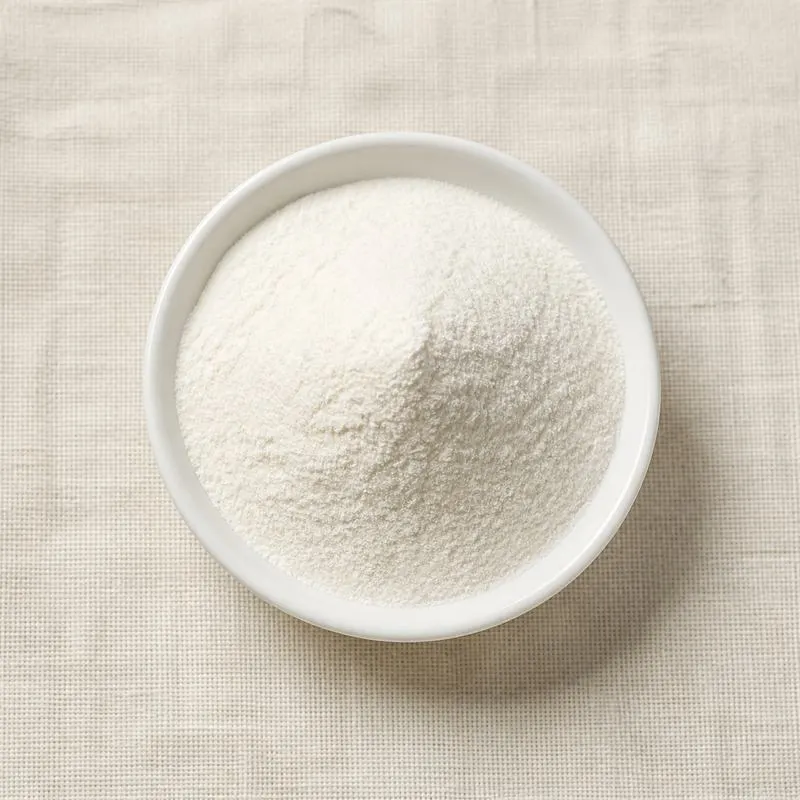
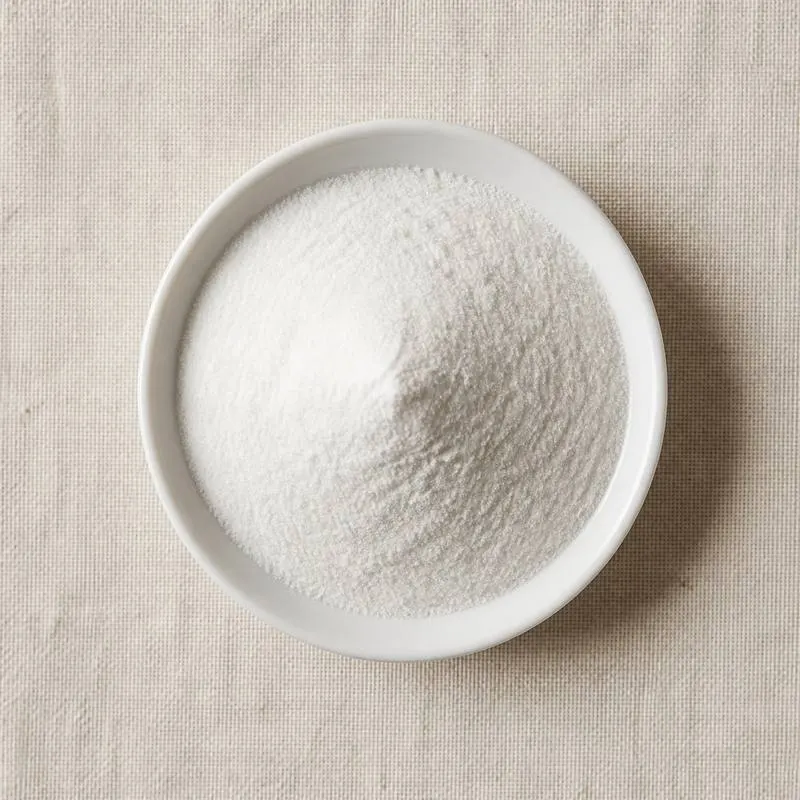
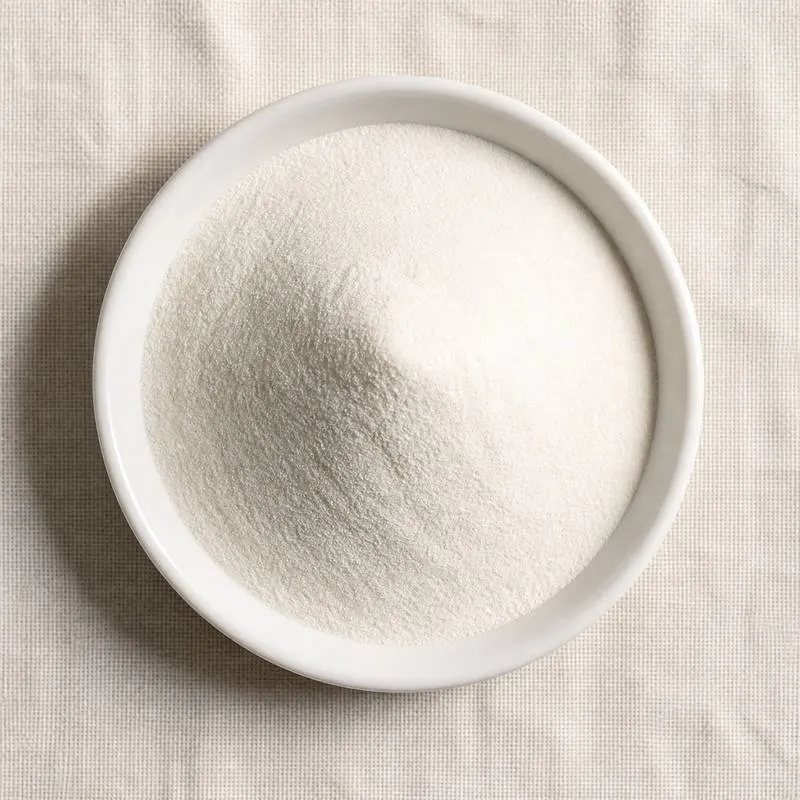
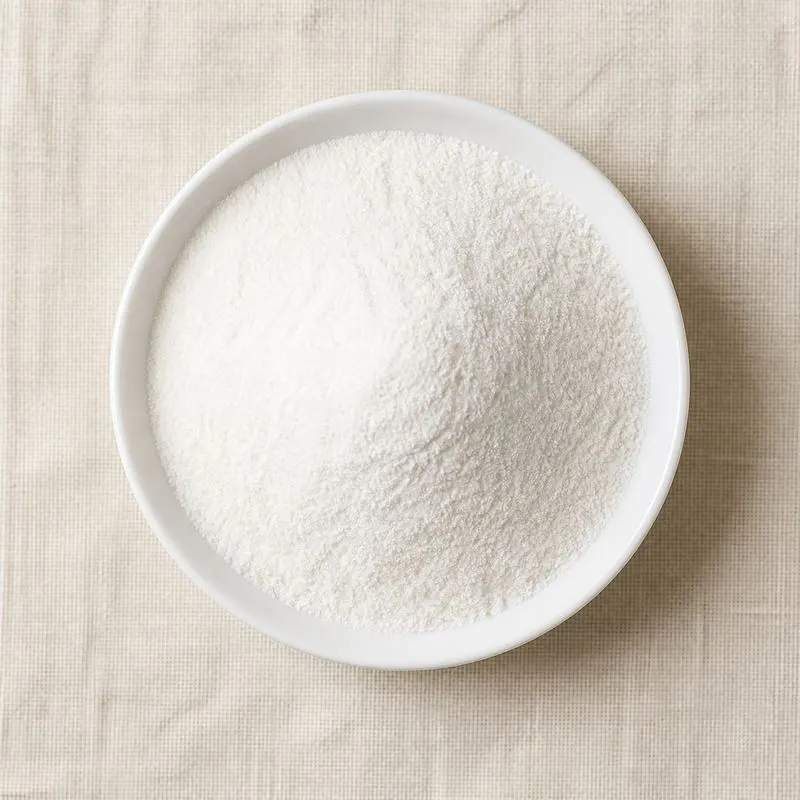
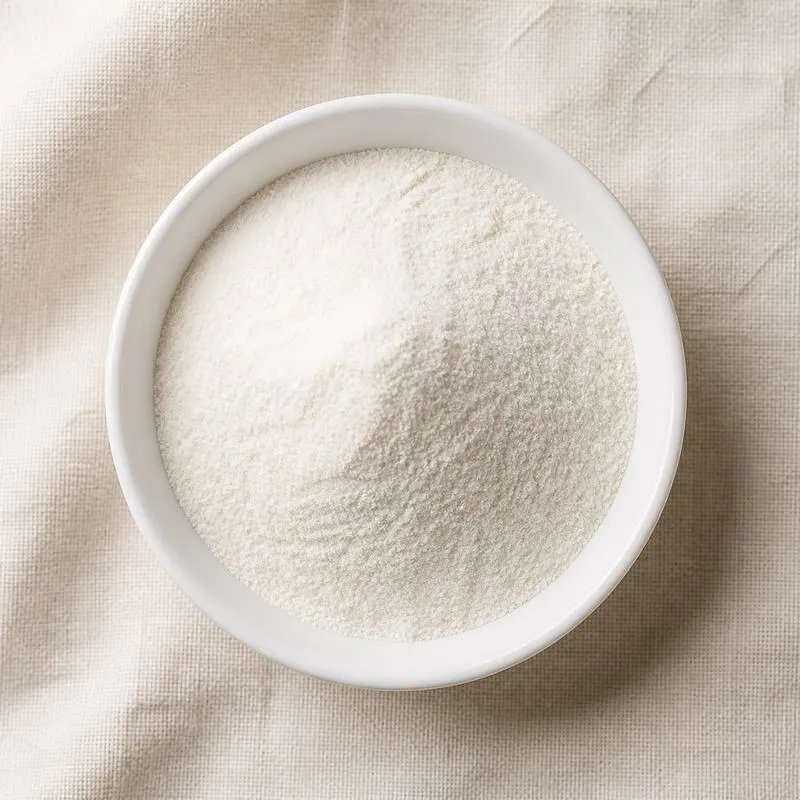
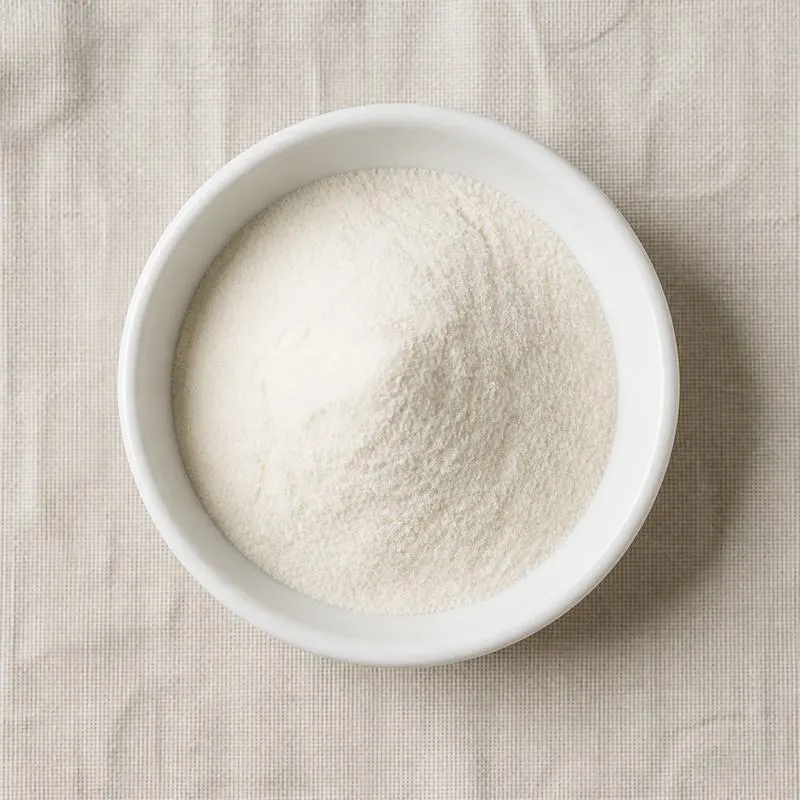
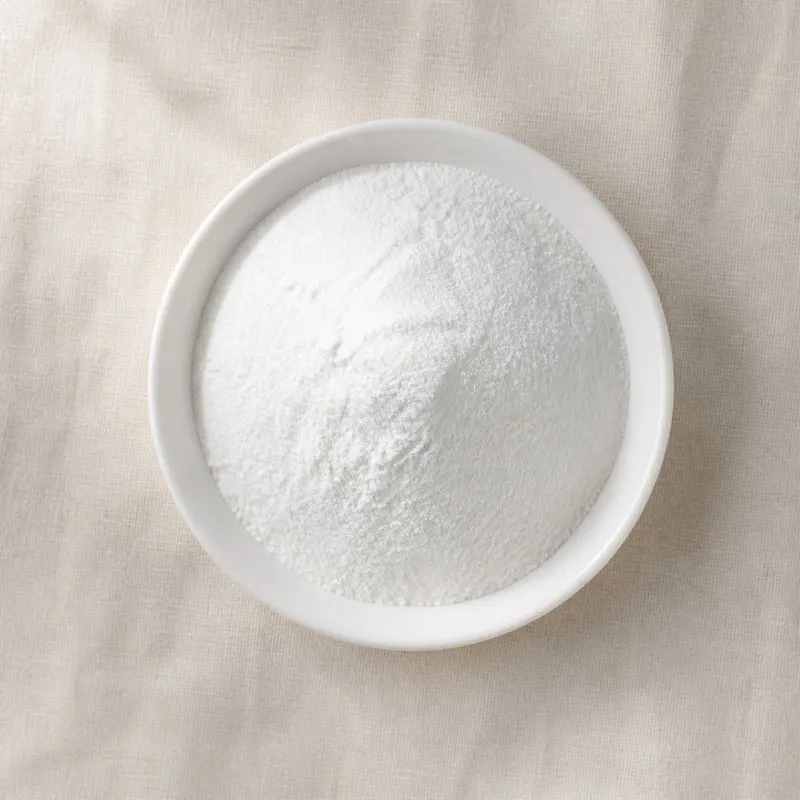
Instant grades are a free-flowing granular powder, coarser and more free-running than standard carrageenan, with a lower bulk density because of the porosity that gives them their behaviour. Once hydrated they behave exactly as the parent carrageenan does, giving the same gel or viscosity, so gel strength and type are specified as usual.
We source bulk Instant Carrageenan from top China manufacturers for our partners. The manufacturer is in Shandong. A smaller requirement can ship in a combined container with other ingredients.
Please send the grade you need, the volume and your destination port, and we will come back with a solution and a price.
or call +86-21-6858 0751
- Function
- Thickener / Hydrocolloid
Specifications
| Item | Specification |
|---|---|
| Appearance | White to pale cream free-flowing granular powder |
| Odour and Taste | Almost odourless, bland |
| Identification | Infrared spectrum characteristic of carrageenan |
| Dispersion Time, 1% in water at 500 rpm | Not more than 2 minutes, free of lumps |
| Gel Strength, 1.5% in 0.2% potassium chloride | Not less than 700 g per square centimetre for kappa type |
| Bulk Density | 0.35 to 0.55 g/mL |
| Sulphate, dry basis | 18.0% to 40.0% |
| Loss on Drying | Not more than 12.0% |
| Sulphated Ash, dry basis | 15.0% to 40.0% |
| Acid Insoluble Matter | Not more than 2.0% |
| pH, 1% solution | 8.0 to 11.0 |
| Particle Size | Not less than 90% retained on 100 mesh |
| Residual Isopropanol | Not more than 0.1% |
| Lead | Not more than 2 mg/kg |
| Arsenic | Not more than 3 mg/kg |
| Total Plate Count | Not more than 5,000 CFU/g |
| Salmonella | Absent in 25 g |
Common Markets Grades
Instant grades exist across the carrageenan types. Instant kappa gives the firm brittle potassium-dependent gel, instant iota the soft elastic calcium-dependent gel, and instant lambda a non-gelling viscosity, with blends of two types standardised to an application. Buyers should state the parent type first and the instant characteristic second, because instantising does not change what the carrageenan does.
The instantising route itself is a specification point. Agglomerated grades are made by fluid bed granulation and carry no added carrier, so the ingredient declaration stays a single entry. Carrier blended grades are dry mixed with sugar, dextrose or maltodextrin, which disperses the particles cheaply but dilutes the active and adds a second line to the ingredient list. Dispersion time in a standard stirred vessel and bulk density are the practical tests, alongside the usual gel strength or viscosity figure. Instant grades are usually coarser than standard powder, so a mesh specification calling for fine material is at odds with the property being bought.
Applications
- Dry beverage and dessert mixes, where the consumer stirs the powder into liquid with no dispersion equipment
- Instant jelly and pudding powders reconstituted with hot water in the kitchen
- Plant operations without high shear mixers, where a standard grade would lump on addition
- Continuous in line dosing, allowing dry powder to be metered into a moving stream
- Meat brine preparation, dispersing into cold brine without a premix stage
- Dairy dessert and flan manufacture, shortening the hydration hold and the batch cycle
- Bakery mixes and dry blends, distributing evenly through the dry ingredients and hydrating on wetting
- Foodservice and catering preparations made by hand rather than in a plant
- Sauce and soup powders where undissolved lumps would be visible in the finished product
China Manufacturers of Instant Carrageenan
Top Instant Carrageenan manufacturers in China.

Company names and logos are the property of the manufacturers themselves. They are listed here because our own directory records them as producing this ingredient. A listing is not an endorsement by them, and we do not represent them or speak on their behalf.
Regulatory Status
Instant grades are carrageenan in regulatory terms. Agglomeration and carrier blending are physical treatments and do not create a new substance, so the authorisations that apply to carrageenan apply unchanged.
In the United States that means the direct food additive regulation at 21 CFR 172.620, with the companion regulation at 21 CFR 172.626 covering carrageenan with polysorbate 80, and the finished food declares carrageenan. In the European Union refined material is authorised as E407 carrageenan and semi-refined material as E407a processed eucheuma seaweed, with identity and purity criteria covering sulphate, ash, acid insoluble matter, residual isopropanol and heavy metals, and requiring control of the molecular weight distribution because degraded low molecular weight carrageenan is not permitted as a food additive. Where the instant grade is a blend with sugar or maltodextrin, the carrier must be declared as well, and the labelling requirements for additive preparations sold to food manufacturers apply, including identification of each component. Codex and JECFA recognise carrageenan as INS 407 with published specifications, and restrictions on use in foods for infants and young children apply to instant grades as to any other.
Manufacturing Process
Manufacture follows the standard refined carrageenan route to dried milled powder. Cleaned red seaweed is cooked in hot alkali, which converts galactose 6-sulphate residues into 3,6-anhydrogalactose so the chain can form its helix, the extract is diluted and clarified by centrifugation and filter pressing, and the polymer is recovered by precipitation into isopropanol or, for kappa, by extrusion into a potassium chloride gel bath followed by pressing. The recovered material is desolventised, dried and milled.
The instantising step comes after that. In fluid bed agglomeration the milled powder is fluidised in a stream of warm air while a fine mist of water or a dilute binder solution is sprayed onto it, so that particles collide, stick and build into porous clusters, which are then dried in the same vessel and screened to remove oversize and returned fines. The moisture level and spray rate set cluster strength: too weak and the agglomerates break back to powder in handling, too strong and they sink without wetting. In the carrier route the powder is instead dry blended with sugar or maltodextrin in a ribbon or double cone blender, sometimes with a small addition of oil or lecithin to hold the carrier onto the particle surface. Finished material is sieved, tested for dispersion time, bulk density and the gel strength or viscosity of the parent type, and blended to specification.