Isopulegol
Isopulegol is a monocyclic terpene alcohol of formula C10H18O and CAS number 89-79-2 for the levorotatory form, structurally a cyclohexanol bearing a methyl group and an isopropenyl group. It has three stereocentres, so eight stereoisomers exist, and the commercially important one is l-isopulegol, the precursor from which most of the world's l-menthol is made by hydrogenation of the isopropenyl double bond. In its own right it carries a fresh minty, herbal and slightly woody odour with a genuine physiological cooling effect, weaker and less sharp than menthol but longer in the mouth.
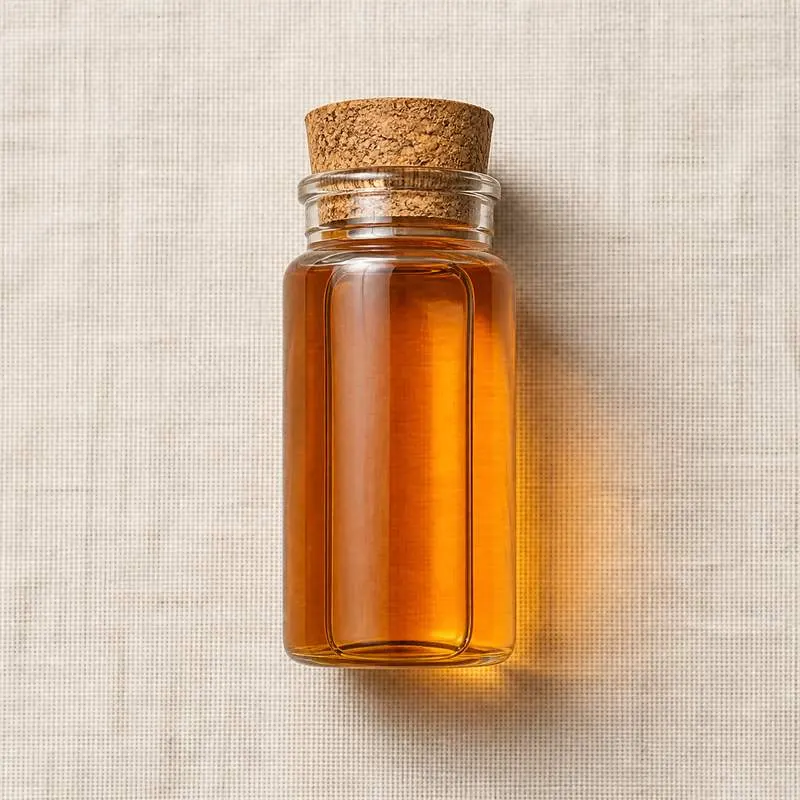
It is a colourless to pale yellow mobile liquid boiling near 212 degrees Celsius, with a mild characteristic odour and a specific rotation that is the primary check of stereochemical purity. It is practically insoluble in water and freely soluble in ethanol, propylene glycol and edible oils, and is dosed into aqueous products as a solution or an emulsion. The tertiary alkene is the reactive site, so material oxidises slowly on exposure to air and light and is packed under nitrogen in lined containers.
We source bulk Isopulegol from top China manufacturers for our partners. The manufacturer is in Anhui. A smaller requirement can ship in a combined container with other ingredients.
Please send the grade you need, the volume and your destination port, and we will come back with a solution and a price.
or call +86-21-6858 0751
- Function
- Flavours and Aromas
Specifications
| Item | Specification |
|---|---|
| Appearance | Colourless to pale yellow clear mobile liquid |
| Odour | Characteristic fresh minty herbal with a cooling effect |
| Assay by Gas Chromatography | Not less than 99.0 percent |
| Identification | Infrared spectrum conforms to reference |
| Other Isopulegol Diastereomers | Not more than 1.0 percent total |
| Optical Rotation at 20 degrees Celsius | Minus 19 to minus 23 degrees for the l isomer |
| Relative Density at 25 degrees Celsius | 0.905 to 0.915 |
| Refractive Index at 20 degrees Celsius | 1.470 to 1.475 |
| Acid Value | Not more than 1.0 mg KOH per gram |
| Water Content | Not more than 0.2 percent |
| Residue on Ignition | Not more than 0.05 percent |
| Heavy Metals as Pb | Not more than 10 mg per kg |
| Lead | Not more than 1.0 mg per kg |
| Arsenic | Not more than 1.0 mg per kg |
Common Markets Grades
The main grade distinction is stereochemical rather than chemical. l-Isopulegol of high enantiomeric and diastereomeric purity is the grade produced for menthol manufacture and for flavour use, and is quoted on optical rotation and on the content of the other isopulegol diastereomers, which arise as by products of the cyclisation step and depress the cooling effect. Racemic and mixed isomer grades are cheaper and are sold as intermediates or for fragrance use where stereochemistry matters less.
Beyond that, the split is between food grade material conforming to a Food Chemicals Codex style monograph with defined assay, refractive index and heavy metal limits, and technical grade of the same assay intended as a synthesis intermediate, which is not interchangeable because it lacks the food documentation. Dilutions at 1 or 10 percent in propylene glycol or triacetin are stocked for flavour compounding, and natural grades made by cyclising citronellal from citronella oil are offered where a natural declaration is required.
Applications
- Chewing gum, where the cooling effect is longer and softer than that of menthol
- Confectionery and mints, used alongside menthol to broaden the cooling profile
- Oral care products such as toothpaste and mouthwash
- Mint and herbal flavours, contributing a green minty top note
- Beverages in mint and citrus mint variants
- Cooling agent blends, where it is combined with menthol derivatives to shape onset and duration
- Pharmaceutical lozenges and cough preparations
- Fine fragrance and functional perfumery in fresh herbal accords
- Tobacco and vapour products as a cooling material
- As the intermediate in the industrial synthesis of l-menthol
China Manufacturers of Isopulegol
Top Isopulegol manufacturers in China.
Company names and logos are the property of the manufacturers themselves. They are listed here because our own directory records them as producing this ingredient. A listing is not an endorsement by them, and we do not represent them or speak on their behalf.
Regulatory Status
In the United States isopulegol carries a FEMA GRAS listing as a flavouring substance and is recognised as a synthetic flavouring substance permitted for use in food under 21 CFR 172.515. Material offered for food use is normally specified against a Food Chemicals Codex style monograph covering assay, refractive index, optical rotation and heavy metals.
In the European Union it appears in the Union list of authorised flavouring substances maintained under Regulation (EC) No 1334/2008, which permits it for general flavouring use subject to good manufacturing practice, identified by an FL number within the alicyclic alcohol group. The Council of Europe has listed it in its flavouring inventory. JECFA has evaluated it within the group of alicyclic primary alcohols, aldehydes, acids and related esters and has published a specification. Where the material is used in cosmetic or oral care products, the separate cosmetic ingredient rules of the relevant jurisdiction apply alongside the food clearances.
Manufacturing Process
The dominant industrial route starts from citronellal and proceeds by an intramolecular carbonyl ene reaction, in which the aldehyde and the trisubstituted alkene within the same molecule close to a six membered ring bearing the new hydroxyl. The reaction is catalysed by a Lewis acid, classically zinc bromide or an aluminium based catalyst, and the choice of catalyst decides the diastereoselectivity, which is the critical process variable because only one of the four diastereomers hydrogenates to l-menthol. The citronellal feedstock is itself made either by asymmetric isomerisation and hydrolysis of a myrcene derived allylamine, which sets the stereochemistry at the outset, or is isolated from citronella or eucalyptus oil where a natural chain is required.
The crude cyclisation product is quenched, washed to remove catalyst residues, and purified by fractional distillation under vacuum, with the unwanted diastereomers separated in that step or removed by crystallisation of a derivative. Where l-menthol is the target, the purified l-isopulegol is hydrogenated over a nickel or palladium catalyst and recrystallised. Material sold as isopulegol is instead polish filtered, assayed by gas chromatography, checked for optical rotation and filled under nitrogen.