Krill Oil
Krill oil is the lipid extracted from Antarctic krill, Euphausia superba, a small pelagic crustacean harvested in the Southern Ocean. What distinguishes it from fish oil is the chemical form in which the omega-3 fatty acids are carried: a large part of the eicosapentaenoic and docosahexaenoic acid is bound to phospholipids, principally phosphatidylcholine, rather than to triglycerides.
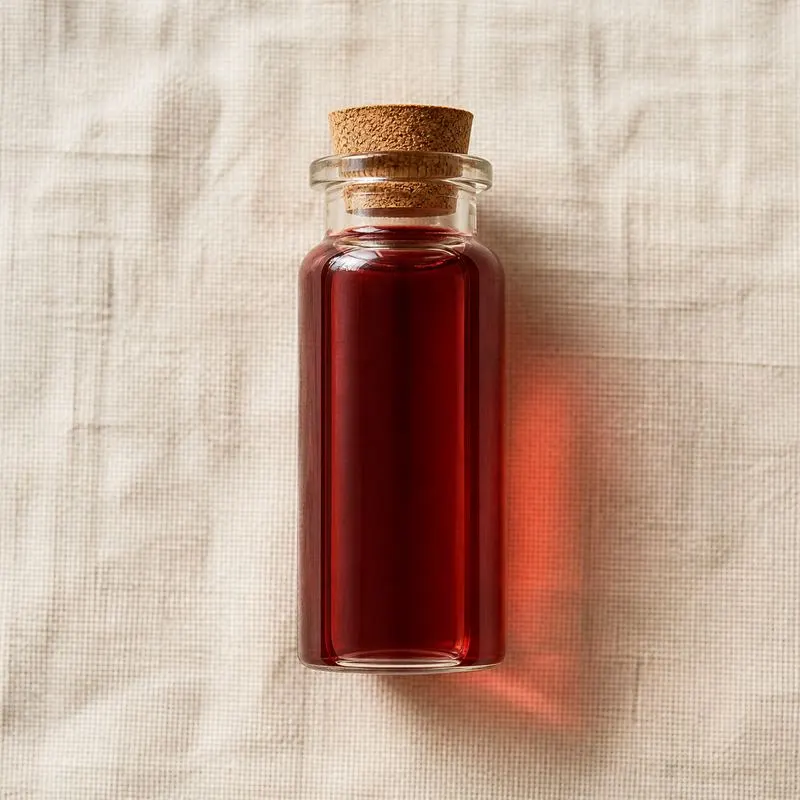
A typical oil contains 15 to 25 percent EPA and 8 to 12 percent DHA on total fatty acids, with phospholipid content between 30 and 56 percent depending on grade. The oil also carries astaxanthin, the carotenoid that gives it its deep red colour and contributes some oxidative protection, along with cholesterol and residual protein from the raw material.
The phospholipid content changes how the oil behaves physically. It is a viscous dark red liquid that thickens noticeably when cold, and unlike a neutral triglyceride oil it is surface active, dispersing in water to form a fine emulsion rather than separating cleanly. That amphiphilic character is useful in emulsion products but makes the oil difficult to fill into softgels without careful temperature control, and it also means the oil holds moisture, so water content is a specification that matters. The oil oxidises readily and is handled under nitrogen with added antioxidants.
We source bulk Krill Oil from top China manufacturers for our partners. The manufacturers are in Shandong. A smaller requirement can ship in a combined container with other ingredients.
Please send the grade you need, the volume and your destination port, and we will come back with a solution and a price.
or call +86-21-6858 0751
- Function
- Specialty oil
Specifications
| Item | Specification |
|---|---|
| Appearance | Viscous dark red oily liquid |
| Odour and Taste | Characteristic marine, free from rancid notes |
| Total Phospholipids | ≥ 40.0% |
| Phosphatidylcholine | ≥ 30.0% |
| EPA (of total fatty acids) | ≥ 15.0% |
| DHA (of total fatty acids) | ≥ 8.0% |
| Astaxanthin Esters | ≥ 50 mg/kg |
| Identification | Conforms by phosphorus nuclear magnetic resonance and fatty acid profile |
| Acid Value | ≤ 25 mg KOH/g |
| Peroxide Value | ≤ 5.0 meq/kg |
| Anisidine Value | ≤ 20 |
| Trimethylamine | ≤ 5 mg/kg |
| Moisture | ≤ 3.0% |
| Residual Solvent | ≤ 50 mg/kg |
| Lead | ≤ 0.1 mg/kg |
| Arsenic (inorganic) | ≤ 0.1 mg/kg |
| Mercury | ≤ 0.1 mg/kg |
| Fluoride | ≤ 20 mg/kg |
Common Markets Grades
Grades are defined by phospholipid content, which is the parameter the market pays for. Standard grades run at 40 percent minimum phospholipids with total omega-3 around 22 to 25 percent; higher grades at 50 to 56 percent phospholipids command a premium. Astaxanthin content is quoted separately, usually in the range of 50 to 200 milligrams per kilogram, as is total phosphatidylcholine.
The processing route gives the second distinction. Solvent extracted oil, made with ethanol or acetone, is the bulk product. Supercritical carbon dioxide extracted oil, produced in a two stage process that first strips the neutral lipids and then the phospholipids with an ethanol co-solvent, is solvent free and is specified separately. Deodorised and decolourised grades with a lighter colour and reduced marine note are made for encapsulation and for food use. A krill meal grade and a krill protein hydrolysate are co-products of the same operation rather than variants of the oil. Trimethylamine and trimethylamine oxide levels are specified because they carry the fishy odour that limits consumer acceptance.
Applications
- Softgel capsules in the omega-3 supplement market, the principal application
- Combination joint and cardiovascular supplements, blended with vitamin D and astaxanthin
- Women's health formulations, where krill phospholipids are positioned against fish oil
- Emulsified liquid supplements and shots, using the natural surface activity of the phospholipid fraction
- Pet supplements for dogs and cats, sold as an oil or a soft chew
- Aquaculture and larval feed, where krill phospholipids and astaxanthin support pigmentation and development
- Functional foods and fortified dairy, added as an emulsion or microencapsulated powder
- Sports nutrition products positioned on membrane phospholipid delivery
- Cosmetic formulations, where the phospholipid and astaxanthin fractions are used in skin care emulsions
Brands Using Krill Oil
Widely-distributed consumer products that list Krill Oil on the ingredient label.
Brand names, product names and logos are the property of their owners. They appear here as published evidence that the ingredient is used, taken from the brand's own label or website. Their appearance is not an endorsement, and it does not mean the brand buys from us or from any manufacturer listed on this site.
China Manufacturers of Krill Oil
Top Krill Oil manufacturers in China.
 Meitek (Qingdao) Co., Ltd.13 ingredients in the directory
 Qingdao Kangjing Marine Biotechnology Co., Ltd.1 ingredient in the directory
Company names and logos are the property of the manufacturers themselves. They are listed here because our own directory records them as producing this ingredient. A listing is not an endorsement by them, and we do not represent them or speak on their behalf.
Regulatory Status
In the United States, krill oil is the subject of GRAS notifications to which the FDA responded without objection for defined food uses, and it is widely sold as a dietary ingredient under the dietary supplement framework. Because krill is a crustacean, the oil must be declared as a crustacean shellfish allergen. The GRAS position and the specification attach to the particular preparation and extraction route.
In the European Union, lipid extracts from Euphausia superba are listed in the Union list of authorised novel foods, with the permitted food categories, maximum levels and specification set out there, and the authorisation is tied to the specific extract. Crustaceans are among the allergens that must be emphasised in the ingredient list. Krill oil is a food ingredient rather than an additive, so no E number applies. The Antarctic fishery itself is managed under the Convention on the Conservation of Antarctic Marine Living Resources, which sets catch limits and requires vessel licensing and catch documentation, and this chain of custody is normally documented for the raw material. Codex has adopted a standard for fish oils, which addresses krill oil among the named oils and sets composition and quality criteria.
Manufacturing Process
Krill is caught by trawl and must be processed within hours, because the animal carries its own powerful proteases and phospholipases, which begin degrading the catch as soon as it dies. Most production therefore takes place on board factory vessels. The catch is pumped aboard, cooked to inactivate the enzymes, and dewatered, then dried into krill meal that is stable enough to ship to a shore based extraction plant. Some operations extract the oil at sea directly from the wet or partly dried material.
Extraction is by polar solvent, since the phospholipid fraction is not recovered efficiently by hexane. Ethanol or an ethanol and acetone system is percolated through the meal at controlled temperature, dissolving both the neutral and the polar lipids, and the extract solution is filtered and the solvent stripped under vacuum at low temperature. The alternative route uses supercritical carbon dioxide in two stages, the first with carbon dioxide alone to remove neutral lipids and free fatty acids, the second with ethanol added as a co-solvent to bring out the phospholipids, and this leaves no solvent residue. The crude oil is then polished by filtration, given a mild deodorisation under deep vacuum to strip trimethylamine and free fatty acids without stripping the astaxanthin, dosed with tocopherols and filled under nitrogen.