N-Propyl Acetate
N-Propyl acetate is the acetate ester of n-propanol, molecular formula C5H10O2, molar mass 102.13, CAS number 109-60-4. It is one of the simple short chain esters that make up the fruity top note of many natural fruits and of fermented foods, and it occurs naturally in pear, apple, banana and in distilled spirits.
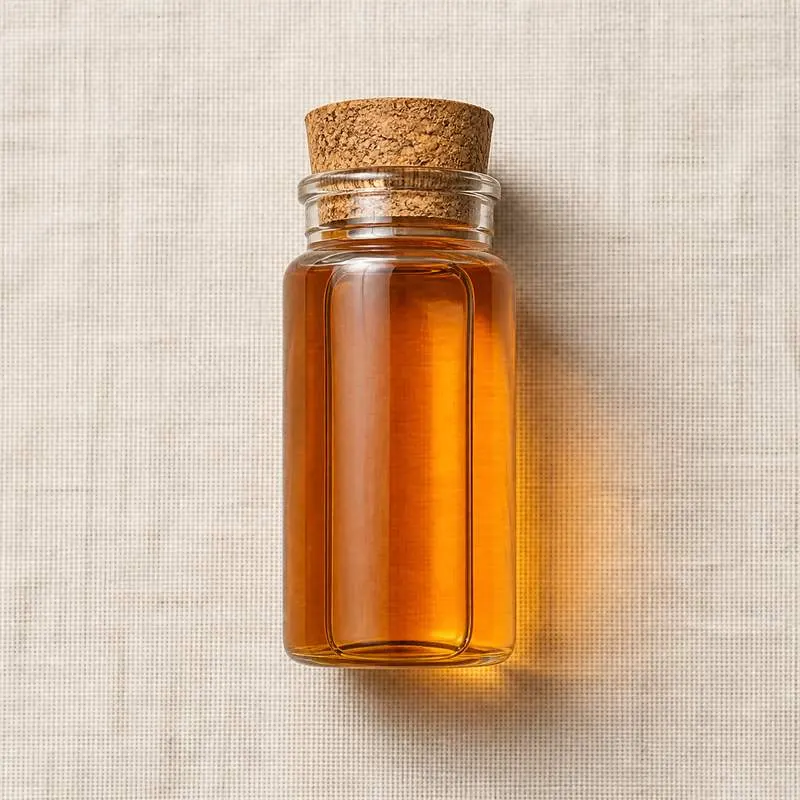
The compound is a clear colourless mobile liquid boiling at about 102 degrees Celsius, with a sweet, sharp fruity odour usually described as pear or nail polish like depending on concentration. In flavour work it behaves as a volatile top note, giving lift and freshness rather than body, and it flashes off quickly under heat, so it is dosed late in a process or protected by encapsulation.
Solubility in water is limited, around two grams per hundred millilitres at room temperature, while it is miscible with ethanol, propylene glycol, vegetable oils and most organic solvents. It is a flammable liquid with a flash point near 13 degrees Celsius, which sets its storage and transport classification. The ester slowly hydrolyses back to acetic acid and propanol in acidic aqueous systems, which limits its shelf life in low pH beverages.
We source bulk N-Propyl Acetate from top China manufacturers for our partners. The manufacturer is in Jiangsu. A smaller requirement can ship in a combined container with other ingredients.
Please send the grade you need, the volume and your destination port, and we will come back with a solution and a price.
or call +86-21-6858 0751
- Function
- Flavours and Aromas
Specifications
| Item | Specification |
|---|---|
| Appearance | Clear mobile liquid, free from suspended matter |
| Colour | Colourless, 10 Hazen maximum |
| Odour | Characteristic sweet fruity, true to reference sample |
| Assay by gas chromatography | 99.5 percent minimum |
| Identification by infrared spectrum | Conforms to reference spectrum |
| Free acid as acetic acid | 0.02 percent maximum |
| Water content | 0.05 percent maximum |
| Relative density at 20 degrees Celsius | 0.884 to 0.889 |
| Refractive index at 20 degrees Celsius | 1.3820 to 1.3860 |
| Distillation range | 100 to 103 degrees Celsius |
| Non volatile residue | 0.005 percent maximum |
| Heavy metals as lead | 10 mg/kg maximum |
| Lead | 1.0 mg/kg maximum |
| Arsenic | 1.0 mg/kg maximum |
Common Markets Grades
The material is traded in two broad positions. Technical or solvent grade, generally 99 percent minimum, accounts for the majority of tonnage and is consumed in coatings, printing inks and cleaning formulations, where the specification is written around water content, acidity and evaporation rate rather than around odour.
Food grade, sometimes called flavour and fragrance grade, is the same chemical purified further and released on an odour assessment as well as on assay. It is normally 99.5 percent minimum with tight limits on free acid, water and residual propanol, since traces of acetic acid or aldehyde are detectable in the finished flavour. Natural n-propyl acetate, produced by esterifying fermentation derived propanol with fermentation derived acetic acid, is sold as a separate and considerably more expensive grade for products carrying a natural flavour declaration. Dilutions at fixed percentages in ethanol, triacetin or propylene glycol are made for flavour houses that dose small quantities.
Applications
- Pear, apple and banana flavour compounds, where it supplies the fresh ester top note
- Confectionery and chewing gum fruit flavours, dosed at low level for lift
- Soft drinks and flavoured waters, usually from a solubilised or emulsified premix
- Bakery and dairy flavours such as yoghurt and ice cream, for a fruity brightness
- Alcoholic drink flavours, reproducing an ester profile found naturally in spirits
- Fine fragrance and household perfumery, as a fresh volatile top note
- Nitrocellulose and acrylic coatings, as a fast evaporating solvent
- Printing inks, particularly flexographic and gravure systems
- Nail care and cosmetic solvent blends
- Cleaning and degreasing formulations where a low residue solvent is required
China Manufacturers of N-Propyl Acetate
Top N-Propyl Acetate manufacturers in China.

Company names and logos are the property of the manufacturers themselves. They are listed here because our own directory records them as producing this ingredient. A listing is not an endorsement by them, and we do not represent them or speak on their behalf.
Regulatory Status
In the United States 21 CFR 172.515 lists n-propyl acetate as a synthetic flavouring substance and adjuvant permitted for use in food, and it holds FEMA GRAS status as a flavouring substance under FEMA number 2925. Use is at the lowest level required to achieve the intended technical effect, in line with good manufacturing practice.
In the European Union the substance appears on the Union list of authorised flavouring substances established under Regulation (EC) No 1334/2008, where it is identified by a FLAVIS number in the ester group. Flavouring substances are not assigned E numbers, so none applies here. The Joint FAO and WHO Expert Committee on Food Additives has evaluated the simple aliphatic acetate esters as a group and concluded there is no safety concern at the levels at which they are used as flavourings, and Codex flavouring guidance applies where national legislation adopts it. Non food use in coatings and inks is regulated under industrial chemicals legislation rather than food law.
Manufacturing Process
Industrial production is by Fischer esterification. N-Propanol and glacial acetic acid are fed to a reactive distillation column or a stirred reactor with a strong acid catalyst, most often sulphuric acid or a solid acid ion exchange resin. The equilibrium is driven toward the ester by removing the water of reaction continuously as an azeotrope with the ester and the alcohol, which is the reason reactive distillation is the preferred configuration at scale.
The crude ester leaving the reaction section is neutralised with dilute alkali to remove residual acid catalyst and free acetic acid, then washed with water and separated. Drying removes entrained water, and the dried crude is fractionated in a rectification column that takes off light ends and unreacted propanol overhead and recovers heavy residues at the base. The heart cut is polish filtered and, for food grade material, assessed by a trained odour panel before filling into lined steel drums or bulk tanks under nitrogen. Where a natural declaration is required the same route is run on fermentation derived alcohol and acid.