Original Flavour Marinade
Original flavour marinade is a compounded seasoning system used to marinate raw meat before cooking, formulated to a plain savoury profile rather than to a spice or sauce direction. It is sold as a dry powder that the processor reconstitutes in water, and it is applied by tumbling, injection or soaking before the meat is grilled, fried or roasted.
A marinade of this type does more than flavour. Salt and phosphates raise the pH of the muscle and increase its water holding capacity, so the meat retains more of its own moisture during cooking. Starches, soy or pea protein and hydrocolloids bind the added brine in place. The savoury components, typically monosodium glutamate, nucleotides, yeast extract and a light spice extract, provide the taste, while sugar contributes browning at the surface during cooking.
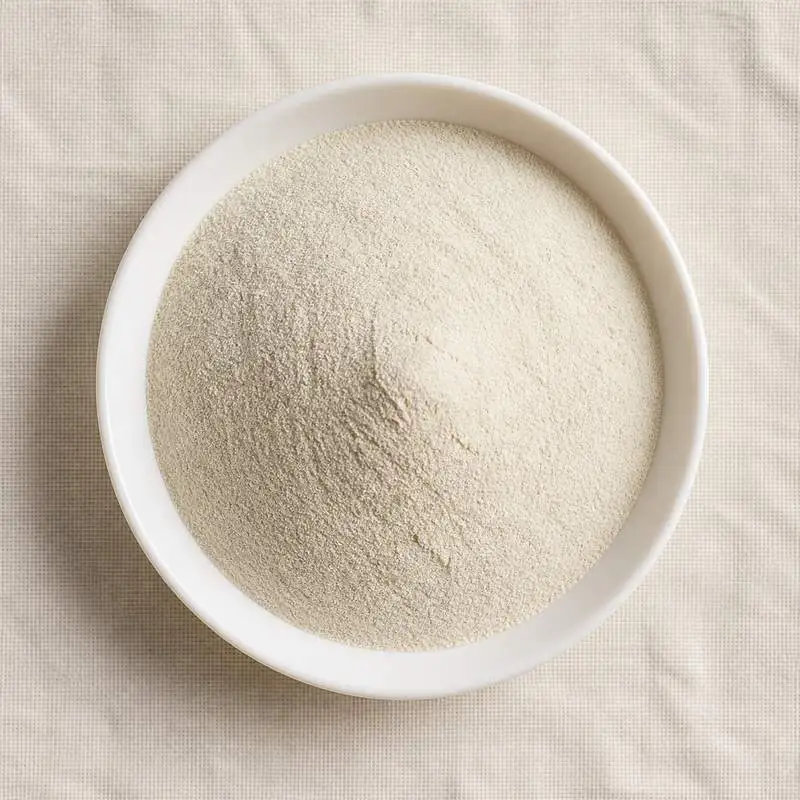
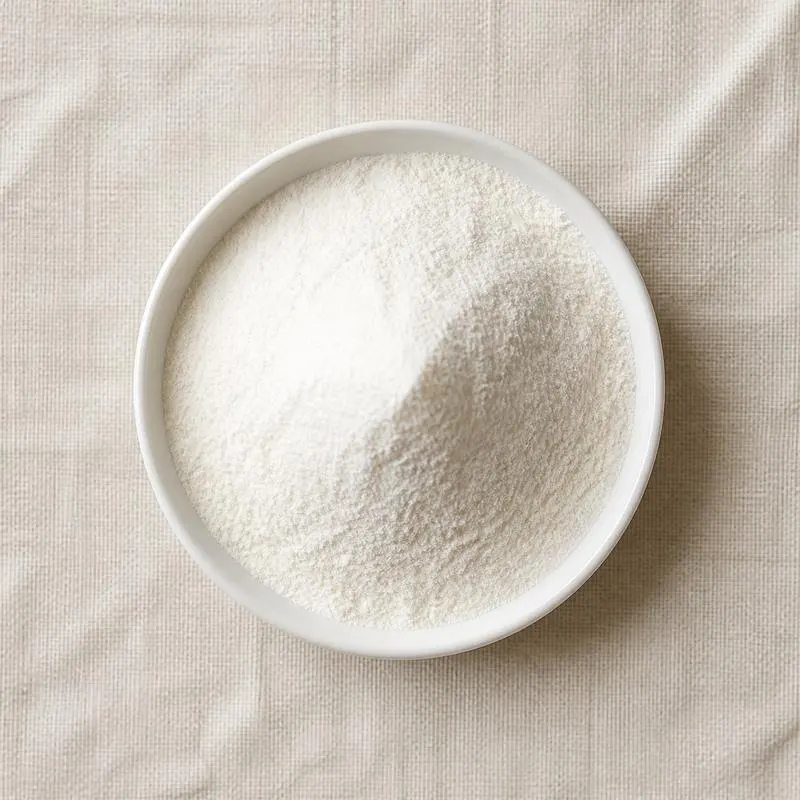
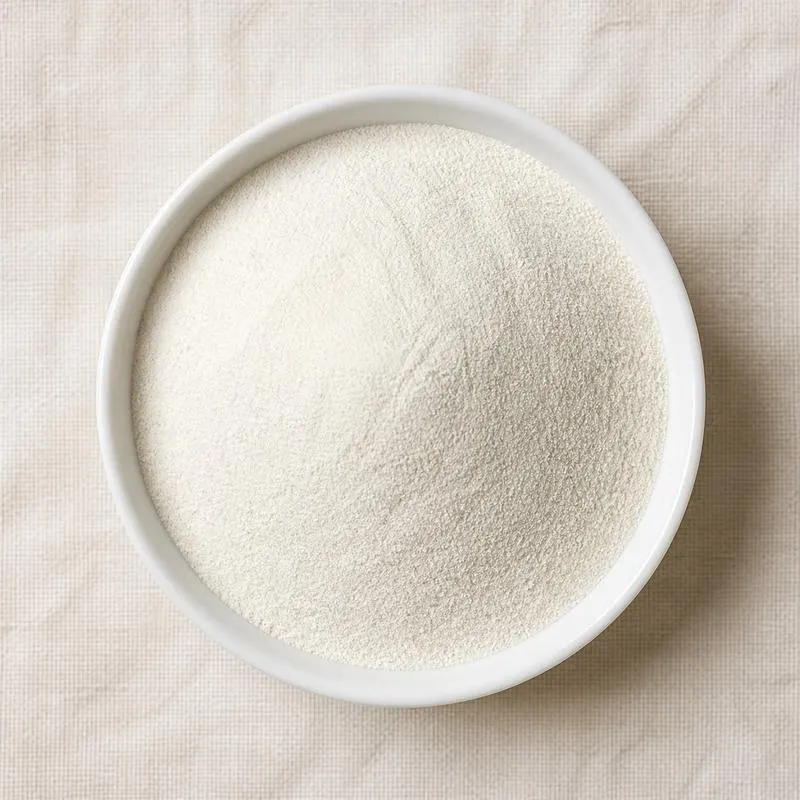
The powder is free flowing, off white to pale beige, and dissolves or disperses in cold water to a slightly viscous brine. The starch and protein components hydrate rather than dissolve, so the brine is mixed for a defined time and used within a working period. Storage life depends on moisture pick up, since the salt and phosphate fraction is hygroscopic, and the material is packed in moisture barrier bags.
We source bulk Original Flavour Marinade from top China manufacturers for our partners. The manufacturer is in Zhejiang. A smaller requirement can ship in a combined container with other ingredients.
Please send the grade you need, the volume and your destination port, and we will come back with a solution and a price.
or call +86-21-6858 0751
- Function
- Flavours and Aromas
Specifications
| Item | Specification |
|---|---|
| Appearance | Free flowing powder, free from lumps and foreign matter |
| Colour | Off white to pale beige |
| Odour and flavour | Characteristic savoury, true to reference sample |
| Particle size | 95 percent through 40 mesh |
| Moisture | 5.0 percent maximum |
| Sodium chloride | Declared per formula, tolerance plus or minus 2 percent |
| Total phosphate as P2O5 | Declared per formula, phosphate bearing grades only |
| pH of 1 percent solution | 7.5 to 9.0 |
| Solubility in cold water | Disperses without lumping at the stated brine ratio |
| Bulk density | 0.70 to 0.95 g/ml |
| Lead | 2.0 mg/kg maximum |
| Arsenic | 0.5 mg/kg maximum |
| Total plate count | 10,000 cfu/g maximum |
| Yeast and mould | 100 cfu/g maximum |
| Salmonella | Absent in 25 g |
Common Markets Grades
Grades are separated by the application method, since injection, tumbling and soaking need different particle size and viscosity behaviour. Injection grades must dissolve completely and pass a fine filter and needle without blocking, so they exclude coarse starch and visible spice particles. Tumbling and soaking grades tolerate a coarser blend and often carry a higher hydrocolloid level to hold the brine on the surface.
The second distinction is compositional. Phosphate bearing grades give the highest yield and the juiciest result, while phosphate free grades, built on citrates, carbonates or functional protein and starch instead, are made for markets and customers that restrict phosphate use. Clean label grades avoid monosodium glutamate and rely on yeast extract and fermented flavourings for the savoury layer. Dose rate is stated as a percentage on meat weight together with a brine ratio, and halal certified lines are run separately.
Applications
- Chicken wings, drumsticks and portions before grilling or deep frying
- Whole chicken and turkey for roasting, applied by injection to reach the deep muscle
- Pork chops, ribs and belly, marinated by tumbling before cooking
- Beef and lamb cuts for grilling and skewering
- Prepared marinated meats sold chilled or frozen at retail
- Foodservice and quick service restaurant preparation, dosed against a fixed brine ratio
- Reformed and coated meat products such as nuggets and cutlets, applied before battering
- Fish and seafood portions, where the water holding function limits cooking loss
- Plant based meat analogues, where the same brine chemistry improves juiciness
China Manufacturers of Original Flavour Marinade
Top Original Flavour Marinade manufacturers in China.
Company names and logos are the property of the manufacturers themselves. They are listed here because our own directory records them as producing this ingredient. A listing is not an endorsement by them, and we do not represent them or speak on their behalf.
Regulatory Status
In the United States a marinade blend of this kind is a mixture of permitted food ingredients. Phosphates used in meat and poultry are permitted at defined levels expressed as phosphate in the finished product, and their use in inspected meat and poultry products falls under the Food Safety and Inspection Service rules on ingredients and labelling as well as under the relevant Food and Drug Administration additive listings. Monosodium glutamate, starches, hydrocolloids and proteins are each declared by name on the ingredient list, and the flavour fraction is declared as natural or artificial flavour.
In the European Union each functional component is regulated separately. Phosphoric acid and the phosphates are authorised food additives with assigned E numbers in the E338 to E452 series and are permitted in meat preparations within the conditions set by the additives regulation, while thickeners, stabilisers and flavour enhancers carry their own E numbers. Flavourings are handled under Regulation (EC) No 1334/2008 and carry no E number. Where the marinade is applied to a meat preparation, the compositional and labelling rules for meat preparations, including added water declaration, determine how the finished product must be described. Codex has a general standard for food additives that sets the equivalent framework internationally.
Manufacturing Process
Manufacture is a dry blending operation rather than a chemical one. Salt, phosphate blend, sugar, starch, protein isolate, hydrocolloid, flavour enhancers and the spice and flavour fraction are received against specification and checked for moisture and particle size, since these two properties decide how the blend flows and whether it will segregate. Coarse components are milled to a matched granulation, and the flavour fraction, which is often a liquid oleoresin or an oil based flavour, is plated onto a portion of the salt or starch in a separate mixer so it can be distributed evenly at low addition levels.
The weighed components are combined in a ribbon or double cone blender and mixed to a validated uniformity, with the order of addition set so that the minor ingredients enter on top of a bed of carrier rather than directly against the vessel wall. Sampling at several points confirms uniformity of the marker component, usually salt or phosphate. The blend passes a check sifter and a metal detector, then is filled into foil laminate bags inside cartons, with a desiccant free but moisture tight seal because the phosphate and salt fraction takes up water rapidly from humid air.