Oxidized Starch
Oxidised starch is a modified starch in which hydroxyl groups on the glucose units have been converted to carbonyl and then to carboxyl groups by treatment with an oxidising agent, most commonly sodium hypochlorite. The reaction also cleaves glycosidic bonds, so the product is both chemically substituted and depolymerised, and the granule structure survives because the treatment is carried out below the gelatinisation temperature.
The two changes work together. Chain scission lowers the paste viscosity sharply, so an oxidised starch can be cooked at high solids where a native starch would be too thick to pump. The carboxyl groups carry a negative charge and are bulky, and they stop the chains from realigning as the paste cools, so unlike an acid thinned starch of comparable viscosity an oxidised starch gives a clear, soft, non setting paste rather than a rigid gel. Whiteness is a further consequence, since hypochlorite bleaches the residual protein and pigment that give native starch its off white cast.
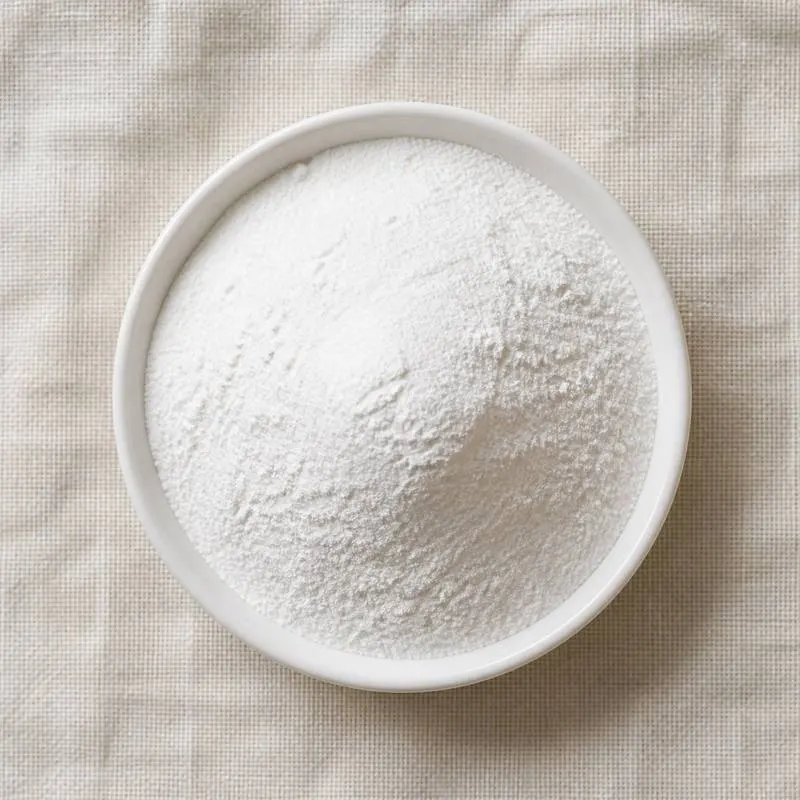
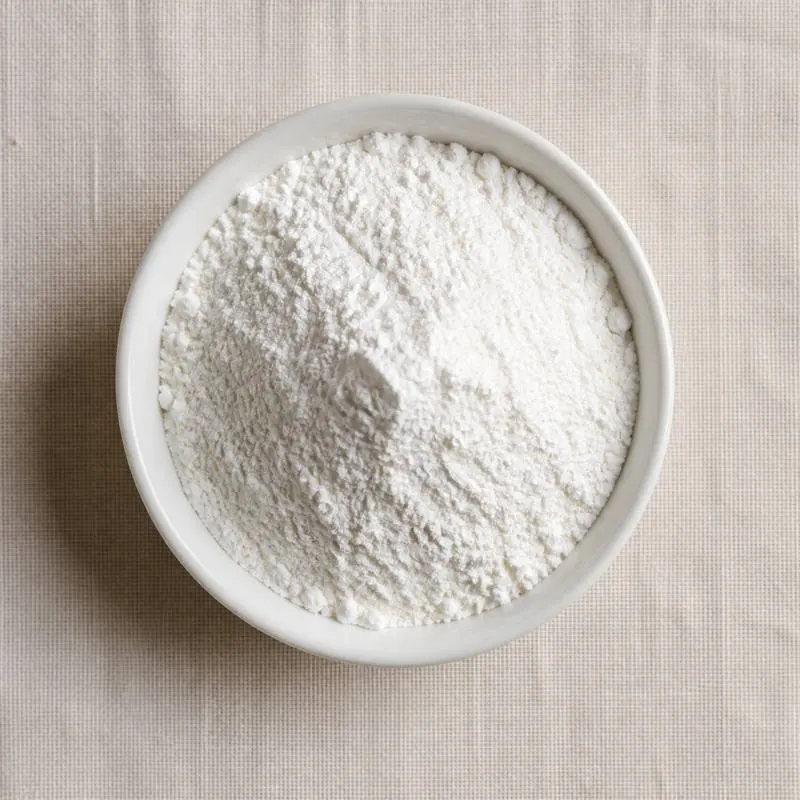
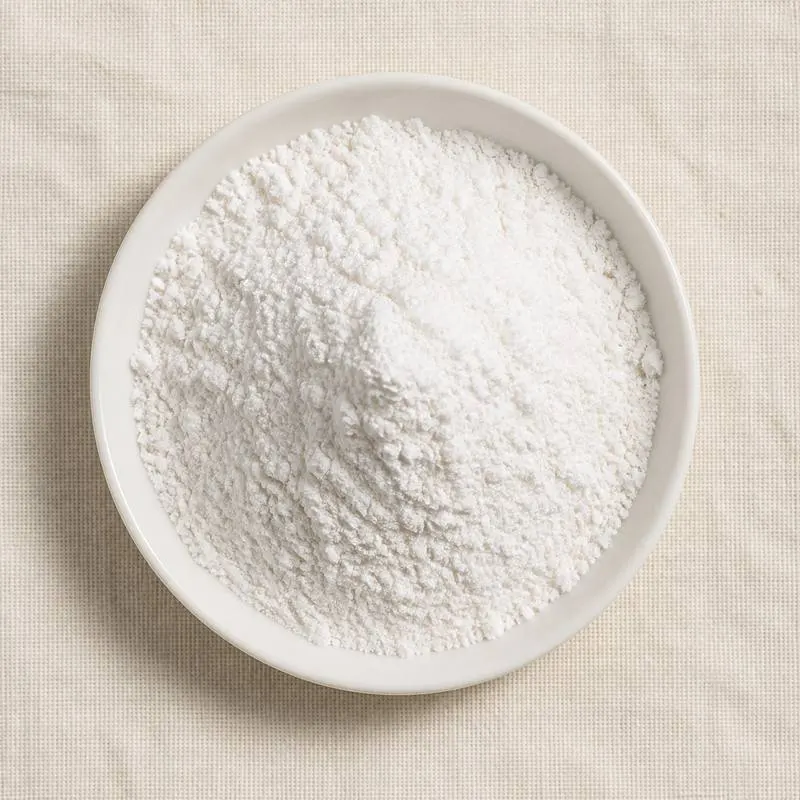
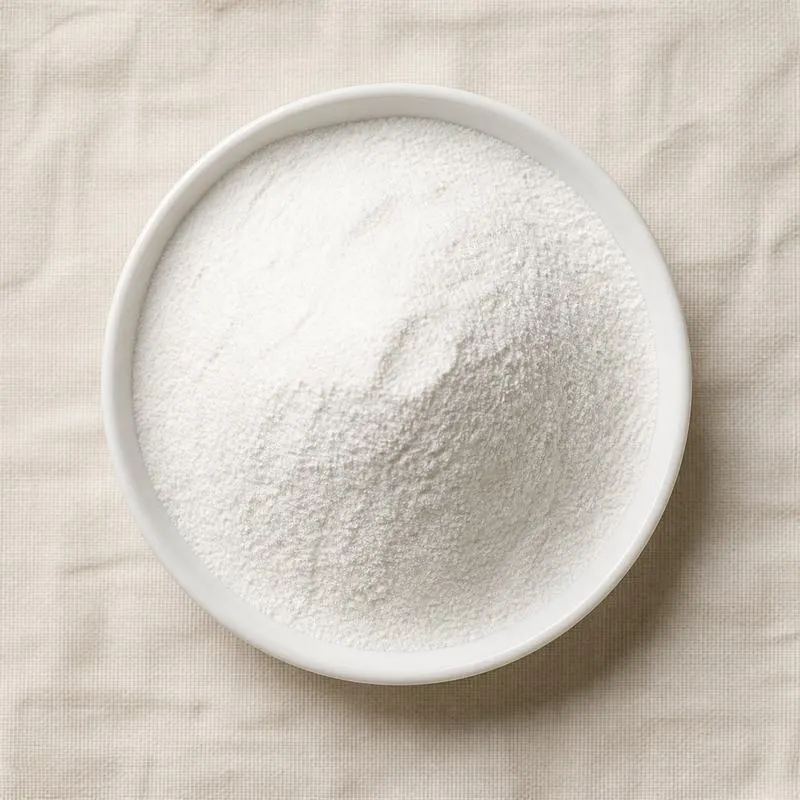
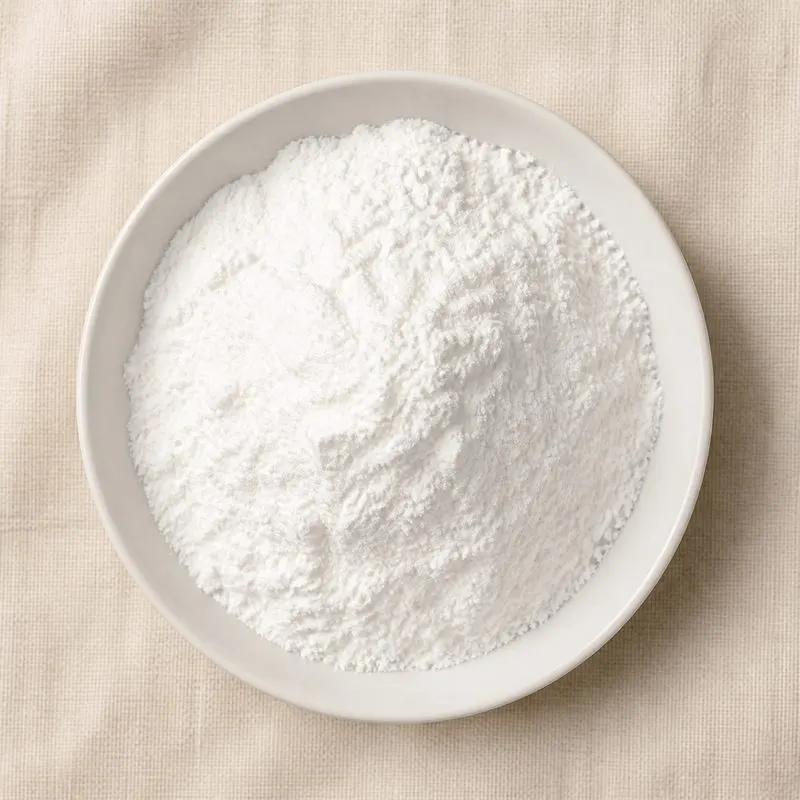
The result is a low viscosity, high clarity, high solids, film forming starch with good adhesion. The powder is bright white and free flowing, insoluble in cold water in the granular form and available pregelatinised for cold water use. Oxidised starch should be distinguished from bleached starch, in which the same class of reagent is used at a far lower level purely to remove colour without greatly changing the viscosity.
We source bulk Oxidized Starch from top China manufacturers for our partners. The manufacturers are in Jiangsu. A smaller requirement can ship in a combined container with other ingredients.
Please send the grade you need, the volume and your destination port, and we will come back with a solution and a price.
or call +86-21-6858 0751
Specifications
| Item | Specification |
|---|---|
| Appearance | Bright white free flowing powder, free of foreign matter |
| Odour and taste | Bland, no chlorine or off odour |
| Identification | Iodine stain and granule microscopy conform to starch reference |
| Total starch, dry basis | 97.0 percent minimum |
| Carboxyl groups | 1.1 percent maximum |
| Paste viscosity, 30 percent solids | Conforms to agreed grade profile |
| Moisture | 14.0 percent maximum |
| Ash, dry basis | 0.6 percent maximum |
| Whiteness | 92 minimum |
| pH, 10 percent slurry | 4.5 to 7.0 |
| Residual active chlorine | Not detected |
| Sulphur dioxide | 50 mg/kg maximum |
| Lead | 0.5 mg/kg maximum |
| Arsenic | 0.5 mg/kg maximum |
| Total plate count | 10000 cfu/g maximum |
| Yeast and mould | 500 cfu/g maximum |
| E. coli | Absent in 1 g |
| Salmonella | Absent in 25 g |
Common Markets Grades
Grades are defined by degree of oxidation, expressed in practice as a paste viscosity at standard solids and temperature, and correlated with the carboxyl content of the finished starch. Lightly oxidised grades retain much of the body of the parent starch and are used where only modest thinning and whitening are wanted; heavily oxidised grades cook very thin, are used at 25 to 35 percent solids, and are the standard article for coatings and adhesives.
Base starch matters less than in most modifications, and regular maize is the dominant feedstock on cost, with tapioca and potato used where clarity, flavour or a non maize declaration is required. Food grade is distinguished from technical grade principally on microbiology, residual chlorine species and heavy metals rather than on functionality, since the largest volumes go to paper and textile manufacture rather than to food. Pregelatinised drum dried grades hydrate in cold water. Acetylated oxidised starch, in which the oxidised granule is additionally esterified, is a related but separate additive.
Applications
- Batters and breading systems for fried foods, where the film forming carboxylated starch adheres the coating to the substrate and crisps on frying
- Confectionery gums and jellies, cooked at high solids where the low paste viscosity keeps the mass depositable
- Gum arabic replacement in confectionery pan coating, forming a clear hard film
- Salad dressings and sauces requiring a light, non gelling body and a clear appearance
- Breakfast cereal and snack coatings, where adhesion and gloss are the objective
- Dairy products and desserts, where a soft, non setting texture is wanted rather than a firm gel
- Paper surface sizing and coating binders outside food, the largest single volume outlet
- Textile warp sizing, applied hot at high solids and forming a strong flexible film on the yarn
- Corrugating and laminating adhesives, using the adhesion of the carboxylated chains
- Building products and gypsum board, as a binder applied at high solids
China Manufacturers of Oxidized Starch
Top Oxidized Starch manufacturers in China.
 NanTong GaoFeng Biotechnology Co., Ltd.10 ingredients in the directory
 Suzhou Gaofeng Biotechnology Co., Ltd.11 ingredients in the directory
Company names and logos are the property of the manufacturers themselves. They are listed here because our own directory records them as producing this ingredient. A listing is not an endorsement by them, and we do not represent them or speak on their behalf.
Regulatory Status
In the United States 21 CFR 172.892 permits oxidised starch as a food starch modified, lists sodium hypochlorite among the permitted treatment agents, caps the amount that may be used relative to the starch and requires removal of reaction residues. It is declared on United States labels as modified food starch or food starch modified rather than by its chemical name.
In the European Union it is authorised as E 1404, oxidised starch, under the food additives framework and is permitted quantum satis across most food categories, with purity criteria including a carboxyl group limit and residual sulphur dioxide limit set out in the specifications regulation. As a chemically modified starch it must be declared as a food additive rather than simply as starch. Bleached starch, treated with the same class of reagent at a much lower level, is a separate additive at E 1403, and acetylated oxidised starch is separately listed at E 1451. JECFA has evaluated the modified starches as a group and maintains a specification monograph for oxidised starch, and Codex lists it among the permitted additives in the General Standard for Food Additives.
Manufacturing Process
Native starch, usually regular maize, is slurried in water at around 35 to 40 percent solids in a stirred, jacketed reactor and adjusted to alkaline pH, generally in the region of 8 to 10, with dilute sodium hydroxide. The reaction is run below the gelatinisation temperature, typically at 30 to 45 degrees Celsius, so that the granules do not swell and the starch can be recovered by filtration.
Sodium hypochlorite solution is metered in over a controlled period while caustic is dosed continuously to hold the pH, because the oxidation releases acid and the reaction rate is strongly pH dependent. The hypochlorite oxidises hydroxyl groups at the second, third and sixth carbon positions to carbonyl and then carboxyl groups, and simultaneously cleaves glycosidic bonds, thinning the molecule. The extent of reaction is tracked by drawing samples and measuring paste viscosity, and when the target is reached any residual active chlorine is destroyed by adding a reducing agent such as sodium bisulphite or sodium thiosulphate. The batch is neutralised with dilute acid, then washed on a countercurrent hydrocyclone battery or a rotary vacuum filter train to remove sodium chloride, chlorate, soluble oxidised fragments and residual reagent. The washed cake is dewatered and flash dried in hot air, then cooled, milled, sieved, passed over a magnet and metal detector and packed. For a pregelatinised grade the washed slurry is cooked and dried on a heated drum and the film milled to powder.