Rice Starch
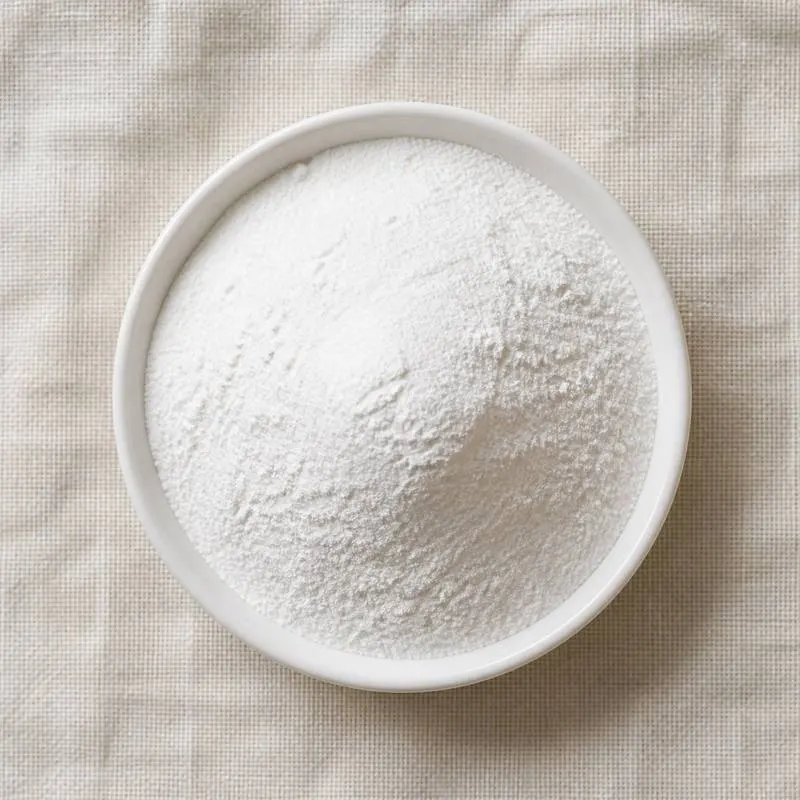
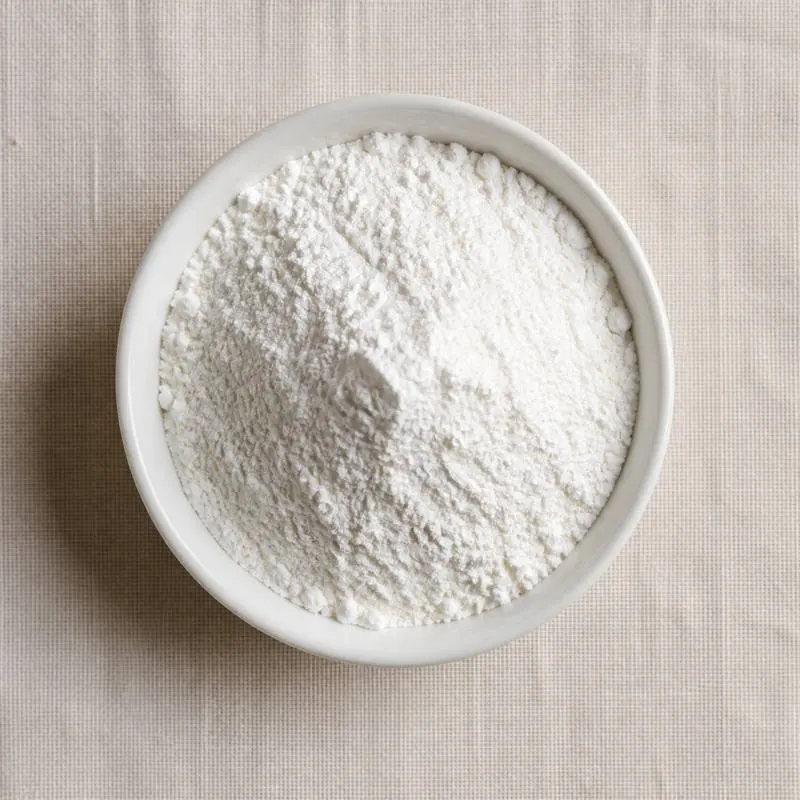
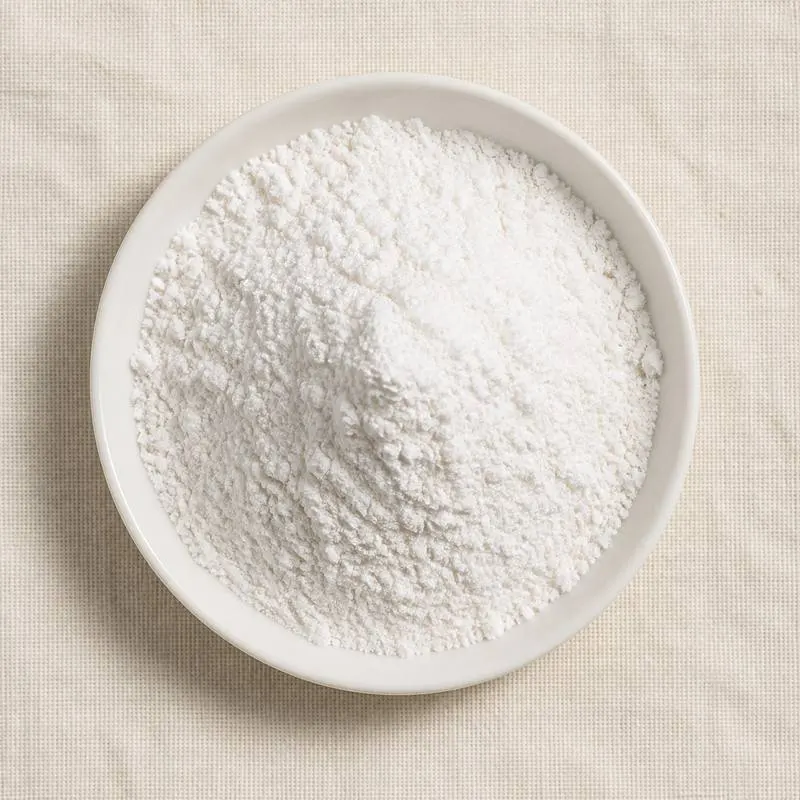
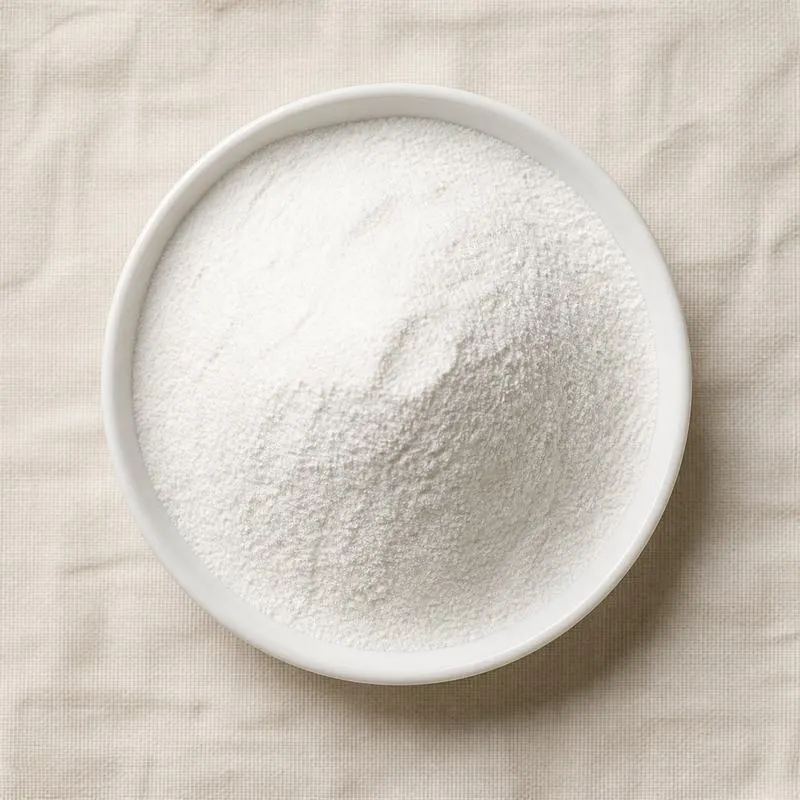
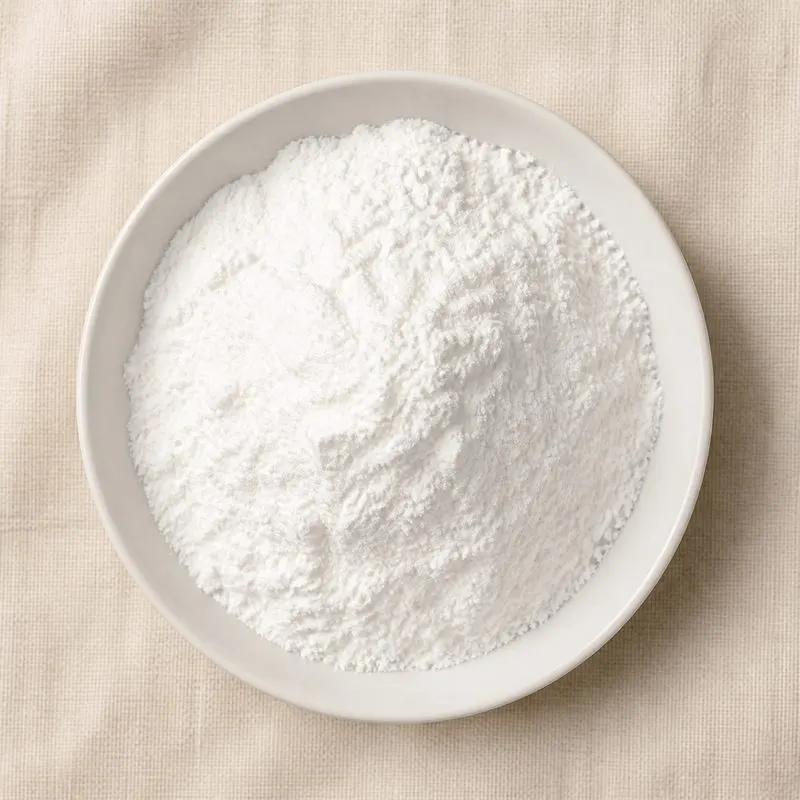
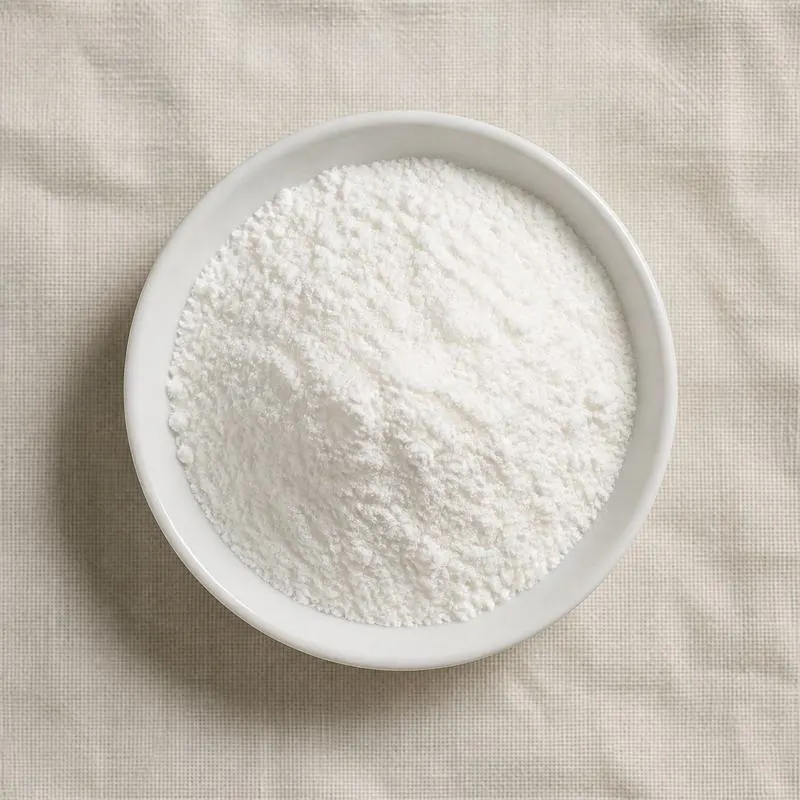
Rice starch is the purified starch fraction of the rice kernel, separated from the grain's protein by alkaline steeping and recovered as a powder of very small polygonal granules.
Its defining property is granule size. At 3 to 8 micrometres it has the smallest granules of any commercial starch, roughly a tenth the diameter of potato starch, and the granules occur in the kernel as tightly bound compound clusters that must be broken apart during extraction. That fineness gives cooked rice starch a smooth, creamy, fat-like mouthfeel with no perceptible graininess, which is the basis of its use as a fat mimetic, and it gives the dry powder a soft slip that makes it a preferred dusting and cosmetic base.
Regular rice starch contains 15 to 30 percent amylose and forms a firm opaque gel that retrogrades on cooling; waxy rice starch is almost pure amylopectin and gives a soft cohesive paste with good freeze and thaw tolerance. Gelatinisation runs from about 68 to 80 degrees Celsius, higher than most cereal starches, so a full cook is needed to develop viscosity. The powder is white, bland, insoluble in cold water and free of gluten.
We source bulk Rice Starch from top China manufacturers for our partners. The manufacturer is in Jiangsu. A smaller requirement can ship in a combined container with other ingredients.
Please send the grade you need, the volume and your destination port, and we will come back with a solution and a price.
or call +86-21-6858 0751
- Function
- Texturisers
Specifications
| Item | Specification |
|---|---|
| Appearance | White fine powder, free of foreign matter |
| Identification | Positive starch reaction with iodine solution |
| Starch Content, dry basis | Not less than 98.0% |
| Moisture | Not more than 14.0% |
| Protein, dry basis | Not more than 0.5% |
| Ash | Not more than 0.5% |
| Fat | Not more than 0.5% |
| pH, 10% slurry | 5.0 to 7.5 |
| Whiteness | Not less than 90 |
| Granule Size | 3 to 8 micrometre, single granules |
| Sulphur Dioxide | Not more than 30 mg/kg |
| Inorganic Arsenic | Not more than 0.2 mg/kg |
| Lead | Not more than 0.5 mg/kg |
| Total Plate Count | Not more than 10,000 CFU/g |
| Yeast and Mould | Not more than 100 CFU/g |
| E. coli | Absent in 1 g |
| Salmonella | Absent in 25 g |
Common Markets Grades
Native rice starch is traded in regular and waxy types, which differ in amylose content and are not interchangeable. Within each type the main specification points are residual protein, whiteness and mesh, with food grade normally held below 0.5 percent protein and pharmaceutical and cosmetic grades below 0.3 percent, since residual protein carries both colour and allergenic protein concerns for topical use.
Pregelatinised rice starch, cooked on a drum dryer and ground, is sold for cold prepared systems. Modified rice starches, acetylated, hydroxypropylated and octenyl succinate types, are made on the same base and traded separately under their own additive names. Cosmetic and pharmaceutical grades are further specified for particle size distribution and microbiological limits. Organic certified rice starch is available where the paddy supply is certified, and infant grade carries tighter inorganic arsenic limits than general food grade.
Applications
- Reduced fat dairy, dressings and spreads, where the very fine granules mimic the mouthfeel of dispersed fat droplets
- Custards, puddings and dairy desserts, giving a smooth short set with no starch grain on the palate
- Infant foods and weaning purees, chosen for digestibility, bland flavour and the absence of gluten
- Gluten-free bakery and pasta, contributing structure and crumb softness
- Soups and sauces requiring an opaque creamy body rather than a clear gel
- Confectionery moulding powder in starch tray depositing, where fine free-flowing granules give sharp mould detail
- Dusting powder for chewing gum, sugar confectionery and dough handling
- Pharmaceutical tablets as a disintegrant and diluent, and as an excipient in dusting powders
- Cosmetic powders, where the soft slip and oil absorption replace talc
- Paper coating and textile finishing, using the fine granule size for a smooth surface film
China Manufacturers of Rice Starch
Top Rice Starch manufacturers in China.
Company names and logos are the property of the manufacturers themselves. They are listed here because our own directory records them as producing this ingredient. A listing is not an endorsement by them, and we do not represent them or speak on their behalf.
Regulatory Status
Native rice starch is a food ingredient rather than an additive. It carries no E number, requires no additive authorisation and is declared on ingredient lists simply as rice starch or starch.
In the United States the FDA lists it as generally recognised as safe for use in food in accordance with good manufacturing practice, and its action level for inorganic arsenic is the relevant reference where the starch goes into infant products. In the European Union it falls under general food law rather than the food additives regulation, with maximum levels for inorganic arsenic and other contaminants in rice-derived products applying under the contaminants regulation. Pharmacopoeial monographs for rice starch are published for pharmaceutical use. Codex maintains a standard covering edible native starches. Because it is routinely used in gluten-free products, mills supplying that market certify each lot below the 20 mg/kg gluten threshold that both the EU and the United States require for the claim. Modified rice starches, by contrast, are regulated as additives under their own E and INS numbers.
Manufacturing Process
Broken rice or rice grits, the low value fraction of the milling stream, is cleaned and steeped in a dilute sodium hydroxide solution, typically 0.2 to 0.5 percent, for around 24 hours at ambient to moderately warm temperature. The alkali dissolves the glutelin protein that binds the starch granules into compound clusters, which is the essential step, since rice starch cannot be separated by the density-based routes used for maize and potato without first removing that protein.
The softened grain is wet milled to a fine slurry and screened to remove fibre and unbroken tissue. The starch is then separated from the dissolved protein and residual fines by repeated washing on nozzle separators and hydrocyclones running countercurrent with fresh water, with the alkaline protein stream drawn off and usually acid precipitated to recover rice protein concentrate as a co-product. The washed starch milk is neutralised with dilute hydrochloric acid, given a final wash to strip the sodium salt formed, dewatered on a vacuum filter or peeler centrifuge, and flash dried to about 12 to 14 percent moisture. The dried starch is milled gently to break drying agglomerates and sifted before packing.