Selenium-Enriched Lion's Mane Mushroom
Selenium-enriched lion's mane mushroom is Hericium erinaceus cultivated on a substrate dosed with an inorganic selenium salt, so that the growing fungus takes up the selenium and converts it into organic selenium compounds held within its own protein.
The enrichment works because fungi cannot distinguish selenium from sulphur at the level of amino acid biosynthesis. Selenite or selenate supplied in the substrate is reduced and incorporated in place of sulphur, giving selenomethionine as the dominant species along with selenocysteine and methylated forms, all bound in mycelial and fruiting body protein rather than present as a free salt. The remaining composition is that of ordinary lion's mane: beta-glucans and heteropolysaccharides, the hericenone series of aromatic compounds in the fruiting body, erinacines where mycelium is grown, plus protein and dietary fibre.
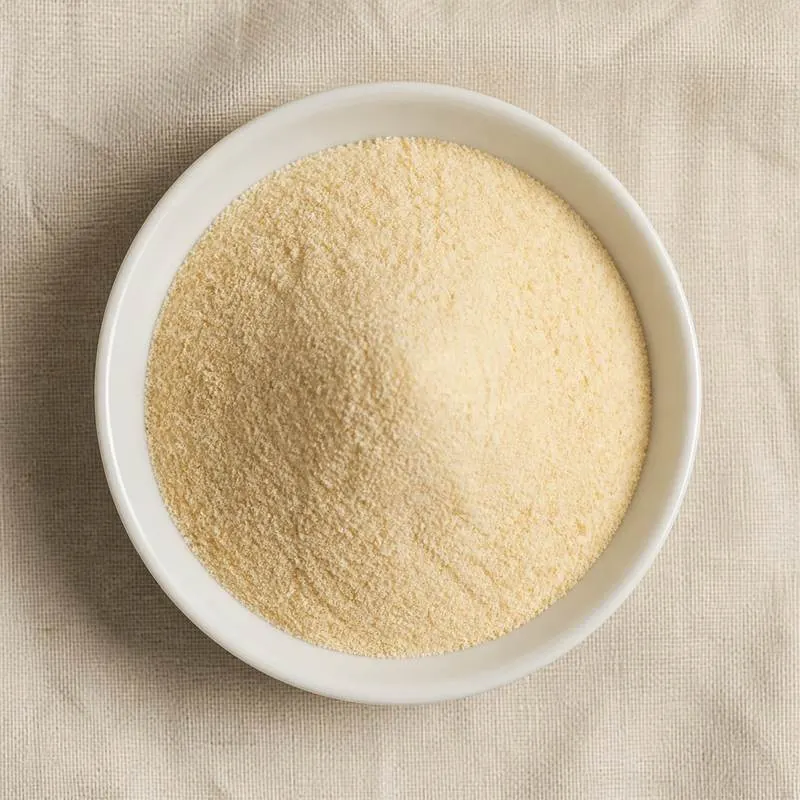
The commercial form is a light beige to tan powder, either milled dried fruiting body or a hot-water extract, with a mild mushroom aroma. The polysaccharide fraction disperses in water to a slightly viscous suspension while the protein-bound selenium stays with the solids. Organic selenium in this form is stable to normal drying and to pasteurisation, and does not volatilise or precipitate the way added selenite can in a mixed formulation.
We source bulk Selenium-Enriched Lion's Mane Mushroom from top China manufacturers for our partners. The manufacturer is in Jilin. A smaller requirement can ship in a combined container with other ingredients.
Please send the grade you need, the volume and your destination port, and we will come back with a solution and a price.
or call +86-21-6858 0751
- Function
- Plant extract
Specifications
| Item | Specification |
|---|---|
| Appearance | Light beige to tan fine powder |
| Source | Hericium erinaceus fruiting body, selenium-enriched cultivation |
| Total selenium | 100 to 200 ppm |
| Organic selenium as share of total | 90.0 percent minimum |
| Beta-glucan | 15.0 percent minimum |
| Identification | Conforms by ITS sequencing and reference colour standard |
| Loss on drying | 8.0 percent maximum |
| Ash | 8.0 percent maximum |
| Particle size | 100 percent through 80 mesh |
| Lead | 1.0 ppm maximum |
| Arsenic | 1.0 ppm maximum |
| Cadmium | 0.5 ppm maximum |
| Total plate count | 10,000 cfu per gram maximum |
| Yeast and mould | 500 cfu per gram maximum |
| E. coli | Negative in 1 gram |
| Salmonella | Negative in 25 grams |
Common Markets Grades
Material is traded on declared total selenium, typically 50 to 500 parts per million in the dried powder, with a separate declaration of the organic selenium fraction as a percentage of total selenium; a credible product shows 90 percent or more of the selenium in organic form, and a low organic fraction indicates unabsorbed residual salt rather than true enrichment. Buyers commonly require selenium speciation data alongside the total figure.
The second grading axis is the mushroom fraction. Dried fruiting body powder is the standard food grade, milled to pass 80 to 100 mesh. Submerged-culture mycelium powder is cheaper and carries a different secondary metabolite profile. Extract grades are standardised on beta-glucan or on total polysaccharide, commonly 20 to 40 percent, with the selenium figure carried through. There is no pharmaceutical grade; the material is sold as a food and supplement ingredient, and non-enriched lion's mane is a separate item that should not be specified against a selenium assay.
Applications
- Selenium-fortified supplement capsules and tablets, where organic selenium is preferred to sodium selenite for label positioning
- Functional mushroom powder blends sold on combined cognitive and antioxidant claims
- Instant mushroom coffee and cocoa sachets, using the finer milled extract grade
- Meal replacement and protein powders, added at low percentages as a mineral and beta-glucan source
- Mushroom-based meat analogues and savoury seasonings, where the fruiting body powder contributes umami as well as selenium
- Functional soups, broths and congee bases in the East Asian market
- Gummies and chewable formats, using the extract to avoid the gritty texture of milled fruiting body
- Animal and companion pet supplements formulated around organic selenium supply
China Manufacturers of Selenium-Enriched Lion's Mane Mushroom
Top Selenium-Enriched Lion's Mane Mushroom manufacturers in China.
Company names and logos are the property of the manufacturers themselves. They are listed here because our own directory records them as producing this ingredient. A listing is not an endorsement by them, and we do not represent them or speak on their behalf.
Regulatory Status
In the United States lion's mane mushroom is a conventional food and its dried powder is used in supplements under the Dietary Supplement Health and Education Act. Selenium is an essential nutrient with an established daily value, and a fortified product is subject to the FDA rules on nutrient declaration and on nutrient content claims. A selenium-enriched mushroom is best characterised as a food ingredient supplying naturally incorporated selenium rather than as an added selenium compound, but a firm adding it to a conventional food for the purpose of fortification should document the basis on which it does so, since only certain selenium sources are the subject of food additive regulations.
In the European Union the material has no E number, being a food rather than an additive. Selenium-enriched foods raise two questions. First, the enriched mushroom itself may require novel food authorisation, since a selenium-enriched form produced by a new cultivation process is not automatically covered by the history of consumption of ordinary lion's mane. Second, selenium is a permitted nutrient for addition to foods and supplements only from the specific chemical sources listed under the EU rules on vitamin and mineral addition, and a selenium-enriched biomass is a distinct case from those listed salts. Selenium carries authorised health claims in the Union, and use of any of them requires the food to meet the significant amount threshold. Codex has general principles for food fortification but no commodity standard for this material.
Manufacturing Process
Cultivation follows normal lion's mane practice with one addition. A sterilised lignocellulosic substrate, usually hardwood sawdust with a wheat bran or soybean meal nitrogen supplement, is prepared in bags and dosed with a measured quantity of sodium selenite or sodium selenate before sterilisation. The dose is the critical control point: too little gives no meaningful enrichment, too much is fungitoxic and suppresses the flush. The bags are inoculated with Hericium erinaceus spawn, incubated in the dark for colonisation over several weeks, then moved to a fruiting room held at high humidity and moderate temperature where the characteristic spined fruiting bodies form. Over the colonisation and fruiting period the fungus absorbs and biotransforms the selenium into amino acid bound forms.
Harvested fruiting bodies are washed, sliced and dried in hot air or freeze dried, then milled and screened to the target mesh. Where an extract is wanted, the dried material is extracted with hot water at 90 to 100 degrees Celsius to bring the polysaccharide into solution, filtered, concentrated under vacuum, and spray dried. Some plants add an ethanol precipitation step to raise beta-glucan assay. Batches are analysed for total selenium and for selenium speciation, then blended to the declared specification.