Selenium
Selenium is an essential trace element, a non-metal of group sixteen that behaves chemically much like sulphur and is incorporated into human proteins as selenocysteine, the active residue of the glutathione peroxidases and of the thioredoxin reductases. It is not used in food for any technological function; it is added as a nutrient, and the ingredient trade is therefore a trade in specific selenium compounds rather than in the element itself.
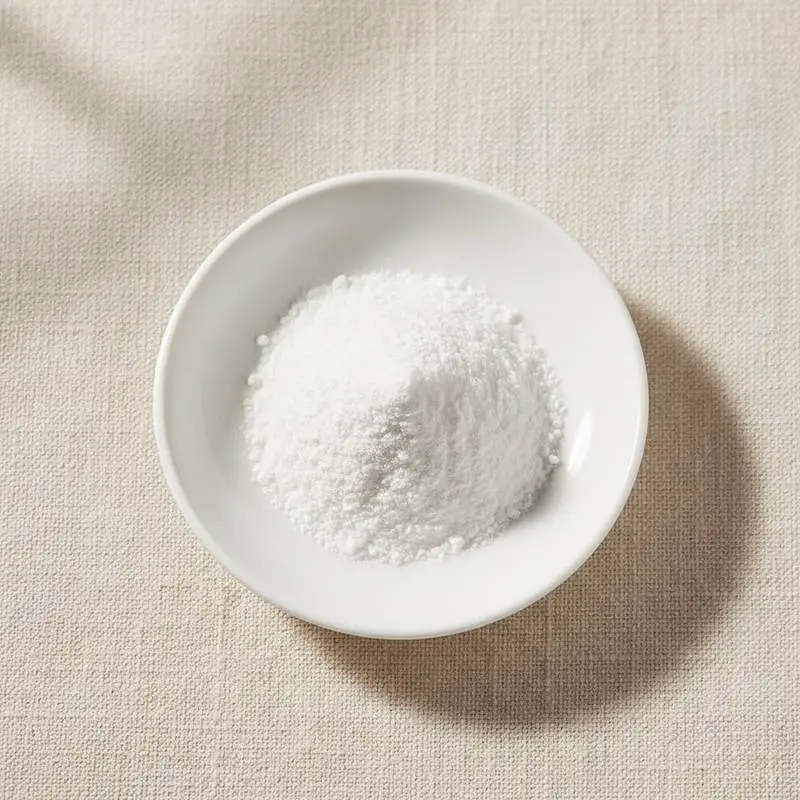
Four forms account for almost all commercial supply. Sodium selenite and sodium selenate are white crystalline inorganic salts, freely soluble in water and cheap, and they are the forms most used in infant formula and in feed premix. L-selenomethionine is an organic form, a white crystalline amino acid derivative in which selenium replaces the sulphur of methionine, and it is the form most used in supplements. Selenium enriched yeast is a dried inactive Saccharomyces cerevisiae biomass grown on a selenium rich medium, a light brown powder in which most of the selenium is present as selenomethionine bound in protein.
All the traded forms are powders and all are handled as high potency actives, dosed at microgram level per serving and therefore almost always predispersed into a premix or a carrier. The inorganic salts are stable dry but hygroscopic, and selenite is reduced to insoluble red elemental selenium by ascorbic acid and other reducing agents, which is a practical constraint in vitamin containing liquid systems.
We source bulk Selenium from top China manufacturers for our partners. The manufacturer is in Jiangsu. A smaller requirement can ship in a combined container with other ingredients.
Please send the grade you need, the volume and your destination port, and we will come back with a solution and a price.
or call +86-21-6858 0751
- Function
- Nutraceutical
Specifications
| Item | Specification |
|---|---|
| Appearance | White crystalline powder, free from foreign matter |
| Assay as sodium selenite, dried basis | 98.0 to 100.5 percent |
| Selenium content | 44.0 to 46.0 percent |
| Identification | Positive for sodium and for selenite; identity confirmed by ICP-MS |
| Selenate content | Not more than 0.3 percent |
| Loss on drying | Not more than 0.5 percent |
| Water insoluble matter | Not more than 0.05 percent |
| pH, 5 percent solution | 8.0 to 10.0 |
| Chloride | Not more than 0.05 percent |
| Sulphate | Not more than 0.1 percent |
| Lead | Not more than 2 mg/kg |
| Arsenic | Not more than 3 mg/kg |
| Cadmium | Not more than 1 mg/kg |
| Mercury | Not more than 1 mg/kg |
Common Markets Grades
The compound determines the grade. Sodium selenite and sodium selenate are sold in food and pharmaceutical grade at assays around 98 to 100 percent, in anhydrous and pentahydrate forms, and separately in feed grade of lower purity. L-selenomethionine is sold at 98 percent and above with the selenium content declared at roughly 40 percent of the molecule, and the enantiomeric purity is a specification in its own right because the racemic material is a different ingredient. Selenium enriched yeast is graded by total selenium, typically 1000 to 2000 mg/kg, and by the proportion of that selenium present as selenomethionine, with a limit on residual inorganic selenium.
Across all forms the commercially important variants are dilutions. Because the nutritional dose is measured in micrograms, the pure salts are rarely used directly; triturations and premixes carried on maltodextrin, dicalcium phosphate or lactose at declared selenium contents of 0.1 to 2 percent are the normal trading form for food and supplement manufacture, along with coated and microencapsulated selenite for feed, where dust control and reduced reactivity matter. Particle size is specified for blend uniformity rather than for solubility.
Applications
- Multivitamin and multimineral tablets and capsules, where selenomethionine or selenium yeast supplies the labelled daily amount
- Infant formula and follow on formula, where sodium selenite or selenate is added to meet the compositional requirement
- Clinical and enteral nutrition, in tube feeds and oral nutritional supplements for patients on long term artificial feeding
- Parenteral nutrition concentrates, using pharmaceutical grade selenite or selenate
- Fortified beverages and dairy drinks, added as a dilute premix so that the microgram dose can be metered accurately
- Sports and antioxidant formulas, combined with vitamin E, zinc and vitamin C
- Livestock and poultry feed premix, where selenium deficiency causes recognised production disease and organic selenium is used to raise tissue levels
- Aquaculture feed, as part of the trace mineral pack
- Selenium biofortification of crops and of eggs and milk, through the feed or the fertiliser route
- Pet food and pet supplement premix, within the trace element blend
Brands Using Selenium
Widely-distributed consumer products that list Selenium on the ingredient label.
- Nature's WaySelenium Capsules ↗A single-mineral capsule sold on selenium's antioxidant role, with selenium named as the only active ingredient.Label verified 2026-08-31
- NutricostSelenium 200 mcg Capsules ↗Each vegetarian capsule provides 200 mcg of selenium as the single active ingredient.Label verified 2026-08-31
- CodeageMultivitamin Performance Elite Max ↗The mineral panel lists selenium supplied as L-selenomethionine alongside zinc, copper, manganese and chromium chelates.Label verified 2026-08-31
- Double Wood SupplementsProstate Support Supplement ↗The prostate formula combines selenium with saw palmetto and pumpkin seed oil in a 120-capsule bottle.Label verified 2026-08-31
Brand names, product names and logos are the property of their owners. They appear here as published evidence that the ingredient is used, taken from the brand's own label or website. Their appearance is not an endorsement, and it does not mean the brand buys from us or from any manufacturer listed on this site.
China Manufacturers of Selenium
Top Selenium manufacturers in China.
Company names and logos are the property of the manufacturers themselves. They are listed here because our own directory records them as producing this ingredient. A listing is not an endorsement by them, and we do not represent them or speak on their behalf.
Regulatory Status
In the United States sodium selenite, sodium selenate and selenium enriched yeast serve as permitted nutrient sources, and the Food and Drug Administration lists selenium compounds among the nutrient substances that may be added to foods; selenium is a required nutrient in infant formula under the infant formula regulations, and the regulations specify the permitted sources. Selenium yeast and selenomethionine have been the subject of GRAS notifications for defined uses. Use in animal feed is governed by a separate food additive regulation that limits the selenium level in complete feed by species. Supplement grades are made under 21 CFR Part 111.
In the European Union the selenium sources that may be added to foods and to food supplements are set out in the annexes to the fortification regulation and to the food supplements directive, and they include sodium selenate, sodium hydrogen selenite, sodium selenite and selenium enriched yeast; a source not on those lists cannot be used. Selenium compounds are nutrients rather than additives, so they carry no E number. Use in infant formula follows the compositional rules for infant and follow on formula, and use in feed is authorised through the feed additive framework with maximum contents set per species. Codex addresses selenium through the advisory list of nutrient compounds for use in foods for special dietary uses and through the infant formula standard. Because the margin between an adequate and an excessive intake is narrow for this element, both jurisdictions control it through maximum permitted levels in the finished food and feed rather than through the ingredient specification alone.
Manufacturing Process
The starting point for the inorganic salts is selenium recovered as a by-product of copper refining, where it collects in the anode slime of the electrolytic tankhouse. The slime is roasted with soda ash or leached with sulphuric acid so that the selenium is oxidised to selenium dioxide, which is volatilised and scrubbed into water. The resulting selenous acid is reduced with sulphur dioxide to precipitate crude elemental selenium, which is filtered, washed and refined by distillation or by repeated dissolution and reprecipitation to a high purity powder. Food grade sodium selenite is then made by dissolving that selenium in nitric acid or by oxidising it to selenium dioxide, neutralising with sodium hydroxide to the selenite, and crystallising; further oxidation gives the selenate.
The organic forms are made biologically. Selenium enriched yeast is produced by fed batch culture of Saccharomyces cerevisiae in a molasses medium into which sodium selenite is dosed gradually, so that the yeast incorporates selenium into protein in place of sulphur rather than accumulating the inorganic salt; the biomass is then washed to remove unincorporated selenite, pasteurised, and drum or spray dried. L-selenomethionine is obtained either by chemical synthesis followed by resolution or by hydrolysis and purification of selenium enriched microbial protein, with the final product crystallised, dried under vacuum, milled and blended to the declared assay.