Senna Leaf Extract
Senna Leaf Extract is a botanical concentrate from the dried leaflets of Cassia angustifolia (Tinnevelly senna) or the closely related Cassia acutifolia (Alexandrian senna). It is standardised to its principal active fraction, the dianthrone glycosides known collectively as sennosides.
The extract is a well-established stimulant laxative and one of the oldest plant-derived ingredients still listed in major pharmacopoeias.
We source bulk Senna Leaf Extract from top China manufacturers for our partners. The manufacturer is in Shaanxi. A smaller requirement can ship in a combined container with other ingredients.
Please send the grade you need, the volume and your destination port, and we will come back with a solution and a price.
or call +86-21-6858 0751
- Packaging
- 25 kg fibre drum with double PE liner
- ISO 9001
- HACCP
- Halal
- Kosher
Specifications
Grades / Types Available: N/A
| Item | Specification |
|---|---|
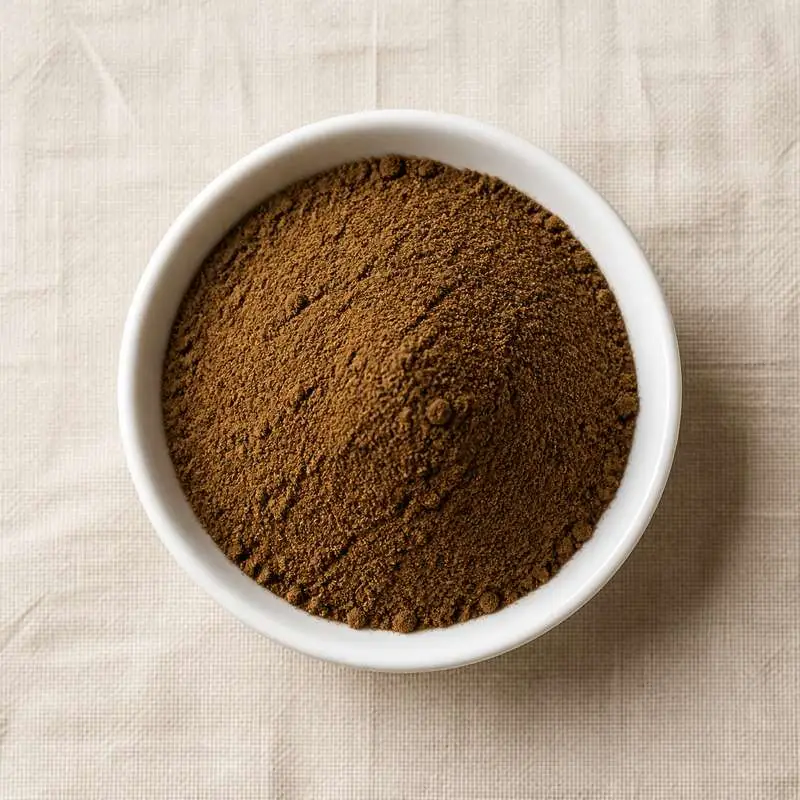
| Appearance | Brown to dark brown powder |
| Assay (Sennosides A+B) | ≥ 5% / 8% / 10% / 20% (HPLC) |
| Particle Size | 95% pass 80 mesh |
| Moisture | ≤ 5.0% |
| Heavy Metals | ≤ 10 ppm |
| Total Plate Count | ≤ 1,000 CFU/g |
| Ash | ≤5.0%: 3.71% |
| Total of bacteria | ≤10000cfu/g: Complies |
| Fungi | ≤1000cfu/g: Complies |
Common Markets Grades
The commercial grade is set by total sennoside content, measured spectrophotometrically against a sennoside B reference and reported as Total Sennosides Calculated as Sennoside B.
Standard grades sit at 6, 8, 10, 20, 40, and 60 percent total sennosides. The 6 to 10 percent range is typical of traditional dried-extract laxative teas and capsules.
The 20 and 40 percent grades feed into mainstream over-the-counter laxative tablets and gummies.
The 60 percent grade is a high-purity material used in dose-sensitive formulations and for further conversion to purified sennoside isolates.
Purified Sennosides A+B Calcium Salt at 60 percent and above is produced for pharmaceutical-grade laxative tablets that meet USP, BP, or Ph. Eur. monographs.
Material is a brown to dark-brown free-flowing powder with a distinct herbal note. Granulated direct-compression grades and pre-mixed tablet blends are common.
Applications
- Over-the-counter stimulant laxative tablets and capsules for occasional constipation
- Senna leaf teas in single-herb and blended slimming-tea formats
- Bowel-cleanse and detox programs alongside cascara, rhubarb, and aloe
- Pre-procedure bowel preparation in combination with electrolyte solutions
- Pediatric laxative syrups and chewable tablets at reduced dose
- Geriatric stool-softener and laxative combinations
- Herbal weight-management products in the slim-tea and detox-tea segment
- Pharmacopoeial-grade tablets meeting USP, BP, and Ph. Eur. monographs
- Veterinary laxative formulations for small animals
- Suppository and enema-style products in some regional markets
- Functional gummies in the regularity and digestive-wellness category
Brands Using Senna Leaf Extract
Widely-distributed consumer products that list Senna Leaf Extract on the ingredient label.
- SenokotSenokot Regular Strength Laxative Tablets ↗Senokot's OTC laxative tablets use standardised senna (Cassia senna) concentrate as the stimulant laxative active ingredient.Label verified 2026-05-24
- SenokotSenokot-S Dual Action Laxative plus Stool Softener ↗Senokot-S combines senna concentrate with docusate sodium for overnight relief, official brand product page.Label verified 2026-05-24
- Traditional MedicinalsSmooth Move Original Senna Laxative Tea ↗Traditional Medicinals Smooth Move is a herbal tea made with organic senna leaf, a stimulant laxative.Label verified 2026-05-24
- Nature's WaySenna Leaves Capsules ↗Nature's Way Senna Leaves is a Non-GMO Project Verified single-herb senna leaf capsule sold for relief of occasional constipation.Label verified 2026-05-24
Brand names, product names and logos are the property of their owners. They appear here as published evidence that the ingredient is used, taken from the brand's own label or website. Their appearance is not an endorsement, and it does not mean the brand buys from us or from any manufacturer listed on this site.
China Manufacturers of Senna Leaf Extract
Top Senna Leaf Extract manufacturers in China.

Company names and logos are the property of the manufacturers themselves. They are listed here because our own directory records them as producing this ingredient. A listing is not an endorsement by them, and we do not represent them or speak on their behalf.
How We Help Source Senna Leaf Extract
Direct Factory Sourcing
We run the whole process: selecting the manufacturer from the top Chinese food ingredient producers, negotiating the price, verifying quality, and coordinating the logistics. You deal with us instead of with several factories at once.
Original Packaging and Documents from the Manufacturer
The manufacturer sends your Senna Leaf Extract out of its own factory in the original packing, through to your destination port. The COA, COO, MSDS, TDS and any certifications reach you from the manufacturer as well.
Free Samples and Lead Time
We send 100 to 500 g free for your own laboratory to test and you cover only the courier, usually within 2 to 3 working days. ETD is usually within 7 to 15 days once the order is confirmed, and we check that date against the factory's own manufacturing schedule before we give it to you.
Combined Shipment
We can load Senna Leaf Extract together with other ingredients such as Astaxanthin, Dehydrated Garlic and Lutein into one 20' FCL. If your quantity is small, we can also ship LCL.
Regulatory Status
Senna is one of the most thoroughly regulated botanical laxatives, with monographs in the major pharmacopoeias and dedicated OTC drug monographs in several jurisdictions.
In the United States senna preparations are recognised in the FDA OTC drug monograph for stimulant laxatives under 21 CFR 334. Sennosides USP and standardised Senna Leaf USP both appear in the United States Pharmacopeia.
In the European Union, Senna Leaf, Senna Pods, and Standardised Senna Leaf Dry Extract all carry Ph. Eur. monographs. The European Medicines Agency has issued a Community herbal monograph supporting short-term use for occasional constipation.
In Japan senna leaf and senna pod are listed in the Japanese Pharmacopoeia, with restrictions on use in foods.
Regulators broadly limit continuous use to short periods (typically one to two weeks) due to the risk of dependence, electrolyte disturbance, and melanosis coli with chronic use.
Manufacturing Process
Tinnevelly senna is cultivated in southern India, principally in Tamil Nadu and parts of Gujarat. Alexandrian senna is grown in Sudan, Egypt, and the wider Nile basin. India supplies the bulk of global commercial senna leaf.
Leaflets are harvested two to three times a year, sun-dried to about 10 percent moisture, and graded by appearance, colour, and broken-leaf content.
Extraction uses water or dilute aqueous alcohol. The crude liquor is filtered, decolorised with activated carbon for higher grades, and concentrated under vacuum.
For low and medium grades the concentrate is spray-dried directly onto a carrier such as maltodextrin or dextrin to give a defined sennoside specification.
For high-purity grades the sennosides are precipitated as calcium salts from alkaline solution, washed, and dried under controlled conditions. Further chromatographic polishing on macroporous resin gives 60 percent and above material.
Quantification uses the European Pharmacopoeia spectrophotometric method, in which the dianthrones are hydrolysed, oxidised, and read at 515 nm as the rheinanthrone-magnesium acetate complex.