Spicy Hot Oil
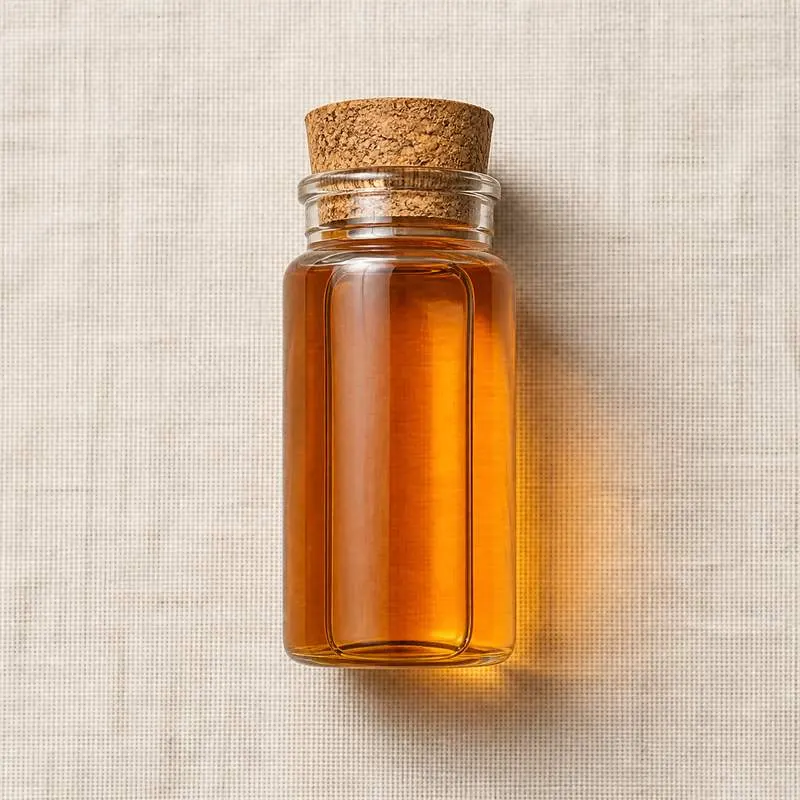
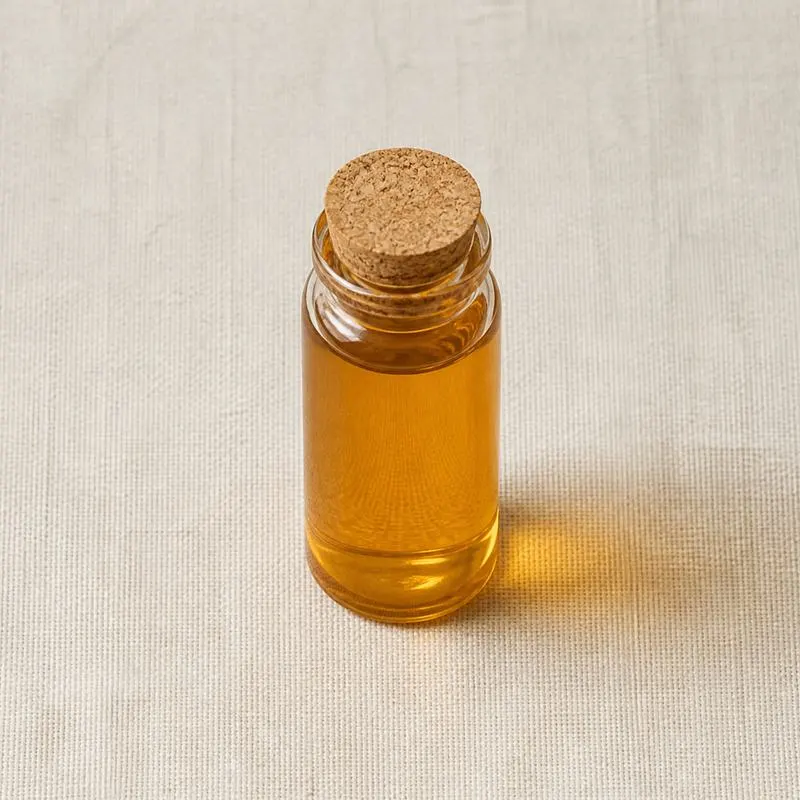
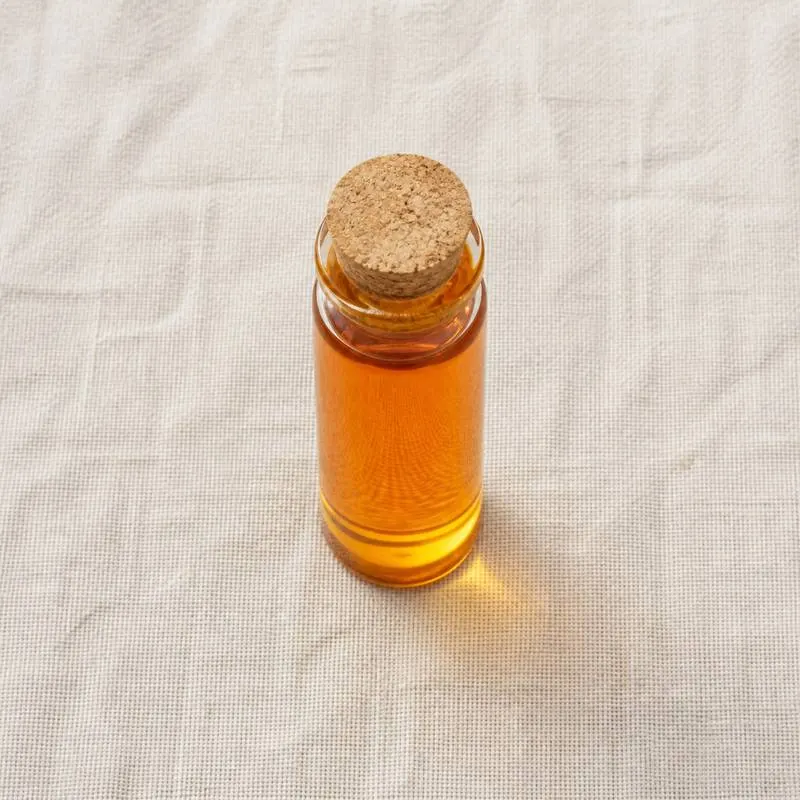
Spicy hot oil is the clear red chilli oil known in Chinese cooking as hongyou, made by pouring hot vegetable oil over ground dried chilli so that the pungent and coloured constituents transfer into the fat, and then separating the oil from the spent solids. It is a fluid, brilliantly red, strongly pungent oil without visible sediment, distinct from the sediment bearing chilli condiments in which the fried solids are part of the product.
The extraction it performs is selective. Capsaicin and dihydrocapsaicin, which carry the burn, and the carotenoids capsanthin and capsorubin, which carry the colour, are both strongly lipophilic and pass readily into hot oil, while the water soluble sugars, acids and cell material stay behind in the residue. Temperature control decides the result, since oil too cool extracts poorly and leaves a pale, weak product, while oil too hot degrades the carotenoids to a brown colour and generates an acrid scorched aroma that cannot be removed afterwards. Commercial practice divides the oil into two or three portions poured at descending temperatures to capture colour, aroma and pungency in turn.
The finished oil is packed in drums, pails and sachets, and is used as a dosing ingredient rather than a table condiment in industrial supply. Shelf life is set by oxidation of the oil base and by the slow fading of the carotenoid colour under light, so the material is packed under nitrogen in opaque containers and frequently carries an added antioxidant.
We source bulk Spicy Hot Oil from top China manufacturers for our partners. The manufacturer is in Shandong. A smaller requirement can ship in a combined container with other ingredients.
Please send the grade you need, the volume and your destination port, and we will come back with a solution and a price.
or call +86-21-6858 0751
- Function
- Flavours and Aromas
Specifications
| Item | Specification |
|---|---|
| Appearance | Clear bright red oil, free from visible sediment at 20 C |
| Odour and Taste | Characteristic roasted chilli, pungent, no scorched or rancid note |
| Identification | Sensory profile and colour conform to retained reference |
| Pungency | Declared in Scoville heat units per grade |
| Moisture and Volatile Matter | Not more than 0.2% |
| Acid Value | Not more than 1.5 mg KOH/g |
| Peroxide Value | Not more than 5.0 meq/kg |
| Insoluble Impurities | Not more than 0.05% |
| Lead | Not more than 0.1 mg/kg |
| Arsenic | Not more than 0.1 mg/kg |
| Total Aflatoxins | Not more than 10 microgram/kg |
| Sudan Dyes and Rhodamine B | Not detected |
| Total Plate Count | Not more than 1,000 cfu/g |
| Salmonella | Absent in 25 g |
Common Markets Grades
Grades are specified on two independent axes, pungency and colour, because the chilli varieties that supply heat and those that supply colour are different. Pungency is quoted in Scoville heat units contributed at a stated dosage, or as capsaicinoid content, and runs from a mild colouring oil through the middle range used in noodle dressings to a high heat grade intended for dilution. Colour is quoted as an ASTA value or as absorbance, and a bright red that holds through storage is graded above a dull or brownish oil of the same heat.
Beyond that, grades follow the base oil, rapeseed and soybean being usual and a partly refined rapeseed being traditional in Sichuan practice for the flavour it contributes, and the clarity specification, which runs from a polish filtered bright oil through to a lightly filtered grade with a trace of fine sediment. Aromatic grades are made by including cassia, star anise, bay, cardamom and Sichuan pepper in the infusion, and numbing grades add Sichuan pepper extract so that the oil carries the mala combination. Standardised grades in which capsicum oleoresin is added to correct for crop variation are traded where batch to batch consistency matters more than an entirely traditional process.
Applications
- Cold dishes and dressed salads, where the oil is the entire seasoning
- Noodle dressings, dan dan noodles and cold noodle sauces
- Dumpling and wonton dipping sauces, blended with vinegar and soy sauce
- Instant noodle oil sachets in spicy varieties
- Hotpot dipping bowls and malatang broths
- Braised and cold cooked meats such as mouth watering chicken and sliced beef
- Central kitchen sauce manufacture, dosed to a target heat and colour
- Snack seasoning slurries sprayed onto crisps and extruded snacks
- Marinades for grilled skewers and barbecue
- Retorted ready meals, added after sterilisation to restore colour and heat
China Manufacturers of Spicy Hot Oil
Top Spicy Hot Oil manufacturers in China.

Company names and logos are the property of the manufacturers themselves. They are listed here because our own directory records them as producing this ingredient. A listing is not an endorsement by them, and we do not represent them or speak on their behalf.
Regulatory Status
Spicy hot oil is a compound food rather than a food additive and carries no E number. The base oil is subject to the edible fats and oils requirements of the destination market, covering the process contaminants glycidyl esters and chloropropanols formed during refining and the erucic acid limit where a rapeseed base is used. Any antioxidant added must be permitted for fats and oils in that market and declared, and where capsicum or paprika extract is added at a level that contributes colour rather than flavour, the colour additive rules apply and it must be declared as a colour.
Manufacture in the United States falls under the preventive controls requirements for human food. Because the product is filtered clear of particulate and the oil is heated well above the boiling point of water during the process, the Clostridium botulinum hazard that attaches to low acid particulate suspended in oil is controlled, and this is the main reason clear grades are handled differently from sediment bearing chilli condiments. Aflatoxin and ochratoxin A limits and pesticide residue limits apply to the dried chilli, and adulteration of chilli with the Sudan dyes or Rhodamine B to improve colour is a recognised risk in this specific product that is screened at import in both major markets. Codex covers the raw materials through its standards for chilli peppers and for named vegetable oils.
Manufacturing Process
Dried chilli is cleaned through destoners, sieves, magnets and optical sorters, deseeded where the grade requires, and milled to a coarse flake or a medium powder, since a grind that is too fine burns instantly on contact with hot oil and one that is too coarse extracts slowly. Refined vegetable oil is heated in a jacketed kettle to a controlled temperature, held to drive off any moisture, and then cooled to the first pouring temperature. The chilli, often with a portion of white sesame, is charged into a separate vessel and the hot oil is poured over it in two or three fractions at descending temperatures, the hottest fraction developing the roasted aroma, the middle fraction extracting the colour and the coolest fraction protecting the more volatile notes.
The mixture is held with gentle agitation while extraction proceeds, then cooled and left to stand so that the solids settle. The oil is decanted, passed through a coarse strainer and then filtered on a plate or bag filter, or centrifuged, until it meets the clarity specification. Capsicum oleoresin, spice extract or an antioxidant is dosed into the clarified oil where the grade calls for standardisation, and the finished oil is polished, checked for pungency, colour, acid value and peroxide value against a retained reference, and filled under nitrogen into opaque containers. The spent chilli residue still carries oil and flavour and is normally recovered into a sediment bearing chilli condiment rather than discarded.