The Big Bone Stock
Big bone stock is a concentrated savoury base made by extracting pork or beef leg and marrow bones in water under pressure, then removing the fat and reducing the resulting broth to a paste, a liquid concentrate or a dried powder.
The flavour is carried by gelatin and collagen fragments released from bone and connective tissue, by free amino acids and small peptides from the residual meat, and by the fat soluble aroma compounds that survive degreasing. Bone extracts are naturally high in glutamic acid, which gives them savoury depth without added enhancers, and the dissolved gelatin gives a diluted stock its body and its tendency to set on cooling. Calcium and phosphorus carried over from the bone mineral raise the ash figure relative to a meat only extract.
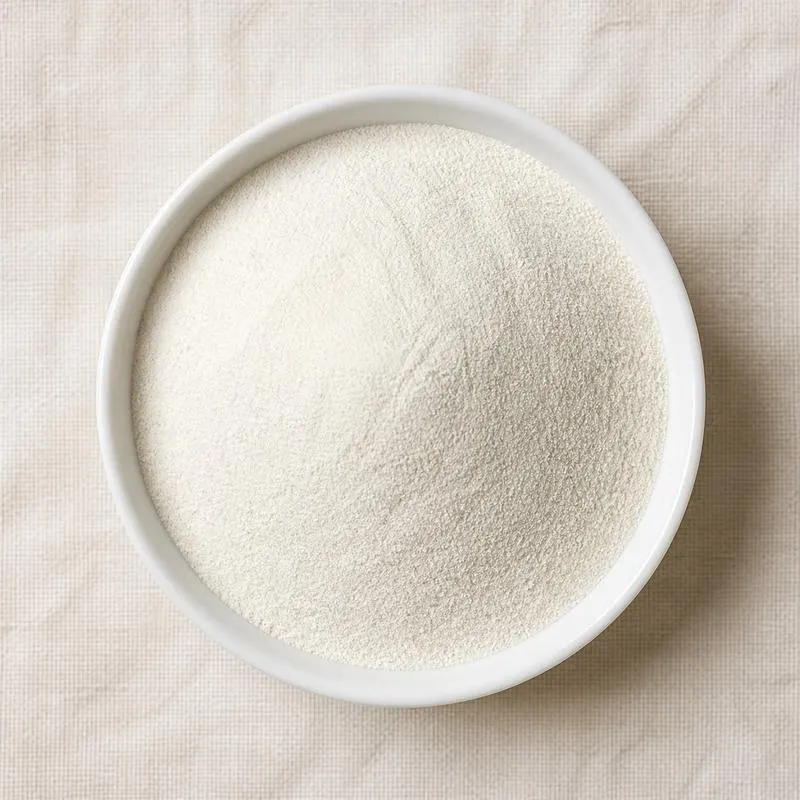
The paste form is a light brown to beige semi solid that disperses in hot water with agitation, while the spray dried powder, usually carried on maltodextrin, dissolves more readily but loses part of the volatile aroma in drying. Both forms brown further on prolonged heating, so they are dosed late in a cooking process where colour matters. Paste and liquid are held refrigerated once opened.
We source bulk The Big Bone Stock from top China manufacturers for our partners. The manufacturer is in Hebei. A smaller requirement can ship in a combined container with other ingredients.
Please send the grade you need, the volume and your destination port, and we will come back with a solution and a price.
or call +86-21-6858 0751
- Function
- Flavours and Aromas
Specifications
| Item | Specification |
|---|---|
| Appearance | Light brown to beige paste, homogeneous, free of bone fragments |
| Odour and taste | Characteristic cooked bone and meat aroma, savoury, no rancid or scorched note |
| Total solids | Not less than 65.0% |
| Total nitrogen | Not less than 3.5 g/100 g |
| Amino acid nitrogen | Not less than 1.2 g/100 g |
| Fat | Not more than 8.0% |
| Sodium chloride | 10.0 to 18.0% |
| Ash | Not more than 22.0% |
| pH of a 1 in 20 dilution | 5.5 to 6.5 |
| Lead | Not more than 1.0 mg/kg |
| Arsenic | Not more than 0.5 mg/kg |
| Total plate count | Not more than 10,000 cfu/g |
| Yeast and mould | Not more than 100 cfu/g |
| Escherichia coli | Absent in 1 g |
| Salmonella | Absent in 25 g |
Common Markets Grades
The main split is between physical forms. Frozen or chilled liquid stock at low solids is used by central kitchens close to the point of use, paste concentrates at roughly sixty to eighty percent solids dominate industrial trade because they are shelf stable and cheap to freight, and spray dried powders are made for dry seasoning blends, instant noodle sachets and retail bouillon. Dilution ratios are declared on the container and typically range from one part in twenty for a paste to one part in ten for a liquid.
Beyond form, offers separate on whether the extract is pure, built only from bone, water and salt, or compounded, with yeast extract, hydrolysed vegetable protein, fat, flavouring and the ribonucleotide enhancers added to raise savoury intensity at lower cost. Species declaration matters commercially, with pork bone the default in Chinese production and beef, chicken and mixed bone versions traded alongside it. Halal and kosher certified beef and chicken versions, low sodium versions and clean label versions free of added enhancers are the other routine specification splits.
Applications
- Ramen, noodle soup and hotpot broths, where the gelatin gives the mouthfeel that a simple salt and enhancer base cannot produce
- Instant noodle soup sachets and cup products, in paste or powder form, reconstituted at the point of eating
- Retail bouillon cubes, pastes and stock pots as the meat derived flavour fraction
- Frozen and chilled ready meals, dosed into sauces and gravies to build body and savoury depth
- Retort and canned soups, where the extract tolerates the sterilisation cycle better than a fresh stock
- Meat marinades and injection brines, contributing soluble protein that improves cooked yield and slice cohesion
- Savoury snack and coated peanut seasonings, blended with spice in the powder form
- Congee, rice bowl and dumpling filling seasoning in central kitchen production
- Petfood palatants and gravy toppers, where the same extraction stream serves the animal feed market
China Manufacturers of The Big Bone Stock
Top The Big Bone Stock manufacturers in China.
Company names and logos are the property of the manufacturers themselves. They are listed here because our own directory records them as producing this ingredient. A listing is not an endorsement by them, and we do not represent them or speak on their behalf.
Regulatory Status
In the United States a meat or bone extract is a food ingredient rather than a food additive, and because it is derived from animal tissue its manufacture falls under the inspection authority of the Food Safety and Inspection Service rather than the general food rules, with imported product requiring an eligible country and establishment listing under the meat inspection regulations. Any flavour enhancers compounded into the base carry their own status, with monosodium glutamate and the disodium salts of inosinic and guanylic acid generally recognised as safe for use in food, and hydrolysed proteins declared by their specific source name in the ingredient statement under 21 CFR Part 101.
In the European Union bone stock is a product of animal origin, so establishments must be approved and listed under the hygiene package, principally Regulation (EC) No 853/2004, and consignments enter through a border control post with the corresponding health certificate. The extract itself has no E number. Additives compounded into it stay subject to Regulation (EC) No 1333/2008 and any flavouring fraction to Regulation (EC) No 1334/2008. Codex has general standards for food additives, for contaminants and for the labelling of prepackaged foods that apply to the finished concentrate, and a code of hygienic practice for meat covering the raw material.
Manufacturing Process
Production starts with sorted leg, neck and marrow bones from an approved abattoir stream, delivered chilled or frozen. The bones are washed and blanched to remove blood and surface contamination, then loaded into a pressure extractor and cooked in water at temperatures above the atmospheric boiling point, which hydrolyses collagen into soluble gelatin far faster than an open kettle. Extraction is often run in two or three stages, with the weak liquor from a later stage recycled as the water charge for the next batch so the solids yield stays high without diluting the first extract.
The hot broth is screened to remove bone fragments, then passed through a decanter and a disc centrifuge to separate the fat, which is recovered as a separate edible tallow or lard stream. The defatted liquor may be treated with proteases to raise free amino acid content, and in many plants it is then taken through a controlled Maillard reaction with reducing sugars and amino acids to develop roasted notes. It is concentrated under vacuum in a falling film evaporator to paste solids, standardised for salt and nitrogen, and either hot filled and cooled or spray dried on a carrier, sieved and packed.