White Lemon Essence
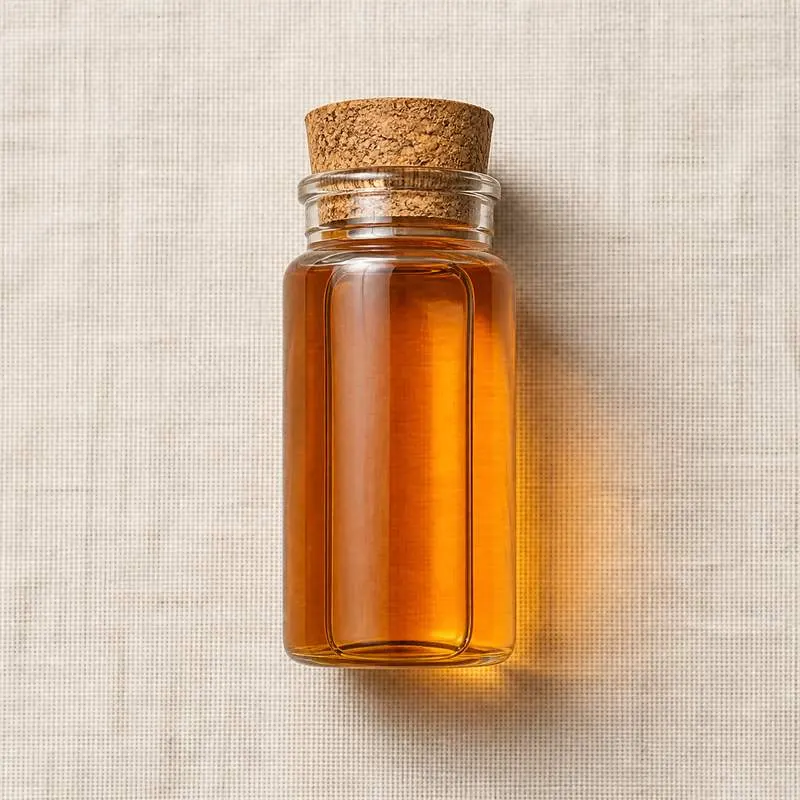
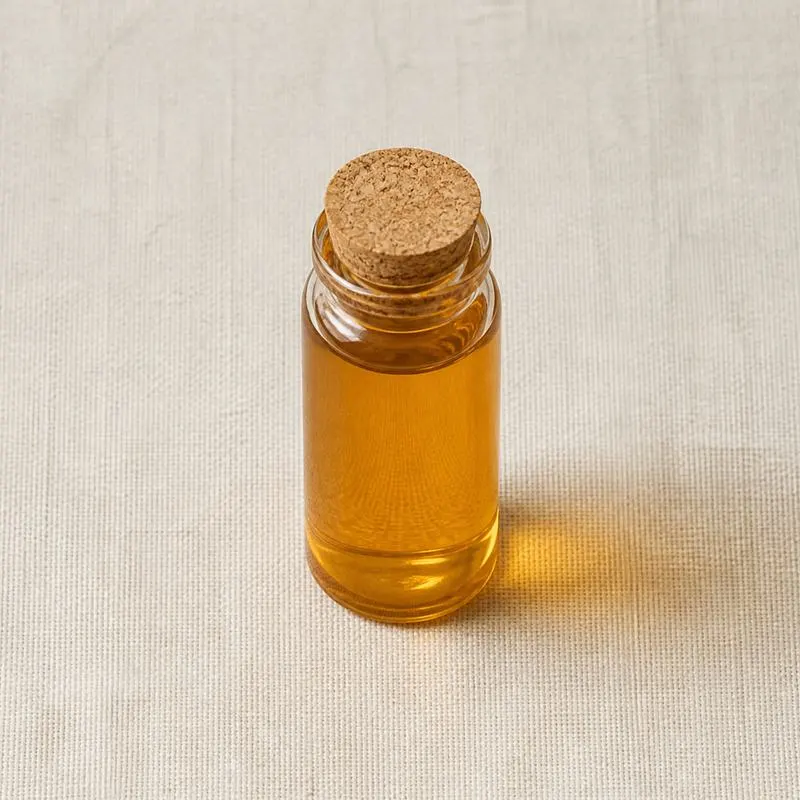
White lemon essence is a clear, uncoloured lemon flavouring, compounded so that it carries the citrus aroma of lemon peel oil into a product without adding the yellow colour or the cloud that a whole cold pressed oil would bring.
The base of the flavour is lemon oil from which the terpene hydrocarbons and the non volatile coumarin and psoralen fraction have been removed. Stripping the terpenes concentrates the oxygenated aroma compounds, mainly citral together with linalool, geranial and a range of esters, and produces a material that dissolves in dilute alcohol and in water without a solubiliser, so the finished drink stays bright rather than turning opalescent. Removing the furocoumarins also removes the pigment and the photosensitising compounds that cause a cold pressed oil to darken and to stain.
It is a clear colourless to very pale straw liquid in an ethanol, propylene glycol or triacetin carrier. Citral is the profile defining component and is also the least stable, oxidising in air and rearranging under acid to off notes described as musty or metallic, so the material is stored cold in filled containers under nitrogen and is normally formulated with an antioxidant when it is used in an acidic beverage.
We source bulk White Lemon Essence from top China manufacturers for our partners. The manufacturer is in Jiangsu. A smaller requirement can ship in a combined container with other ingredients.
Please send the grade you need, the volume and your destination port, and we will come back with a solution and a price.
or call +86-21-6858 0751
- Function
- Flavours and Aromas
Specifications
| Item | Specification |
|---|---|
| Appearance | Clear colourless to very pale straw liquid, free from sediment |
| Odour | Fresh characteristic lemon peel, free from musty or oxidised notes |
| Identification | Conforms by gas chromatographic profile against reference standard |
| Citral content | Not less than 2.0%, standardised to the declared grade |
| Relative density at 20 degrees Celsius | 0.870 to 1.050 |
| Refractive index at 20 degrees Celsius | 1.4400 to 1.4800 |
| Solubility in 60% ethanol | Clear solution at 1 part in 3 parts |
| Colour, Gardner scale | Not more than 1 |
| Acid value | Not more than 3.0 mg KOH/g |
| Water content | Not more than 0.5% |
| Residue on ignition | Not more than 0.1% |
| Lead | Not more than 1.0 mg/kg |
| Arsenic | Not more than 1.0 mg/kg |
| Total plate count | Not more than 100 cfu/g |
Common Markets Grades
The commercial grades follow how far the oil has been stripped. Folded oils, described as five fold or ten fold, have had the terpenes removed by vacuum distillation to concentrate the aroma but remain oil soluble and lightly coloured. Terpeneless and sesquiterpeneless grades take the removal further and become soluble in dilute alcohol, which is what allows a water white essence to be made. Fully deterpenated and decolourised grades, cleared of coumarins by adsorption or by molecular distillation, are the true white essences and are the most expensive.
Beyond that, the material is sold at different strengths in different carriers according to the application, from a concentrated essence dosed in tenths of a percent to a ready diluted beverage essence. Both natural grades, compounded exclusively from lemon derived and other natural components, and nature identical grades built on synthesised citral and supporting chemicals are traded, with the natural grade priced against the lemon oil market. Where the flavour must survive heat, an encapsulated powder version on a modified starch carrier is offered instead of the liquid.
Applications
- Clear carbonated soft drinks and lemonades, where any cloud or colour from the flavour would be a defect
- Flavoured waters and sports drinks, dosed at low level into an uncoloured base
- Clear spirits, liqueurs and hard seltzers, in which alcohol solubility removes the need for an emulsifier
- Bakery glazes, icings and white creams that must stay bright rather than turning yellow
- Hard candy and clear jelly confectionery, using a heat tolerant or encapsulated grade
- Dairy desserts, mousses and white chocolate, where a pale colour is part of the product concept
- Instant drink powders and effervescent tablets, in spray dried form
- Savoury sauces and dressings needing a citrus lift without a change of colour
- Oral care and personal care products where a clear formulation is required
China Manufacturers of White Lemon Essence
Top White Lemon Essence manufacturers in China.
Company names and logos are the property of the manufacturers themselves. They are listed here because our own directory records them as producing this ingredient. A listing is not an endorsement by them, and we do not represent them or speak on their behalf.
Regulatory Status
In the United States lemon oil and its terpeneless fractions are recognised as safe for their intended use as flavourings and appear among the essential oils and oleoresins listed as generally recognised as safe in 21 CFR 182.20, while individual compounded components must each be permitted flavouring substances, either listed in 21 CFR 172.515 or carrying generally recognised as safe status through the expert panel of the Flavour and Extract Manufacturers Association. Solvents such as ethanol, propylene glycol and triacetin have their own clearances. Declaration on a finished food follows 21 CFR 101.22 and depends on whether the components are of natural or synthetic origin.
In the European Union lemon oil is a flavouring preparation and the compounded aroma chemicals must appear on the Union list of flavouring substances, both governed by Regulation (EC) No 1334/2008, which also sets the conditions under which the description natural lemon flavouring may be used. Flavourings carry no E number, though the carriers, antioxidants and emulsifiers used in a preparation are additives under Regulation (EC) No 1333/2008 and are identified by their own E numbers. Where the citrus feedstock is concerned, the pesticide residue limits set for citrus fruit carry through to the oil. The Joint FAO WHO Expert Committee on Food Additives has evaluated citral and the related citrus flavouring agents in its group assessments without raising a safety concern at use levels.
Manufacturing Process
The starting material is cold pressed lemon peel oil, recovered as a by product of juice extraction. The oil is first winterised and centrifuged to drop the waxes, then fed to a vacuum fractional distillation column operating at a low overhead temperature so that citral, which is thermally fragile, is not degraded. The monoterpene hydrocarbons, largely limonene and beta-pinene, come off overhead and are recovered for other uses, leaving an oxygenated concentrate in the base. A second pass removes the sesquiterpenes and raises the concentration further.
Decolourisation and coumarin removal follow, either by adsorption onto activated carbon or a silica adsorbent, or by short path molecular distillation that leaves the heavy non volatile fraction behind. The clear concentrate is then compounded, blended into the chosen solvent with any supporting aroma chemicals, natural isolates and antioxidant, held so the flavours come together, and filtered through a polishing filter. Each batch is checked by gas chromatography against a reference profile and by a sensory panel before it is filled into lined drums or cans under nitrogen and held in cold storage.