Amp
AMP is adenosine 5 monophosphate, a nucleotide consisting of the purine base adenine linked to ribose and carrying a single phosphate group on the fifth carbon of the sugar. It is one of the five 5 ribonucleotides that make up ribonucleic acid. The others are guanosine, cytidine, uridine and inosine monophosphate, and it is traded both as the free acid and as the sodium salt.
It has two quite separate roles in food. The first is nutritional: nucleotides are present in human milk at levels well above those in cow milk, and they contribute to the nucleotide pool used by rapidly dividing tissue in the gut and the immune system during early life. That is why a defined mixture of the five monophosphates is added to infant formula. The second is sensory: adenosine 5 monophosphate suppresses bitter taste, apparently by acting on the bitter receptor pathway itself rather than by masking. It is used in that role in foods where bitterness from a sweetener, a mineral salt, a protein hydrolysate or a botanical extract limits palatability. Unlike inosinate and guanylate it is not a strong savoury enhancer, so it is not used interchangeably with them.
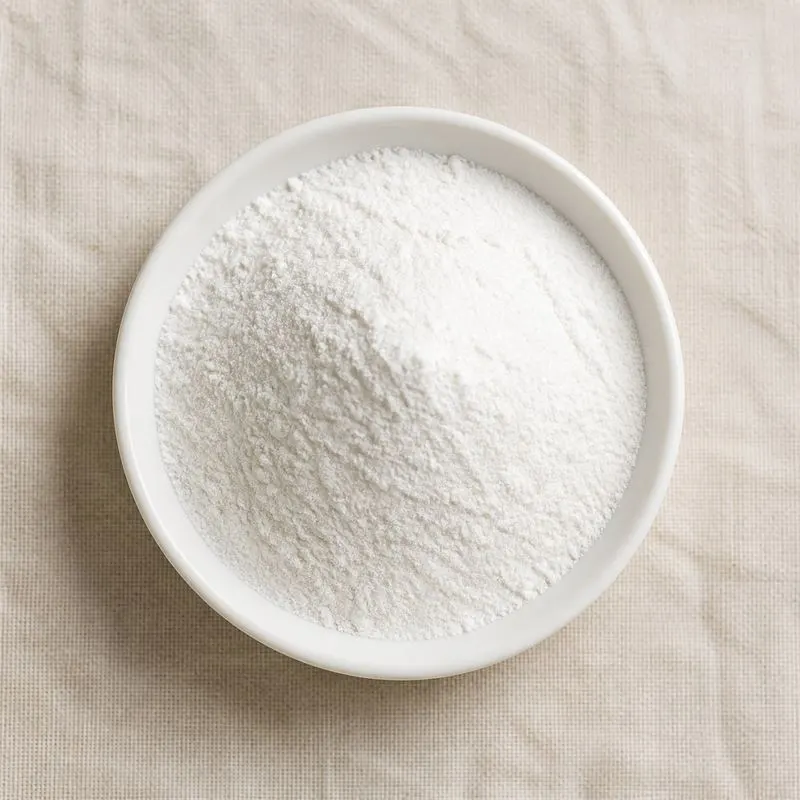
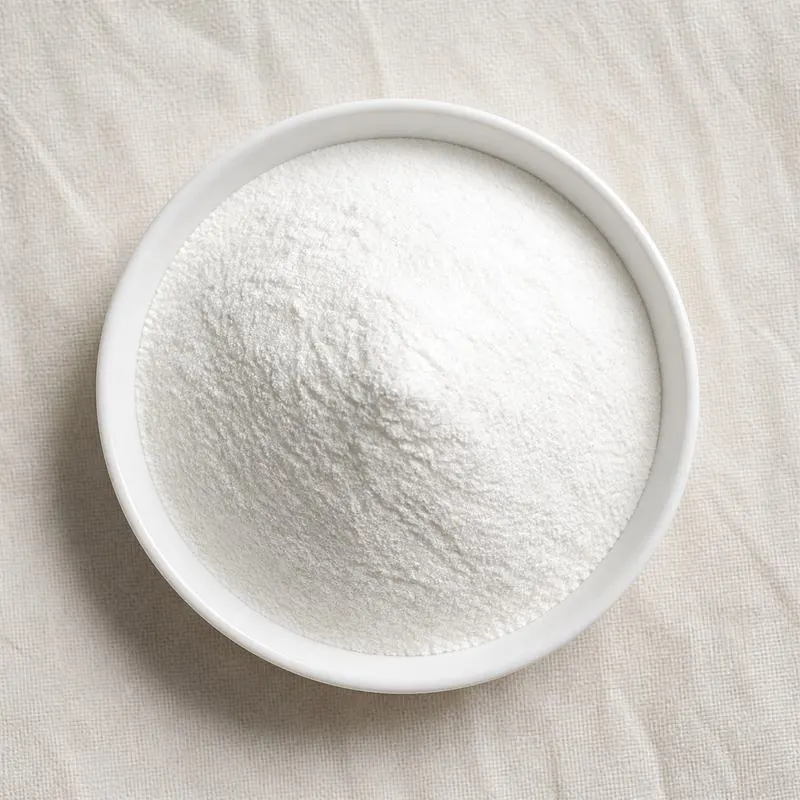
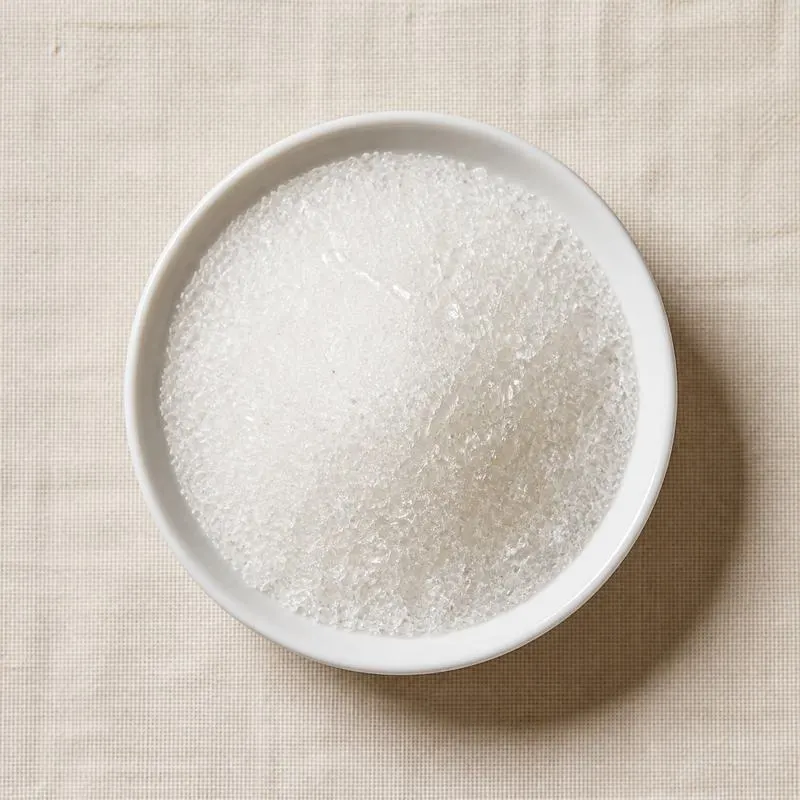
The material is a white to off white crystalline powder, odourless, sparingly soluble in water in the free acid form and freely soluble as the sodium salt. It is stable as a dry powder and in solution under normal food processing conditions, though prolonged heating in acid will hydrolyse the phosphate ester.
We source bulk Amp from top China manufacturers for our partners. The manufacturer is in Liaoning. A smaller requirement can ship in a combined container with other ingredients.
Please send the grade you need, the volume and your destination port, and we will come back with a solution and a price.
or call +86-21-6858 0751
- Function
- Probiotic
Specifications
| Item | Specification |
|---|---|
| Appearance | White to off white crystalline powder |
| Odour | Odourless |
| Assay (dried basis) | Not less than 98.0 percent |
| Identification | Ultraviolet maximum near 259 nm and retention time conform to reference |
| Specific Absorbance Ratio A250 over A260 | 0.78 to 0.84 |
| Other 5 Ribonucleotides | Not more than 1.0 percent total |
| Loss on Drying | Not more than 6.0 percent |
| pH of 1 percent Solution | 2.0 to 3.5 for the free acid |
| Sulphated Ash | Not more than 0.2 percent |
| Ammonium | Not more than 0.05 percent |
| Lead | Not more than 0.5 mg/kg |
| Arsenic | Not more than 0.5 mg/kg |
| Heavy Metals (as Pb) | Not more than 10 mg/kg |
| Total Plate Count | Not more than 1000 cfu/g |
| Yeast and Mould | Not more than 100 cfu/g |
| Salmonella | Absent in 25 g |
Common Markets Grades
The first distinction is chemical form. The free acid, adenosine 5 monophosphate, is the form used where the sodium contribution matters and where a pharmacopoeial monograph is being followed. The disodium salt is the form chosen for solubility and for ease of dosing into aqueous systems. Both are traded at high assay, normally not less than ninety eight percent on the dried basis, and the specification carries limits on the other 5 ribonucleotides, since separation from the guanosine, cytidine and uridine monophosphates produced alongside it is the difficult part of the process.
The second is grade of purity and documentation. Infant formula grade is the most demanding, made under enhanced hygiene controls with tight limits on related nucleotides, on heavy metals and on microbiological status, and supported by a specification suitable for that use. Food and flavour grade is made to a food specification for the bitter blocking application. Pharmaceutical and biochemical grades are made to pharmacopoeial or reagent requirements and are specified on residual solvents and on chromatographic purity rather than on food criteria. Physical presentation is a fine crystalline powder in all grades, with particle size specified for blending uniformity in the infant formula application.
Applications
- Infant formula, where it forms part of the nucleotide mixture added to bring the formula closer to the composition of human milk
- Follow on formula and growing up milks, where nucleotide addition is continued at lower levels
- Clinical and enteral nutrition, where nucleotides support the turnover of gut and immune tissue
- High intensity sweetener systems, where it reduces the bitter and metallic aftertaste that limits their use
- Protein hydrolysate and amino acid products, where bitterness from hydrophobic peptides restricts the dose that can be delivered
- Mineral fortified beverages, where potassium and calcium salts contribute a bitter note
- Botanical and plant protein products, where saponins and polyphenols carry bitterness that formulation alone does not remove
- Pharmaceutical and supplement flavour systems, where an active with a bitter taste has to be taken orally
- Savoury seasoning manufacture, as an intermediate from which inosine monophosphate is produced by deamination
- Biochemical and cell culture applications, as a nucleotide source in defined media
China Manufacturers of Amp
Top Amp manufacturers in China.

Company names and logos are the property of the manufacturers themselves. They are listed here because our own directory records them as producing this ingredient. A listing is not an endorsement by them, and we do not represent them or speak on their behalf.
Regulatory Status
In the United States the 5 ribonucleotides used in infant formula, including adenosine 5 monophosphate, are permitted for that purpose, and nucleotide addition to infant formula is handled within the framework governing infant formula composition and the notification requirements that apply to formula manufacturers. Adenosine 5 monophosphate has separately been the subject of a generally recognised as safe determination for use as a flavour modifier to reduce bitterness in specified food categories. A notification was submitted to the Food and Drug Administration, to which the agency responded without objection, and that is the basis of its use as a bitter blocker.
In the European Union the composition of infant and follow on formula is set by delegated regulation, which lists the nucleotides that may be added and the permitted chemical forms, adenosine 5 monophosphate and its sodium salt among them, together with maximum levels for each nucleotide and for the total. Outside infant nutrition, use as a flavour modifier would fall under the flavourings regulation and would require the substance to be on the Union list of authorised flavouring substances for that function, so the bitter blocking application is not automatically available in the European Union on the strength of its United States status. The Codex standard for infant formula permits the optional addition of nucleotides, and the Codex advisory lists of nutrient compounds include the 5 ribonucleotides in the forms accepted for that use.
Manufacturing Process
The industrial route to the 5 ribonucleotides is enzymatic degradation of ribonucleic acid. Yeast, usually Saccharomyces cerevisiae or Candida species grown for the purpose, is the source of the nucleic acid, and the biomass is first treated to extract the ribonucleic acid, typically by heating in dilute alkali or salt solution to release it from the cell, followed by removal of protein and cell debris. The recovered nucleic acid is then hydrolysed with a 5 phosphodiesterase, most commonly the nuclease from Penicillium citrinum, which cleaves the polymer specifically at the 5 position and so gives the four 5 monophosphates rather than the 3 isomers that alkaline hydrolysis would produce. Reaction conditions of temperature, pH and enzyme dose are held closely, since incomplete digestion leaves oligonucleotides that complicate the separation.
The hydrolysate is clarified and the individual nucleotides are separated by ion exchange chromatography, which resolves them on the basis of the differing charge of the purine and pyrimidine bases, with the adenosine monophosphate fraction collected and the others taken forward as their own products. The fraction is concentrated by evaporation or by membrane, decolourised over activated carbon, and crystallised, either as the free acid by adjusting to its isoelectric region or as the sodium salt by neutralisation followed by addition of an antisolvent. Crystals are separated on a centrifuge, washed, dried under vacuum or in a fluid bed, milled to the specified particle size and packed. Purity is confirmed by high performance liquid chromatography against the other ribonucleotides, and by ultraviolet absorbance, adenine having a characteristic maximum near 259 nanometres.