Yeast
Yeast, in food ingredient terms, means Saccharomyces cerevisiae and the small number of related species grown industrially as biomass. The same organism is sold in two entirely different conditions, and which one is meant decides everything about the specification. Active yeast is alive and is bought for what it does, fermenting sugars to carbon dioxide and ethanol in bread, beer, wine and distilled spirits. Inactive yeast has been killed and is bought for what it contains, a cell mass that is roughly half protein on a dry basis and rich in B vitamins, nucleotides, minerals and cell wall polysaccharides.
The cell itself is a single celled fungus a few micrometres across, with a cell wall of beta glucan and mannoprotein enclosing a protein and nucleic acid rich interior. In active use it is judged on fermentative power, on how quickly it produces gas in a defined dough or wort, and on how well it survives drying and storage. In inactive use it is judged on composition, on protein and nucleotide content, on flavour, and on the absence of the bitterness that poor processing produces.
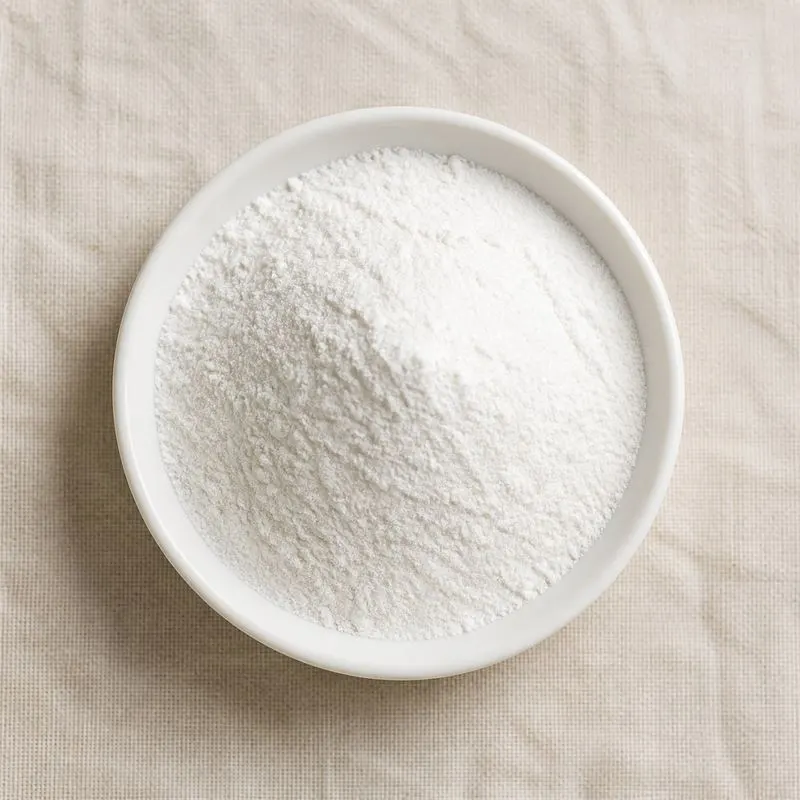
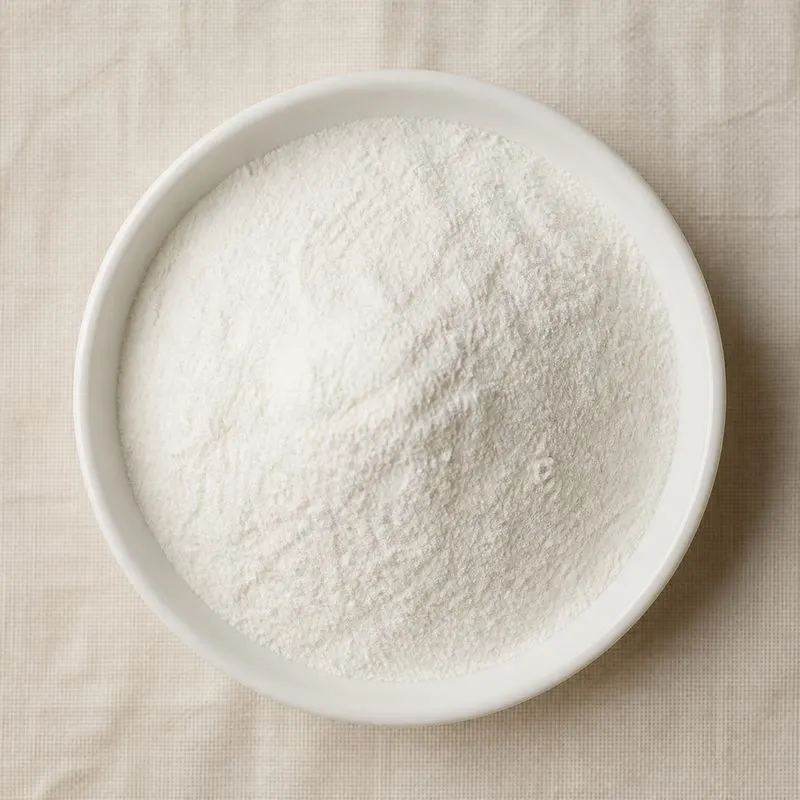
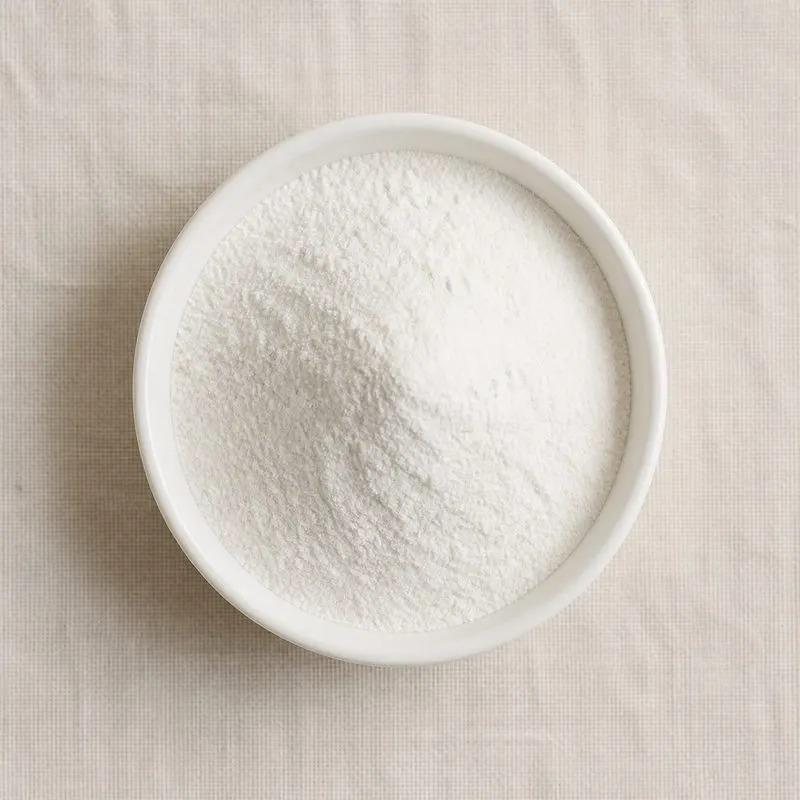
Physical forms follow those uses. Fresh compressed yeast is a moist, crumbly block of around seventy percent water, cream coloured, and must be refrigerated. Active dry yeast is a granule dried to low moisture that must be rehydrated before use, and instant dry yeast is a finer, more porous extrusion that can be added straight to flour. Inactive and nutritional yeasts are dried flakes or powders, pale yellow to light brown, with a savoury aroma. All forms are dispersible rather than soluble, since whole cells are involved.
We source bulk Yeast from top China manufacturers for our partners, working with several of them. The manufacturers are in Hubei, Zhejiang and Henan. A smaller requirement can ship in a combined container with other ingredients.
Please send the grade you need, the volume and your destination port, and we will come back with a solution and a price.
or call +86-21-6858 0751
- Function
- Probiotic
Specifications
| Item | Specification |
|---|---|
| Appearance | Cream to light tan granules or powder |
| Odour | Characteristic yeasty, free from foreign odour |
| Identification | Saccharomyces cerevisiae confirmed by microscopy and sequencing |
| Loss on Drying | Not more than 6.0 percent for dry forms |
| Protein (Nitrogen x 6.25, dry basis) | Not less than 45.0 percent |
| Total Ash (dry basis) | Not more than 8.0 percent |
| Viable Cell Count (active grades) | Not less than 1 x 10^10 cfu/g |
| Gassing Power (active grades) | Not less than declared value in standard dough test |
| pH of 10 percent Suspension | 5.0 to 6.5 |
| Lead | Not more than 2 mg/kg |
| Arsenic | Not more than 1 mg/kg |
| Total Plate Count (inactive grades) | Not more than 50000 cfu/g |
| Yeast and Mould (inactive grades) | Not more than 1000 cfu/g |
| Escherichia coli | Absent in 10 g |
| Salmonella | Absent in 25 g |
Common Markets Grades
Baking grades form the largest group. Fresh compressed yeast goes to plant bakeries in blocks and crumbled form and has a shelf life of a few weeks under refrigeration. Active dry yeast is more robust in distribution but loses some activity in drying and needs rehydration. Instant dry yeast is dried under gentler conditions with an emulsifier added and is the form used in most modern plants. Within these, osmotolerant grades are selected for sweet doughs, where high sugar would otherwise inhibit fermentation, and specific grades are made for frozen dough, where survival of freezing is the limiting property.
Brewing and distilling grades come as liquid slurry, pressed cake or active dry yeast, and are traded by strain rather than by activity figure, since attenuation, flocculation and flavour profile are strain properties. Wine yeasts are almost always active dry. On the inactive side, nutritional yeast is grown on a clean substrate and dried as flakes or powder for direct consumption, torula yeast from Cyberlindnera jadinii is grown on wood sugars or other non molasses substrates, and brewer's yeast recovered after brewing is debittered and dried as a nutritional ingredient. Yeast extract, yeast cell wall and beta glucan preparations are made from the same biomass but are separate products with their own specifications.
Applications
- Bread and fermented bakery products, where carbon dioxide production raises the dough and fermentation develops flavour
- Sweet doughs and enriched buns, where osmotolerant strains ferment despite high sugar concentrations
- Frozen and refrigerated dough, where strains selected for freeze tolerance retain activity after thawing
- Beer brewing, where ale and lager strains determine attenuation, flocculation and the ester and phenol profile
- Wine and cider making, where selected strains give reproducible fermentation and a defined aromatic outcome
- Distilling and industrial ethanol, where the criterion is ethanol yield and tolerance rather than flavour
- Nutritional yeast as a food in its own right, supplying protein and B vitamins in vegan and plant based diets
- Savoury flavour manufacture, where inactive yeast is the starting material for yeast extract and nucleotide seasonings
- Animal feed, where dried yeast supplies protein and B vitamins and live strains are used as feed additives for rumen function
- Fermentation media, where autolysed yeast serves as the nitrogen and vitamin source in microbiological growth media
Brands Using Yeast
Widely-distributed consumer products that list Yeast on the ingredient label.
Brand names, product names and logos are the property of their owners. They appear here as published evidence that the ingredient is used, taken from the brand's own label or website. Their appearance is not an endorsement, and it does not mean the brand buys from us or from any manufacturer listed on this site.
China Manufacturers of Yeast
Top Yeast manufacturers in China.
 Angel Yeast Co., Ltd.2 ingredients in the directory
 Zhejiang Dongcheng Biotechnology Co., Ltd.5 ingredients in the directory
 Zhengzhou Junfa Technology Co., Ltd.2 ingredients in the directory
Company names and logos are the property of the manufacturers themselves. They are listed here because our own directory records them as producing this ingredient. A listing is not an endorsement by them, and we do not represent them or speak on their behalf.
Regulatory Status
In the United States baker's yeast, dried yeast and yeast derived preparations are established food substances, with dried yeast and baker's yeast affirmed as generally recognised as safe and their use permitted under good manufacturing practice, subject in the case of dried yeasts to a limit on how much folic acid the yeast may contribute. Yeast is a food rather than an additive when consumed as nutritional yeast, and is labelled by its common name. Live yeast used as a direct fed microbial in animal feed is regulated through the feed ingredient framework.
In the European Union yeast and dried yeast are foods, not food additives, and carry no E number, so they are placed on the market under general food law with compositional and hygiene requirements rather than an additive authorisation. Saccharomyces cerevisiae holds qualified presumption of safety status in the assessments of the European Food Safety Authority, reflecting its long history of use. Yeast biomass from a species or a process without a history of consumption before May 1997 falls under the novel food regulation, which is why some non conventional yeasts require authorisation while baker's yeast does not, and yeast used as a feed additive is authorised separately under the feed additives regulation. Codex treats yeast as a food ingredient and addresses it through general standards on hygiene and labelling rather than through a specific commodity standard.
Manufacturing Process
Industrial yeast is propagated aerobically rather than fermented anaerobically, because the object is biomass rather than ethanol. Production runs through a series of stages of increasing volume, beginning with a pure culture from a laboratory slant, through seed fermenters, to a commercial fermenter of several hundred cubic metres. The substrate is cane or beet molasses, clarified and sterilised, supplemented with ammonia or ammonium salts as the nitrogen source, phosphate, magnesium and vitamins. The critical control is the sugar feed rate: molasses is added incrementally rather than all at once, because if sugar accumulates the yeast switches to fermentative metabolism and produces ethanol instead of cells. Vigorous aeration and cooling are maintained throughout, since the process is strongly exothermic.
At harvest the culture is concentrated by nozzle centrifuges and washed with chilled water to remove residual molasses and colour, giving yeast cream. For fresh yeast the cream is dewatered on a rotary vacuum filter or filter press to around thirty percent solids, mixed with a small quantity of emulsifier, extruded and cut into blocks or crumbled, then chilled and packed. For dry yeast the same press cake is extruded into fine strands and dried in a fluid bed under controlled temperature, gently for instant yeast and more severely for active dry yeast, then sieved and packed under vacuum or nitrogen because oxygen destroys activity. Inactive yeast is made by heating the cream to kill the cells, then drum drying or spray drying and milling or flaking, and where the material is recovered brewer's yeast it is first washed and treated to remove hop bitterness.