Selenium Enriched Yeast
Selenium enriched yeast is Saccharomyces cerevisiae grown in a medium to which an inorganic selenium salt has been added, so that the growing cells take selenium up and incorporate it into their own amino acids. The product is not yeast with a selenium salt mixed into it, and the distinction is the whole point of the ingredient: the selenium is present largely as selenomethionine, in which selenium has replaced the sulphur of methionine, rather than as the selenite that was fed.
That difference decides how the selenium behaves in the body. Selenomethionine is handled by the same transport and protein incorporation pathways as methionine, so it is absorbed efficiently and can be deposited in body protein and drawn on later, whereas inorganic selenite and selenate are absorbed by different routes and are not stored in the same way. Selenium enriched yeast is therefore the form used where a sustained rise in selenium status is wanted, in human supplements and in livestock and poultry nutrition.
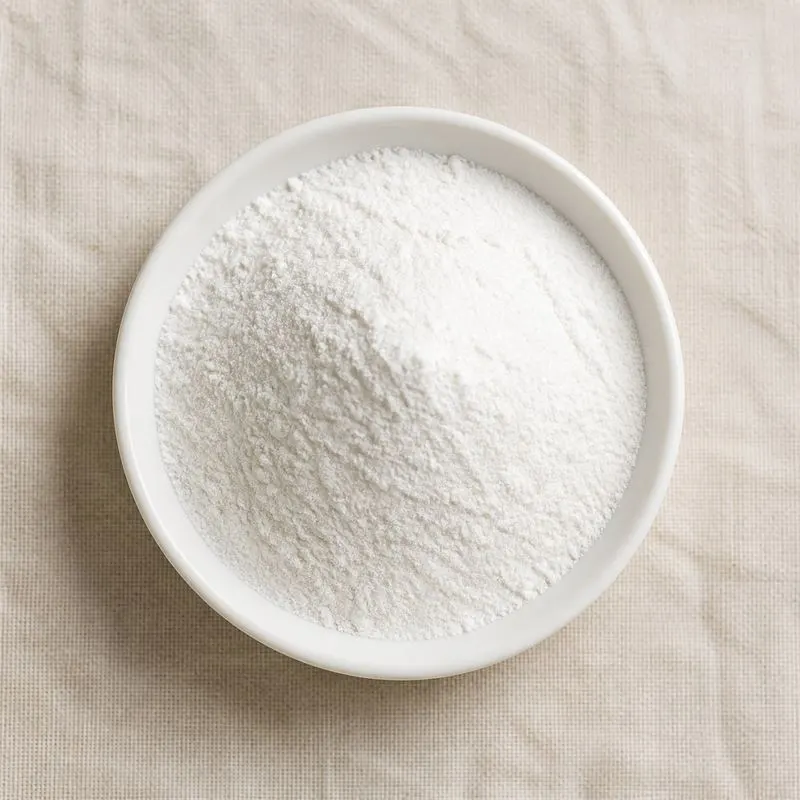
The traded material is an inactivated, dried yeast, a light to medium brown free flowing powder with a characteristic yeasty odour, not soluble but readily dispersed. Total selenium is normally in the range of one to three thousand milligrams per kilogram, and the specification always states not only that figure but the proportion present as selenomethionine and the proportion remaining inorganic, since a poorly controlled fermentation leaves unincorporated selenite in the biomass and that is what a buyer is paying to avoid.
We source bulk Selenium Enriched Yeast from top China manufacturers for our partners, working with several of them. The manufacturers are mostly in Liaoning, Jiangsu and Hubei. A smaller requirement can ship in a combined container with other ingredients.
Please send the grade you need, the volume and your destination port, and we will come back with a solution and a price.
or call +86-21-6858 0751
- Function
- Probiotic
Specifications
| Item | Specification |
|---|---|
| Appearance | Light to medium brown free flowing powder |
| Odour | Characteristic yeasty |
| Total Selenium | 1800 to 2400 mg/kg |
| Selenomethionine (of total selenium) | Not less than 60 percent |
| Inorganic Selenium (of total selenium) | Not more than 1.0 percent |
| Identification | Speciation confirmed by chromatography with mass spectrometry |
| Protein (Nitrogen x 6.25) | Not less than 40.0 percent |
| Loss on Drying | Not more than 6.0 percent |
| Total Ash | Not more than 8.0 percent |
| Viable Yeast Cells | Not more than 1000 cfu/g |
| Particle Size | Not less than 95 percent through 60 mesh |
| Lead | Not more than 2 mg/kg |
| Arsenic | Not more than 2 mg/kg |
| Cadmium | Not more than 1 mg/kg |
| Mercury | Not more than 0.1 mg/kg |
| Total Plate Count | Not more than 10000 cfu/g |
| Escherichia coli | Absent in 10 g |
| Salmonella | Absent in 25 g |
Common Markets Grades
The main grade axis is total selenium content, with one thousand, two thousand and three thousand milligrams per kilogram being the common declarations, and the higher loadings being harder to make because selenite is toxic to the yeast and pushing the concentration reduces both growth and the efficiency of incorporation. Alongside that figure sits the speciation specification, expressed as the percentage of total selenium present as selenomethionine and a maximum for inorganic selenium, and this is the criterion on which grades genuinely differ.
The second axis is the intended market. Food and supplement grade is made to a tighter speciation specification and to food hygiene standards, and comes as a fine powder for tabletting and encapsulation or granulated for direct compression. Feed grade is produced to the same principle but is specified for use in premixes and is often sold at a lower selenium loading with better flow, since it must disperse evenly through a large mass of feed. Both are inactivated, and viable yeast cells are a specification limit rather than a feature, because the product is a nutrient source and not a live culture.
Applications
- Selenium supplements in tablet, capsule and softgel form, where the organic form is preferred over selenite for absorption and retention
- Multivitamin and mineral formulations, where it supplies the selenium contribution of the product
- Antioxidant and thyroid support formulations, selenium being a component of glutathione peroxidase and of the deiodinase enzymes
- Men's health and fertility supplements, where selenium status is a recognised nutritional factor
- Clinical and enteral nutrition, where trace element provision has to be complete and reliably absorbed
- Fortified foods and nutritional powders in markets where selenium fortification is permitted
- Poultry feed, where selenium status affects immune function and carries through into the egg
- Dairy and beef cattle feed, where organic selenium raises transfer into milk and into tissue compared with selenite
- Aquaculture diets, where selenium supports antioxidant defence under intensive rearing conditions
- Pet food and companion animal supplements, as the organic selenium source in the trace mineral premix
China Manufacturers of Selenium Enriched Yeast
Top Selenium Enriched Yeast manufacturers in China.
 Dalian Zhen-Ao Bio-tech Co., Ltd.11 ingredients in the directory
 Nantong Yinqi Biological Technology Co., Ltd.3 ingredients in the directory
 WuHan Stars Modern Bio-engineering Co., Ltd.3 ingredients in the directory
 Zhejiang Dongcheng Biotechnology Co., Ltd.5 ingredients in the directory
Company names and logos are the property of the manufacturers themselves. They are listed here because our own directory records them as producing this ingredient. A listing is not an endorsement by them, and we do not represent them or speak on their behalf.
Regulatory Status
In the United States high selenium yeast is used as a dietary ingredient in supplements and as a source of selenium in food, with selenium itself an essential nutrient for which a daily value is established, and preparations of selenium enriched yeast have been the subject of generally recognised as safe notifications for defined food uses. The Food and Drug Administration has considered qualified health claims relating selenium intake to reduced cancer risk and has allowed only carefully worded statements reflecting limited evidence, so claim language is constrained. In animal feed, selenium yeast is permitted as a selenium source under the food additive regulations governing feed, with the maximum added selenium in the complete feed controlled by species.
In the European Union selenium enriched yeast is listed among the permitted sources of selenium that may be added to food supplements and to foods for particular nutritional uses, and the entry is drawn tightly: the yeast must be inactivated, the selenium must be predominantly organic with selenomethionine the major species, and the residual inorganic selenium must be below a stated proportion of the total. Those conditions come from opinions of the European Food Safety Authority on the different selenium sources. As a feed additive it is authorised under the feed additives regulation with the permitted strain and the maximum supplementation level specified. The Joint FAO WHO Expert Committee on Food Additives and the Codex Committee on Nutrition and Foods for Special Dietary Uses treat selenium within the framework for nutrient compounds rather than as an additive, and Codex advisory lists of nutrient compounds include organic selenium sources.
Manufacturing Process
Production is a controlled aerobic fermentation of Saccharomyces cerevisiae, usually on a molasses or refined sugar medium with ammonium salts, phosphate and vitamins, run fed batch in a stirred aerated fermenter. The distinguishing feature is the selenium feed. Sodium selenite is dosed continuously and at a rate matched to the growth of the culture, because a high standing concentration of selenite is toxic to the yeast and will both stop growth and force the element into non protein forms. Held at a low concentration, the cells assimilate selenium through the sulphur pathway and substitute it for sulphur in methionine and, to a smaller extent, cysteine.
At the end of the fermentation the culture is starved of selenium for a short period so that residual inorganic selenium is taken up or diluted out. The broth is centrifuged and the yeast cream is washed repeatedly with water to remove selenite that is adsorbed to the cell surface rather than incorporated, and this washing step is what determines the inorganic selenium figure on the certificate. The washed cream is heat inactivated, then dried on a drum drier or in a spray drier, milled, and blended across sublots to bring total selenium to the declared level. Every batch is assayed both for total selenium, by hydride generation or mass spectrometry after digestion, and for speciation by chromatography coupled to mass spectrometry, which is the only way to demonstrate the selenomethionine content.