Anhydrous Alcohol
Anhydrous alcohol is ethanol from which essentially all water has been removed, typically 99.5 percent by volume or higher, also traded as absolute alcohol or dehydrated alcohol. The distinction from ordinary rectified spirit is not one of chemical identity but of water content, and it matters because ethanol and water form an azeotrope at about 95.6 percent by weight, a mixture that cannot be separated further by simple distillation.
Removing that last few percent of water requires a step beyond fractionation, and the choice of that step defines the grade. In food and pharmaceutical use anhydrous alcohol serves as an extraction solvent, a carrier for flavours, colours and oleoresins, a precipitation medium in polysaccharide and protein recovery, and a processing aid that is subsequently removed. Its value in extraction comes from a polarity that suits a broad range of plant actives, and from a boiling point of 78 degrees Celsius that allows recovery under vacuum without thermal damage to the extract.
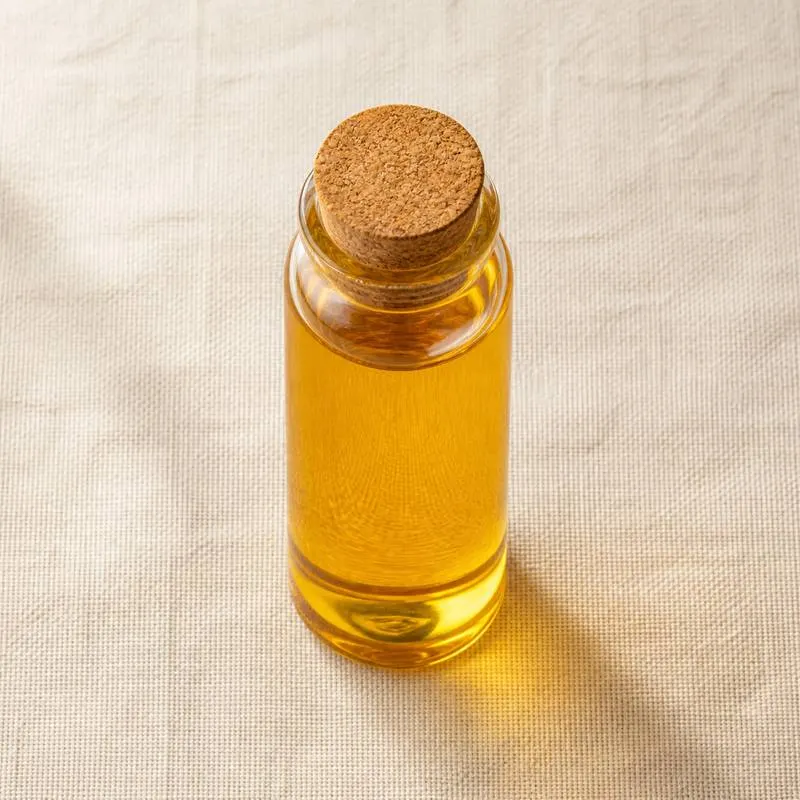
The material is a clear colourless mobile liquid with a characteristic odour, miscible with water in all proportions and with most organic solvents. It is strongly hygroscopic, drawing moisture from the air fast enough that an opened container loses its anhydrous specification within hours, so it is stored and dispensed under nitrogen in sealed vessels. It is highly flammable, with a flash point near 13 degrees Celsius, and is handled under flammable liquid rules throughout.
We source bulk Anhydrous Alcohol from top China manufacturers for our partners. The manufacturer is in Guangxi. A smaller requirement can ship in a combined container with other ingredients.
Please send the grade you need, the volume and your destination port, and we will come back with a solution and a price.
or call +86-21-6858 0751
- Function
- Nutraceutical
Specifications
| Item | Specification |
|---|---|
| Appearance | Clear colourless mobile liquid, free of suspended matter |
| Odour | Characteristic, free of foreign odour |
| Assay (ethanol by volume) | Not less than 99.5 percent |
| Identification | Infrared spectrum and gas chromatographic retention conform |
| Water Content | Not more than 0.2 percent |
| Specific Gravity at 20 C | 0.7893 to 0.7910 |
| Methanol | Not more than 200 mg/L |
| Acetaldehyde | Not more than 10 mg/L |
| Fusel Alcohols | Not more than 10 mg/L |
| Acidity (as acetic acid) | Not more than 30 mg/L |
| Non Volatile Residue | Not more than 25 mg/L |
| Benzene | Not detected |
| Permanganate Time | Not less than 30 minutes |
| Lead | Not more than 0.1 mg/L |
| Denaturant | None, undenatured grade |
Common Markets Grades
Grading rests on assay, on residual water, and on the impurity profile carried from the feedstock. Food grade and extraction grade anhydrous alcohol is specified at 99.5 percent minimum by volume with a water limit and controls on methanol, acetaldehyde, fusel alcohols and non volatile residue. Pharmaceutical grade conforms to the United States Pharmacopeia and European Pharmacopoeia monographs for dehydrated alcohol and carries tighter limits on the same impurities plus a defined absorbance and clarity requirement. Analytical and semiconductor grades exist at 99.9 percent and above with trace metal and particulate specifications, and are a separate trade.
The dehydration route is stated on the specification because it leaves a signature. Molecular sieve dried material carries no added solvent and is the preferred grade for food and pharmaceutical use. Azeotropic distillation using benzene, cyclohexane or toluene as an entrainer leaves trace entrainer residue, and benzene dried alcohol is not acceptable for food use. Feedstock also matters commercially: fermentation ethanol from grain, cassava or molasses is required where a natural or non synthetic declaration is being made, while synthetic ethanol from ethylene hydration is chemically identical but cannot carry that declaration. Denatured grades, to which a denaturant has been added for duty purposes, are unsuitable for food extraction and must not be confused with undenatured material.
Applications
- Botanical and plant extract manufacture, where it is the principal solvent for flavonoids, alkaloids and resins
- Oleoresin and essential oil processing, as an extraction and fractionation solvent
- Precipitation medium for polysaccharides, pectin, gums and protein isolates
- Crystallisation solvent in the purification of nucleotides, amino acids and fine chemicals
- Carrier and diluent for flavour compounds, natural colours and vitamin preparations
- Tincture and liquid supplement manufacture in the nutraceutical trade
- Pharmaceutical solvent and processing aid in wet granulation and coating
- Cosmetic and personal care formulations as a solvent and rapid evaporating carrier
- Disinfectant and hand sanitiser manufacture after dilution to the working concentration
- Cleaning and rinsing of process equipment where a residue free volatile solvent is required
China Manufacturers of Anhydrous Alcohol
Top Anhydrous Alcohol manufacturers in China.

Company names and logos are the property of the manufacturers themselves. They are listed here because our own directory records them as producing this ingredient. A listing is not an endorsement by them, and we do not represent them or speak on their behalf.
Regulatory Status
In the United States ethanol is generally recognised as safe for use in food, and it is also permitted as a solvent and processing aid, with residual solvent expectations governed by good manufacturing practice for the finished food. Dehydrated alcohol carries a United States Pharmacopeia monograph and is used as a pharmaceutical solvent and excipient. The larger regulatory burden is fiscal rather than compositional: undenatured ethanol is controlled by the Alcohol and Tobacco Tax and Trade Bureau, and buyers using it in food and supplement manufacture require the appropriate permit, with denatured formulations available where the end use allows.
In the European Union ethanol is an authorised extraction solvent under the extraction solvents directive, which permits its use in the production of foodstuffs and food ingredients subject to good manufacturing practice, with residues limited to technically unavoidable levels. It is not a food additive and holds no E number in that role, and a European Pharmacopoeia monograph exists for anhydrous ethanol. Excise duty rules apply to undenatured alcohol across member states and denaturing formulations are prescribed at Union level for certain exempt uses. As a chemical it is registered under REACH and classified as a highly flammable liquid, and it is shipped under dangerous goods rules. Codex and JECFA address ethanol among processing aids and extraction solvents rather than as an additive with its own specification.
Manufacturing Process
Production begins with hydrous ethanol, made either by fermentation or by synthesis. In the fermentation route a starch or sugar feedstock, most commonly maize, cassava, sugarcane molasses or sugar beet, is liquefied and saccharified by enzymes where necessary, then fermented with Saccharomyces cerevisiae to a beer of roughly 10 to 15 percent alcohol. The beer is fed to a multi column distillation train in which a beer stripping column removes the solids and water bulk, a rectifying column concentrates the ethanol, and a purification or fusel column removes higher alcohols, aldehydes and methanol. The rectified spirit leaving that train sits at the azeotrope, close to 95 to 96 percent, and cannot be dried further by distillation alone.
Dehydration is the defining step. The dominant modern route passes superheated ethanol vapour through a bed of 3 angstrom molecular sieve, a zeolite whose pore size admits water molecules and excludes ethanol. Two or more beds are operated in swing, one adsorbing while the other is regenerated under vacuum, and the process leaves no added chemical in the product. The older azeotropic route adds an entrainer such as cyclohexane, which forms a ternary azeotrope with ethanol and water that carries the water overhead, leaving anhydrous alcohol in the bottoms; it is still used industrially but is not preferred for food grade material. Membrane pervaporation is used in some plants as an alternative or as a polishing step. The dried alcohol is cooled, checked for assay and impurity profile, filtered, and filled into sealed drums, road tankers or isotanks under nitrogen, since the product reabsorbs atmospheric water immediately on exposure.