Coenzyme Q10
Coenzyme Q10 is a lipid-soluble benzoquinone with a forty-carbon isoprenoid side chain that is found in the inner mitochondrial membrane of nearly every eukaryotic cell. The molecule (C₅₉H₉₀O₄, molar mass 863.34 g/mol, CAS 303-98-0) is also widely known as ubiquinone or ubidecarenone.
It shuttles electrons between Complex I/II and Complex III of the respiratory chain, so it is essential to ATP generation. In its reduced ubiquinol form, it also functions as a lipid-phase antioxidant that protects membranes from peroxidation.
We source bulk Coenzyme Q10 from top China manufacturers for our partners, working with several of them. The manufacturers are mostly in Zhejiang, Shandong and Shanghai. For this ingredient the minimum order is 50 kg, and a smaller requirement can ship in a combined container with other ingredients.
Please send the grade you need, the volume and your destination port, and we will come back with a solution and a price.
or call +86-21-6858 0751
- Minimum order
- 50 kg
- Packaging
- 25 kg kraft paper bag with PE inner liner
- ISO 9001
- HACCP
- Halal
- Kosher
Specifications
| Item | Specification |
|---|---|
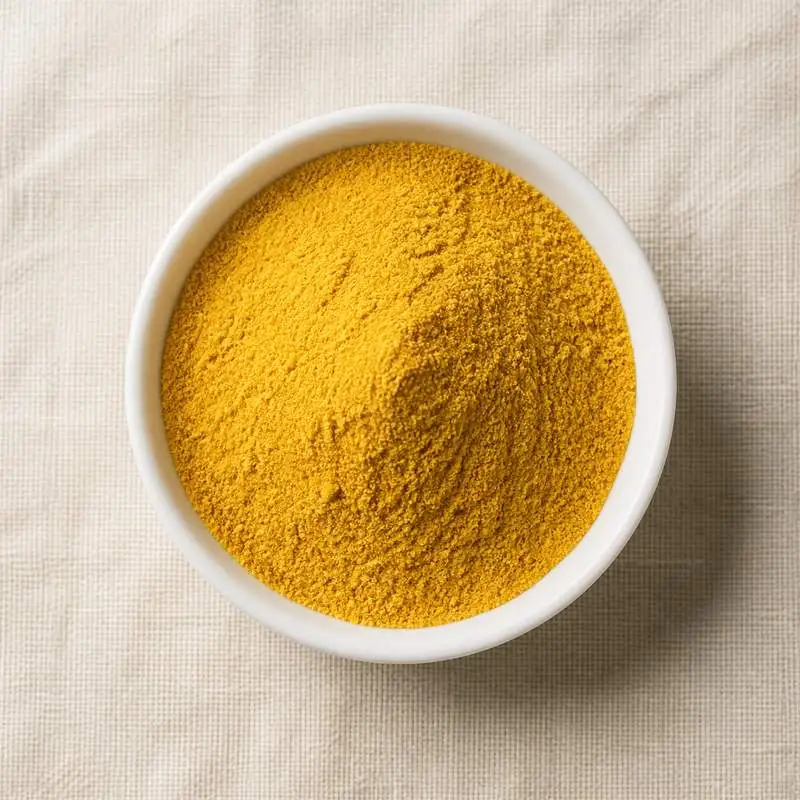
| Appearance | Yellow to orange crystalline powder |
| Assay (HPLC, dry basis) | ≥ 98.0% |
| All-trans isomer | ≥ 99.5% |
| Loss on drying | ≤ 0.5% |
| Melting point | 48 °C to 52 °C |
| Heavy metals (as Pb) | ≤ 10 mg/kg |
| Arsenic | ≤ 1 mg/kg |
| Residual solvents | Meets ICH Q3C limits |
| Microbiology | Meets pharmacopoeial limits |
| Storage | Sealed, protected from light and oxygen, 2 °C to 8 °C recommended |
Common Markets Grades
Coenzyme Q10 is commercialized in two oxidation states: ubiquinone (oxidised, orange crystalline powder) and ubiquinol (reduced, off-white powder requiring oxygen-barrier packaging).
USP and EP grade ubiquinone assays at not less than 98 percent purity and is the standard format for capsules, tablets, and softgels. Pharmaceutical-grade material is produced with tight specifications on related substances, residual solvents, and heavy metals.
Solubilised and bioavailability-enhanced grades take the form of oil suspensions, self-emulsifying preconcentrates, cyclodextrin inclusion complexes, and microencapsulated beadlets at 10, 20, and 40 percent active content.
Cosmetic-grade Q10 comes as a 1 to 10 percent oil dispersion for direct addition to creams and serums, with controlled particle size to support skin penetration.
Applications
- Cardiovascular dietary supplements positioned for cardiac energy support and statin co-therapy
- Sports nutrition formulas marketed for endurance and recovery
- Anti-aging multivitamin blends and unisex daily-wellness products
- Fertility and reproductive health supplements for both men and women
- Migraine and neurological support products at higher single doses
- Periodontal and oral-care formulations including toothpastes and gels
- Topical skincare: anti-wrinkle serums, eye creams, and night moisturizers
- Sunscreen and after-sun lotions for membrane-level oxidative defense
- Functional foods and fortified beverages using water-dispersible beadlets
- Veterinary supplements for senior dogs and performance horses
- Pharmaceutical add-on treatments in mitochondrial myopathy and heart-failure research
Brands Using Coenzyme Q10
Widely-distributed consumer products that list Coenzyme Q10 on the ingredient label.
- QunolUltra CoQ10 100mg Softgels ↗100mg coenzyme Q10 (ubiquinone) per softgel in solubilized formula.Label verified 2026-05-24
- QunolUltra CoQ10 200mg Softgels ↗200mg coenzyme Q10 ubiquinone softgels.Label verified 2026-05-24
- Doctor's BestHigh Absorption CoQ10 with BioPerine 100 mg, 120 Veggie Caps ↗100mg naturally fermented CoQ10 ubiquinone with BioPerine.Label verified 2026-05-24
- Doctor's BestHigh Absorption CoQ10 with BioPerine 400 mg, 60 Veggie Caps ↗400mg CoQ10 ubiquinone with BioPerine for enhanced absorption.Label verified 2026-05-24
- Nature MadeCoQ10 200 mg Softgels ↗200mg coenzyme Q10 per softgel for heart and cellular energy support.Label verified 2026-05-24
- Nature MadeCoQ10 100 mg Softgels ↗100mg coenzyme Q10 ubiquinone per softgel.Label verified 2026-05-24
- Jarrow FormulasCo-Q10 100 mg Veggie Capsules ↗100mg ubiquinone CoQ10 in vegetable capsule form.Label verified 2026-05-24
- Jarrow FormulasCo-Q10 200 mg Veggie Capsules ↗200mg ubiquinone CoQ10 in vegetable capsule form.Label verified 2026-05-24
Brand names, product names and logos are the property of their owners. They appear here as published evidence that the ingredient is used, taken from the brand's own label or website. Their appearance is not an endorsement, and it does not mean the brand buys from us or from any manufacturer listed on this site.
China Manufacturers of Coenzyme Q10
Top Coenzyme Q10 manufacturers in China.
- Shandong Guohetang Pharmaceutical Co., Ltd.1 ingredient in the directory
 Shanghai Natural Biotechnology Co., Ltd.9 ingredients in the directory
 Sichuan Ingia Biosynthetic Co., Ltd.5 ingredients in the directory
 Tianxian Biopharm4 ingredients in the directory
 Zhejiang NHU Company Ltd.25 ingredients in the directory
 Zhejiang Wedin Biological Technology Co., Ltd.18 ingredients in the directory
Company names and logos are the property of the manufacturers themselves. They are listed here because our own directory records them as producing this ingredient. A listing is not an endorsement by them, and we do not represent them or speak on their behalf.
How We Help Source Coenzyme Q10
Direct Factory Sourcing
We run the whole process: selecting the manufacturer from the top Chinese food ingredient producers, negotiating the price, verifying quality, and coordinating the logistics. You deal with us instead of with several factories at once.
Original Packaging and Documents from the Manufacturer
The manufacturer sends your Coenzyme Q10 out of its own factory in the original packing, through to your destination port. The COA, COO, MSDS, TDS and any certifications reach you from the manufacturer as well.
Free Samples and Lead Time
We send 100 to 500 g free for your own laboratory to test and you cover only the courier, usually within 2 to 3 working days. ETD is usually within 7 to 15 days once the order is confirmed, and we check that date against the factory's own manufacturing schedule before we give it to you.
Combined Shipment
We can load Coenzyme Q10 together with other ingredients such as Arachidonic Acid, Chondroitin Sulphate Sodium and L-Ergothioneine into one 20' FCL. If your quantity is small, we can also ship LCL.
Regulatory Status
Coenzyme Q10 is a permitted dietary ingredient in the United States and is notified to FDA as a New Dietary Ingredient where applicable. It is not classified as a novel food in the European Union when sourced from traditional fermentation processes.
Japan recognises Q10 as a Food with Function Claims ingredient, and it is listed in the Japanese Pharmacopoeia as ubidecarenone with monographs for both bulk substance and capsules.
Pharmacopoeial monographs appear in USP, Ph. Eur. (as ubidecarenone), and JP. Kosher and Halal certifications are routinely available for fermentation-derived material.
The substance is not scheduled and carries no controlled-substance restrictions in major regulated markets.
Manufacturing Process
Industrial Coenzyme Q10 production is dominated by microbial fermentation. Strains of Rhodobacter sphaeroides, Agrobacterium tumefaciens, and selected yeasts are cultivated in stirred-tank bioreactors on glucose or glycerol feedstocks.
After fermentation, biomass is harvested by centrifugation and the intracellular Q10 is recovered through solvent extraction, typically using a hexane or isopropanol system. The crude extract is then purified by saponification, crystallisation, and recrystallisation from ethanol to achieve pharmacopoeial purity.
A semi-synthetic route, historically developed by Nisshin Seifun and later by Kaneka, condenses solanesol from tobacco leaves with a synthetic quinone unit. This route now plays a smaller role, since fermentation gives a closer match to the natural all-trans isomer.
Ubiquinol is generated by chemical or enzymatic reduction of ubiquinone, followed by stabilisation under inert atmosphere with antioxidant carriers such as ascorbyl palmitate.