α-Arbutin
Alpha-arbutin is 4-hydroxyphenyl alpha-D-glucopyranoside, the alpha-anomeric glucoside of hydroquinone. It differs from the naturally occurring beta-arbutin found in bearberry and pear leaf only in the configuration of the glycosidic bond, but that difference decides how the molecule behaves: the alpha form is far more stable in aqueous formulation and is cleaved by different glycosidases, and it is the form the cosmetic and personal care trade specifies.
Its function is as a tyrosinase inhibitor. By competing with tyrosine at the copper active site of the enzyme, it slows the first committed step of melanin synthesis, which is why it is formulated into brightening and anti-pigmentation products. It is not a bleach and acts on new pigment formation rather than existing melanin.
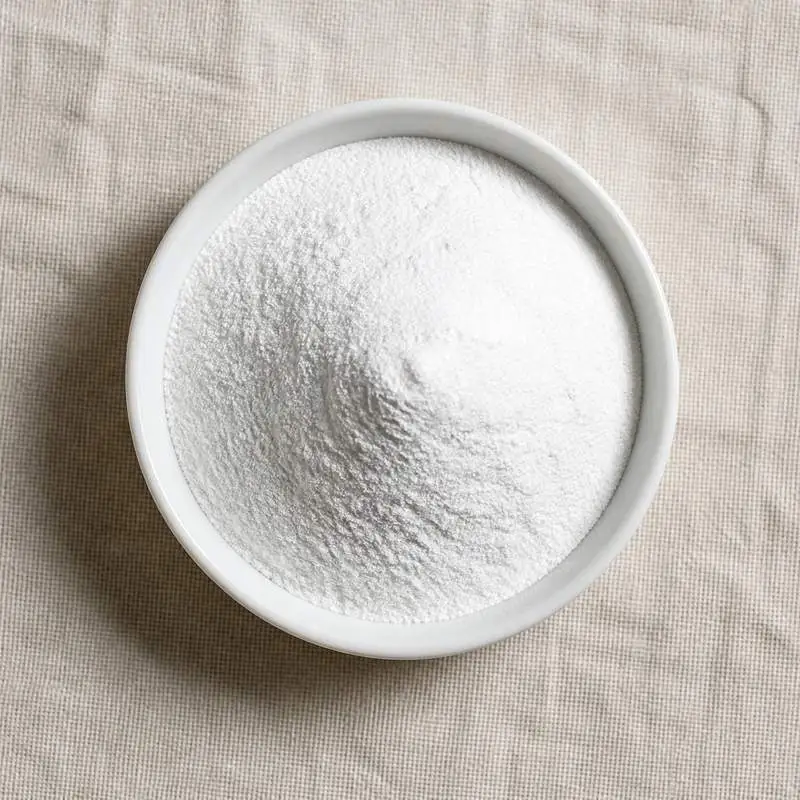
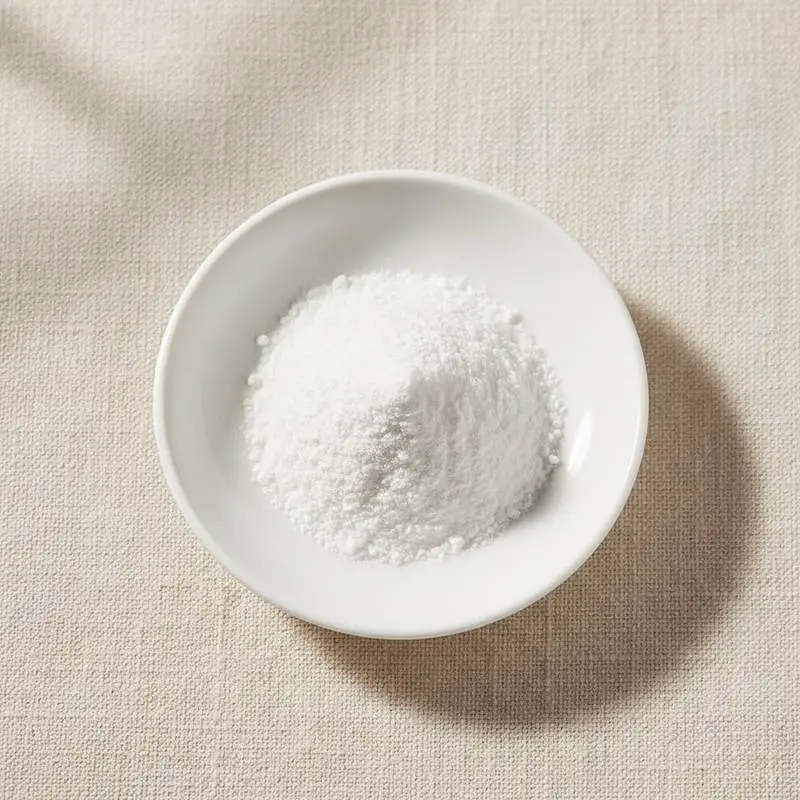
The commercial material is a white crystalline powder, odourless, freely soluble in water and in aqueous alcohol and poorly soluble in oils. It is most stable in mildly acidic to neutral formulations and degrades under strong alkali, prolonged heat and in the presence of oxidising agents, which is why it is added at the cooling stage of a batch and often paired with a chelating agent and an antioxidant.
We source bulk α-Arbutin from top China manufacturers for our partners. The manufacturer is in Zhejiang. A smaller requirement can ship in a combined container with other ingredients.
Please send the grade you need, the volume and your destination port, and we will come back with a solution and a price.
or call +86-21-6858 0751
- Function
- Nutraceutical
Specifications
| Item | Specification |
|---|---|
| Appearance | White to off-white crystalline powder, odourless |
| Assay (HPLC, dry basis) | 99.0 percent minimum |
| Identification | Infrared spectrum and HPLC retention conform to reference standard |
| Beta-arbutin | 0.5 percent maximum |
| Free hydroquinone | 10 mg/kg maximum |
| Melting range | 198 to 203 degrees C |
| Specific rotation | Plus 174 to plus 182 degrees, 2 percent in water |
| Loss on drying | 0.5 percent maximum |
| Residue on ignition | 0.2 percent maximum |
| pH (5 percent aqueous solution) | 5.0 to 7.0 |
| Residual solvents (ethanol) | 5000 mg/kg maximum |
| Lead | 1.0 mg/kg maximum |
| Arsenic | 1.0 mg/kg maximum |
| Total plate count | 100 cfu/g maximum |
Common Markets Grades
Alpha-arbutin is traded almost entirely as a single cosmetic grade at 99 percent minimum assay by HPLC. What differentiates suppliers is not assay but the residual hydroquinone limit, which is controlled to the low parts per million because free hydroquinone is restricted in cosmetics. Anomeric purity is the second discriminator, with beta-arbutin content held to a low percentage since chemical and enzymatic routes can leave the wrong anomer behind.
Beta-arbutin is sold separately, as a synthetic material or as a bearberry leaf extract standardised to a stated arbutin percentage, and it is not interchangeable with the alpha form. Physical options are limited to particle size, with a micronised grade offered for faster dissolution, and to solution concentrates at 20 to 50 percent in water or glycol for formulators who prefer not to handle powder.
Applications
- Facial serums and essences formulated for brightening, where its water solubility suits a light aqueous base
- Creams and lotions targeting uneven skin tone, added after the batch has cooled
- Spot and blemish treatments used alongside niacinamide and vitamin C derivatives
- Sun care and after-sun products aimed at limiting pigmentation following exposure
- Sheet mask essences, where a fully soluble active loads evenly onto the substrate
- Body and hand care products for age-spot applications
- Toners and micellar formulations where oil-soluble actives cannot be used
- Colour cosmetics with skin-care positioning, such as tinted bases carrying a brightening claim
Brands Using α-Arbutin
Widely-distributed consumer products that list α-Arbutin on the ingredient label.
- The OrdinaryAlpha Arbutin 2% + HA ↗A water based serum for uneven tone whose ingredient list runs Aqua (Water), Alpha-Arbutin, Propanediol, with alpha-arbutin named as the key ingredient alongside hydrolysed sodium hyaluronate.Label verified 2026-08-31
- NaturiumAlpha Arbutin Serum 2% ↗A serum formulated with 2 percent alpha arbutin plus niacinamide and lemon fruit extract to fade the appearance of dark spots.Label verified 2026-08-31
- CocokindChlorophyll Discoloration Serum ↗A spot fading serum combining 1 percent alpha arbutin with chlorophyll, licorice root and panthenol.Label verified 2026-08-31
Brand names, product names and logos are the property of their owners. They appear here as published evidence that the ingredient is used, taken from the brand's own label or website. Their appearance is not an endorsement, and it does not mean the brand buys from us or from any manufacturer listed on this site.
China Manufacturers of α-Arbutin
Top α-Arbutin manufacturers in China.

Company names and logos are the property of the manufacturers themselves. They are listed here because our own directory records them as producing this ingredient. A listing is not an endorsement by them, and we do not represent them or speak on their behalf.
Regulatory Status
Alpha-arbutin is a cosmetic ingredient rather than a food additive, so its regulatory position is set by cosmetic law. In the United States it is used in cosmetics under the general provisions of the Federal Food, Drug, and Cosmetic Act, which require a product to be safe and properly labelled but do not involve pre-market approval for a cosmetic ingredient of this kind. The point of regulatory sensitivity is hydroquinone, which is not permitted as a cosmetic ingredient in leave-on products, so residual free hydroquinone in the raw material is controlled and tested.
In the European Union alpha-arbutin is regulated under the cosmetic products regulation and the Scientific Committee on Consumer Safety has assessed it, with maximum concentrations set for face and body products and a strict limit applied to free hydroquinone content in the raw material. It appears in the cosmetic ingredient inventory under its INCI name, alpha-arbutin. It has no E number and no Codex or JECFA specification, since it is not an approved food additive, and it should not be presented for food or supplement use in these markets.
Manufacturing Process
Industrial alpha-arbutin is made by enzymatic transglycosylation rather than by classical chemical glycosylation, because the enzyme sets the alpha configuration cleanly and avoids the protecting-group chemistry a chemical route would need. Hydroquinone is dissolved with a glucosyl donor, usually maltose, dextrin or sucrose, and treated with a glycosyltransferase such as an alpha-glucosidase, a cyclodextrin glucanotransferase or a sucrose phosphorylase, either as an isolated enzyme or as a whole-cell biocatalyst. The reaction runs at controlled pH and moderate temperature, and conversion is stopped before side products accumulate.
Downstream work is dominated by the need to strip unreacted hydroquinone. The broth is heat treated or ultrafiltered to remove enzyme and cells, then passed over adsorbent resin and activated carbon that hold back the free phenol while the glucoside passes, and the eluate is desalted by ion exchange. The purified solution is concentrated under vacuum at low temperature and crystallised, usually from aqueous alcohol, with a recrystallisation step where the hydroquinone specification is tight. Crystals are centrifuged, washed, vacuum dried, milled and packed away from light.