Berberine Hydrochloride
Berberine hydrochloride is the hydrochloride salt of berberine, a quaternary benzylisoquinoline alkaloid with the formula C20H18ClNO4 and a molar mass of 371.81 in the anhydrous form. The free alkaloid occurs as a natural cation in several unrelated plant families, and the commercial salt is recovered chiefly from Coptis chinensis rhizome, Phellodendron amurense and Phellodendron chinense bark, Berberis species root and Mahonia species.
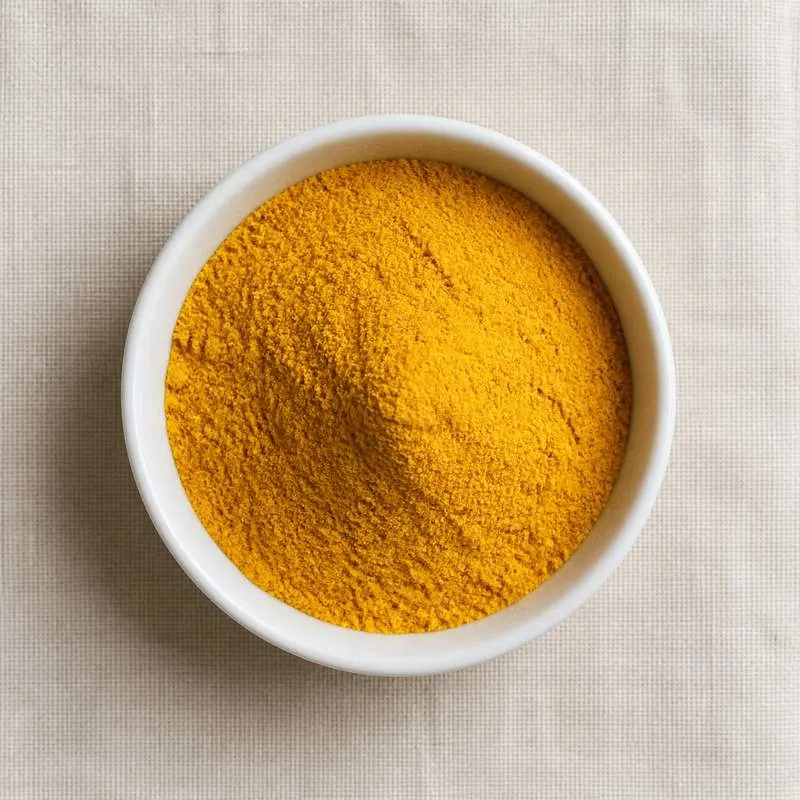
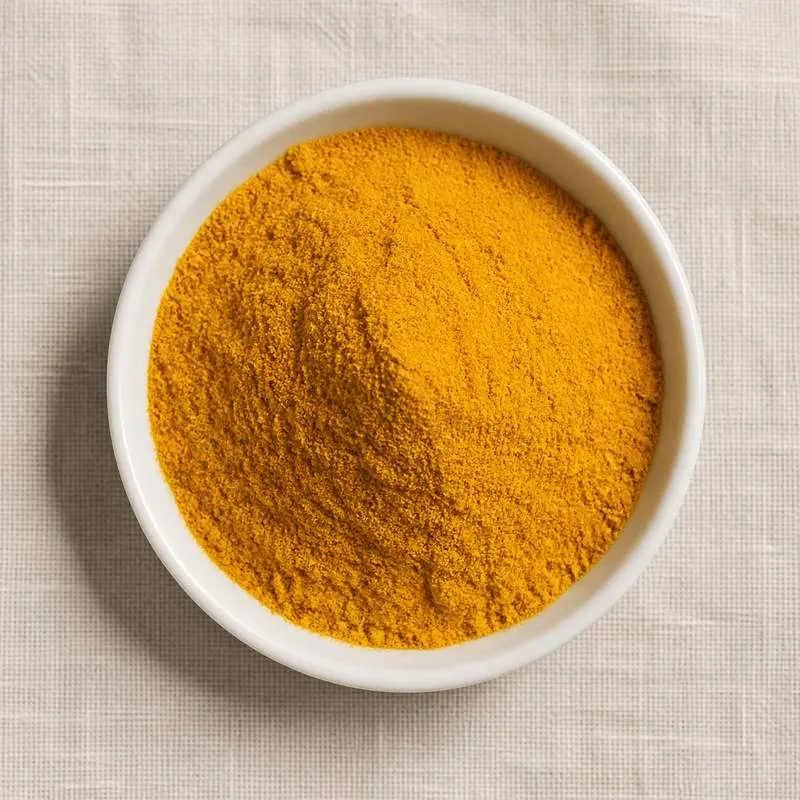
The compound is an intense yellow crystalline powder with a strongly bitter taste, and its colour is a practical constraint as much as an identifier, since even small doses tint tablets, capsule shells and any solution it enters. It is sparingly soluble in cold water, noticeably more soluble in hot water, and slightly soluble in ethanol. The quaternary nitrogen carries a permanent positive charge, so unlike a typical alkaloid the compound cannot be freed as a neutral base by raising pH. Its solubility is controlled by the counter ion and by temperature rather than by protonation.
Solutions are yellow and fluoresce under ultraviolet light. The material is stable dry but darkens under prolonged light exposure, and it precipitates when brought into contact with high concentrations of chloride or with certain organic anions, which limits the beverage systems it can be dosed into.
We source bulk Berberine Hydrochloride from top China manufacturers for our partners. The manufacturer is in Jiangsu. A smaller requirement can ship in a combined container with other ingredients.
Please send the grade you need, the volume and your destination port, and we will come back with a solution and a price.
or call +86-21-6858 0751
- Function
- Plant extract
Specifications
| Item | Specification |
|---|---|
| Appearance | Bright yellow crystalline powder |
| Chemical Name | Berberine hydrochloride |
| Odour and Taste | Odourless, strongly bitter |
| Identification | HPLC retention and UV spectrum match reference; positive chloride test |
| Assay | ≥ 97.0% (HPLC, anhydrous basis) |
| Palmatine | ≤ 1.0% |
| Jatrorrhizine | ≤ 0.5% |
| Loss on Drying | ≤ 12.0% (dihydrate) |
| Residue on Ignition | ≤ 0.5% |
| pH (1% solution) | 3.5 to 5.5 |
| Residual Ethanol | ≤ 0.5% |
| Heavy Metals (as Pb) | ≤ 10 mg/kg |
| Lead | ≤ 2.0 mg/kg |
| Arsenic | ≤ 1.0 mg/kg |
| Total Plate Count | ≤ 1,000 cfu/g |
| Yeast and Mould | ≤ 100 cfu/g |
| Escherichia coli | Negative in 1 g |
| Salmonella | Negative in 25 g |
Common Markets Grades
The trade quotes purity by HPLC, with 97 and 98 percent the standard supplement grades and 99 percent used for pharmaceutical and analytical work. Below these sit plant extracts standardised on berberine at 5, 10, 30, 60 and 90 percent, produced from Coptis, Phellodendron or Berberis and retaining the accompanying alkaloids palmatine, jatrorrhizine and coptisine, which are stated separately because they affect both colour and the chromatographic profile.
The salt form is part of the specification. Berberine hydrochloride is the volume item, with berberine sulphate and berberine citrate traded in smaller quantities for higher aqueous solubility. Particle size grades run from standard 80 mesh powder through micronised material for dispersion to granulated versions for direct compression, and dihydrate and anhydrous forms are distinguished because the water of crystallisation changes the assay basis. Because purified berberine can also be produced synthetically, the specification states botanical or synthetic origin where that matters to the buyer.
Applications
- Capsule supplements, the dominant outlet, where the bitter taste and yellow colour are contained within the shell
- Tablets and coated tablets, using a film coat both to mask bitterness and to prevent the yellow colour transferring in handling
- Metabolic and blood sugar support formulations, blended with chromium salts, cinnamon extract or alpha lipoic acid
- Digestive and gut support products, reflecting the traditional use of the parent botanicals
- Traditional Chinese formula preparations, in which standardised Coptis or Phellodendron extract replaces crude herb
- Delivery enhanced presentations such as phospholipid complexes and solid dispersions, formulated around the low aqueous solubility
- Oral care products, where the antimicrobial character of the alkaloid is the formulation angle
- Feed additive premixes for poultry and aquaculture, applied as a plant alkaloid at low inclusion
- Analytical reference material for assaying berberine in botanical raw material
Brands Using Berberine Hydrochloride
Widely-distributed consumer products that list Berberine Hydrochloride on the ingredient label.
- Nature's WayBerberine Capsules ↗Single ingredient capsule whose supplement facts panel lists Berberine HCl at 500 mg per capsule.Label verified 2026-08-31
- Nature's WayBerberine with Cinnamon ↗One capsule serving combines 500 mg of Berberine HCl with 50 mg of cinnamon.Label verified 2026-08-31
- SolarayBerberine 500 mg VegCaps ↗Each VegCap supplies 500 mg of berberine, listed on the panel as Berberine HCl from Indian barberry together with Oregon grape.Label verified 2026-08-31
Brand names, product names and logos are the property of their owners. They appear here as published evidence that the ingredient is used, taken from the brand's own label or website. Their appearance is not an endorsement, and it does not mean the brand buys from us or from any manufacturer listed on this site.
China Manufacturers of Berberine Hydrochloride
Top Berberine Hydrochloride manufacturers in China.
Company names and logos are the property of the manufacturers themselves. They are listed here because our own directory records them as producing this ingredient. A listing is not an endorsement by them, and we do not represent them or speak on their behalf.
Regulatory Status
In the United States, berberine and berberine containing botanical extracts are marketed as dietary ingredients under the Dietary Supplement Health and Education Act, with finished products manufactured under 21 CFR Part 111. The parent botanicals have a history of use in the food supply predating the 1994 cut off, while purified berberine salts at high assay are a different article and suppliers commonly support them with a new dietary ingredient notification. Berberine has no food additive listing and is not an approved colour additive in the United States, so its yellow colour cannot be relied on for colouring purposes.
In the European Union berberine is not an authorised food additive, so no E number applies, and several member states restrict or prohibit berberine in food supplements following national assessments, which makes market by market checking necessary. Purified berberine without an established history of consumption in the Union falls within the novel food regulation, and the European Food Safety Authority has considered berberine containing preparations in the context of botanicals of concern. Codex has no commodity standard for the compound and JECFA has issued no additive specification for it.
Manufacturing Process
Dried Coptis rhizome, Phellodendron bark or Berberis root is milled and extracted with hot water made slightly acidic, or with dilute ethanol, both of which recover the quaternary alkaloid efficiently as its salt. The liquor is separated from the marc, filtered, and concentrated under vacuum. In the classical route the concentrate is treated with an excess of sodium chloride or hydrochloric acid, at which point berberine hydrochloride, which is only sparingly soluble in a chloride rich solution, crystallises out as a yellow solid and is collected by filtration.
The crude salt is purified by redissolving in hot water, treating with activated carbon to remove colour bodies and resinous material, filtering hot, and recrystallising on cooling, a cycle that is repeated where high purity is required. Modern plants often insert a macroporous adsorption resin or ion exchange step before crystallisation to strip polysaccharide, tannin and the companion alkaloids, which reduces the number of recrystallisations needed. The purified crystals are washed with cold water and a little ethanol, dried under vacuum at moderate temperature to the specified hydration state, milled, sieved and packed in double polyethylene liners inside light protective fibre drums.