Citrus Dietary Fibre
Citrus dietary fibre is the fibre fraction of citrus peel and pulp, produced from the residue left after juice extraction from oranges, lemons, limes and grapefruit. It is a mixture of cellulose, hemicellulose and a large pectin fraction, and the pectin content is what distinguishes it from cereal and root fibres: citrus peel is the principal commercial source of pectin, and even after pectin extraction the remaining fibre retains a significant soluble component.
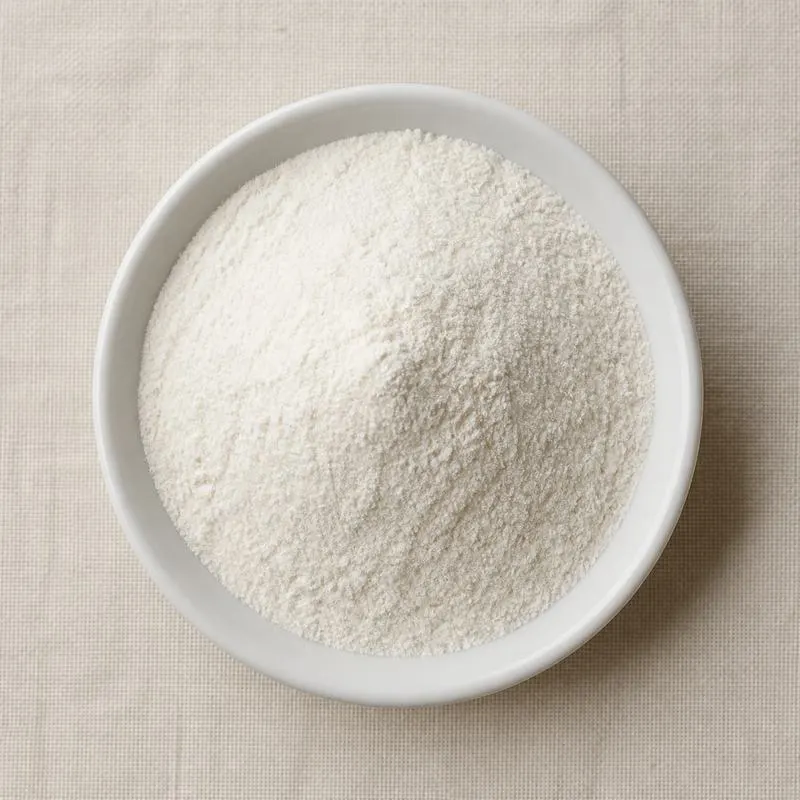
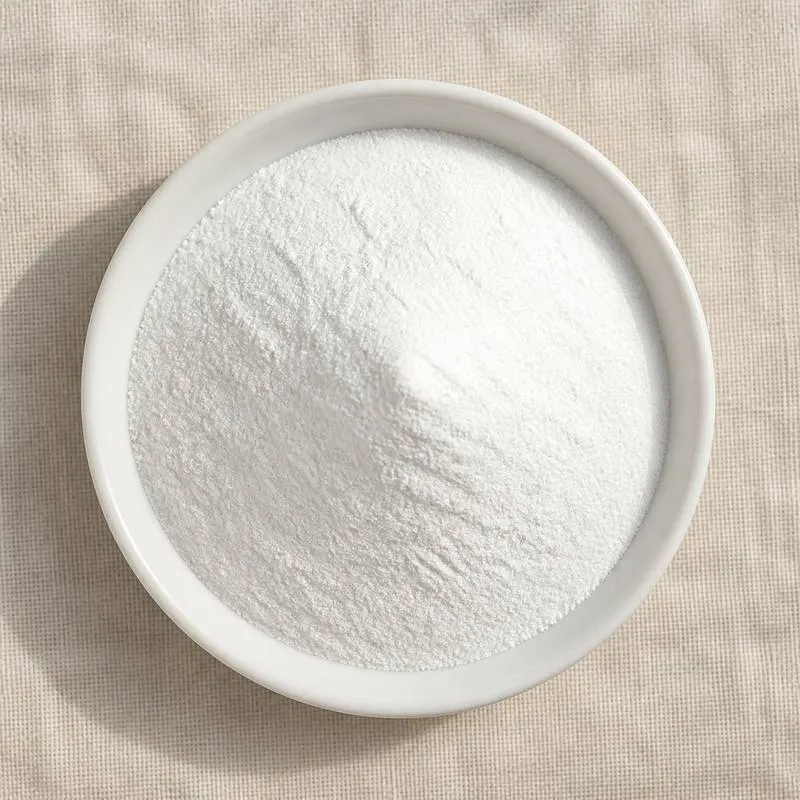
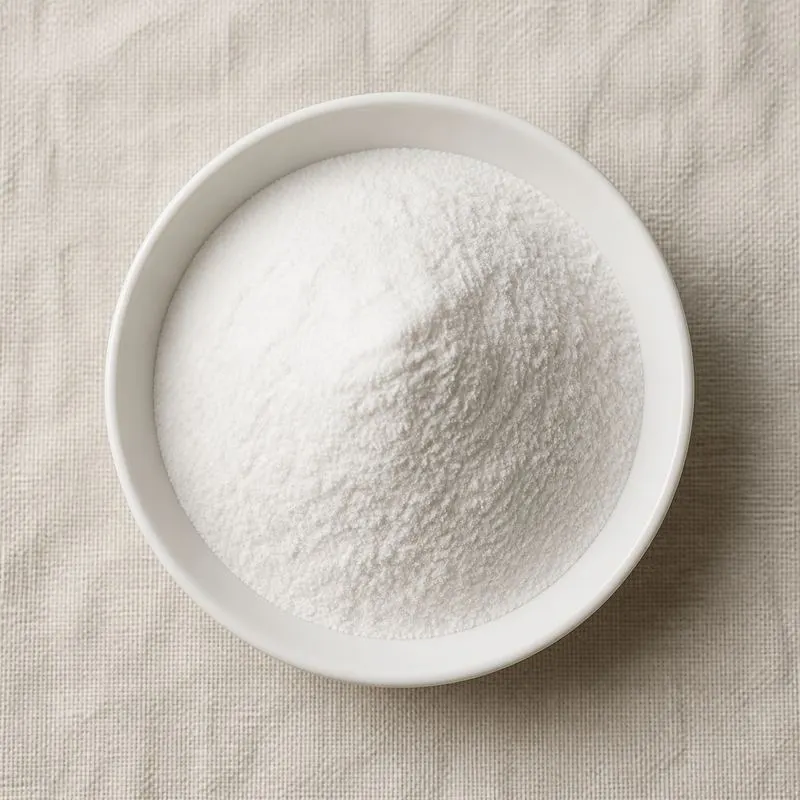
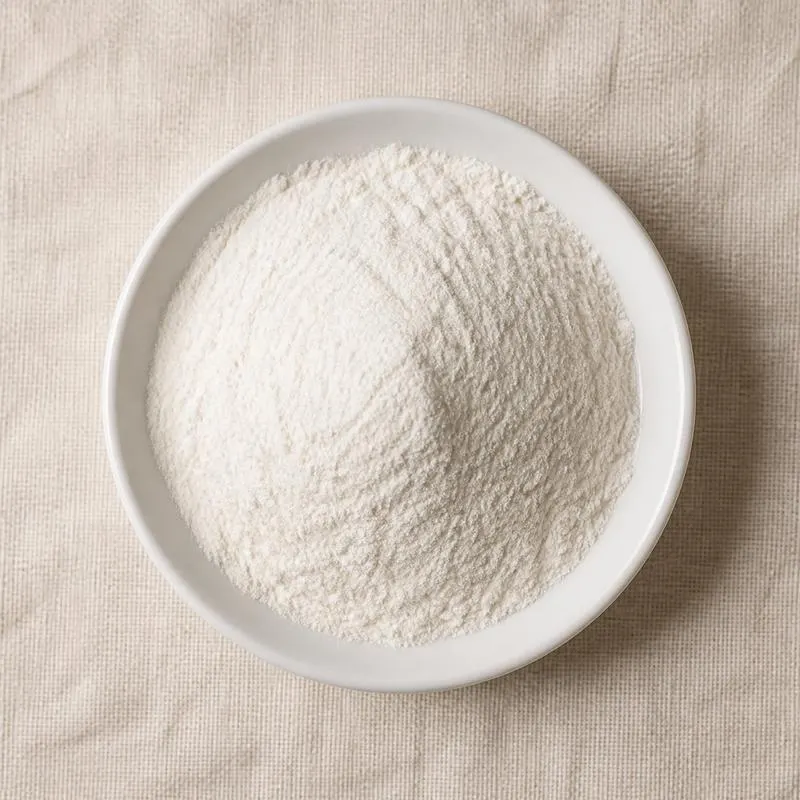
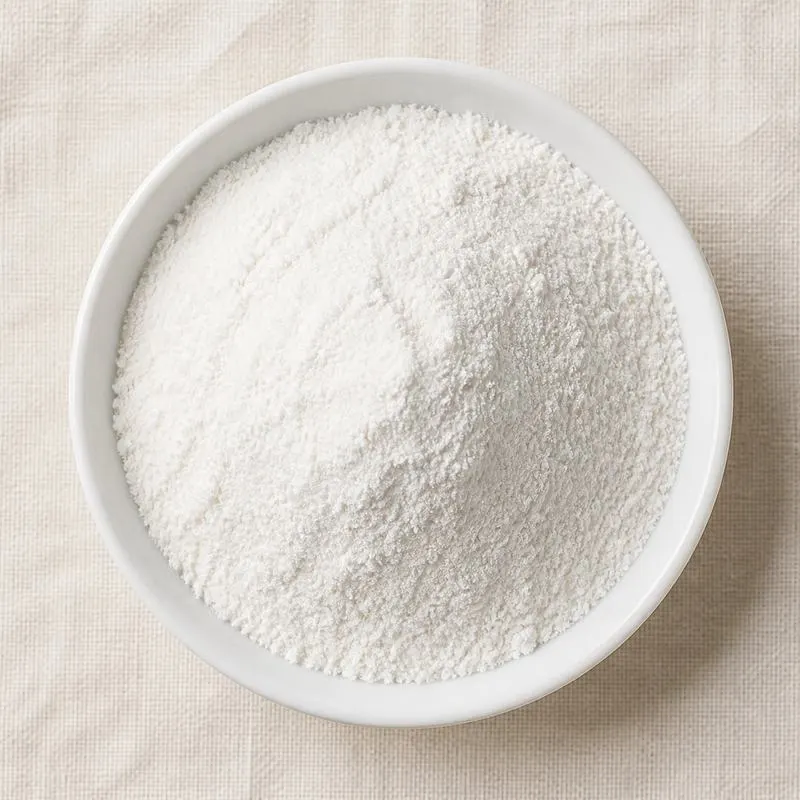
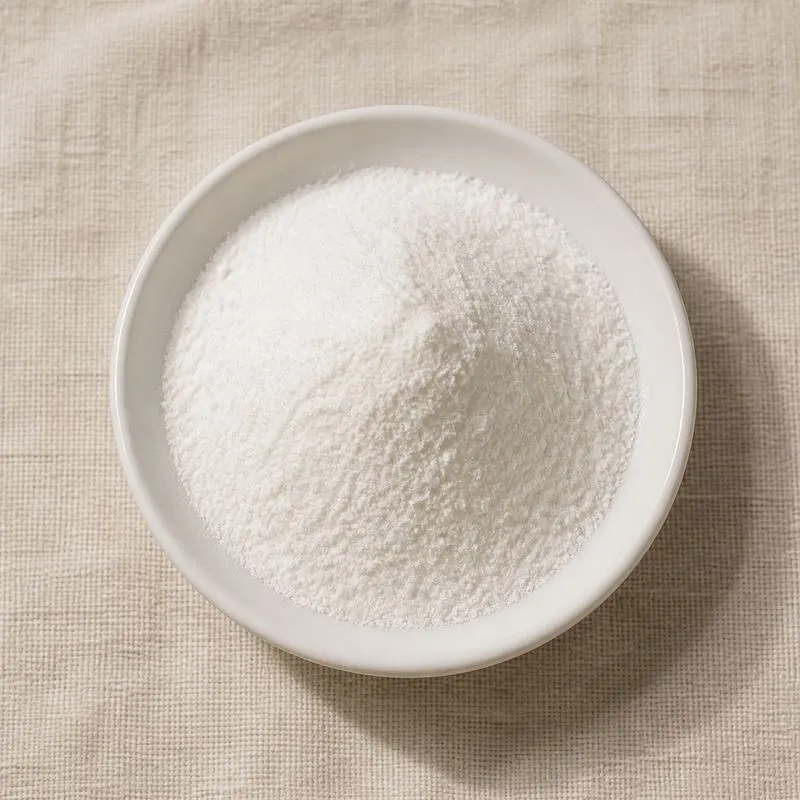
The powder is white to pale cream where it has been washed and bleached, and pale yellow to light brown in unbleached grades, with a mild citrus note. Total dietary fibre commonly runs 70 to 90 per cent on a dry basis, of which 15 to 35 per cent may be soluble. Unlike most fibres it is often sold in an activated form, in which mechanical or thermal treatment has opened the structure so that it holds twenty times its weight in water or more.
Functionally the material sits between a fibre and a hydrocolloid. It does not dissolve, but the fine open network it forms when hydrated builds viscosity, stabilises emulsions and suspends particles, so it is frequently specified as a clean-label replacement for added gums in sauces, dressings and beverages rather than purely as a fibre enrichment.
We source bulk Citrus Dietary Fibre from top China manufacturers for our partners. The manufacturer is in Guangdong. A smaller requirement can ship in a combined container with other ingredients.
Please send the grade you need, the volume and your destination port, and we will come back with a solution and a price.
or call +86-21-6858 0751
- Function
- Dietary Fibres
Specifications
| Item | Specification |
|---|---|
| Appearance | White to pale cream fine powder |
| Total Dietary Fibre | Not less than 75.0 per cent on dry basis |
| Soluble Dietary Fibre | Not less than 15.0 per cent |
| Protein | Not more than 6.0 per cent |
| Moisture | Not more than 8.0 per cent |
| Ash | Not more than 6.0 per cent |
| Particle Size | 95 per cent through 100 mesh |
| pH of 1 per cent suspension | 3.5 to 5.5 |
| Lead | Not more than 0.5 mg/kg |
| Arsenic | Not more than 0.5 mg/kg |
| Total Plate Count | Not more than 5000 cfu/g |
| Yeast and Mould | Not more than 100 cfu/g |
| Escherichia coli | Absent in 1 g |
| Salmonella | Absent in 25 g |
Common Markets Grades
The main division is between conventional milled citrus fibre and activated or high water binding grades. Conventional grades hold six to ten times their weight in water and are used for fibre enrichment and bulking. Activated grades, produced by high shear homogenisation or by steam explosion of the wet fibre before drying, hold fifteen to thirty times their weight and are sold on water binding and on the viscosity they develop, since that is their functional value.
Within each type, grades are set by particle size, from 60 mesh through 100 mesh to superfine below 200 mesh, and by whether the pectin has already been extracted. Depectinised fibre, the residue from pectin manufacture, is higher in insoluble fibre and lower in cost; whole-peel fibre retains its native pectin and binds more water. Colour and flavour grades are differentiated by the degree of washing and by whether a bleaching step has been applied, since deodorised, decolourised material is needed in dairy and beverage work. Food grade is the standard, with organic certification widely available given the volume of organic juice pressing.
Applications
- Sauces, dressings and mayonnaise, building viscosity and stabilising the emulsion in place of added gums
- Beverages and protein drinks, suspending cocoa, minerals and protein particles
- Bakery goods, retaining moisture in the crumb and extending softness through shelf life
- Meat products and analogues, binding water and fat and reducing cook loss
- Fruit preparations, jams and fillings, controlling syneresis and giving a natural fruit texture
- Ice cream and frozen desserts, limiting ice crystal growth through temperature cycling
- Plant-based dairy alternatives, contributing body and mouthfeel to low-solids systems
- Reduced-fat and reduced-egg formulations, where the hydrated network mimics the body that fat provided
- Fibre supplements and functional powders sold on total and soluble fibre content
Brands Using Citrus Dietary Fibre
Widely-distributed consumer products that list Citrus Dietary Fibre on the ingredient label.
- OatlyChilled Oatmilk 4 Ingredient (64 oz) ↗Oat drink whose entire ingredient list reads oat base (water, oats), sea salt and citrus fibre, the fibre coming from peels upcycled after juice production.Label verified 2026-08-31
- OatlyChilled Oatmilk Unsweetened (64 oz) ↗Unsweetened oat drink listing citrus fibre among the ingredients present at 2 percent or less, used for texture.Label verified 2026-08-31
Brand names, product names and logos are the property of their owners. They appear here as published evidence that the ingredient is used, taken from the brand's own label or website. Their appearance is not an endorsement, and it does not mean the brand buys from us or from any manufacturer listed on this site.
China Manufacturers of Citrus Dietary Fibre
Top Citrus Dietary Fibre manufacturers in China.
Company names and logos are the property of the manufacturers themselves. They are listed here because our own directory records them as producing this ingredient. A listing is not an endorsement by them, and we do not represent them or speak on their behalf.
Regulatory Status
Citrus fibre is a conventional food ingredient rather than an additive. In the European Union it is not covered by an E number and is declared by its ingredient name, and because citrus peel has a long history of food use in the Union it falls outside the novel food framework for the traditional preparations, though a highly modified preparation should be checked against that framework. Its fibre content is declared under the nutrition labelling rules of the Food Information to Consumers Regulation. Pectin extracted from citrus peel is a different matter and is authorised as the additive E440.
In the United States citrus fibre is used as a food ingredient on the basis of the history of safe consumption of citrus peel, and preparations have been the subject of generally recognised as safe determinations for defined uses. For Nutrition Facts purposes, intrinsic and intact fibre from the fruit counts as dietary fibre under the Food and Drug Administration definition without a separate physiological demonstration, whereas a fibre that has been isolated or synthesised is assessed against the additional requirement. Codex covers the material through its nutrition labelling guidelines and its definition of dietary fibre.
Manufacturing Process
Wet citrus peel arrives from the juice plant at 75 to 85 per cent moisture, still carrying sugars, organic acids and the bitter limonoid and flavonoid compounds of the albedo and flavedo. It is first pressed to remove peel liquor, then washed in counter current flow with water, sometimes acidified or with a short alkaline stage, to remove sugars, acids and the bitter compounds. This washing sets both the fibre purity and the flavour of the finished product, and the wash liquor is normally evaporated separately as a molasses stream.
Where an activated grade is being made, the washed wet cake is passed through a high shear homogeniser, a colloid mill or a steam explosion vessel, which disrupts the cell wall structure and creates the open network responsible for the high water binding. Drying is then carried out in a way that preserves that structure, either by flash drying at short residence time or, for the highest binding grades, by spray drying a dilute slurry, since conventional oven drying collapses the network irreversibly. The dried fibre is milled, sieved to the target mesh and blended across lots to a uniform water holding capacity, with a heat treatment applied where the microbiological specification requires it.