Clove Bud Oleoresin
Clove bud oleoresin, traded in some listings under the spelling clore bud oleoresin, is the concentrated solvent extract of the dried unopened flower buds of Syzygium aromaticum. Unlike the distilled essential oil, which captures only the volatile fraction, the oleoresin carries both the volatile oil and the non volatile resins, fixed oil and tannins of the bud, so it reproduces the taste of the whole spice rather than its aroma alone.
Its composition is dominated by eugenol, usually between sixty and eighty percent of the total, accompanied by eugenyl acetate, beta caryophyllene and smaller terpene and phenolic constituents. Eugenol supplies the warm, sweet, medicinal pungency and the numbing effect on the tongue that characterises clove, and it also gives the material measurable antioxidant and antimicrobial activity that meat and fat containing systems draw on.
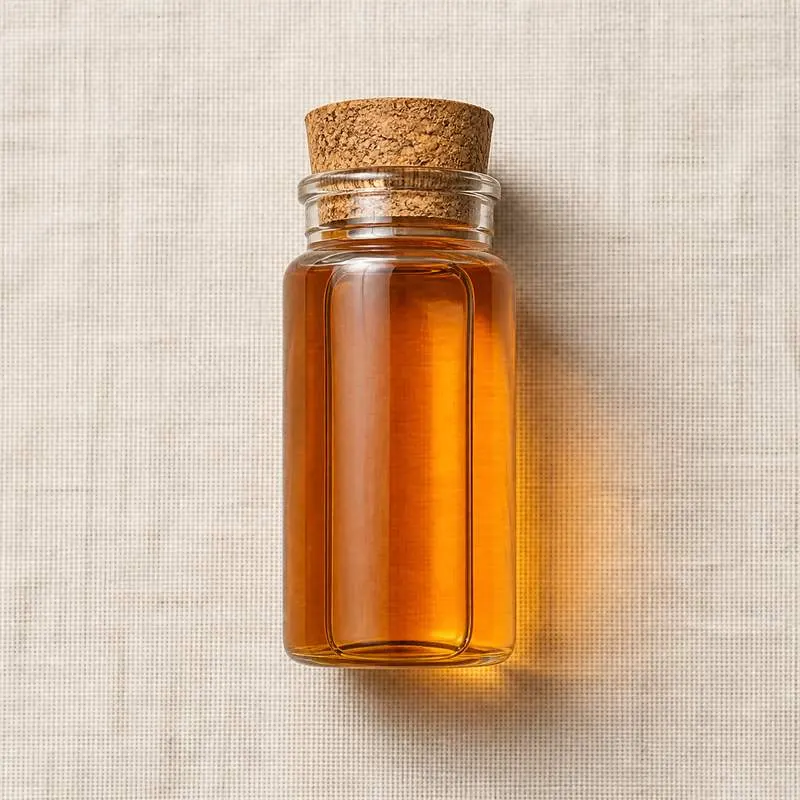
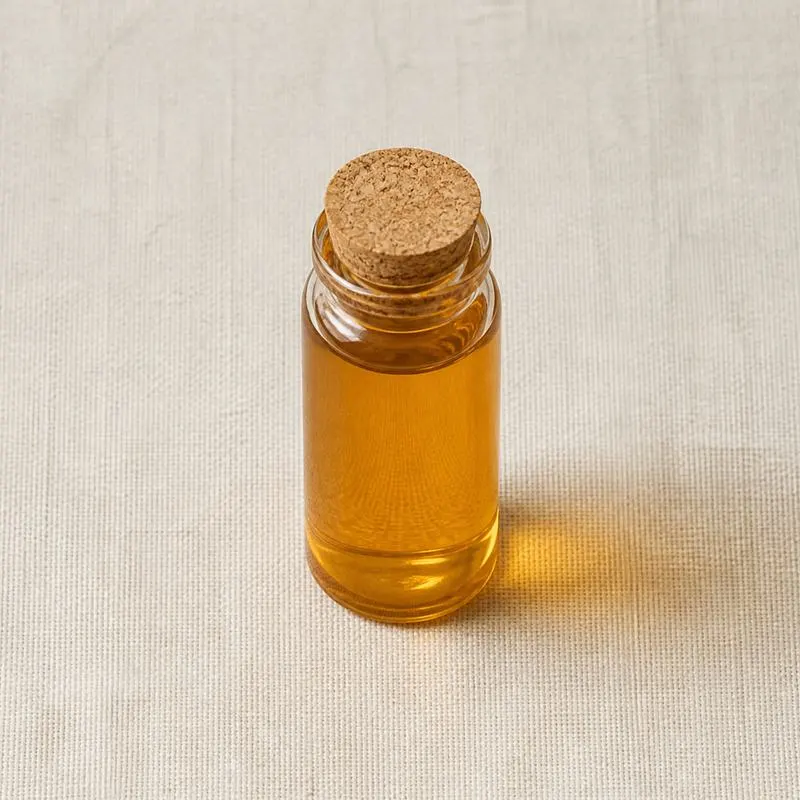
The oleoresin is a dark brown to greenish brown viscous liquid that may deposit a sediment or partially separate on standing, and it is warmed and stirred before use. It is practically insoluble in water and soluble in ethanol, propylene glycol and edible oils. The phenolic constituents darken on exposure to air, light and iron, so it is held cool in lined or glass containers under nitrogen, and for aqueous applications it is normally used dispersed on a carrier or emulsified.
We source bulk Clove Bud Oleoresin from top China manufacturers for our partners. The manufacturer is in Shaanxi. A smaller requirement can ship in a combined container with other ingredients.
Please send the grade you need, the volume and your destination port, and we will come back with a solution and a price.
or call +86-21-6858 0751
- Function
- Flavours and Aromas
Specifications
| Item | Specification |
|---|---|
| Appearance | Dark brown to greenish brown viscous liquid, sediment permitted |
| Odour and taste | Characteristic of clove, warm sweet pungent |
| Volatile oil content | 15 to 25 mL per 100 g as declared |
| Total eugenol content | 60.0 percent minimum |
| Identification | Gas chromatographic profile conforms to reference clove extract |
| Refractive index at 20 degrees Celsius | 1.528 to 1.545 |
| Specific gravity at 25 degrees Celsius | 1.050 to 1.090 |
| Moisture | 2.0 percent maximum |
| Total ash | 1.0 percent maximum |
| Residual solvent | Within the permitted limit for the declared extraction solvent |
| Heavy metals as lead | 10 mg per kg maximum |
| Lead | 2 mg per kg maximum |
| Arsenic | 1 mg per kg maximum |
| Total plate count | 1000 cfu per g maximum |
| Yeast and mould | 100 cfu per g maximum |
| Escherichia coli | Absent in 1 g |
| Salmonella | Absent in 25 g |
Common Markets Grades
The trade specification turns on volatile oil content, expressed in millilitres per hundred grams, and on the eugenol assay. Standard food grade material is offered at a declared volatile oil level, commonly in the range of fifteen to twenty five percent for a plain extract and higher for a concentrated or oil fortified grade, with the eugenol content stated separately because it drives both flavour strength and antimicrobial effect. Buyers specify the extraction solvent as well, since ethanol extracted, ethyl acetate extracted, hexane extracted and supercritical carbon dioxide extracted materials differ in residual solvent status, colour and the balance of non volatile matter. Carbon dioxide extracted grades are the cleanest and carry no solvent residue declaration.
Beyond the neat oleoresin, dispersed forms make up much of the volume, because the neat material is too viscous and too dark to dose directly into many products. These include dispersions on salt, dextrose or maltodextrin at a standardised strength, oil soluble dilutions in vegetable oil, water dispersible forms emulsified with polysorbate or a gum acacia system, and spray dried encapsulated powders that protect the eugenol from oxidation and release it on hydration. Decolourised grades are also produced where the natural dark colour would be visible in a pale product.
Applications
- Meat curing and brine systems for ham, bacon and sausage, where it contributes clove character and slows fat oxidation
- Sauces and marinades, including barbecue, brown and oriental braising sauces, replacing ground clove without visible specks
- Bakery fillings and spiced doughs such as fruit cake, gingerbread and spiced biscuits
- Beverage flavouring for mulled and spiced drinks, cola type soft drinks and bitters, used in a water dispersible form
- Pickles, relishes and chutneys, where the antimicrobial phenolics support the acid preservation system
- Confectionery and chewing gum, supplying the clove note in medicated and spice flavoured lines
- Seasoning blends and curry, garam masala and five spice bases, dispersed on salt or dextrose for even distribution
- Oral care and lozenge flavouring, using the numbing action of eugenol
- Natural antioxidant systems in fats and fat rich snacks, where the phenolic fraction slows rancidity development
China Manufacturers of Clove Bud Oleoresin
Top Clove Bud Oleoresin manufacturers in China.
Company names and logos are the property of the manufacturers themselves. They are listed here because our own directory records them as producing this ingredient. A listing is not an endorsement by them, and we do not represent them or speak on their behalf.
Regulatory Status
In the United States clove and its extractives are treated as generally recognised as safe when used as flavouring. 21 CFR 182.20 lists clove bud among the essential oils, oleoresins and natural extractives affirmed as GRAS for their intended use, and clove appears in the companion list of spices and other natural seasonings and flavourings in 21 CFR 182.10. Use is governed by good manufacturing practice, and the residual solvent must be within the limits set for the extraction solvent employed; carbon dioxide extracted material avoids that question entirely.
In the European Union the material is a flavouring preparation obtained from a food source under the flavourings regulation, so it is permitted for use in and on foods without appearing on the Union list of authorised flavouring substances, and it carries no E number. The extraction solvent must be one permitted for food use under the extraction solvents directive, with the corresponding residue limit observed. Where the oleoresin is sold on a carrier or as an emulsion, the carrier and emulsifier are additives in their own right and must be permitted for the food in which the preparation is used. Codex covers the material through its guidelines for the use of flavourings and its standard for dried cloves, and the Joint Expert Committee on Food Additives has evaluated eugenol, the principal constituent, as a flavouring agent.
Manufacturing Process
Production starts with dried unopened clove buds, which are cleaned to remove stalks, dust and foreign matter and then milled to a coarse powder immediately before extraction, since grinding releases volatiles that are lost if the powder is stored. The milled material is loaded into a battery of percolation extractors and contacted with the chosen solvent, most often food grade ethanol, ethyl acetate or hexane, in a countercurrent arrangement so the freshest solvent meets the most exhausted bed. Extraction runs at moderate temperature over several hours, and the loaded miscella is drained and filtered to remove suspended spice fines.
The miscella is then concentrated by evaporation under vacuum, which recovers the solvent for reuse while keeping the temperature low enough to retain eugenol and the lighter terpenes, and the last traces of solvent are stripped in a wiped film or falling film evaporator or by steam sparging under reduced pressure. The stripped oleoresin is analysed for volatile oil and eugenol content and standardised to the declared strength, either by blending batches or by adding back clove essential oil recovered from the same process. It is finally filtered, homogenised and filled under nitrogen. In the carbon dioxide route the milled buds are extracted with supercritical carbon dioxide instead, and the extract separates from the gas simply by reducing pressure, so no solvent stripping stage is required.