Cold Carrageenan
Cold carrageenan is carrageenan that hydrates and develops its function at ambient temperature, without the heating step that ordinary carrageenan requires. Standard kappa and iota grades have to be taken above about 70 to 80 degrees Celsius before the polymer goes fully into solution, and anything left undissolved contributes nothing; a cold soluble grade removes that constraint.
Two routes give the property, and they are not equivalent. The first is composition. Lambda carrageenan, which carries three sulphate groups per repeating unit, cannot form the ordered helix and therefore never gels, but it does dissolve in cold water to give viscosity, and lambda-rich material is the classic cold soluble carrageenan for thickening. The second is counter-ion. A kappa or iota carrageenan converted to its sodium form dissolves cold, because sodium does not promote the helix aggregation that keeps the potassium or calcium salt insoluble at ambient temperature, and the gel can then be triggered later by adding potassium or calcium.
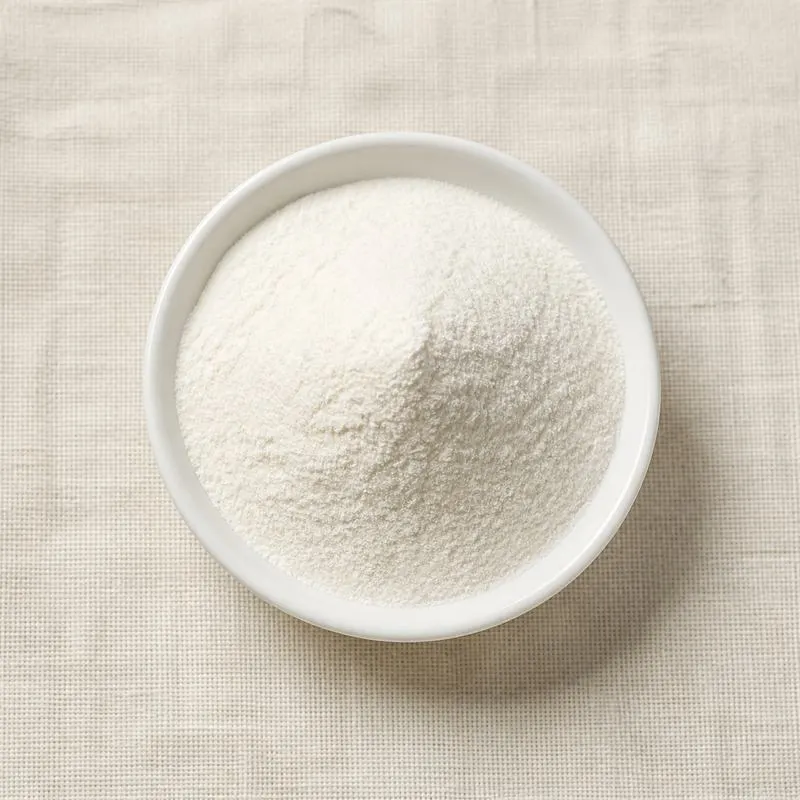
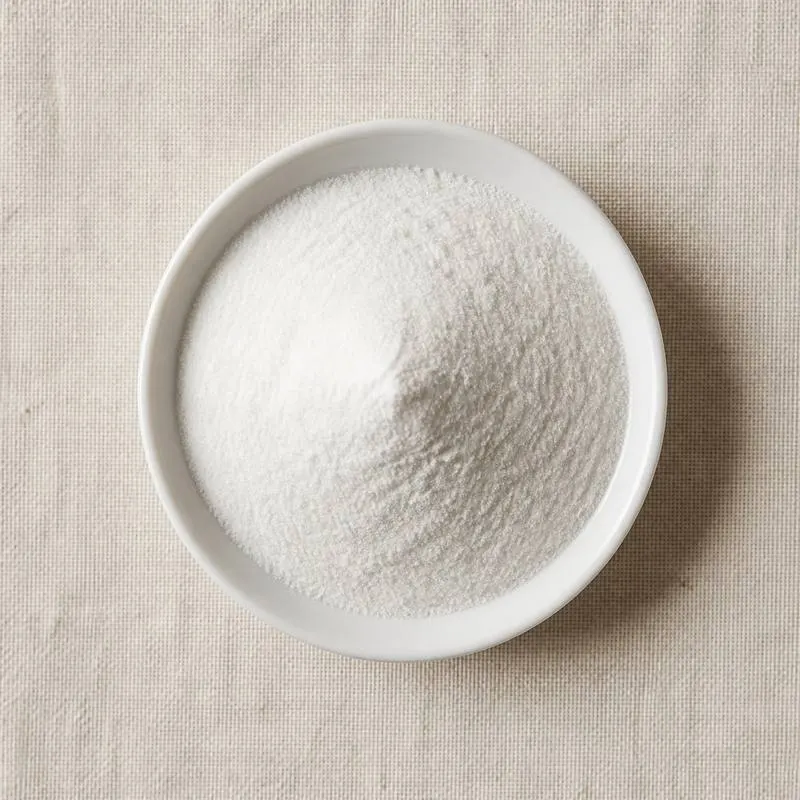
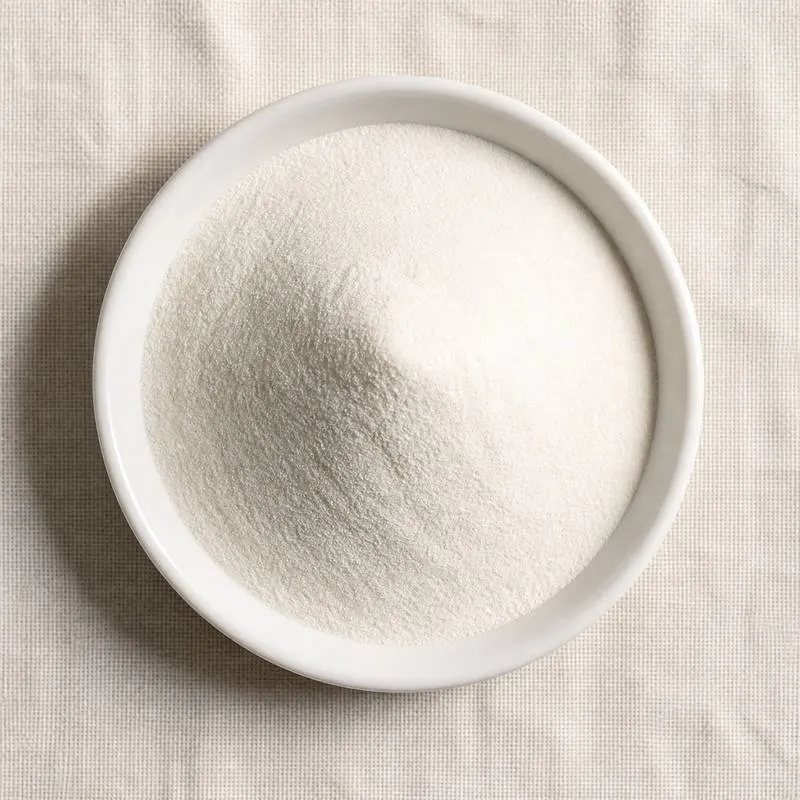
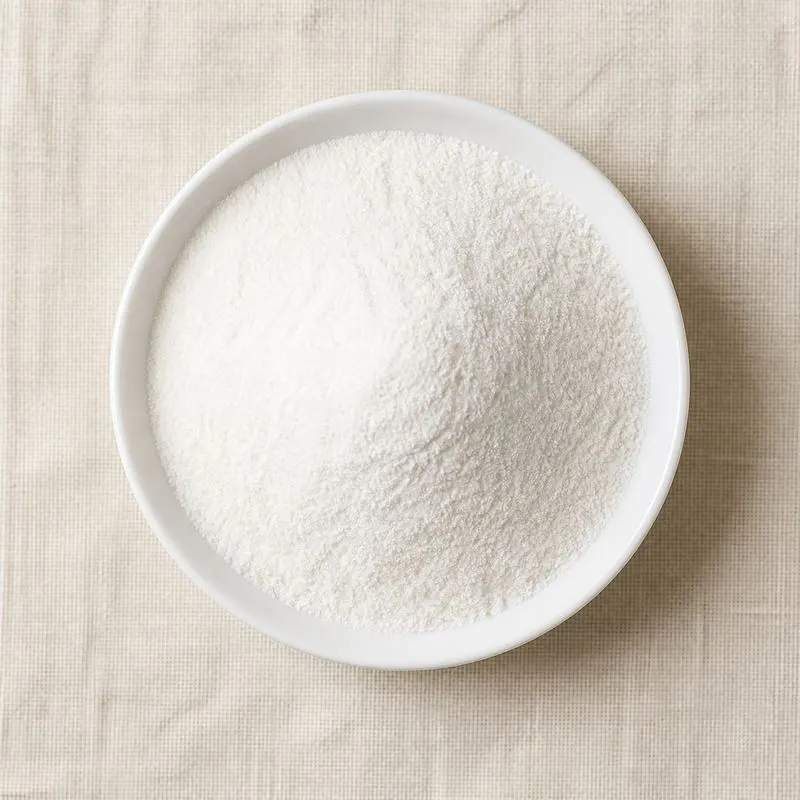
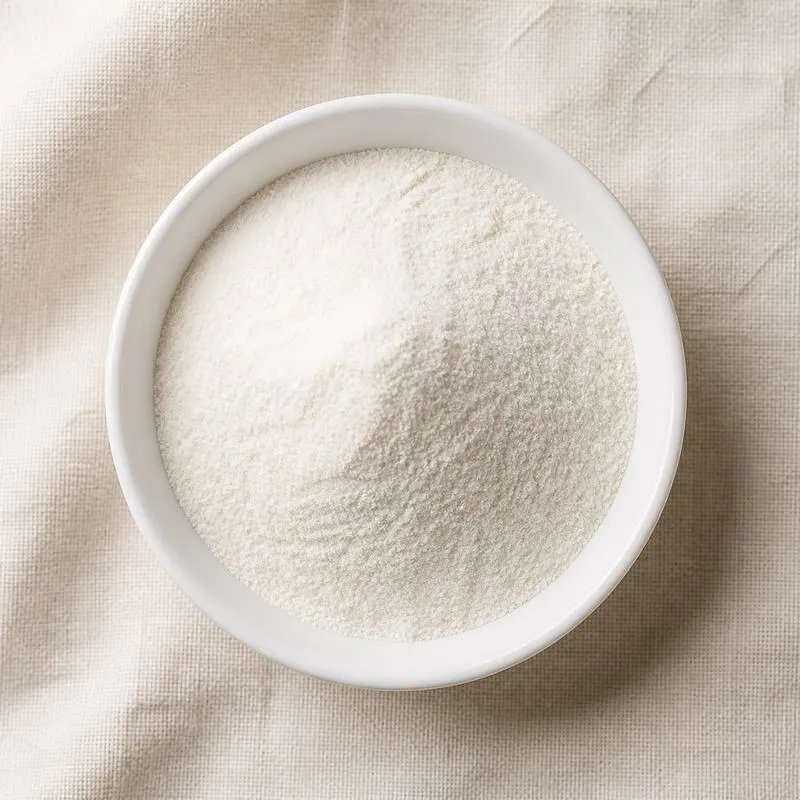
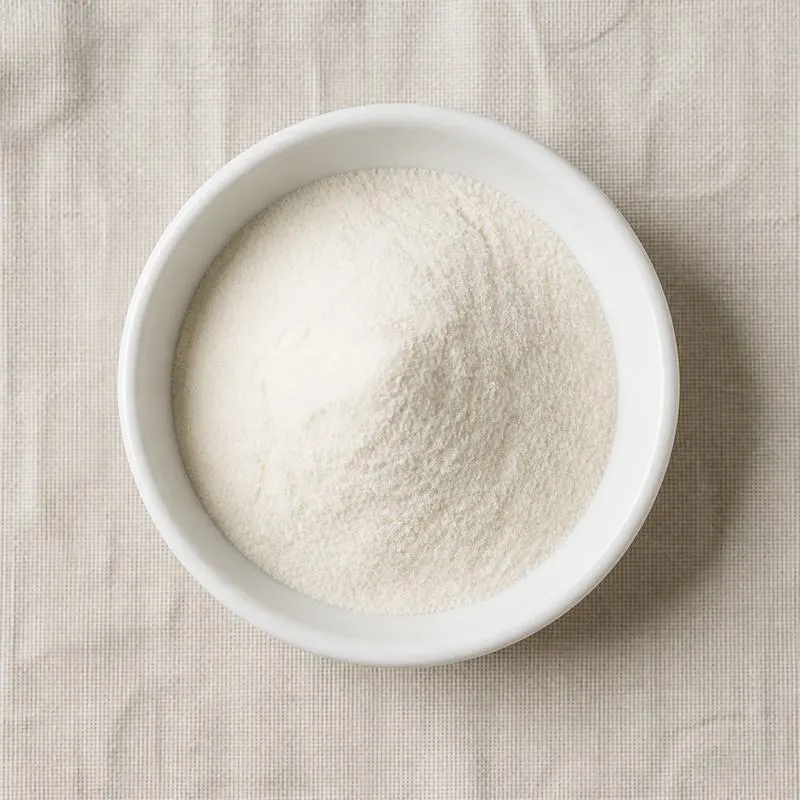
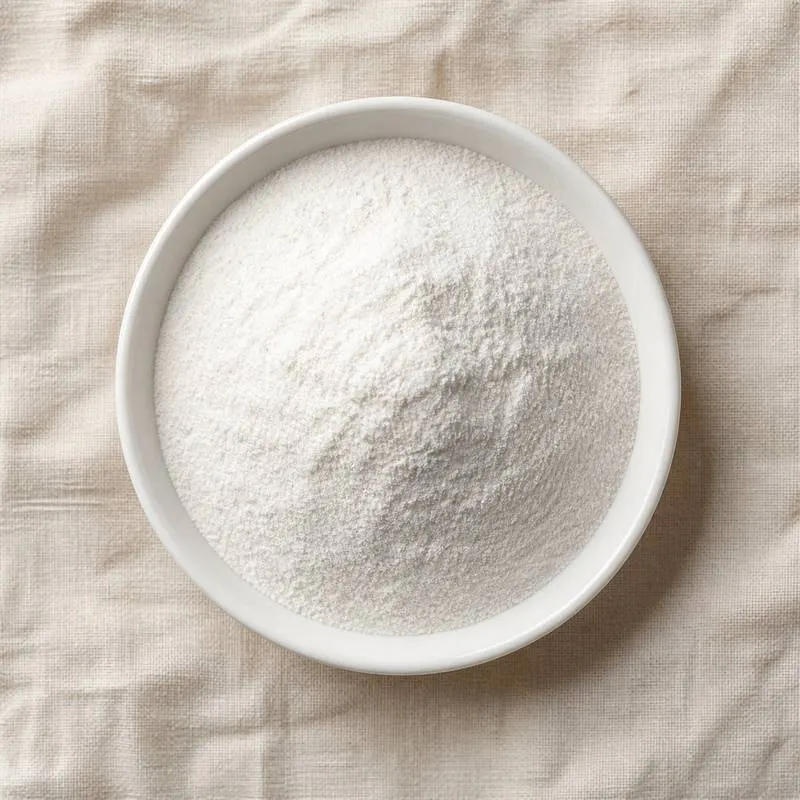
Cold carrageenan is a white to pale cream powder, usually agglomerated or blended with a dispersing carrier so that it wets out rather than lumping. Solutions are pseudoplastic and stable at neutral and alkaline pH, and, like all carrageenans, hydrolyse if held hot under acid.
We source bulk Cold Carrageenan from top China manufacturers for our partners. The manufacturer is in Guangdong. A smaller requirement can ship in a combined container with other ingredients.
Please send the grade you need, the volume and your destination port, and we will come back with a solution and a price.
or call +86-21-6858 0751
- Function
- Thickener / Hydrocolloid
Specifications
| Item | Specification |
|---|---|
| Appearance | White to pale cream powder or agglomerate |
| Odour and Taste | Almost odourless, bland |
| Identification | Infrared spectrum characteristic of carrageenan |
| Cold Solubility at 25 degrees Celsius | Not less than 95% dissolved in 20 minutes |
| Viscosity, 1.5% solution at 25 degrees Celsius | Not less than 200 mPa s |
| Sulphate, dry basis | 20.0% to 40.0% |
| Loss on Drying | Not more than 12.0% |
| Sulphated Ash, dry basis | 15.0% to 40.0% |
| Acid Insoluble Matter | Not more than 2.0% |
| pH, 1% solution | 8.0 to 11.0 |
| Residual Isopropanol | Not more than 0.1% |
| Particle Size | Not less than 95% through 60 mesh |
| Lead | Not more than 2 mg/kg |
| Arsenic | Not more than 3 mg/kg |
| Cadmium | Not more than 1 mg/kg |
| Total Plate Count | Not more than 5,000 CFU/g |
| Salmonella | Absent in 25 g |
Common Markets Grades
The first thing to establish on an enquiry is whether cold soluble means non-gelling thickening or a cold prepared gel, because the two are different products. Lambda-rich grades are specified by viscosity on a 1.5 percent solution at ambient temperature and give body and suspension with no set. Sodium form kappa and iota grades are specified by the gel strength they develop once the setting ion is added, and by their cold solubility, and are used where a gel has to be made without heat.
Beyond that split, grades differ in dispersibility, since the faster a hydrocolloid hydrates the more readily it lumps, so cold soluble grades are commonly agglomerated in a fluid bed or blended with sugar, dextrose or maltodextrin as a carrier. Application lines exist for cold prepared dairy desserts, instant beverages and dry mixes. Particle size is specified because it controls both dispersion and hydration rate.
Applications
- Cold prepared dairy desserts and mousses, setting or thickening without a cook step
- Instant dessert and beverage mixes reconstituted by the consumer in cold milk or water
- Milkshakes and cold dairy drinks, giving body and suspending cocoa or protein
- Cold process sauces, dips and dressings, avoiding the flavour and colour loss that heating causes
- Plant based milk alternatives prepared cold, supplying suspension and mouthfeel
- Bakery fillings and toppings assembled at ambient temperature
- Whipped and aerated products, stabilising the foam without a heat set
- Toothpaste and cosmetic gels manufactured on cold process lines
- Dry blend systems where the finished product must hydrate on first contact with water
- Reformulation of existing recipes to remove a heating stage and its energy cost
China Manufacturers of Cold Carrageenan
Top Cold Carrageenan manufacturers in China.
Company names and logos are the property of the manufacturers themselves. They are listed here because our own directory records them as producing this ingredient. A listing is not an endorsement by them, and we do not represent them or speak on their behalf.
Regulatory Status
Cold soluble grades are carrageenan in regulatory terms; the cold solubility comes from the type of carrageenan and from salt exchange and physical treatment, not from a chemical modification producing a new substance.
In the United States that means the direct food additive regulation at 21 CFR 172.620, with the companion regulation at 21 CFR 172.626 for carrageenan with polysorbate 80, and the label declaration is carrageenan. In the European Union refined material is authorised as E407 carrageenan, with the identity and purity criteria covering sulphate, ash, acid insoluble matter, residual isopropanol and heavy metals, and requiring control of the molecular weight distribution so that only a small proportion falls below the low molecular weight threshold, degraded carrageenan not being permitted as a food additive. Where a cold soluble product is a blend with a sugar carrier or another hydrocolloid, each component must be declared, and the additive preparation labelling requirements for additives sold to manufacturers apply. Codex and JECFA recognise carrageenan as INS 407 with published specifications. Restrictions on use in foods for infants and young children apply as they do to all carrageenan grades.
Manufacturing Process
Manufacture begins as for any refined carrageenan. Dried red seaweed is cleaned, cooked in hot alkali to convert galactose 6-sulphate residues into 3,6-anhydrogalactose where the type in question forms a helix, then diluted, clarified by centrifugation and filter pressing, and the polymer recovered by precipitation into isopropanol. Lambda carrageenan is obtained by selecting seaweed of the Gigartina or Chondrus type that yields the lambda fraction, and by running the alkali step mildly, since strong alkali converts lambda towards the gelling theta form.
Where a sodium form of kappa or iota is being made, an ion exchange stage is added. The clarified extract or the precipitated fibre is washed with a sodium salt solution so that potassium and calcium are displaced from the polymer and replaced by sodium, then washed free of the excess salt. This exchange is what gives cold solubility, and its completeness is checked by measuring residual potassium and calcium as well as by a cold dissolution test.
The recovered polymer is pressed, desolventised, dried and milled. Most cold soluble grades then take an agglomeration step, in which the fine powder is lightly wetted in a fluid bed and re-dried so that the particles form porous clusters that sink and wet rather than forming lumps, or are dry blended with a sugar carrier for the same purpose. Finished material is sieved, tested for cold viscosity or cold gel strength, and blended to specification.