Compound Sodium Polyphosphate
Compound sodium polyphosphate is a formulated blend of sodium phosphate salts, typically sodium tripolyphosphate with tetrasodium pyrophosphate and sodium hexametaphosphate, sold as a single powder for water binding and pH control in meat, poultry and seafood processing.
Blending exists because no single phosphate does the whole job. Pyrophosphate is the most effective at dissociating the actomyosin complex but dissolves poorly in cold brine, hexametaphosphate dissolves readily and chelates strongly but is only weakly alkaline, and tripolyphosphate sits between the two. Combining them gives a powder that goes into cold water without lumping, raises brine pH into the range where muscle protein swells, and holds its chelating capacity against the calcium in hard process water.
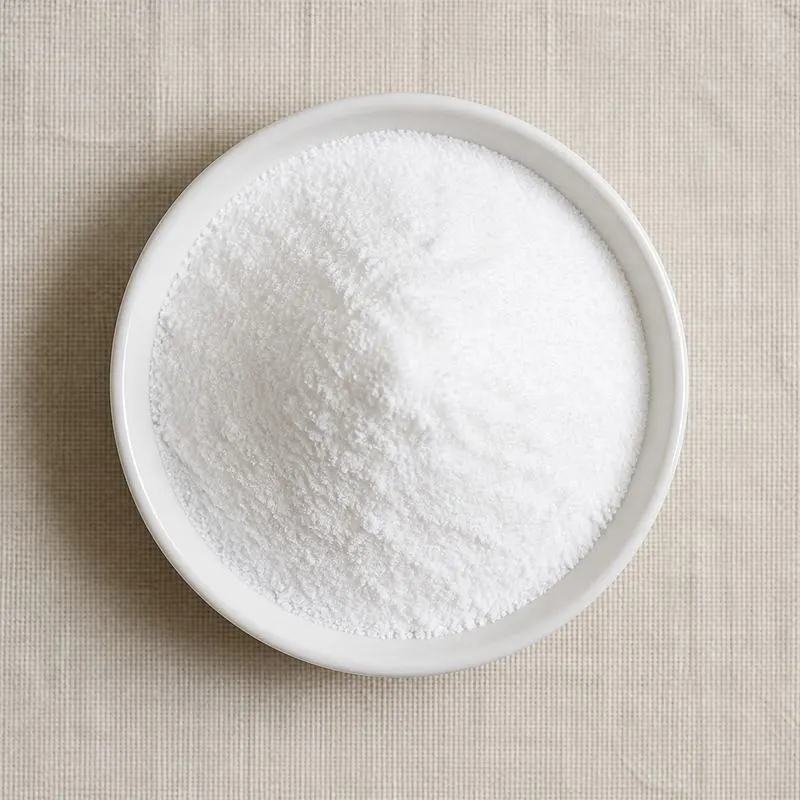
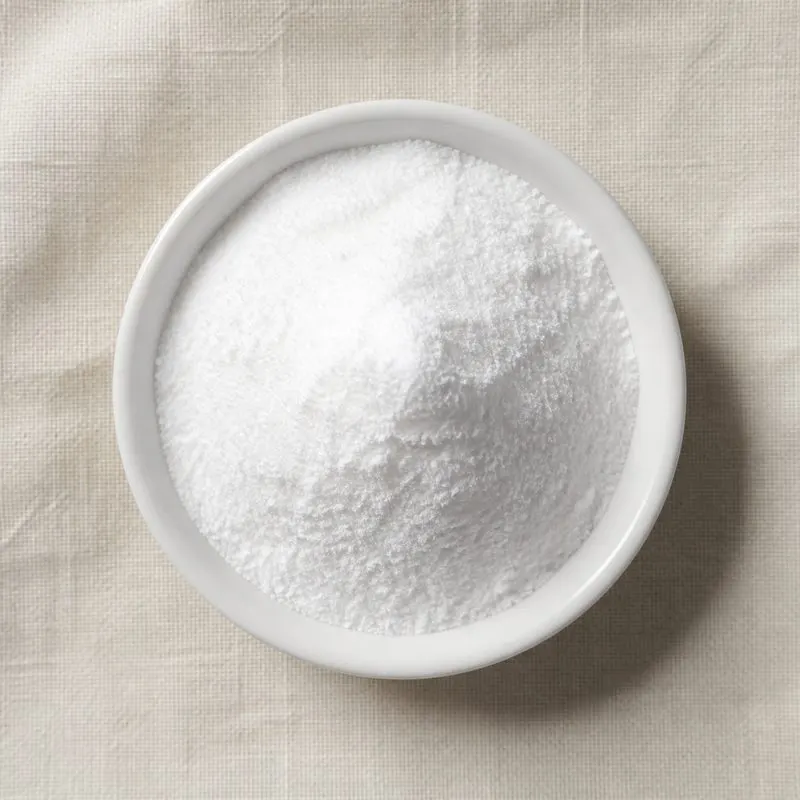
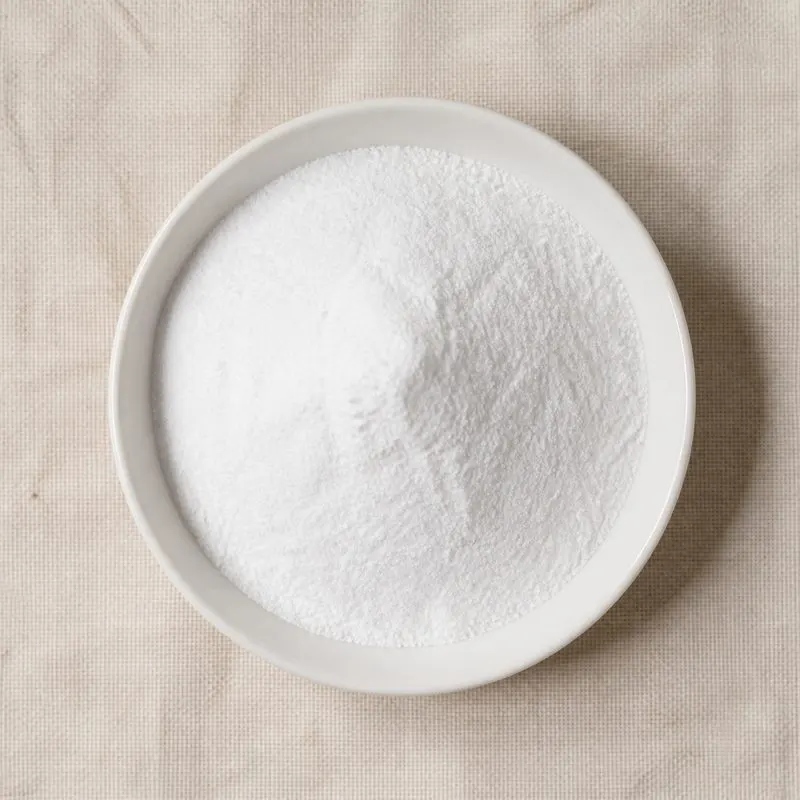
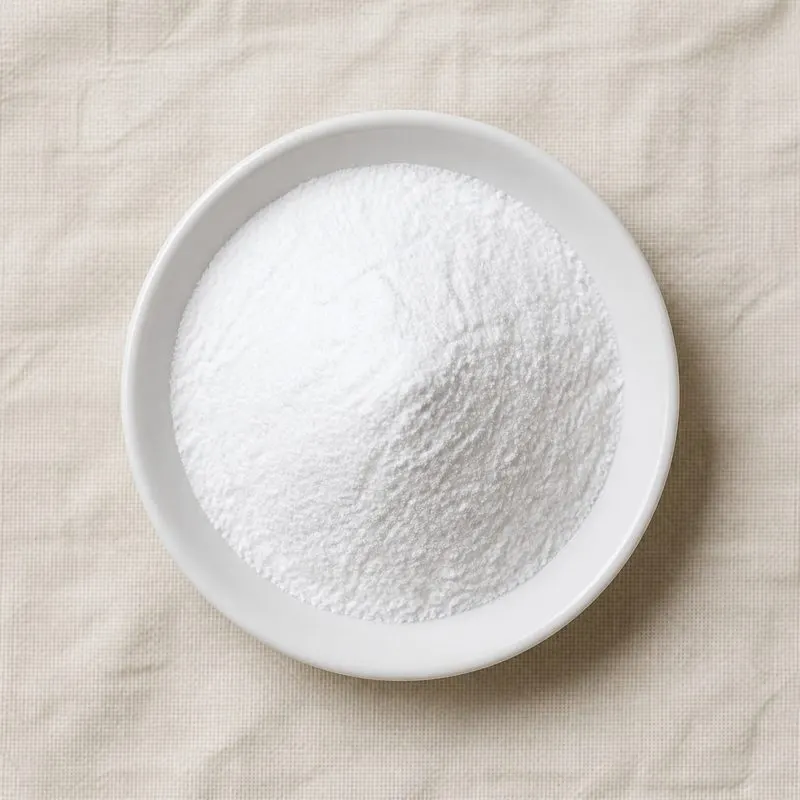
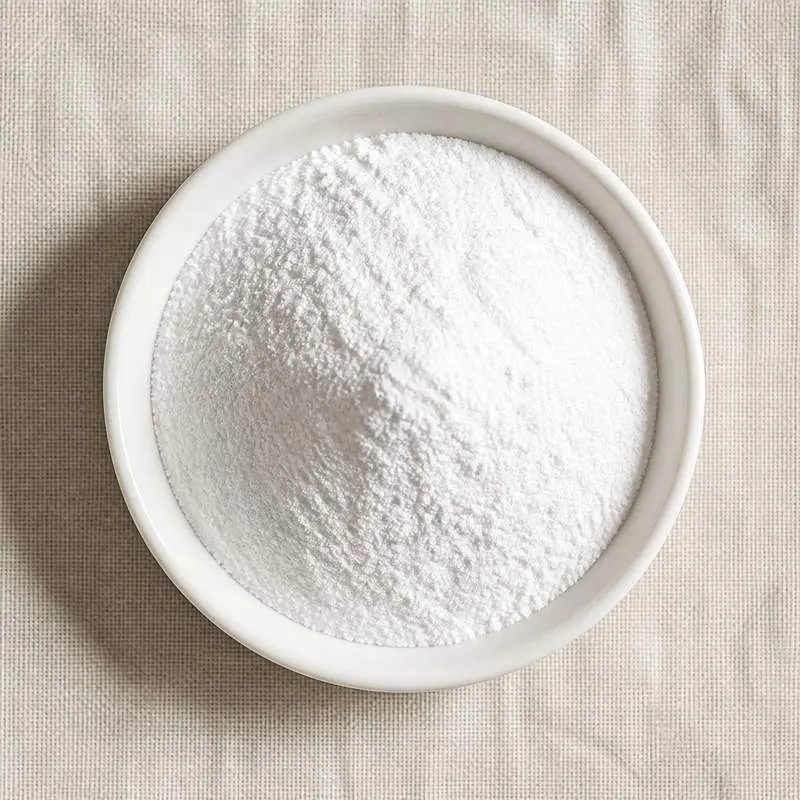
The blend is a white free flowing powder or granule, fully soluble in water at the dosages used, giving a solution of pH between about eight and a half and ten depending on the formulation. Some grades carry sodium carbonate or sodium citrate to lift alkalinity further, and others include an anticaking agent. In solution the condensed chains hydrolyse progressively to orthophosphate, faster when hot or acidic, so working brines are made up shortly before injection rather than held.
We source bulk Compound Sodium Polyphosphate from top China manufacturers for our partners. The manufacturer is in Jiangsu. A smaller requirement can ship in a combined container with other ingredients.
Please send the grade you need, the volume and your destination port, and we will come back with a solution and a price.
or call +86-21-6858 0751
- Function
- Meat-processing aid
Specifications
| Item | Specification |
|---|---|
| Appearance | White free flowing powder or granule, free from lumps |
| Identification | Positive for sodium and for condensed phosphate by chromatography |
| Total phosphorus pentoxide | 55.0 to 62.0% |
| pH of 1% aqueous solution | 8.5 to 10.0 |
| Dissolution time in water at 5 degrees Celsius | Complete within 10 minutes at 10% concentration |
| Loss on drying at 105 degrees Celsius | Not more than 1.0% |
| Water insoluble matter | Not more than 0.2% |
| Iron | Not more than 50 mg/kg |
| Fluoride | Not more than 10 mg/kg |
| Heavy metals as lead | Not more than 10 mg/kg |
| Lead | Not more than 1.0 mg/kg |
| Arsenic | Not more than 1.0 mg/kg |
| Cadmium | Not more than 1.0 mg/kg |
| Particle size | Not less than 95% through 40 mesh, or granular as specified |
Common Markets Grades
Blends are sold by application rather than by a single chemical assay. Injection grades are formulated for rapid cold solubility and are specified on dissolution time as much as on composition, since a brine mixed in a few minutes at four degrees Celsius cannot tolerate slow dissolving material. Tumbling and massaging grades carry a higher proportion of pyrophosphate because the mechanical action gives more time and shear for it to work. Seafood soak grades are built around hexametaphosphate and tripolyphosphate for chelation and drip control, and frozen product grades add a chelating fraction aimed at the iron catalysed oxidation that causes rancidity in fatty fish.
Alongside these, alkalinity is a graded property, with high alkaline blends used where the raw material has an unusually low pH, and buffered blends used where pH must be held closer to neutral for flavour reasons. Physical form ranges from fine powder for dry seasoning blends to granulated and agglomerated grades that generate little dust and take up water without forming lumps. All are made to food grade phosphate specifications for fluoride, arsenic, lead and insoluble matter.
Applications
- Brine injected ham, bacon and cooked pork, raising cooked yield and improving slice cohesion
- Tumbled and massaged whole muscle products, assisting protein extraction so the pieces knit on cooking
- Marinated fresh and frozen poultry, reducing liquid loss in the retail tray
- Emulsified sausage and frankfurters, stabilising the fat and water emulsion during chopping and cooking
- Shrimp and scallop soaking, controlling weight loss on freezing, thawing and cooking
- Fish fillet dips before freezing, limiting drip and chelating the iron that drives oxidative rancidity
- Surimi production, supporting gel strength and protein solubility
- Canned and retorted seafood, preventing struvite crystal formation
- Restructured and formed meat products, where binding between pieces depends on extracted myofibrillar protein
China Manufacturers of Compound Sodium Polyphosphate
Top Compound Sodium Polyphosphate manufacturers in China.
Company names and logos are the property of the manufacturers themselves. They are listed here because our own directory records them as producing this ingredient. A listing is not an endorsement by them, and we do not represent them or speak on their behalf.
Regulatory Status
In the United States each phosphate in the blend is separately affirmed as generally recognised as safe for use as a sequestrant and buffer under 21 CFR Part 182, and the blend itself carries no separate approval. Use in meat and poultry is controlled by the Food Safety and Inspection Service, which permits phosphates in the standardised products listed in 9 CFR 424.21 at a level not exceeding half a percent of the finished product calculated as phosphate, requires each phosphate to be named in the ingredient statement rather than declared as a blend, and applies its own labelling rules to raw products carrying added solution. Seafood use is subject to the hazard analysis requirements of 21 CFR Part 123 and to net weight declaration rules for treated frozen product.
In the European Union, Regulation (EC) No 1333/2008 authorises the components as food additives carrying the E numbers assigned to diphosphates, triphosphates and polyphosphates, and sets maximum levels by food category expressed as phosphorus pentoxide, with purity criteria in Regulation (EU) No 231/2012. Because the European Food Safety Authority reassessed the phosphates as a single group, the permitted level applies to all added phosphate in a product taken together rather than to each salt separately. Codex lists the same salts in its general standard for food additives, with specific limits in several commodity standards for quick frozen fish and shellfish, and the Joint FAO WHO Expert Committee on Food Additives has published specifications for the individual salts.
Manufacturing Process
The individual phosphate salts are made first, each from purified phosphoric acid neutralised with sodium carbonate or sodium hydroxide to a specific sodium to phosphorus ratio, clarified to remove fluoride and metal bearing solids, then spray dried and calcined. The calcination temperature and residence time differ for each salt and determine which condensed phosphate forms, so tripolyphosphate, pyrophosphate and hexametaphosphate are produced on separate calcination lines or in separate campaigns rather than together.
Blending is a dry operation. The component salts are dosed by loss in weight feeders or by batch weighing against a formula, then mixed in a ribbon, plough or conical screw blender long enough to reach a verified blend uniformity, since the components differ in particle size and density and will segregate if the mix is short or if the blend is handled roughly afterwards. Where dust and lumping are a problem the blend is agglomerated in a fluid bed with a fine water or phosphate solution spray and redried, which produces a coarser porous particle that takes up water quickly. The finished blend is screened, passed through a metal detector, sampled for pH, phosphorus pentoxide content and dissolution time, and packed into lined paper sacks or bulk bags.